Breast augmentation surgery adds volume and shape with silicone gel implants, or with your own fat for smaller changes. At ten years, 94.2 percent of augmentation patients in a major study were satisfied with their implants. At Biruni Hospital in Istanbul, our plastic surgery team plans implant size, type and placement from your measurements, with a stay of six to seven days and video follow-up for a year.
About This Department
Plastic Surgery
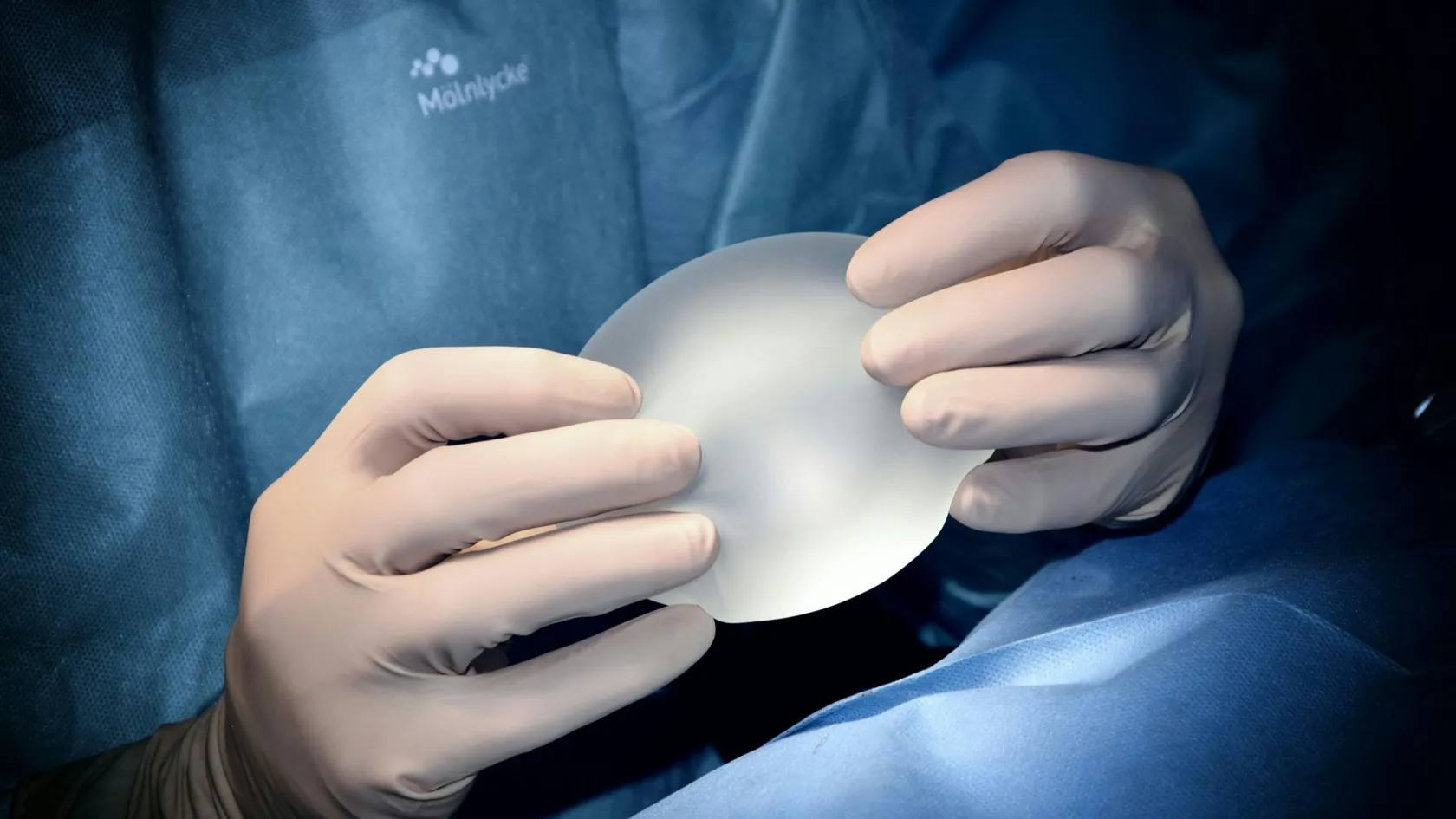
Breast augmentation places an implant behind the breast to add volume and shape. The right plan fits the implant to the body.
Breast augmentation surgery enlarges the breasts or restores volume lost after pregnancy, breastfeeding or weight loss, using silicone gel or saline implants, or in smaller changes a transfer of the patient's own fat. In a ten-year study of 715 women followed with regular visits and MRI scans, 94.2 percent of augmentation patients said they were satisfied or definitely satisfied with their implants, and 81.8 percent still had their original implants at ten years (Spear and Murphy, Plastic and Reconstructive Surgery, 2014). Across 14,514 women in a nationwide American study, satisfaction with the breasts and psychosocial well-being rose after surgery and stayed higher at four years. Implants do not last a lifetime, and capsular contracture remains the most common reason for another operation. This page explains who is suited, implant types, placement, incisions, choosing size, risks including lymphoma, the operation day, recovery, long-term care and how patients from abroad arrange breast augmentation at Biruni Hospital in Istanbul.
94.2
Percent of augmentation patients satisfied with their implants at ten years
81.8
Percent of augmentation patients with their original implants still in place at ten years
15.7
Percent capsular contracture at ten years with implants under the muscle, against 26.3 percent above it
Free
Review of your photos and goals by our plastic surgery team
Augmentation adds volume and upper fullness. It does not lift a breast that has dropped well below the fold, which needs a lift as well.
1
The procedure
Through an incision of four to five centimeters, the surgeon creates a pocket behind the breast tissue or the chest muscle and places the implant. The operation takes one to two hours under general anesthesia.
Common goals
Women choose augmentation to enlarge naturally small breasts, to restore fullness after pregnancy or weight loss, and to balance breasts of different sizes.
Breast augmentation differs from reconstruction after mastectomy, which follows cancer treatment and uses different techniques and planning.
Who is suited
Good candidates and when to wait
Situation
Suitability
Note
Small breasts, stable weight
Well suited
Most common reason
Volume loss after pregnancy
Well suited
Wait six months after breastfeeding ends
Asymmetry
Suited
Different implant sizes or shapes
Marked sagging
Needs a lift too
Augmentation with mastopexy
Planned pregnancy soon
Better to wait
Pregnancy changes the result
1
Age
Regulators in the United States approve silicone gel implants for cosmetic augmentation from age 22 and saline implants from 18. We follow the same limits.
Health checks before surgery
Check
Purpose
When
Breast ultrasound or mammogram
Exclude hidden disease
Mammogram from age 40 or with family history
Blood tests
Fitness for anesthesia
Before surgery
Smoking status
Wound healing
Stop four weeks before
Women with a strong family history of breast cancer discuss screening plans with us before choosing an implant and a pocket.
2
Motivation
The best results come when a woman wants the change for her own comfort and body image.
We discuss expectations openly, including the likelihood of further surgery over a lifetime.
Implant types
Choices in breast implants
Feature
Options
What it means
Filling
Silicone gel or saline
Gel feels more natural, saline is filled after placement
Shape
Round or anatomical
Anatomical implants slope like a teardrop
Surface
Smooth or microtextured
Macrotextured implants were withdrawn in 2019 over lymphoma risk
Profile
Low to extra high
How far the implant projects for its width
Gel cohesiveness
Standard to highly cohesive
Firmer gel keeps its shape better
In the nationwide American study of 14,514 women, silicone implants gave greater gains in satisfaction and well-being than saline implants at one and four years (Alderman and colleagues, 2016).
Modern cohesive silicone gel stays in place when the shell tears, which reduces spread. We use implants with European CE marking and give each patient an implant card with the manufacturer, model, size and serial number.
Proportion over volume
Bigger does not mean better.
An implant wider than the breast base sits too far to the side or crowds the cleavage, and one too heavy for thin skin stretches it and slides downward over the years, so the best measure of success comes from how well the new breast matches the chest, shoulders and hips rather than from the number of cubic centimeters. We measure the width of the breast base, the stretch of the skin, the distance from nipple to fold and the thickness of tissue at the top of the breast, and those figures narrow the choice to a small range of implants before a woman ever tries a sizer. Within that range she chooses the look she prefers.
This keeps the result stable for longer.
Implant placement
1
Three pockets
The implant can sit above the chest muscle, below it, or in a dual plane where the upper part lies under the muscle and the lower part under the breast tissue.
Evidence at ten years
Placement compared
Pocket
Advantage
Drawback
Under the muscle, dual plane
Better cover in thin women, less contracture
Movement of the implant with muscle use
Above the muscle
Faster recovery, no animation
Edges more visible in thin women
Subfascial
Middle ground
Less cover than under the muscle
In the Natrelle Core Study, capsular contracture at ten years reached 15.7 percent with implants under the muscle and 26.3 percent with implants above it (Spear and Murphy, 2014).
2
Our usual choice
For women with little breast tissue, we usually place implants in a dual plane. Women with ample tissue and athletes who use the chest muscles intensively may do better above the muscle.
The pocket matters as much as the implant.
Incisions
The incision sits where it heals well and stays hidden, and it needs to give the surgeon a clear view of the pocket.
Incision sites
Site
Advantage
Consideration
Fold under the breast
Best control, lowest contracture in several series
Scar in the fold
Edge of the areola
Scar at a color border
More effect on breastfeeding and nipple feeling
Armpit
No scar on the breast
Less control, harder for revisions
Fat transfer as an alternative
Fat can replace an implant for modest changes.
Liposuction takes fat from the abdomen or thighs, and after processing it is injected into the breast in small amounts. Only part of it survives. In a prospective MRI study, 57 percent of the injected volume remained at three months (Guo and colleagues, Aesthetic Surgery Journal, 2019), so fat transfer suits women who want an increase of about one cup size and have fat to spare.
It also works alongside implants to soften their edges.
Choosing size
Sizers and simulation
Sizers worn under a fitted bra help a woman see different volumes on her own body, and 3D imaging shows a simulation. Cup sizes differ between brands and countries, so we talk about look and proportion rather than a letter.
1
Final decision
We agree the implant range at the consultation and bring more than one size to the operating room, choosing the final implant after testing the pocket with a temporary sizer.
Risks
Swelling, tightness and bruising in the first weeks, easing as the implants settle.
Temporary changes in nipple feeling, returning in most women within months.
Rippling in thin women.
Main complications
Complication
How often
Management
Capsular contracture
18.9 percent at ten years in the Core Study
Capsule removal and implant exchange
Silent rupture of silicone implants
7.7 percent of implants at ten years on MRI
Implant replacement
Hematoma
Uncommon
Drainage in the first days
Infection
Rare
Antibiotics, sometimes implant removal
Implant malposition
Uncommon
Pocket repair
Capsular contracture
Every implant forms a thin capsule of scar tissue. In some women it thickens and tightens, making the breast firm, misshapen or painful.
Careful technique lowers the risk, including an incision in the fold, handling the implant as little as possible with a sleeve, antibiotic irrigation of the pocket and meticulous control of bleeding.
Lymphoma risk in perspective
Breast implant associated anaplastic large cell lymphoma, BIA-ALCL, grows in the fluid or capsule around an implant.
A nationwide Dutch registry study found that 32 of 43 women with lymphoma of this type in the breast had implants, most of them macrotextured, and estimated that one case would arise for every 6,920 women carrying implants up to the age of 75 (de Boer and colleagues, JAMA Oncology, 2018). The disease typically shows years after surgery as sudden swelling of one breast from fluid, and when caught at that stage, removal of the implant and the whole capsule cures most women without chemotherapy. The risk relates mainly to heavily textured surfaces, and those implants left the market in 2019 for that reason.
Late swelling needs an ultrasound. It rarely means cancer.
Breastfeeding and mammograms
Breastfeeding
Most women with implants breastfeed normally, especially when the implant lies under the muscle and the incision sits in the fold, away from the milk ducts. Silicone implants do not pass gel into breast milk in measurable amounts.
Screening
Can I still have mammograms with implants?
Yes. Mammograms remain safe and effective with implants. The radiographer takes extra views that push the implant back and pull the breast tissue forward, called displacement views, so tell the screening center about your implants when you book. Ultrasound and MRI complement mammography where needed.
Breast implant illness
Some women with implants report fatigue, joint pain, memory problems or rashes and call this breast implant illness. Studies have not shown that implants cause a specific disease, and symptoms improve in a share of women after removal, and the question remains under research. We take these reports seriously and discuss them before surgery.
The operation day
1
Before surgery
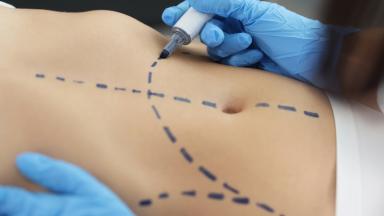
No food for six hours and clear water until two hours before. We mark the breasts standing up and take photographs.
Surgery lasts one to two hours under general anesthesia. Local anesthetic in the pocket eases pain on waking, and drains are rarely needed.
Timeline on the day
Step
Timing
Note
Admission and marking
Morning
Photographs and final check
Surgery
One to two hours
General anesthesia
Recovery room
One to two hours
Pain relief, surgical bra fitted
Ward
Overnight
Discharge next morning
2
Pain
Tightness and aching peak over the first three days, stronger with implants under the muscle, and respond to regular painkillers.
Medicines after surgery
Medicine
Purpose
Duration
Painkillers
Comfort
Five to seven days
Muscle relaxant if needed
Chest muscle spasm
A few days
Antibiotic
Prevention in selected cases
Short course
Recovery
Implants sit high and tight at first and then drop and soften into place over three months. Waiting for that settling spares worry.
Recovery after breast augmentation
Time
What happens
Activity
Days 1 to 3
Tightness, swelling
Walking, arms below shoulder height
Week 1
Wound check
Desk work, light daily tasks
Weeks 4 to 6
Pocket healed
Gym, running, underwire bra
Month 3
Implants settled
Result close to final
Month 12
Scars pale
Final review
A supportive surgical bra is worn day and night for four to six weeks. Sleeping on the back protects the pockets in the first weeks, and heavy lifting waits for six weeks.
Long-term care
Breast implants do not last a lifetime. Many stay in place for decades without problems, and others need exchange for contracture, rupture or a wish to change size.
Checking for rupture
1
Screening schedule
For silicone implants, the United States Food and Drug Administration advises an ultrasound or MRI five to six years after surgery and every two to three years after that, even without symptoms.
Pregnancy, weight change and age alter the breast around the implant, and some women later choose a lift or a change of size.
Keeping your records
Keep the implant card safe, since any surgeon who operates later needs the model and size.
For patients from abroad
Plan for six to seven days in Istanbul. The wound check on day five or six clears you for the flight home.
1
What to send
Front and side photographs, your height, weight and current bra size, a description of the look you want, any breast imaging from the past two years and a list of medicines.
Long flights raise the risk of blood clots after surgery. Walk in the aisle, drink water and wear compression stockings on the journey.
After you return home, follow-up continues by video at one, three, six and twelve months. A local doctor can check the wounds, and we send them the operative report and implant details.
One coordinator from the international patients office handles arrangements from the first message through discharge and answers the same WhatsApp number after you return. The office works in English, Arabic, French, Russian, Serbian, Romanian and Spanish and books interpreters for other languages, and it arranges the visa invitation letter, airport transfers, daily transport and accommodation near the hospital. Halal, vegetarian and diabetic meals, a prayer room on site, and a female physician on request wherever the rota allows.
Your stay in Istanbul
Day
Step
Note
Day 1
Consultation, tests, sizing
Implant range agreed
Day 2
Surgery
One night in hospital
Days 3 to 5
Rest at the hotel
Check visit on day 3
Day 6 or 7
Wound check
Cleared for travel
Cost
What a quote for breast augmentation covers
Item
Included
Priced separately
Surgery
Surgeon, anesthesia, operating room
Breast lift if needed
Implants
Two silicone implants with card
Premium implant lines if chosen
Hospital and aftercare
One night, surgical bra, medicines, video follow-up for a year
Later exchange or revision
The price depends on the implant chosen, whether a lift or fat transfer is added and the nights in hospital. We quote after reviewing your photographs, before you travel.
Compare quotes for the same implant brand, type and aftercare, and ask what the manufacturer warranty covers.
References
Spear SL, Murphy DK. Natrelle round silicone breast implants. Core Study results at 10 years. Plast Reconstr Surg. 2014;133(6):1354-1361.
Alderman A, Pusic A, Murphy DK. Prospective analysis of primary breast augmentation on body image using the BREAST-Q. Results from a nationwide study. Plast Reconstr Surg. 2016;137(6):954e-960e.
de Boer M, van Leeuwen FE, Hauptmann M, et al. Breast implants and the risk of anaplastic large-cell lymphoma in the breast. JAMA Oncol. 2018;4(3):335-341.
Guo X, Mu D, Xing W, Qu Y, Luan J. Identification of the optimal recipient layer for transplanted fat. A prospective study on breast lipoaugmentation. Aesthet Surg J. 2019;39(10):1071-1081.
Editor's note
Written by the Biruni Hospital medical editorial team. Reviewed by Assistant Professor Erman AK, Plastic, Reconstructive and Aesthetic Surgery.