The Urology Center at Biruni Hospital in Istanbul treats prostate disease, kidney stones and men's health, with a free written file review before you travel.
Let us call you
Send us your contact information and we will call you as soon as possible.
About This Center
A biopsy report that says prostate cancer, an ultrasound that says the prostate is enlarged, a CT that shows a kidney stone, or a problem you have not yet said out loud to anyone: one of these usually brings a man to this page. The Urology Center at Biruni Hospital in Istanbul treats prostate disease, urinary stones, bladder and kidney tumors and the male reproductive system, and what follows explains how each of those decisions is actually made, what recovery honestly involves, and how a treatment trip is priced and planned before you commit to anything.
Free consultation
A urologist answers in writing before you book a flight
The remote file review is free, confidential and does not commit you to traveling. Send your PSA history with any biopsy or MRI reports for a prostate question, the CT report for a stone, or hormone results and a semen analysis for erectile or fertility problems, and the reply is a written opinion stating the diagnosis as we read it, your options with their trade-offs, the recommended approach, the stay length and a quote.
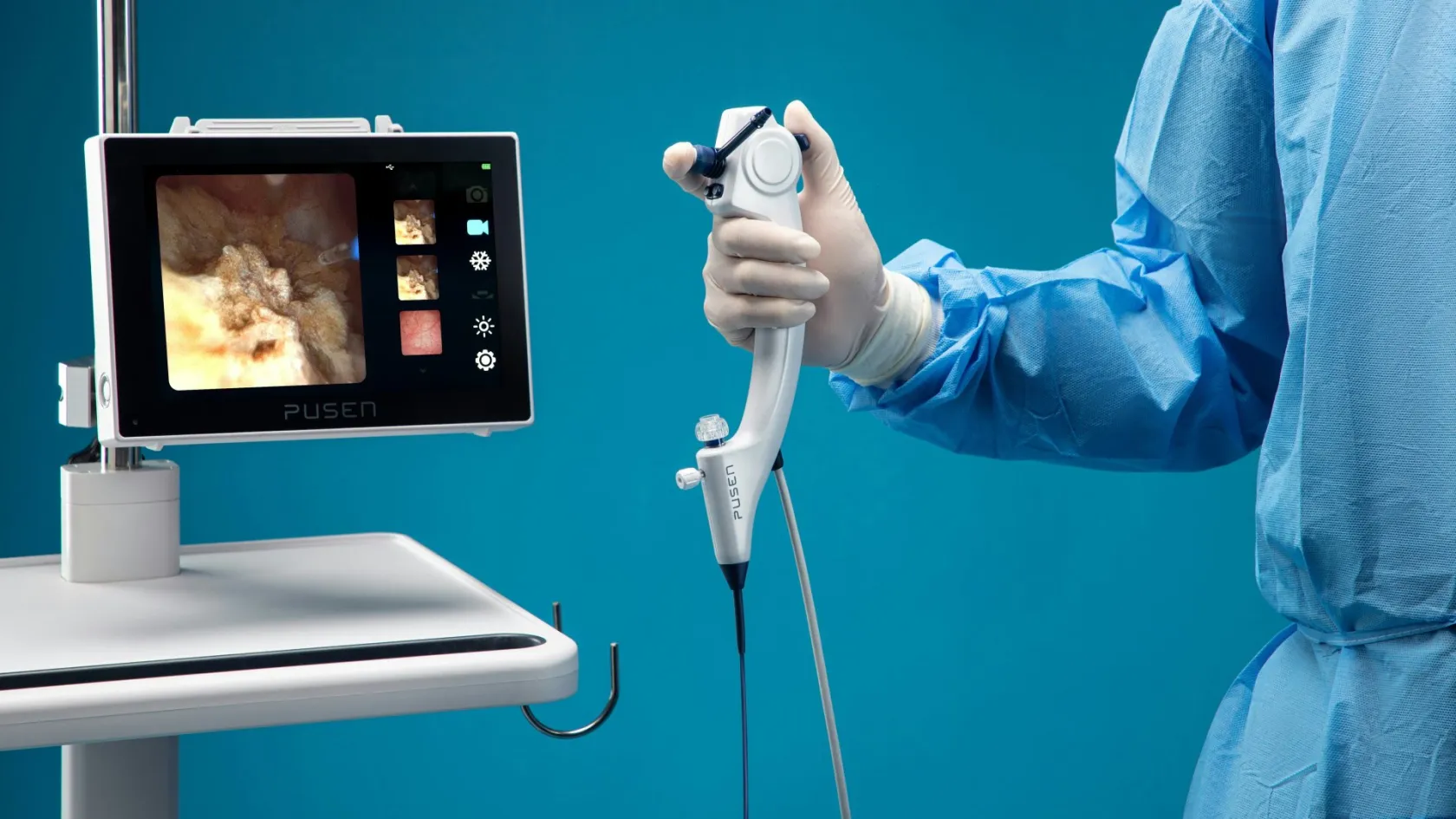
Four problem areas account for nearly all the men who travel here. The prostate, both benign enlargement and cancer. Stones anywhere in the kidney or the ureter, the tube that drains it. Tumors of the bladder and kidney, where bladder tumors are removed through the urethra in a procedure called TURBT and kidney tumors by removing part of the kidney or, when the tumor is large or unfavorably placed, the whole organ. And andrology, the branch that covers erectile dysfunction through to penile implant surgery, together with male infertility operations such as microsurgical varicocelectomy and micro-TESE sperm retrieval.
Urology is a named department inside a university hospital of more than 600 beds, and the departments a urological case leans on sit in the same building: pathology to read every biopsy and surgical specimen, radiology for the MRI and CT decisions rest on, the oncology teams for cancer cases, and an intensive care unit behind every major operation. Needle-based alternatives to two of the operations described on this page, prostate artery embolization for benign enlargement and varicocele embolization, exist at the hospital's Interventional Radiology Center, and which route fits is decided per patient rather than per department.
Two edges are worth naming. Childhood urology, including hypospadias and the undescended testis, belongs to the Pediatric Surgery Center rather than here. Female urinary incontinence and pelvic floor problems are treated jointly with the gynecology department.
Localized prostate cancer and the fifteen-year evidence
Fifteen years is long enough to know what a treatment choice was worth. The ProtecT trial, published in the New England Journal of Medicine in 2023, randomized men with localized prostate cancer to active monitoring, surgery or radiotherapy and followed them for fifteen years. Death from prostate cancer was uncommon, around 3 percent, and the rate was similar whichever of the three paths a man had been assigned. What differed was progression: under monitoring the disease grew and spread more often than after immediate treatment.
Read plainly, that result reframes the whole conversation. For low-risk and much intermediate-risk localized disease, the decision is rarely a race against death within the horizon most men are planning for. It is a weighing of trade-offs: the urinary and sexual side effects of treating now against the higher chance of progression if you monitor instead. Monitoring in this sense is a structured program of PSA tests, MRI scans and repeat biopsies on a schedule, not watchful neglect, and it does not suit high-risk disease. Surgery and radiotherapy control the cancer to a comparable degree; their side-effect profiles differ, with urinary leakage and erectile function the main issues after surgery, and bowel and urinary irritation the main issues after radiotherapy.
When surgery is the right answer, radical prostatectomy today is performed by the robotic or laparoscopic route in most experienced centers, working through small incisions rather than one large one. The approach used for your case is stated in the written opinion, so you know what is planned before you travel, not on the morning of the operation.
What recovery after prostatectomy honestly looks like
Two facts belong before the flight is booked, not after the surgery.
Urinary control
A catheter drains the bladder for one to two weeks after the operation. Once it is out, most men leak at first and regain control over weeks to months with pelvic floor exercises. A minority keep some degree of long-term leakage, and honest counseling says so in advance.
Erections
Erectile recovery is slower than urinary recovery, often taking many months, and it depends on whether the nerves beside the prostate could be spared and on how good function was before surgery. Some men recover fully, some partially with tablets, some not at all.
Advanced disease follows a different path. Prostate cancer that has spread and stopped responding to hormonal control can qualify for Lutetium-177 PSMA therapy at the hospital's Nuclear Medicine and Theranostics Center, and systemic treatment for metastatic disease is directed through the Oncology Center with urology contributing to each decision.
The enlarged prostate, from tablets to laser surgery
Benign prostatic enlargement is not cancer, and having it does not mean cancer is coming; the two are checked separately and can simply coexist. What enlargement does is squeeze the urethra, which is why men wake at night, wait for the stream to start, and never feel quite empty.
Treatment climbs a ladder. Tablets come first, relaxing the prostate or slowly shrinking it, and many men stay on that rung for years. Surgery enters when symptoms persist despite medication, when the bladder stops emptying, or when the obstruction starts causing infections, bladder stones or pressure on the kidneys. The long-standing standard operation is transurethral resection, TURP, which shaves the obstructing tissue from inside. The newer laser alternative, holmium laser enucleation or HoLEP, peels the whole obstructing lobe out along its natural plane.
A meta-analysis of six randomized trials in the Journal of Endourology compared the two directly. HoLEP relieved symptoms at least as well as TURP, with flow and symptom scores slightly better at twelve months, and it produced less bleeding, a shorter catheter time and a shorter hospital stay, at the cost of a longer operation. Unlike TURP, which becomes impractical beyond a certain gland size, enucleation remains suitable for very large prostates, which is exactly the situation many men who have postponed treatment for years arrive with.
The travel arithmetic is friendlier than most men expect. One to two nights in hospital is typical, the catheter usually comes out before you fly, and about a week in Istanbul covers the operation, the catheter removal and a check of how you void without it.
Kidney stones, the two operations and the stent
One warning before any planning: a blocked kidney with fever is an emergency treated wherever you happen to be, not a reason to book a flight. Everything else about stone surgery travels well as a scheduled trip.
Two operations cover most stones that need surgery. Retrograde intrarenal surgery, RIRS, reaches the stone through the natural urinary passages with a flexible scope and breaks it with a laser, no incision anywhere. Percutaneous nephrolithotomy, PCNL, reaches large stones through a small puncture in the back and clears them more completely in a single session. A 2025 meta-analysis in International Urology and Nephrology covering 62 studies and 7,021 patients found PCNL achieved a higher stone-free rate, while RIRS carried fewer complications, fewer blood transfusions and a shorter hospital stay. Neither is simply better. The stone's size, position and your anatomy decide, which is why the CT report matters more to a surgeon than the story of the pain.
How the two stone operations compare
Question
RIRS
PCNL
How it reaches the stone
Through the urinary tract, no incision
Small puncture through the back
Best suited to
Small to medium stones
Large or multiple stones, cleared in one session
Main drawback
Very large stones may need more than one session
More bleeding risk and a longer stay
Typical hospital nights
One
One to three
The stent almost no page mentions
After stone surgery a thin plastic tube called a ureteral stent often stays inside, keeping the passage open while it heals. Some men barely notice it. Others find it genuinely uncomfortable, with urgency, flank twinges and blood-tinged urine until it comes out, typically within a few weeks, in a short procedure. For a patient flying home, that removal has to be planned before the operation: either the trip is long enough to include it, or the handover to a named urologist in your country is documented in writing. A stent forgotten inside is a serious problem, so this is agreed as part of consenting to the surgery, not left to sort itself out.
Recurrence deserves the same honesty. Roughly half of stone formers make another stone within the following years, so the metabolic workup, the stone analysis and the drinking and dietary advice are part of the treatment itself rather than an optional extra, and they are what your urologist at home builds on.
Erectile dysfunction, penile implants and male fertility surgery
Erectile dysfunction is a medical condition with a defined workup, and that workup comes before any talk of devices. Hormone levels, blood sugar, blood pressure and the vessels are assessed first, partly because ED can be an early sign of vascular disease, so the same assessment also checks the heart's risk factors. Treatment then follows its own ladder: tablets, then injection therapy if tablets fail, each reversible and each tried properly before anything permanent is discussed.
A penile implant sits at the top of that ladder for a reason. It works reliably, and it is irreversible. Placing the device removes the natural erectile tissue, so there is no returning to the starting point if you change your mind, which makes the implant a last-line treatment chosen only after tablets and injections have genuinely been tried. A page that sells it as a first stop is not obtaining anyone's informed consent. Infection is its defining risk: uncommon, but when it happens the device usually has to come out, and that is why surgical technique and antibiotic protocol carry real weight in this operation.
Male infertility surgery is the other half of andrology here. Microsurgical varicocelectomy corrects the enlarged veins around the testis that can depress sperm quality, working under an operating microscope through a small groin incision. Micro-TESE retrieves sperm directly from testicular tissue in men whose semen contains none, and sperm found this way feeds directly into the fertility pathway at the hospital's IVF Center, where the couple's treatment continues.
On discretion, one plain sentence: the file review is confidential and is conducted with you directly, so nothing about your case passes through anyone you have not chosen to involve.
The file review, the trip and the cost
What to send depends on which of this page's paths you are on. Prostate cancer: the PSA history and the biopsy or MRI reports. Enlargement: the ultrasound with prostate volume and, if one was recorded, your symptom score. Stones: the CT report above all, since the stone's size and position choose the operation. Erectile dysfunction or infertility: hormone results and a semen analysis. Every file should carry a medication list with blood thinners named, because they change surgical planning. The reply states the diagnosis as the team reads it, the options with their trade-offs, the recommended approach, the number of nights in hospital and in Istanbul, and an itemized quote.
Interpreter support, airport transfer and help arranging accommodation are organized by the hospital's international patient team, which matters most on the days a catheter or stent is coming out and you would rather not negotiate a foreign city alone. Once you are back home, follow-up continues remotely. The discharge summary and operation record travel with you, and a control PSA value, an ultrasound or a stone analysis result can be sent over WhatsApp for a written reply from the same team.
What urology surgery in Turkey costs
Aggregator listings put robotic radical prostatectomy in Turkey at roughly 12,000 to 20,000 US dollars, penile implants at 8,000 to 16,000 dollars depending on device type, and stone procedures at 3,000 to 7,000 dollars. Treat these as indicative spans compiled from package sites, nothing more. What moves an individual price is concrete: the operation and its approach, the device where one is implanted, the nights in hospital, whether the stent removal happens here or at home, and whether one stone or several in both kidneys need clearing. Biruni Hospital states its own figure only in the written itemized quote that follows the free review, because a number given before the file is read would be a guess.
Questions men ask before traveling for urology treatment
Do I need surgery for low-risk prostate cancer?
Not necessarily. In the ProtecT trial, which followed men with localized prostate cancer for fifteen years, death from prostate cancer was uncommon at around 3 percent whether men were monitored, operated on or irradiated, though the disease progressed and spread more often under monitoring. Active monitoring is a structured program of PSA tests, MRI scans and repeat biopsies rather than doing nothing, and it does not suit every risk profile. For low-risk disease it is a legitimate first option, and the written opinion states which options apply to your case.
Will I be continent after prostate removal?
Most men regain urinary control over weeks to months after radical prostatectomy, and a minority are left with a degree of long-term leakage. The catheter placed at surgery stays for one to two weeks, and pads are normal for a period after it comes out. Pelvic floor exercises speed the recovery. Any center that promises immediate perfect continence is describing the best case, not the usual one.
How long does kidney stone surgery take, and when does the stent come out?
The operation itself usually takes under two hours, with one night in hospital for ureteroscopic surgery and one to three nights for percutaneous surgery. A ureteral stent is often left in place afterward and is removed within a few weeks in a short procedure. For an international patient, the removal is either scheduled before you fly home or handed over in writing to a urologist in your country, and that plan is agreed before the operation, not after it.
Is a penile implant reversible?
No. Placing a penile implant removes the natural erectile tissue inside the penis, so the implant cannot later be taken out in the expectation that natural erections will return. It is a reliable and well-established treatment, and precisely because it is final it belongs at the end of the treatment ladder, after tablets and injections have genuinely been tried.
When can I fly home after urology surgery?
For most endoscopic prostate and stone procedures you can fly within about a week, once the catheter is out and you are passing urine normally. After radical prostatectomy or kidney surgery, plan for roughly ten days to two weeks in Istanbul before a long flight. The written opinion you receive before traveling states the expected nights in hospital and in the city for your specific operation.
What does urology treatment in Turkey cost?
Aggregator sites list robotic radical prostatectomy in Turkey at roughly 12,000 to 20,000 US dollars, penile implants at 8,000 to 16,000 dollars depending on device type, and kidney stone procedures at 3,000 to 7,000 dollars. Those are indicative package listings, not quotes. Your price follows the operation, the device where one is used, the hospital nights and the stent or catheter follow-up plan, and Biruni Hospital states its own figure in a written itemized quote after the free file review.
What should I send for the free file review?
For prostate cancer, send your PSA history and any biopsy or MRI reports. For an enlarged prostate, add the ultrasound with the prostate volume and, if recorded, your symptom score. For stones, the CT report matters most, because the stone's size and position decide the method. For erectile dysfunction or infertility, send hormone results and a semen analysis. Everyone should include a medication list with blood thinners named. The reply is a written opinion with the diagnosis as we read it, the options with their trade-offs, the recommended approach, the stay length and a quote.
References
Hamdy FC, Donovan JL, et al. Fifteen-Year Outcomes after Monitoring, Surgery, or Radiotherapy for Localized Prostate Cancer. New England Journal of Medicine. 2023;388(17):1547-1558.
Yin L, Teng J, Huang CJ, Zhang X, Xu D. Holmium laser enucleation of the prostate versus transurethral resection of the prostate: a systematic review and meta-analysis of randomized controlled trials. Journal of Endourology. 2013;27(5):604-611.
Naeem Z, Tabasum P, et al. Percutaneous nephrolithotomy versus retrograde intrarenal surgery: a systematic review and meta-analysis of stone-free rates and complication profiles. International Urology and Nephrology. 2025;58(2):407-431.
Editor's note
Written by the Biruni Hospital medical editorial team. Reviewed by Assistant Professor Yüksel SARICALI, Otorhinolaryngology.