The Spine Surgery Center at Biruni Hospital Istanbul explains when back surgery genuinely helps, when it does not, endoscopic options, recovery and costs.
Let us call you
Send us your contact information and we will call you as soon as possible.
About This Center
Someone has probably already told you that your back needs an operation. Spine surgery carries a reputation, not entirely undeserved, for being offered too quickly, and the honest starting point is that most back and neck pain settles without any operation at all. This page describes what the Spine Surgery Center at Biruni Hospital in Istanbul treats, what randomized trials actually say about when spine surgery helps and when it does not, and how to get an answer on your own MRI, in writing, before you plan any travel.
Free consultation
A spine surgeon can tell you from your MRI whether you need an operation at all
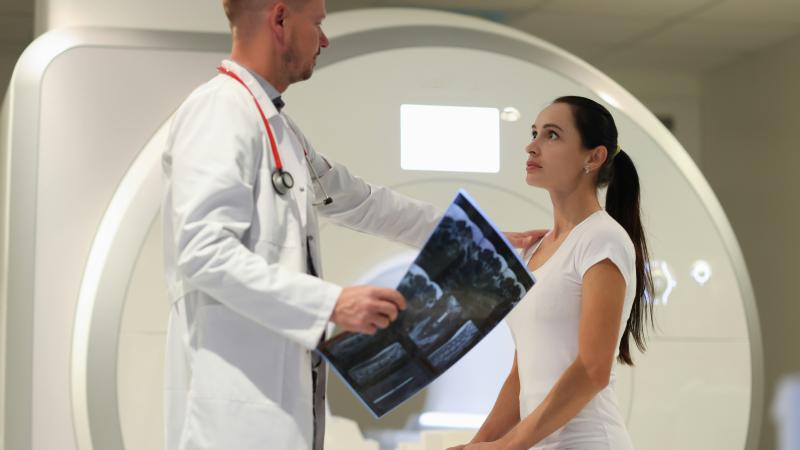
The remote review of your file costs nothing and commits you to nothing. Send the MRI images themselves rather than only the written report, standing X-rays if the question is a curvature, how long the symptoms have lasted and which treatments have already been tried, and the reply is a written opinion stating whether surgery is indicated in your case, and if so which operation.
What the Spine Surgery Center treats, and who operates
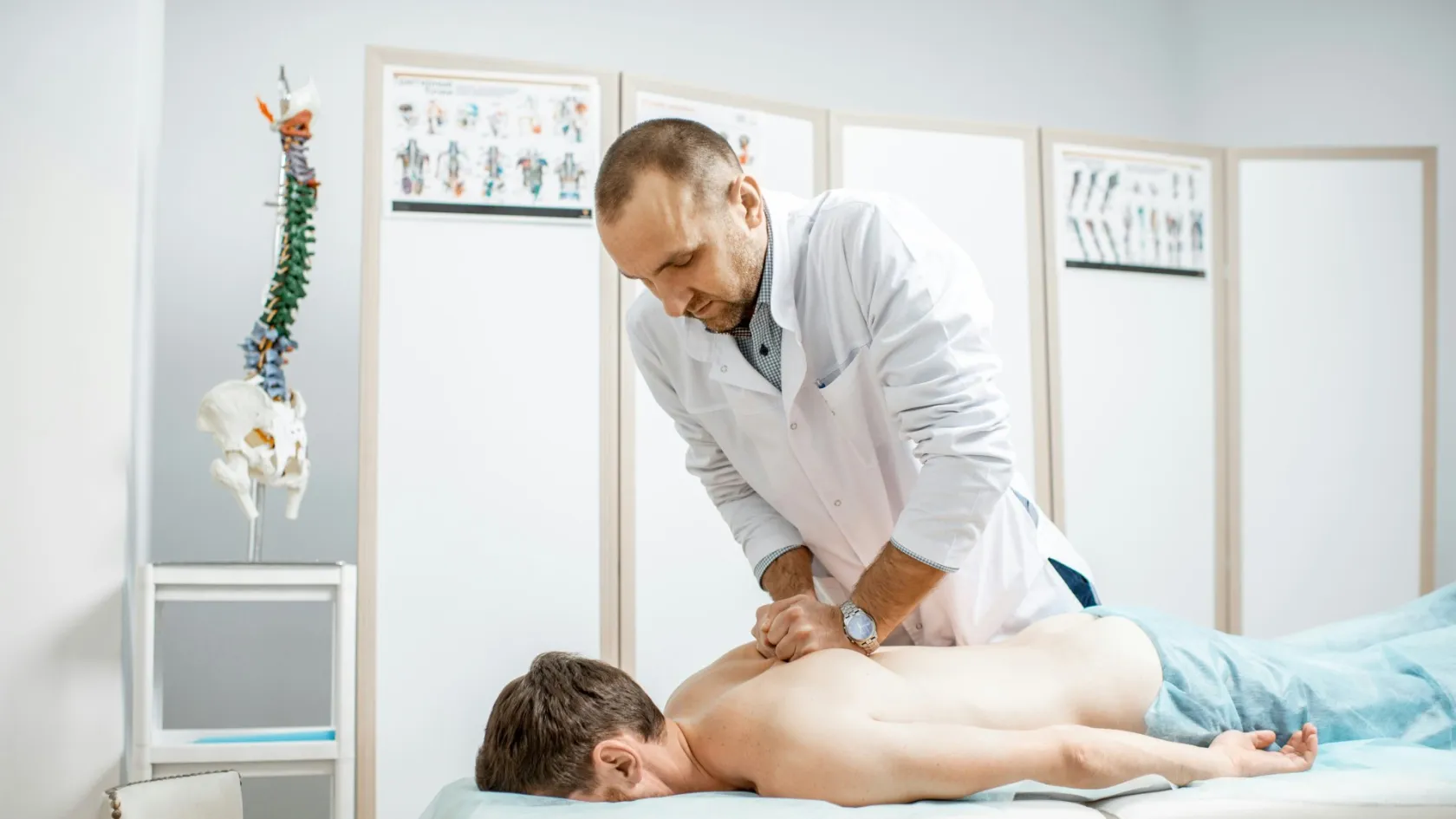
Spine surgery at Biruni Hospital is delivered by spine surgeons drawn from the Neurosurgery and the Orthopedics and Traumatology departments, working as one team. The spine sits exactly on the border between those two specialties, so university hospitals organize spinal work this way as a matter of course: the surgeon proposed for your case is chosen by the problem in your scan, and complex cases are discussed jointly before anyone talks to you about an operation.
The conditions treated cover the degenerative spine and beyond: lumbar and cervical disc herniation, spinal stenosis, spondylolisthesis, which is one vertebra slipping forward over the one below, degenerative disc disease, and spinal deformity in both adolescents and adults, meaning scoliosis and kyphosis. Endoscopic lumbar disc herniation surgery appears by name on the hospital's published treatment list. Vertebral fractures are treated as well, including the osteoporotic compression fractures that follow a minor fall in older patients.
Spinal infections, which need weeks of targeted antibiotics and sometimes surgical cleaning, are managed with the infectious diseases physicians. Spinal cord tumors are operated here too, planned jointly with neurosurgery and oncology. Behind all of this stands a university hospital of more than 600 beds with intensive care on site, which is what makes the longer operations, deformity correction above all, safe to undertake.
When spine surgery is genuinely needed, and when it is not
Most episodes of back pain never need an operation, and a center that operates on spines owes you that sentence before any other. The evidence behind it is not vague reassurance. For the three conditions that bring most patients to this page, randomized trials in the New England Journal of Medicine have measured what surgery adds, and the answers differ condition by condition.
Sciatica from a lumbar disc herniation is the clearest example of a genuine choice. In a 2007 randomized trial, Peul and colleagues assigned patients with severe sciatica to early surgery or to prolonged conservative treatment, and early surgery relieved the leg pain faster. At one year, though, the two groups had arrived at much the same place. Read both halves honestly and the operation buys speed of relief, not a different destination for most patients, which means the decision belongs to you, weighed against your pain, your work and your tolerance for waiting.
Three warning signs change that calculus completely. Weakness in a leg or foot that is getting worse. Numbness in the area that would sit on a saddle, or new trouble controlling bladder or bowel. Any of these can mean severe nerve compression, the window for protecting nerve function is short, and the right response is an emergency assessment where you live now, not a travel plan.
Lumbar spinal stenosis behaves differently in the trials. In the SPORT study, published in 2008, surgery for symptomatic lumbar spinal stenosis produced greater improvement in pain and function than nonsurgical care. Among the degenerative spine conditions, this is the one where surgery holds the clearer evidence edge, and a patient whose walking distance has shrunk to a few hundred meters deserves to hear that as plainly as the herniation patient deserves the opposite caution.
Scoliosis has its own honest number. The BrAIST trial, published in 2013, showed that bracing significantly reduced the progression of adolescent idiopathic scoliosis to the threshold where surgery is considered. Not every curve needs an operation. Bracing genuinely works for many growing adolescents, and correction surgery is reserved for curves that progress despite it or arrive too large for it.
What randomized evidence says, condition by condition
Condition
What the trials found
What that means for you
Sciatica from disc herniation
Early surgery relieved leg pain faster, and outcomes at one year matched prolonged conservative care (Peul, NEJM 2007)
A real choice about speed of relief, and yours to make
Symptomatic lumbar spinal stenosis
Surgery produced greater improvement in pain and function than nonsurgical care (SPORT, NEJM 2008)
The condition where surgery holds the clearer evidence edge
Adolescent idiopathic scoliosis
Bracing significantly reduced progression to the surgical threshold (BrAIST, NEJM 2013)
Many growing curves are managed without an operation
Low back pain without instability
No trial shows a reliable advantage for fusion in uncomplicated cases, and the operation remains debated in the field
Get a second opinion before agreeing to fusion anywhere
A spine center you can trust is one that can show you, with trials, when it would tell you not to have surgery.
The free file review applies that standard to your scan, and no surgery, structured conservative care is one of its normal written outcomes. Non-surgical treatment, and the rehabilitation that follows an operation for those who do have one, run as a program of the hospital's Physical Medicine and Rehabilitation Center. When an image-guided injection is the sensible next step instead of either, that part of the plan is carried out with the hospital's Pain Clinic.
The operations, plainly described
An operation you cannot picture is an operation you cannot properly consent to. Here is what each one does, in plain terms, together with the honest caveat that belongs to it.
Endoscopic discectomy and microdiscectomy
Endoscopic lumbar disc surgery, a named offering at Biruni Hospital, removes the herniated fragment through a thin tube carrying a camera and instruments, under an incision on the scale of a centimeter. Less muscle is disturbed on the way in, so patients are commonly on their feet sooner and the hospital stay is shorter. Microdiscectomy does the same job through a small incision under an operating microscope and remains the standard against which everything else is measured.
One caveat carries more weight than the technology. The approach has to fit the anatomy: the position, size and shape of your herniation decide whether an endoscopic route is the right one, and not every herniation is an endoscopic case. Choosing the approach from the MRI rather than from the brochure is the mark of a serious center, which is why the written opinion you receive names the technique proposed for your specific scan and says why.
Decompression for spinal stenosis
Spinal stenosis is a narrowing of the canal that carries the nerves, and decompression surgery reopens that space by removing the bone and thickened ligament pressing on them. The symptom it treats best is the classic one: legs that ache, cramp or go numb after a short walk and recover when you sit. Decompression can be done alone at one or several levels, and whether a fusion is added depends on how stable the spine is once the pressure is relieved.
Fusion, and the debate it deserves
A fusion joins two or more vertebrae with screws, rods and bone graft so they heal into one piece, trading the motion of that segment for stability. Fusion earns its place when a vertebra has slipped, when the spine is unstable, and when a deformity needs to be held in its corrected position. For those problems it is standard, well-supported surgery.
Fusion for ordinary low back pain without instability is a different matter, and one of the most debated operations in the whole field. A second opinion before agreeing to one, anywhere in the world, is money well spent. This center gives that opinion from the MRI, in writing, without your traveling anywhere, and is prepared to put its name to the answer that no fusion is indicated.
Deformity surgery for scoliosis and kyphosis
Scoliosis and kyphosis correction straightens the curved segment with screws placed in the vertebrae and connects them with contoured rods, fixing the spine in the corrected position while the bone fuses. Planning starts from standing whole-spine X-rays, because a spine behaves differently under gravity than lying in an MRI tunnel. Adolescent operations mostly follow curves that kept progressing despite bracing; adult deformity surgery weighs pain, balance and nerve compression, and the operation is tailored accordingly. This is the largest undertaking in spine surgery, scheduled with the intensive care unit behind it as routine backup.
Cement augmentation for vertebral fractures
Osteoporotic compression fractures collapse the front of a vertebra and can leave pain that resists weeks of brace wear and medication. Cement augmentation treats the persistent cases: through a needle placed in the fractured vertebra under imaging guidance, bone cement is injected to stabilize the broken body from within. Most such fractures heal without any procedure. The file review says which group yours falls into, and treating the underlying osteoporosis is part of the plan either way, because the fracture is a symptom of the bone, not only an injury.
The trip and the recovery, told precisely
Numbers beat reassurance when you are booking flights, so here are the typical patterns, stated as patterns and fixed for your case in writing before you travel. A microdiscectomy or endoscopic discectomy means a few nights in hospital and flying home at roughly one to two weeks once the surgeon clears the wound. A fusion means a longer stay, a later flight and a no-lifting period that continues well after you land. Scoliosis correction is the biggest undertaking of the three: hospital time in the territory of one to two weeks, and several weeks in Istanbul before a flight is sensible.
The flight itself rewards planning. Sitting is the position a freshly operated lumbar spine tolerates worst, so book an aisle seat, stand and walk the cabin at regular intervals, and take the surgeon's advice on preventing blood clots seriously, since long immobile sitting in the first weeks is the main avoidable risk. Whether you wear a brace or a support garment, and for how long, differs by operation and surgeon, so that question is answered in your written plan rather than by a general rule on this page.
Recovery honesty matters as much as trip honesty. Leg pain from a decompressed nerve frequently eases fast, within days. Numbness is slower, recovering over months, and in some patients it never fully leaves, which you should hear before an operation rather than after it. Office work is a matter of a few weeks after a discectomy, physical work waits considerably longer, and after a fusion the two dates sit further apart still; the written plan states both for your actual job. Interpreter support, airport transfer and help arranging accommodation are organized by the international patient team. Once you are back home, follow-up runs remotely: scans and wound photos go over the same channel you first wrote to, and the reply states which checks your local doctor should take over.
What to send for the free file review
A useful opinion needs the right material, and in spine surgery the single most common gap is a file that contains the radiologist's report but not the images. Surgeons plan from the pictures. Send the MRI itself, as files or a download link, and add the following where it applies to you:
standing X-rays of the whole spine if the question is scoliosis, kyphosis or another deformity
your symptoms in your own words, how long they have lasted, and what makes them worse
what has genuinely been tried: a physiotherapy course, injections, medication, and for how long
any weakness or numbness, and exactly where in the leg, foot, arm or hand you feel it
the operation notes from any previous spine surgery, if this would be a revision
The written reply states whether surgery is indicated at all, and only then the rest: the operation and approach proposed, the expected hospital stay and time in Istanbul, and the itemized quote. Patients regularly receive the first answer without the rest, because no surgery is a complete and legitimate result of the review.
What spine surgery costs in Turkey, and what moves the price
Published medical travel price guides list microdiscectomy in Turkey from about 4,800 dollars, single-level lumbar fusion at roughly 10,000 to 15,000 dollars, and scoliosis correction from 18,000 to 27,000 dollars on one guide and from about 46,000 dollars on another, set against roughly 126,000 dollars quoted for the same correction in the United States. For spinal fusion the comparison the guides draw is 8,000 to 18,000 dollars in Turkey against 80,000 to 150,000 in the United States. Treat every one of those numbers as indicative rather than bookable, because the guides differ in what a package includes.
Five factors move the real figure: how many levels are operated, the implants and instrumentation the plan requires, the approach chosen, the nights in hospital, and, in deformity surgery, the magnitude of the curve. Two patients with the same diagnosis can carry honestly different quotes for those reasons, which is exactly what an itemized quote exists to show.
Biruni Hospital does not publish a list price for spine surgery. The file review ends in a written, itemized quote for your specific operation, naming what it covers, so the figure you compare is yours and not an average.
Frequently asked questions about spine surgery in Istanbul
Do I really need surgery for a herniated disc?
Most herniated discs do not need surgery. In a randomized trial published in the New England Journal of Medicine in 2007, patients with sciatica from a lumbar disc herniation who had early surgery lost their leg pain faster, yet at one year their outcomes were similar to those of patients treated with prolonged conservative care. Surgery mainly buys speed of relief, not a different destination, so once both halves of that evidence are on the table the choice is yours. Progressive weakness, numbness in the saddle area or new bladder or bowel trouble change the picture completely: those signs need emergency assessment where you are now, not a treatment trip.
Is endoscopic spine surgery better than open surgery?
Endoscopic discectomy removes the herniated fragment through a tube about a centimeter wide, and for the right herniation that means less muscle damage, earlier walking and a shorter hospital stay. Neither technique is simply better for everyone, because the approach has to fit the anatomy: the position and shape of your herniation decide whether the endoscopic route, a microdiscectomy or an open operation is the sound choice. A serious center picks the approach from the MRI, not from the brochure, which is why the written opinion from Biruni Hospital names the technique proposed for your specific scan.
How long after spine surgery can I fly home?
Flying at roughly one to two weeks after a microdiscectomy or endoscopic discectomy is a typical clearance, a fusion means waiting longer, and after scoliosis correction most patients remain in Istanbul for several weeks before the surgeon agrees to a flight. These are patterns, not promises: the written plan you receive before traveling states the expected hospital stay and the earliest realistic flight for your operation. For the flight itself, book an aisle seat, walk the cabin at regular intervals and follow the surgeon's advice on clot prevention, because long immobile sitting in the first weeks is the main avoidable risk.
Which symptoms mean I should not wait for a travel plan?
Weakness in a leg or foot that is getting worse, numbness in the area that would sit on a saddle, and new difficulty controlling bladder or bowel are the red flags of spine disease. Any of them can signal severe nerve compression, and the window for protecting nerve function is measured in hours to days. Go to an emergency department where you live instead of arranging surgery abroad; planning a trip to Istanbul starts only after a doctor has ruled out an emergency.
Should I get a second opinion before agreeing to spinal fusion?
Yes, and preferably a written one. Fusion has a clear place when a vertebra has slipped, when the spine is unstable or when a deformity needs correction, while fusion for ordinary low back pain without instability is one of the most debated operations in spine surgery. A second opinion from surgeons who did not propose the operation is money well spent before agreeing to a fusion anywhere in the world. Biruni Hospital gives that opinion from your MRI, in writing and without travel, and telling a patient that no fusion is indicated is one of its normal outcomes.
What does spine surgery cost in Turkey?
Medical travel price guides list microdiscectomy in Turkey from about 4,800 dollars, single-level lumbar fusion at roughly 10,000 to 15,000 dollars, and scoliosis correction from 18,000 to 27,000 dollars on one guide and from about 46,000 dollars on another, against far higher figures quoted for the United States. The number of levels operated, the implants used, the approach and the nights in hospital move any quote up or down. Biruni Hospital does not publish a list price; the free file review ends in a written itemized quote for your specific operation, naming what it covers.
What should I send for the free file review?
Send the MRI images themselves, not only the radiologist's report, because the surgeons plan from the pictures. Add standing X-rays if the question is scoliosis or another deformity, your symptoms with how long they have lasted and what worsens them, the treatments already tried including any physiotherapy course or injections, any weakness or numbness and exactly where you feel it, and the operation notes if you have had spine surgery before. The written reply states whether surgery is indicated at all, the operation and approach proposed, the expected stay and the itemized cost.
References
Peul WC, van Houwelingen HC, van den Hout WB, et al. Surgery versus prolonged conservative treatment for sciatica. The New England Journal of Medicine. 2007;356(22):2245-2256.
Weinstein JN, Tosteson TD, Lurie JD, et al. Surgical versus nonsurgical therapy for lumbar spinal stenosis. The New England Journal of Medicine. 2008;358(8):794-810.
Weinstein SL, Dolan LA, Wright JG, Dobbs MB. Effects of bracing in adolescents with idiopathic scoliosis. The New England Journal of Medicine. 2013;369(16):1512-1521.
Editor's note
Written by the Biruni Hospital medical editorial team. Reviewed by Assistant Professor Pınar ACAR, Anesthesia and Reanimation.