Interventional Radiology & Interventional Oncology Center
The Interventional Radiology Center at Biruni Hospital Istanbul covers embolization for fibroids, prostate and liver tumors, honest trial evidence and costs.
Let us call you
Send us your contact information and we will call you as soon as possible.
About This Center
Somewhere in your file there is probably a scan and an offer of an operation: a myomectomy or hysterectomy for fibroids, a prostate resection for urinary trouble, or a plan for a liver tumor that cannot simply be cut out. Interventional radiology treats many of these conditions through a puncture a few millimeters wide, guided by imaging instead of an open incision. This page describes what the Interventional Radiology Center at Biruni Hospital in Istanbul treats, what randomized trials honestly found when embolization was tested against surgery, and how a treatment trip to Istanbul runs in practice.
Free consultation
An interventional radiologist can tell you from your existing scans whether a pinhole treatment fits your case
The remote file review is free and does not commit you to anything. Send your MRI or CT reports, a short description of your symptoms, and your medication list with any blood thinners named, and a written opinion comes back on whether embolization or ablation is realistic for you and what it would involve.
What interventional radiology is, and what this center treats
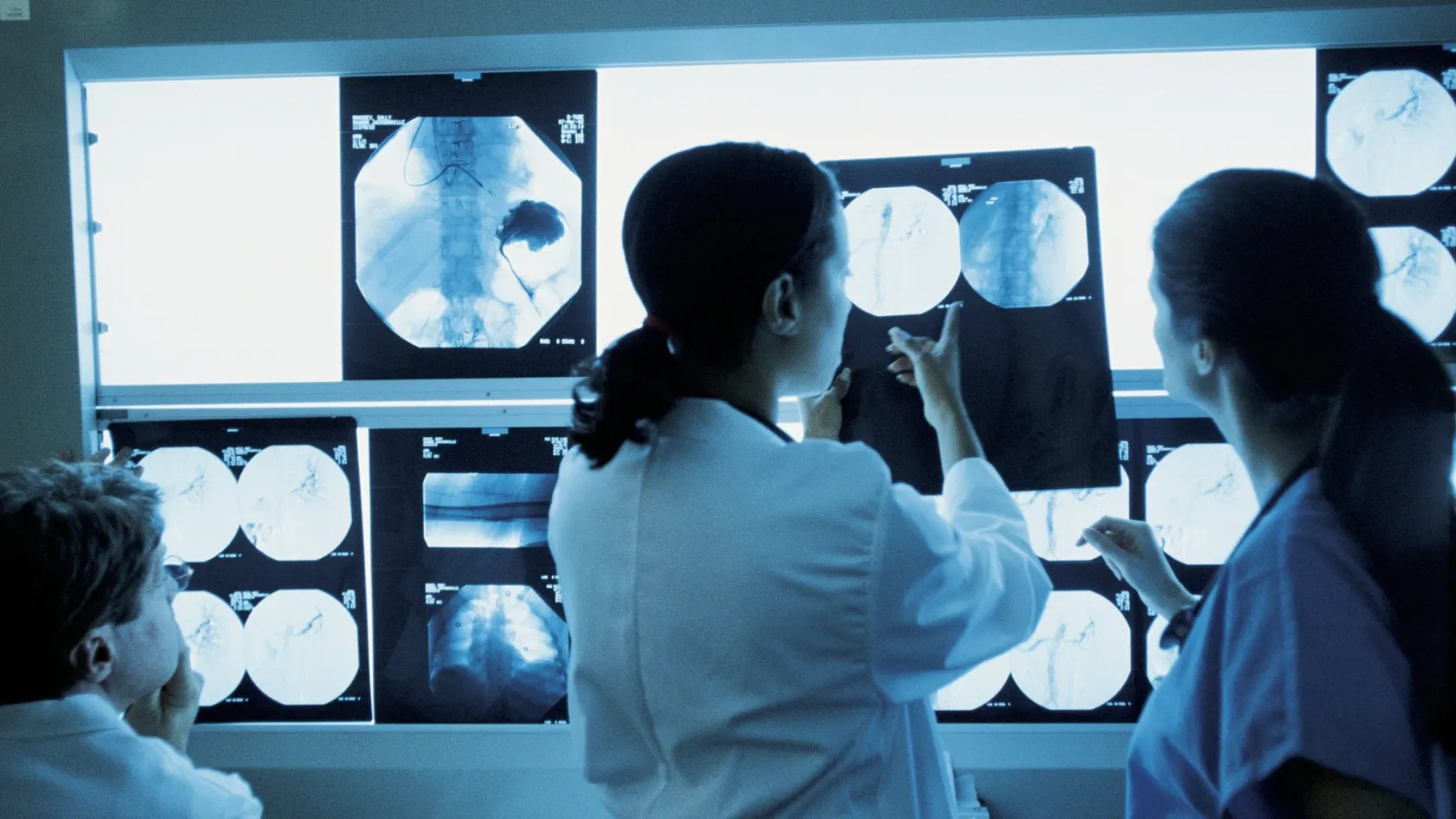
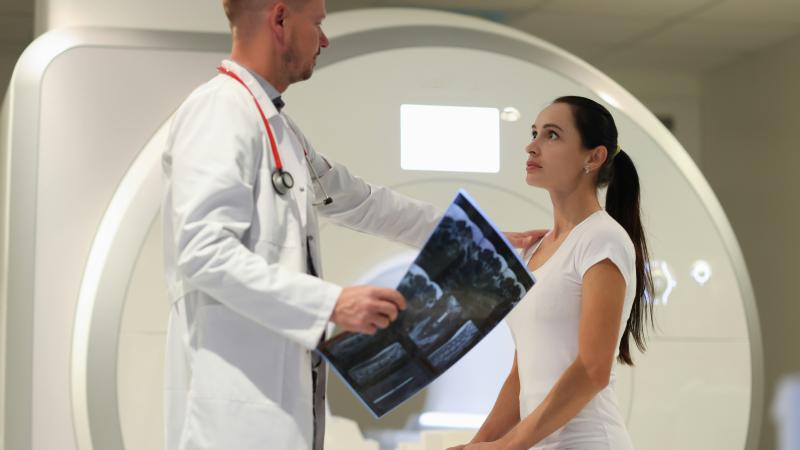
Interventional radiology treats disease from inside the body's vessels and organs, working through a needle puncture in the skin while CT, MRI, ultrasound or X-ray imaging shows the physician exactly where the instruments are. No open incision is made. For an embolization, a thin tube called a catheter enters through the groin or the wrist, travels along the arteries to the target, and releases tiny particles that close the vessels feeding a fibroid, an enlarged prostate or a tumor. Starved of blood, the tissue shrinks.
At Biruni Hospital, the Interventional Radiology Center is built around the Interventional Radiology department and the imaging that guides it, inside a university hospital of more than 600 beds, and that setting matters because almost nothing in this specialty is decided alone. Gynecology and obstetrics joins every fibroid decision, urology every prostate and varicocele case, the oncology teams every tumor treatment, and gastroenterology and general surgery the biliary and abdominal work. Anesthesiology provides sedation when a procedure needs it. Intensive care is on site.
Two facts about the guidance itself belong on this page instead of in small print. Procedures steered by X-ray use ionizing radiation, and the dose is kept as low as the procedure allows, with short imaging runs and tight beam collimation. Contrast dye, which makes vessels visible, passes through the kidneys, so kidney function is checked with a blood test before contrast is given and the plan is adjusted when the result calls for caution.
Uterine fibroid embolization for women
Uterine fibroid embolization blocks the arteries that keep fibroids alive, and the fibroids shrink over the following months while the uterus stays in place. Heavy bleeding and pressure symptoms ease as the shrinkage progresses. One caveat shapes the whole decision and is stated here plainly: a woman who plans a future pregnancy should discuss myomectomy and embolization with both a gynecologist and an interventional radiologist before choosing, because the two paths differ in what they mean for fertility, and that comparison deserves both perspectives.
Prostate artery embolization and varicocele treatment for men
Prostate artery embolization shrinks a benign enlarged prostate by closing part of its blood supply, easing the urinary symptoms that wake men at night, without any instrument passing along the urethra. Varicocele, the swollen vein network around the testicle that can ache and impair sperm quality, can be closed from inside the vein through a needle puncture, a needle-based alternative to the operation through the groin.
Embolization or surgery, and what the trials honestly found
Two published comparisons answer the question most readers of this page are quietly asking, and this center quotes both halves of each result, the half that favors embolization and the half that favors surgery.
The FEMME trial, published in the New England Journal of Medicine in 2020, randomized women with symptomatic fibroids between uterine artery embolization and myomectomy. Both treatments improved fibroid-related quality of life. At two years, myomectomy scored somewhat better on the quality-of-life measure. Read plainly, that means embolization is a valid, less invasive option that preserves the uterus, and it also means surgery is a genuine competitor with a measured advantage on that endpoint, not a fallback for women who cannot have the catheter treatment.
For the prostate, the UK-ROPE study in BJU International in 2018 followed men treated with prostate artery embolization and compared them, propensity matched, with men who had transurethral resection of the prostate. Embolization improved urinary symptoms with a shorter hospital stay. The improvement was somewhat smaller than after resection. Which half weighs more depends on the man reading them: some want the largest measurable relief and accept an operation, others want the shortest stay and no cutting and accept a somewhat smaller gain.
What this center commits to is fitting the treatment to the patient, not the patient to the catheter. The gynecologists and urologists who perform the surgical alternatives work in the same building, so when your file says surgery is the better answer, that is the answer you are given, and the operation can be planned here as well.
Both halves of the trial evidence, side by side
Comparison
Where embolization stood
Where surgery stood
Fibroids: FEMME trial, NEJM 2020
Quality of life improved; uterus preserved; no surgical wound
Myomectomy scored somewhat better on quality of life at two years
Prostate: UK-ROPE study, BJU Int 2018
Urinary symptoms improved with a shorter hospital stay
Resection produced a somewhat larger symptom improvement
What settles the choice
Priority on a short stay, organ preservation and early return to normal life
Priority on the largest measured effect; anatomy or fertility plans favoring removal
Cancer procedures and the everyday image-guided work
Transarterial chemoembolization, TACE, delivers chemotherapy directly into the artery feeding a liver tumor and then blocks that artery. A randomized trial published in The Lancet in 2002 found that chemoembolization improved survival in selected patients with liver cancer that could not be surgically removed, and that finding remains the foundation of the treatment. Selection is the operative word. Every cancer procedure at this center, TACE included, is planned jointly with the hospital's oncology teams, and this page deliberately leaves chemotherapy, radiotherapy and the wider cancer pathway to the Oncology Center that owns them.
Thermal ablation destroys selected small tumors of the liver, kidney and lung with heat delivered through a needle, using radiofrequency or microwave energy. Chemotherapy ports, the small chambers placed under the skin through which infusions run, are implanted here under imaging guidance as well.
Beyond the named procedures sits a broad daily workload that rarely gets a page of its own. Image-guided biopsy reaches almost any organ. Abscesses and fluid collections are drained through the skin instead of through an operation, blocked bile ducts causing jaundice are decompressed and stented, and narrowed vessels are widened with angioplasty and held open with stents. Bleeding that cannot be reached surgically is stopped by embolizing the responsible vessel, an emergency service that runs on the same table as the planned work. Dialysis patients have their fistulas and catheters opened and maintained. Selected benign thyroid nodules can be shrunk by ablation, sparing an operation on the neck.
What a treatment trip to Istanbul looks like
Most embolizations and ablations mean a day case or a single night in hospital. The wound is a puncture in the groin or the wrist, closed with pressure or a small plug, and flying within days of the procedure is realistic once the treating physician confirms the site has sealed. That compactness is the honest appeal of this specialty for a traveling patient.
Honesty also requires the counterweight, and it belongs inside the travel plan, not in a leaflet handed over afterwards.
Post-embolization syndrome
Pelvic pain, low-grade fever and deep fatigue commonly follow fibroid embolization and last several days. The syndrome is expected, is managed with scheduled painkillers, and is the reason not to book a flight for the morning after the procedure. Build those days into the trip and stay through them.
Results arrive on biology's schedule, not on the calendar of the trip. A fibroid or a prostate does not vanish on the table; shrinkage builds over weeks to months as the starved tissue breaks down, so some relief comes early and the full effect later. Measuring that result does not require a second journey. An MRI or ultrasound done back home can be sent for remote review, and the reply arrives in writing.
Interpreter support is available for the consultations, and the international patient office helps with the airport transfer and with finding accommodation near the hospital for the days around the procedure.
What to send for the free file review, condition by condition
A useful review depends on the right documents, and they differ by condition. Send what you have from the list below, in any language and any format, including photographed pages.
Documents that let the radiologist give a real answer
Condition
What the interventional radiologist needs to see
Uterine fibroids
The pelvic MRI with its report, the gynecology notes, and a clear statement of whether a future pregnancy is planned
Prostate enlargement
A description of the urinary symptoms with the IPSS score if one was recorded, the prostate volume from ultrasound or MRI, and the PSA value
Liver lesions
The CT or MRI reports, any biopsy result, and the oncology notes if treatment has already begun
Every condition
The full medication list with blood thinners named, and a recent kidney function result
An incomplete file still gets read. The written reply then names what is missing and why it matters, which is itself worth having before you spend anything on travel.
What embolization costs, and what actually moves the price
Published third-party figures show the spread this market spans. The medical travel platform Lyfboat lists indicative uterine fibroid embolization prices of about 2,800 dollars in India, 4,100 dollars in the United Arab Emirates and 6,700 dollars in South Korea, and places Turkey among the lower-priced destinations. An Istanbul interventional radiology practice publishes embolization treatment ranges of 20,000 to 40,000 dollars for the United States and 12,000 to 24,000 pounds for the United Kingdom, with Turkish prices markedly below both. Figures of this kind are indicative, compiled from public sources, and they shift with exchange rates and with what a quoted package includes.
Four things move the price of an interventional procedure more than anything else. The embolic material and the devices come first, because particles, coils, microcatheters and ablation probes differ in cost by multiples. Then whether the plan is a day case or includes a hospital night, the depth of anesthesia, since sedation and general anesthesia are billed differently, and finally the imaging wrapped around the procedure, before it and at follow-up.
Biruni Hospital does not print a list price for these treatments, because an honest figure depends on the file. After the free review you receive a written individual quote that states what it covers.
Questions patients ask about interventional radiology in Istanbul
Is embolization better than surgery for fibroids or prostate enlargement?
Neither is simply better, and the trials say so. In the FEMME trial both uterine artery embolization and myomectomy improved fibroid-related quality of life, with myomectomy scoring somewhat better at two years. In the UK-ROPE study prostate artery embolization improved urinary symptoms with a shorter hospital stay, while surgical resection produced a somewhat larger improvement. Embolization offers the less invasive route and preserves the organ; surgery offers the larger measured effect. The right choice follows your anatomy, your symptoms and your priorities, which is why both specialties look at the file here.
Can I still get pregnant after uterine fibroid embolization?
Pregnancy after fibroid embolization is possible, but a woman planning a future pregnancy should weigh myomectomy seriously before choosing, because the two treatments differ in what they mean for fertility. The honest path is a joint consultation: discuss your case with both a gynecologist and an interventional radiologist, state the pregnancy plan clearly in the file review, and let the decision follow the fibroid anatomy and the evidence rather than either department's preference.
How long do I need to stay in Istanbul for an embolization?
Plan for roughly five to seven days for a fibroid embolization trip: consultation and imaging on arrival, the procedure with a day-case or one-night stay, and several days nearby while the puncture site settles and post-embolization syndrome passes. Prostate artery embolization and most ablations need a similar or shorter window. The exact plan for your case is put in writing before you book any travel.
When can I fly home after an interventional radiology procedure?
Flying within days of an embolization or ablation is realistic for most patients, because the entry wound is a puncture rather than an incision. Clearance stays individual: the treating physician confirms the puncture site has sealed and, after fibroid embolization, that the pain and fever of post-embolization syndrome have passed. Booking a flight for the morning after the procedure is the one planning mistake to avoid.
How soon will I feel the result of fibroid or prostate embolization?
Shrinkage builds over weeks to months, because embolization starves the tissue rather than removing it. Some symptom relief can come early, and the full effect arrives later as the fibroid or the prostate slowly shrinks. Follow-up imaging can be done in your home country and sent for remote review, so measuring the result does not require a second trip to Istanbul.
What should I send for the free file review?
For fibroids, send the pelvic MRI with its report, the gynecology notes and your pregnancy plans. For the prostate, send the symptom picture with the IPSS score if recorded, the prostate volume and the PSA value. For liver lesions, send the CT or MRI reports and any biopsy result. Everyone should add a full medication list with blood thinners named and a recent kidney function result. The review costs nothing, and the reply is a written opinion on whether a pinhole treatment fits your case.
What does uterine fibroid embolization cost in Turkey?
Turkey sits well below Western prices for embolization. The medical travel platform Lyfboat lists fibroid embolization at about 2,800 dollars in India, 4,100 dollars in the United Arab Emirates and 6,700 dollars in South Korea, with Turkey among the lower-priced destinations, while published United States and United Kingdom ranges for embolization treatments run 20,000 to 40,000 dollars and 12,000 to 24,000 pounds. Biruni Hospital gives a written individual quote after the free file review instead of a list price, stating exactly what the figure covers.
References
Manyonda I, Belli AM, et al. Uterine-Artery Embolization or Myomectomy for Uterine Fibroids. The New England Journal of Medicine. 2020;383(5):440-451.
Ray AF, Powell J, et al. Efficacy and safety of prostate artery embolisation for benign prostatic hyperplasia: an observational study and propensity-matched comparison with transurethral resection of the prostate (the UK-ROPE study). BJU International. 2018;122(2):270-282.
Llovet JM, Real MI, et al. Arterial embolisation or chemoembolisation versus symptomatic treatment in patients with unresectable hepatocellular carcinoma: a randomised controlled trial. The Lancet. 2002;359(9319):1734-1739.
Editor's note
Written by the Biruni Hospital medical editorial team. Reviewed by Assistant Professor Pervin AVCI, Microbiology and Clinical Microbiology.