The Intensive Care Center at Biruni Hospital Istanbul explains ICU transfer from abroad, family communication, recovery after critical illness and costs.
Let us call you
Send us your contact information and we will call you as soon as possible.
About This Center
Nobody chooses intensive care the way they choose a hospital for a planned operation. If you are reading this, the likeliest reason is that someone you love is critically ill: in an intensive care unit in another country while your family weighs a transfer to Istanbul, or in a hospital in Turkey after falling ill during a visit, or preparing for major surgery here and wanting to know what stands behind the operating room. This page describes how the Intensive Care Center at Biruni Hospital works, how a transfer from abroad is actually judged, and what a family far from the bedside can expect to be told.
Free consultation
An intensivist can read your relative's ICU file before any decision is made
The file review costs nothing and places your family under no obligation. Send the current ICU summary, the ventilator settings, the medication and infusion list and the most recent laboratory results, and an intensivist replies in writing on whether a transfer is medically sensible and what it would involve.
What the Intensive Care Center is, and who this page is written for
The Intensive Care Center at Biruni Hospital in Istanbul cares for critically ill patients of every age inside a university hospital of more than 600 beds. Three units carry that work: a General Intensive Care unit for adults, a Pediatric Intensive Care unit for children, and a Neonatology unit for newborns, with the Anesthesiology and Reanimation department behind all three.
An intensive care unit of this kind is less a destination than a foundation. Complex surgery, transplant programs and advanced cancer treatment can be offered at all only because intensive care stands behind them, and the hospital's Stroke Center rests on the same base. The units work alongside every surgical and medical department in one building, and a university hospital ICU is built so that imaging, laboratory testing and interventional radiology can be reached at any hour without moving the patient far.
Three situations bring families to this page. Some are weighing a transfer: a relative lies in an ICU abroad, and the family wants to know whether continued intensive care, ventilator weaning or a treatment the current hospital cannot provide would be possible in Istanbul. Others had a relative fall critically ill while visiting Turkey and are trying to understand, from a distance, what is being done. A third group is planning a major operation at this hospital and wants to know what backs it up if things do not go smoothly. Every section below was written with all three in mind.
What modern intensive care actually involves
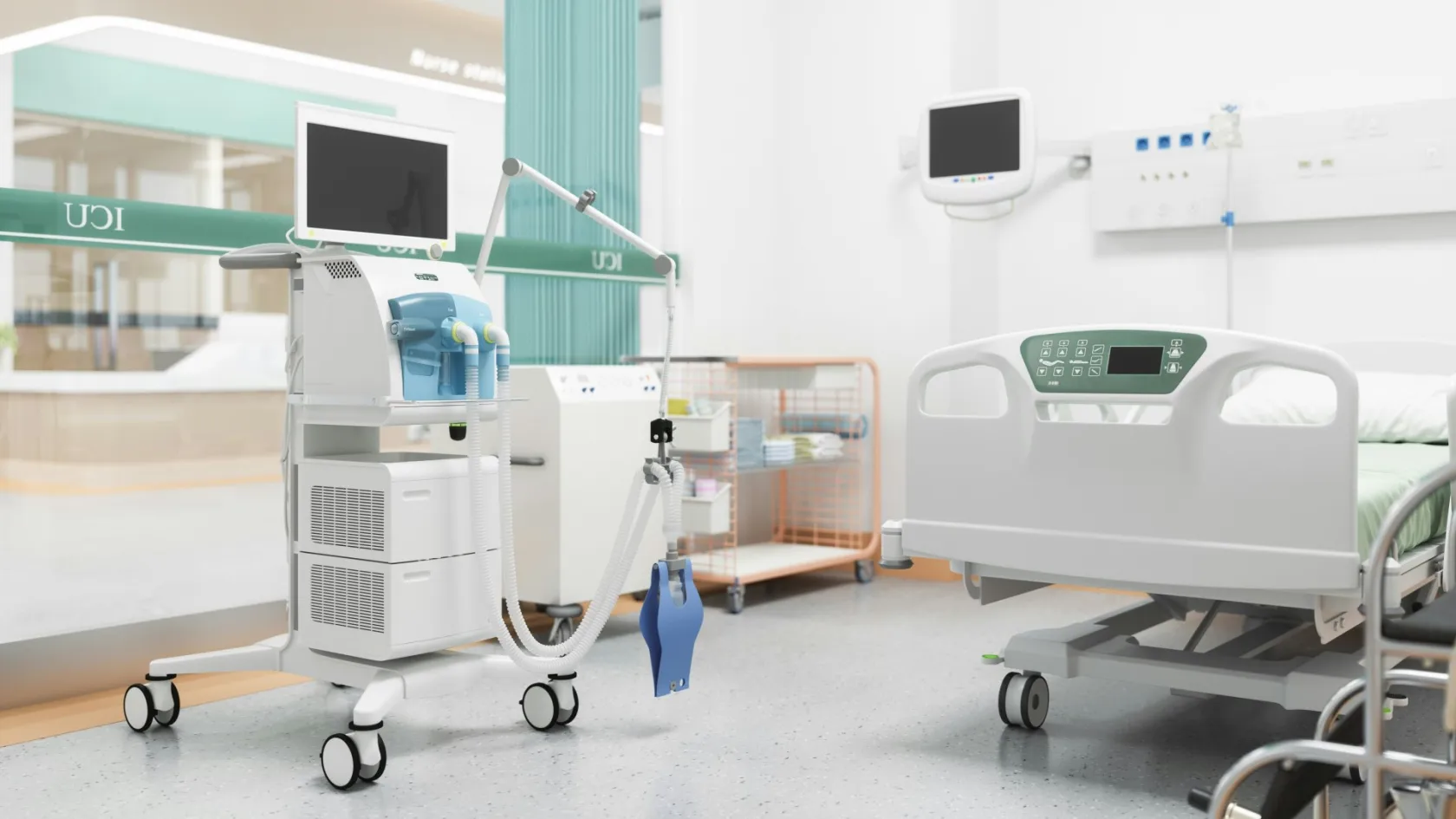
Intensive care means taking over, temporarily, the work of organs that are failing while the illness behind the failure is treated. A ventilator breathes for lungs that cannot. Blood pressure is held up with continuously infused medication, adjusted against readings taken moment by moment, and when the kidneys stop, a machine similar to dialysis runs at the bedside without pause. Around all of this sits monitoring: heart rhythm, oxygen levels, pressures inside the circulation, and laboratory values rechecked through the day.
One image families often carry into an ICU is of a relative kept asleep for weeks. Modern practice looks different. Sedation is titrated to the least the situation allows, lightened daily where the illness permits so the patient can be examined and can respond, and paired with structured breathing trials that test whether the ventilator is still needed. Comfort while awake, wherever it can be achieved, is the goal rather than unconsciousness.
The ABCDEF bundle, in plain words
Much of what evidence-based intensive care means today is captured in the ABCDEF bundle. In more than 15,000 adults treated across the ICU Liberation Collaborative, higher performance of the bundle was associated with better survival, less delirium and fewer ICU readmissions (Pun et al., Critical Care Medicine, 2019). The letters cover pain assessment and control, daily awakening and breathing trials, careful sedation choices, delirium monitoring and management, early mobility, and family engagement.
The letter F stands for family engagement and empowerment. That element was measured in the study alongside sedation and breathing trials, which means keeping relatives informed and involved belongs to the evidence itself, not to courtesy added on top. It is also why so much of this page is about communication rather than machines.
Early mobility tends to surprise families most. Physiotherapy begins inside the ICU, and a patient may sit on the edge of the bed or take supported steps while still connected to a ventilator, because muscle lost to immobility is among the hardest deficits to win back later.
Transferring a critically ill relative from another country
An international ICU transfer starts with a medical judgment. Published guidelines on transporting critically ill patients are explicit that movement itself carries risk, and that it demands planned equipment, continuous monitoring, trained accompanying personnel and an expected benefit large enough to outweigh that risk (Warren et al., Critical Care Medicine, 2004). So the first question an accepting intensivist asks is not when the flight could leave. It is whether moving this patient would serve this patient.
The file your family sends
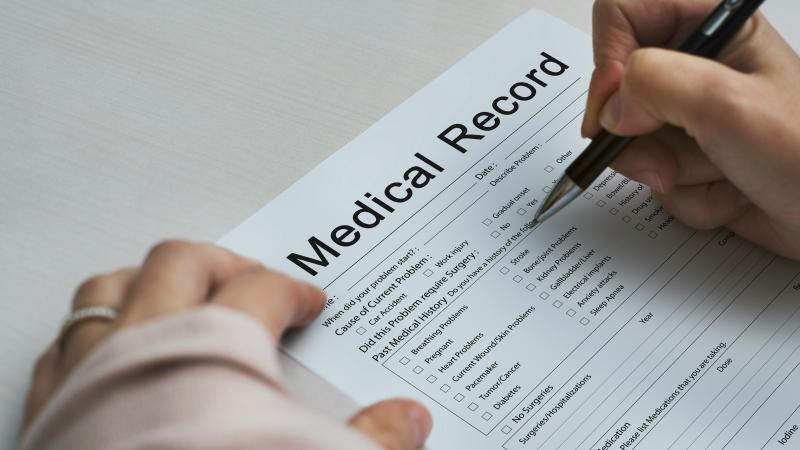
A transfer assessment is only as good as the file behind it. What the intensivist needs to see: the current ICU summary or the latest daily note, the exact diagnosis as the treating team states it, the ventilator settings, every infusion and medication with its dose, recent laboratory results together with culture reports, and the most recent imaging. Photographed pages and phone screenshots are acceptable when nothing cleaner can be obtained. Families are rarely handed a tidy dossier, and the review works with whatever can actually be gathered.
The honest possible answers
The written reply can go three ways, and a family deciding what to do next deserves to see all three named in advance.
Your relative is too unstable to move safely now
Some patients would be harmed more by the journey than helped by the destination. When the file shows that, the reply says so. Sometimes it also names what would need to change before transport could be reconsidered.
The treatment you hope for would not change the picture
Families sometimes fix on a therapy the current hospital does not offer. If the file shows it would not alter the course of the illness, the reply says that plainly, because a transfer built on a false hope serves nobody.
A transfer is medically sensible
When continued intensive care, ventilator weaning or a specific treatment in Istanbul genuinely could serve the patient, the reply sets out what the move would involve, what the risks of the journey are, and what has to be in place on both sides before a date is set.
No acceptance is promised before the file has been read.
How the transfer itself runs
1
Written medical opinion
An intensivist reads the file and replies in writing: whether transfer is medically sensible, what would be done in Istanbul, and what the journey itself would demand.
2
Transport planning
The journey is arranged with specialized medical transport providers, ICU to ICU, with equipment and personnel matched to the patient's condition. Air ambulance costs are separate from hospital costs and are substantial; the transport provider quotes them directly.
3
Arrival and handover
Because the receiving team has studied the file in advance, the bed, the ventilator strategy and the first day's plan are prepared before the aircraft lands, and treatment continues from where the sending hospital left off.
How the center works with a family that is far away
Most relatives of an international ICU patient are not in Istanbul, and communication has to be built for that distance. Ask for updates in writing. A written summary can be translated, reread calmly, shared with relatives in other time zones, and shown to the doctors who treated the patient before. Interpreter support is available for families in their own language, for the difficult conversations as much as the routine ones.
Ask also for one named contact person in the international patient office. Critical illness produces many calls from many relatives, and a single point of contact keeps the account consistent and spares the family from repeating painful questions to strangers.
Visiting an intensive care unit is unlike visiting a ward. Access is restricted to protect patients whose defenses are down, and a relative usually cannot stay at the bedside the way a companion stays in a patient room. Before anyone books a flight, ask the office how visiting currently works in the specific unit, who may enter and at what times. Arrangements in intensive care follow the clinical situation, so the honest answer is a current one rather than a fixed rule printed on a page.
For a relative who does travel, the hospital helps with airport transfer and with finding accommodation nearby, so the practical side of staying close does not fall on the family alone.
After the ICU, and why survival is the start of recovery
Leaving intensive care alive is the beginning of recovery, not the end of the illness. Clinicians call what often follows post-intensive care syndrome: muscle weakness that can take months to rebuild, trouble with memory and concentration, and psychological effects that include anxiety, low mood and intrusive memories. The term was defined in a stakeholders' conference report in Critical Care Medicine in 2012, and that report made a second point families should hear early: the same kinds of effects occur in relatives too, and they are common rather than rare (Needham et al.).
Good intensive care plans for this while the patient is still in the unit. Nutrition, physiotherapy and the daily lightening of sedation all exist partly to shrink what must be recovered afterwards. Once organ support is no longer needed, care steps down to a ward in the same building, and rehabilitation continues there at a pace set by the patient's strength.
For a patient who came from abroad, one question eventually replaces the others: when can we go home. Fitness to travel after critical illness is a medical decision, made near discharge rather than promised in advance, and it comes in grades: a normal commercial flight, a commercial flight with a medical escort and oxygen, or an air ambulance for a patient who still needs intensive care in the air. The treating team puts its assessment in writing, along with a handover summary for the doctors who will take over at home. How long the whole stay in Istanbul lasts cannot be fixed in advance; ward time and rehabilitation usually take longer than the ICU days themselves. Once the patient is back home, that same channel stays open for remote follow-up questions.
What intensive care costs, and why no fixed price exists
Intensive care is billed by the day and by acuity, and an honest fixed price for it does not exist anywhere. A package figure would have to assume how long a critical illness lasts, and nobody knows that in advance. What can be explained is what moves the total.
What drives the cost of an intensive care stay
Cost driver
Why it moves the total
Number of ICU days
The largest driver. A stay of three days and a stay of three weeks are different orders of cost, and the length of a critical illness cannot be fixed in advance.
Intensity of organ support
A patient on a ventilator, kidney support and several infusions costs more per day than a patient being closely monitored after surgery.
Isolation requirements
Resistant infections require isolation measures, dedicated materials and specific antibiotics, all of which add to the daily figure.
Drugs and consumables
Some intensive care medications and single-use materials are costly in themselves, and their use follows the illness rather than a schedule.
Procedures and imaging
Operations, interventional radiology, endoscopy and scans are added when the clinical course demands them, not by plan.
After the file review, the hospital puts an estimate in writing, stated as a range. The range is honest because critical illness changes course, and the figure moves with it. Air ambulance transport is quoted separately by the transport provider and is a substantial cost of its own; the hospital estimate never includes it.
Questions families ask about intensive care in Istanbul
Can we transfer our relative to your intensive care unit in Istanbul?
Sometimes, and the honest answer depends entirely on the file. An intensivist reads the current ICU summary, the ventilator settings, the medication list and the recent laboratory results, then replies in writing. The reply may say that transfer is medically sensible, that your relative is currently too unstable to move safely, or that the treatment you are hoping for would not change the picture. No acceptance is given before the file has been read.
What do you need from us to assess an ICU transfer from abroad?
The current intensive care summary or the latest daily note, the exact diagnosis, the ventilator settings, every infusion and medication with its dose, recent laboratory results including culture reports, and the most recent imaging. Photographed pages and phone screenshots are acceptable when nothing cleaner exists. A fuller file gets a sharper written reply.
Can family members visit, or stay with the patient in the ICU?
Visiting an intensive care unit is more limited than visiting a ward, and a relative usually cannot stay at the bedside the way a companion stays in a patient room. Arrangements depend on the unit and on the clinical situation, so ask the international patient office how visiting currently works before you travel, and ask for one named contact person who passes updates to the whole family.
Will anyone speak our language while our relative is in intensive care?
Interpreter support is available for families in their own language, for medical conversations as well as practical ones. Ask for updates in writing where possible. A written summary can be translated, reread calmly, shared with relatives in other time zones, and shown to the doctors who treated the patient before.
What does intensive care cost at Biruni Hospital?
Intensive care at Biruni Hospital carries no fixed price. It is billed by the day and by how much support the patient needs, so the total is driven by the number of ICU days, the intensity of organ support, isolation requirements, drugs and consumables, and any procedures. After the file review the hospital gives a written estimate stated as a range, with the honest caveat that critical illness is unpredictable. Air ambulance transport is quoted separately and is a substantial cost of its own.
When can a patient fly home after intensive care?
When it is medically safe, and that point cannot be promised in advance. Fitness to travel is assessed by the treating team once the patient has stabilized on a ward after leaving the ICU. The answer has grades: a normal commercial flight, a commercial flight with a medical escort and oxygen, or an air ambulance for a patient who still needs intensive care in the air. The assessment and the travel options are given to the family in writing.
Is the Intensive Care Center only for patients transferred from abroad?
No. Most of its work stands behind the hospital's own operating rooms and wards. Complex surgery, transplant programs and advanced cancer treatment can be offered at all because adult, pediatric and newborn intensive care units work in the same building. A patient planning a major operation at the hospital is relying on this center even if they never see the inside of it.
References
Needham DM, Davidson J, et al. Improving long-term outcomes after discharge from intensive care unit: report from a stakeholders' conference. Critical Care Medicine. 2012;40(2):502-509.
Pun BT, Balas MC, et al. Caring for Critically Ill Patients with the ABCDEF Bundle: Results of the ICU Liberation Collaborative in Over 15,000 Adults. Critical Care Medicine. 2019;47(1):3-14.
Warren J, Fromm RE, et al. Guidelines for the inter- and intrahospital transport of critically ill patients. Critical Care Medicine. 2004;32(1):256-262.
Editor's note
Written by the Biruni Hospital medical editorial team. Reviewed by Alketa Toska Sert, Physical Therapy and Rehabilitation.