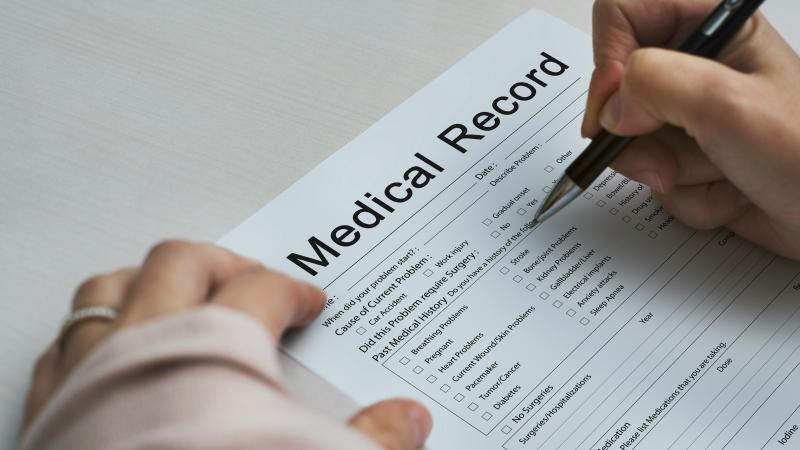
The Hematology Center at Biruni Hospital in Istanbul diagnoses and treats anemia, leukemia, lymphoma and thalassemia, with a free file review before you travel.
Let us call you
Send us your contact information and we will call you as soon as possible.
About This Center
A blood count comes back abnormal and nobody has explained why, a report contains the word lymphoma, or an anemia that should have answered to iron tablets has not moved in a year. The Hematology Center at Biruni Hospital in Istanbul is the department that puts names to problems like these and treats them, inside a university hospital of more than 600 beds. This page sets out which blood diseases are handled here, how a precise diagnosis is reached, which situations make travel sensible and which demand treatment at home within days, and how care continues after an international patient flies back.
Free consultation
A hematologist can read your blood results before you plan anything
The remote review is free and does not commit you to anything. Send your serial blood count results with their dates, the bone marrow biopsy report if one exists, and any flow cytometry or genetic reports. The reply is written and specific: the likely picture, the missing tests, and whether travel to Istanbul would change your options.
Blood diseases sort into two groups that feel nothing alike from the patient's side. On the benign side sit iron deficiency and the other anemias, inherited conditions such as thalassemia and sickle cell disease, immune thrombocytopenia, bleeding disorders including hemophilia and von Willebrand disease, and the clotting tendencies that surface as repeated thromboses and call for a thrombophilia assessment. None of these is a cancer. Several still shorten lives when they are managed casually.
On the malignant side stand the acute leukemias, the chronic leukemias, Hodgkin and non-Hodgkin lymphoma, multiple myeloma, myelodysplastic syndromes and the myeloproliferative neoplasms. Treatment for these is medical rather than surgical: chemotherapy, immunochemotherapy, targeted tablets and supportive care, planned by hematologists and delivered through the hospital's oncology infrastructure, with radiology and nuclear medicine providing imaging, PET included, where lymphoma staging requires it.
Behind both groups works the diagnostic toolkit of a university hematology unit: the hematology laboratory, pathology, flow cytometry, and cytogenetic and molecular testing, with transfusion services carrying patients whose own counts cannot yet carry them.
Three boundaries deserve naming so nobody reads the wrong page. Children with blood diseases are cared for through the hospital's Children's Health center, where pediatric hematology and oncology has its own team. When a disease reaches the point where transplant is the right treatment, in selected leukemias, myeloma or severe inherited anemias, the case moves to the hospital's separate Bone Marrow Transplant Center. And a small group of relapsed B-cell cancers is evaluated for cell therapy at the CAR-T Cell Therapy Center. This page is the front door that comes before all three: diagnosis, medical treatment, and the judgment about which road a given case belongs on.
Reaching a precise diagnosis, and why it decides everything
Lymphoma is a single word for several dozen distinct diseases, and the correct treatment for one of them can be the wrong treatment for its neighbor. Leukemia stretches even wider, from an emergency that needs chemotherapy this week to a condition observed for years without a single tablet. In this specialty the diagnosis is most of the work. A subtype named wrongly costs months, and it can cost treatment lines that do not come back.
A full workup starts smaller than most patients expect. A stained drop of blood under a microscope, the peripheral smear, still directs the first decisions. From there the investigation deepens only as far as the case requires: a bone marrow biopsy to look at where blood is made, flow cytometry to establish exactly which cell population has expanded, and cytogenetic and molecular testing to find the changes that separate one subtype from another and increasingly decide which drug is used.
Why one blood count proves very little
A single blood count is a snapshot. Hemoglobin of 10 means one thing if it measured 14 three months ago, and something far less alarming if it has read 10 for a decade. Trends carry the diagnosis. So the center asks for serial results with their dates instead of the newest printout alone, and a folder of old laboratory reports, however untidy, is worth more than a fresh test taken the day before writing.
This dependence on laboratory work has a practical consequence for anyone living abroad. Very little in hematology turns on physically examining the patient, so a remote second opinion works unusually well here: smear slides and marrow blocks can be re-examined in Istanbul when the original laboratory releases them, written flow cytometry and genetic reports can be reinterpreted exactly as they stand, and whatever questions remain can be listed before anyone considers a flight.
What to send for a remote review
Serial complete blood counts with dates come first. Add the smear and bone marrow reports if a biopsy has been done, together with the slides or blocks when your laboratory will release them, then the flow cytometry, cytogenetic and molecular reports, imaging and PET reports where lymph nodes or the spleen are involved, your current medications, and, for anemia patients, the transfusion record with a rough frequency. A file assembled this way lets a hematologist state in writing what the picture most likely is, which tests are missing, and whether travel would change anything.
When traveling for treatment makes sense, and when it does not
Acute leukemia is the exception to everything else on this page. When a blood picture suggests it, with blasts on the smear and normal counts failing, treatment should begin within days at the nearest hospital able to deliver it. Visa applications, flight searches and second opinions all take longer than this disease allows. A serious center does not encourage that patient to board a plane first, and this one does not.
Travel fits three other situations well. There is the abnormal count that has gone months without a name, where a short, dense diagnostic visit can settle in days what has drifted for half a year. There is the chronic disease standing at a decision point: a CML response that needs assessing, an early CLL where observation and treatment are being weighed, a myeloma where the next line has to be chosen. And there is the planned treatment course whose timing is elective, where cycles can be scheduled around flights and a stay in Istanbul instead of against them.
Four situations, and whether travel fits them
Situation
Time pressure
Does travel fit?
Suspected acute leukemia
Days
No. Start treatment where you are; a remote review can follow once the disease is controlled.
An abnormal count unexplained for months
Weeks to months
Yes. A structured diagnostic visit is short and frequently decisive.
A chronic disease at a decision point
Weeks
Yes, and much of it works remotely. CML responses, CLL observation and myeloma choices can be reviewed on paper first.
A planned treatment course
Elective
Yes. Cycles run to a calendar, so flights and length of stay can be planned honestly in advance.
Triage of this kind is the first thing the free file review does, and sometimes the written answer is that traveling now would be a mistake. That answer costs nothing. It can matter more than any other on this page.
Chronic blood diseases, and what managing them well looks like
Some leukemias are now managed the way high blood pressure is. A Swedish registry analysis published in the Journal of Clinical Oncology in 2016 found that life expectancy in chronic myeloid leukemia, treated with modern targeted tablets, approaches that of the general population, especially for younger patients [1]. A sentence like that could not have been written twenty years ago. It changes what a sensible cross-border care plan looks like: less drama, more structure.
Chronic myeloid leukemia: a tablet and a monitoring calendar
CML treatment is a daily tablet plus scheduled blood tests that measure the disease at the molecular level, down to fractions of a percent. What an international patient needs from Istanbul is rarely the tablet itself, which most countries stock. It is the structure around it: confirmation that the current drug is still the right one, a written monitoring calendar a local laboratory can run, defined thresholds that would trigger a change of drug, and remote review of the results as they arrive. Repeated flights add nothing to such a plan. Built properly, it runs at home.
Chronic lymphocytic leukemia: when the right treatment is none yet
Hearing 'no treatment yet' can feel like being turned away. In early CLL it is correct care. International iwCLL guidelines published in Blood in 2018 define when treatment should start, naming criteria such as progressive marrow failure, rapidly rising lymphocyte counts and symptomatic enlargement of nodes or spleen, and they direct doctors to observe patients who meet none of them, because starting earlier has not been shown to lengthen life [2]. Observation is a plan with appointments, thresholds and scheduled counts, not the absence of a plan. A second opinion that confirms watch and wait is a legitimate outcome of a file review, and for some readers it is the most valuable one available.
Thalassemia: a structured review for a lifelong disease
Thalassemia concentrates in the Mediterranean, the Middle East and Asia, which is to say in the regions many readers of this site live in. A 2018 Lancet seminar describes the modern shape of care: regular transfusion programs, iron chelation to remove the iron those transfusions leave behind, and curative options reserved for selected, usually younger patients [3]. A structured assessment at the Hematology Center goes through the transfusion history, measures the iron burden, asks whether the chelation regimen still fits it, and screens for the heart, liver and endocrine complications that accumulating iron causes. Plenty of long-transfused adults have never had that full accounting done in one place, and it is a realistic reason to travel once, calmly, at a time of their choosing.
How the center works with a patient who lives abroad
Every international case follows the same spine, whatever the disease behind it.
1
The file is read first
A hematologist reviews the records sent over WhatsApp or e-mail, free of charge, and answers in writing: the likely or confirmed diagnosis, the tests still needed, and whether coming to Istanbul would change anything.
2
Arrival and confirmation
The visit opens with confirmatory laboratory work and whatever marrow sampling or imaging is still missing. Interpreter support covers the consultations. The international office helps with the transfer from the airport and with staying close to the hospital.
3
Treatment, or a written opinion
Some patients leave with a completed workup and a plan their own doctor can carry out. Others stay for a course of treatment, delivered in cycles as an inpatient or an outpatient depending on the regimen and the counts.
4
Follow-up from your own country
Departure comes with a written summary: what was found, what was given, the monitoring schedule, the changes that should prompt contact, and how to send follow-up results for remote review once you are back home.
Not every file ends in an invitation. When the honest reading is that nothing in Istanbul would improve on the care already available at home, the written reply says exactly that, and the reader has lost nothing by asking.
What blood disease treatment costs in Turkey
No single number covers a specialty that runs from an iron infusion to months of chemotherapy. Listing platforms such as Bookimed give an orientation for Turkey as a market: hematologist consultations around 120 to 180 dollars, basic blood panels near 100 dollars, a bone marrow biopsy listed anywhere from roughly 1,200 to 2,600 dollars depending on the clinic, and full chemotherapy courses spanning about 17,000 to 45,000 dollars, with intensive induction courses toward the top of that range. These are third-party figures compiled from listings, and they are context rather than quotes.
What actually moves the price is knowable in advance. Whether the visit is a diagnostic workup or a treatment course. How many chemotherapy or immunotherapy cycles the plan contains and which drugs are inside them, since modern antibody drugs cost several times what older chemotherapy does. Whether cycles run as hospital admissions or as outpatient visits. How much growth factor and transfusion support the blood counts demand along the way. And how wide the molecular test panel has to be for this particular disease.
Biruni Hospital prices each case individually, in writing, after the free file review, so the figure arrives attached to a named diagnosis and a counted number of cycles. A price quoted before those two things are known describes some other patient.
Questions international patients ask about blood disease care
I have been told I have acute leukemia. Should I travel to Istanbul for treatment?
Usually not as a first step. Acute leukemia is a medical emergency, and treatment should begin within days at the nearest hospital able to give it, not after visa applications and flight bookings. Where a remote review helps is afterwards: once the disease is under control and the pressure of the first days has passed, the file can be read calmly to check the diagnosis, the planned next phase and the monitoring, and travel can be weighed at a point where timing is no longer working against you.
My doctor says watch and wait. Is that neglect?
No. In early chronic lymphocytic leukemia and in some slow-growing lymphomas, starting treatment before defined criteria are met has not been shown to lengthen life, which is why international guidelines direct doctors to observe rather than treat. Observation is active care: scheduled blood counts, scheduled visits, and a clear list of changes that would trigger treatment. A second opinion that confirms watch and wait is a legitimate and useful result of a file review, not a wasted one.
How long would I need to stay in Istanbul?
A diagnostic visit is short. Consultation, laboratory work and a bone marrow biopsy fit into roughly a week, with some genetic results following after you have left. A treatment course is a different calculation, because chemotherapy and immunotherapy run in cycles spaced weeks apart; some patients stay through the whole course, while others go home between cycles when the disease and the drugs allow it. The realistic length of stay for your situation is stated in writing during the free file review, before you commit to travel.
Can a blood disease really be assessed from abroad?
Better than most conditions can. Hematology diagnoses rest mainly on laboratory work, not on physical examination, so serial blood counts with dates, smear and marrow reports, flow cytometry and genetic results carry most of what a specialist needs. Stained slides and tissue blocks can be re-examined in Istanbul if your laboratory releases them. Whatever cannot be judged remotely is named plainly in the written reply instead of guessed at.
I have CML. Do I need to move to Istanbul for treatment?
No. Chronic myeloid leukemia is treated with daily tablets and scheduled blood tests that measure the disease at the molecular level, and both can run in your home country. What an international patient gains from this center is structure: confirmation that the current tablet is the right one, a written monitoring schedule a local laboratory can follow, and remote review of the results as they arrive, with a visit reserved for the points where the plan genuinely needs to change.
What exactly should I send for the free review?
Serial complete blood count results with their dates, not only the latest one. The blood smear and bone marrow reports if a biopsy has been done. Flow cytometry, cytogenetic and molecular reports. Imaging or PET reports where lymph nodes or the spleen are involved. Your current medications, and, for anemia patients, the transfusion history including how often blood is needed. An incomplete file is still read; the reply then lists what is missing and why it matters.
References
Bower H, Bjorkholm M, et al. Life Expectancy of Patients With Chronic Myeloid Leukemia Approaches the Life Expectancy of the General Population. Journal of Clinical Oncology. 2016;34(24):2851-2857.
Hallek M, Cheson BD, et al. iwCLL guidelines for diagnosis, indications for treatment, response assessment, and supportive management of CLL. Blood. 2018;131(25):2745-2760.
Taher AT, Weatherall DJ, Cappellini MD. Thalassaemia. The Lancet. 2018;391(10116):155-167.
Editor's note
Written by the Biruni Hospital medical editorial team. Reviewed by Podologist Gülçin KILIÇ, Podology.