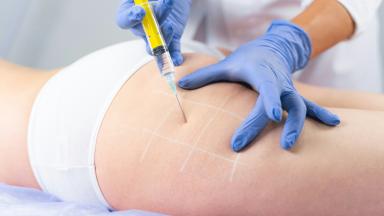
Vaser liposuction uses ultrasound to loosen stubborn fat before suctioning it out, with less blood loss and more skin retraction than traditional liposuction in a randomized trial. It treats the abdomen, flanks, back, thighs, arms, chin and male chest, and suits people near their goal weight. At Biruni Hospital in Istanbul, our plastic surgery team plans the areas from your photographs, with a stay of five to seven days and video follow-up.
About This Department
Plastic Surgery
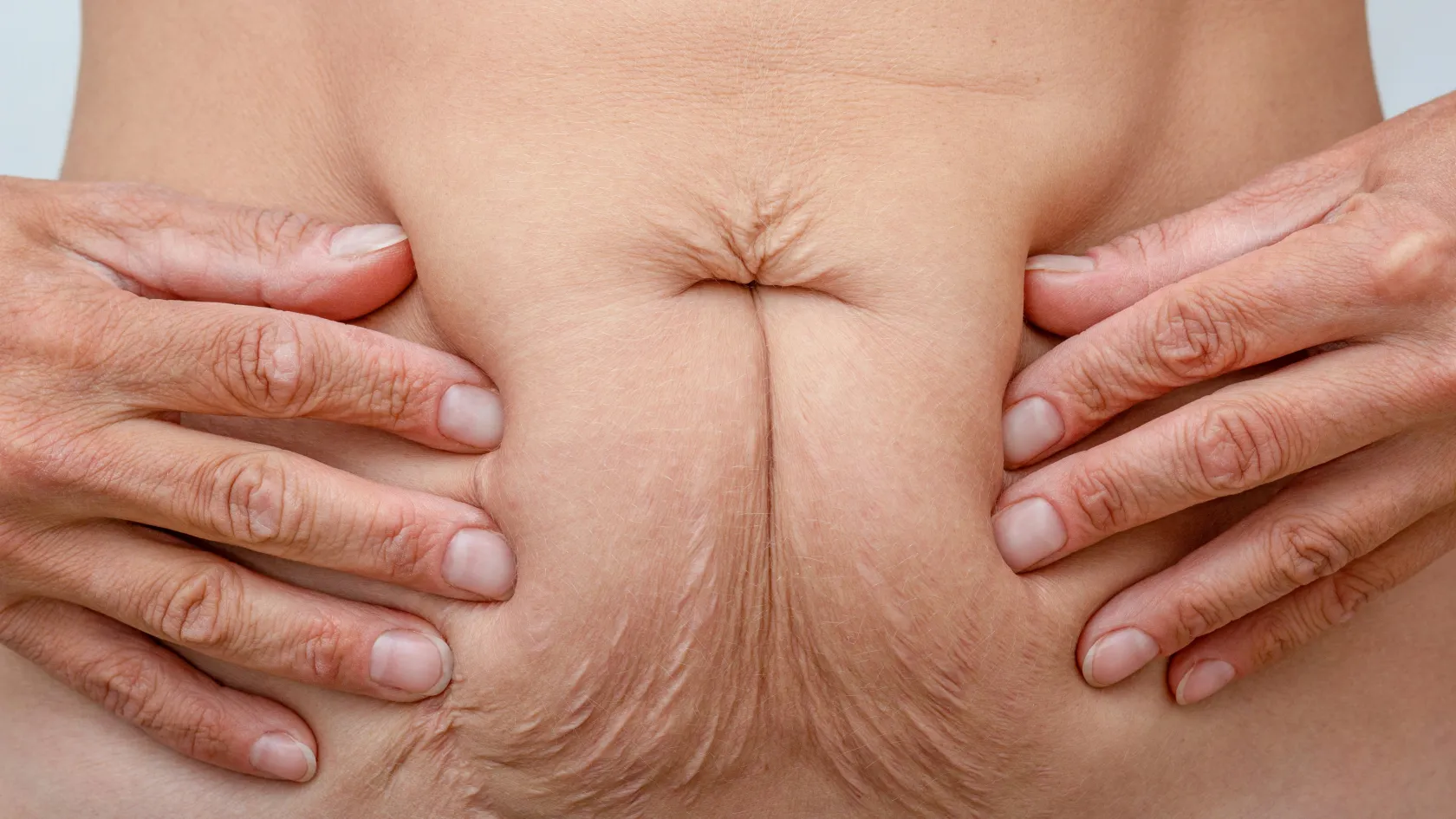
Diet and exercise shrink fat cells everywhere, yet some pockets refuse to move. Vaser liposuction loosens that fat with ultrasound before removing it.
Vaser liposuction, short for vibration amplification of sound energy at resonance, uses a thin ultrasound probe to break up fat under the skin before a cannula suctions it out. The ultrasound works selectively on fat, sparing much of the surrounding blood vessels and nerves. In a randomized trial comparing each patient's two sides, the Vaser side showed 53 percent more skin retraction and 26 percent less blood loss than traditional suction liposuction, while pain, swelling and appearance at six months did not differ (Nagy and Vanek, Plastic and Reconstructive Surgery, 2012). A series of 261 patients over 15 years reported a complication rate of 4.6 percent, and 86 percent would recommend the operation. Vaser shapes the body. It does not replace weight loss. This page explains how Vaser works, how it compares with traditional liposuction, who is suited, the areas treated, high-definition sculpting, risks, the operation day, recovery, results, and how patients from abroad arrange Vaser liposuction at Biruni Hospital in Istanbul.
53
Percent more skin retraction on the Vaser side than with traditional liposuction in a randomized trial
26
Percent less blood in the removed fat with Vaser than with suction alone
4.6
Percent overall complication rate in 261 patients treated over 15 years
Free
Review of your photos and goals by our plastic surgery team
Vaser liposuction proceeds in three steps. First, tumescent fluid, a mix of saline, a local anesthetic and adrenaline, fills the fat layer to numb it and narrow the blood vessels. Next, a solid probe of two to four millimeters delivers pulsed ultrasound that shakes fat cells loose from the connective tissue. Finally, small cannulas suction out the loosened fat.
Why ultrasound
Fat cells break apart at energy levels that leave firmer tissue, such as vessels, nerves and the fibrous network under the skin, largely intact.
The name
1
Vaser
The letters stand for vibration amplification of sound energy at resonance. It belongs to the third generation of ultrasound-assisted liposuction, which uses grooved probes and pulsed energy to deliver less heat than earlier devices.
Vaser and traditional liposuction
Vaser compared with suction-assisted liposuction
Feature
Vaser
Traditional suction
How fat is loosened
Ultrasound, then suction
Mechanical movement of the cannula
Blood in the aspirate
Lower
Higher
Skin retraction
Greater in the trial
Less
Fibrous areas, back, male chest
Easier
Harder
Heat injury risk
Present, controlled with technique
None from energy
Loosened fat comes out with less force, which helps in fibrous areas such as the back, the flanks and the male chest, and in repeat liposuction where scar tissue holds fat tightly.
Other liposuction technologies
Technology
Energy
Main use
Power-assisted liposuction
Vibrating cannula
Large volumes, fibrous fat
Laser-assisted liposuction
Laser heat
Small areas, skin tightening
Radiofrequency-assisted
Radiofrequency heat
Skin laxity
1
Our approach
We often combine Vaser with power-assisted suction, choosing for each area what removes fat most evenly.
What the trial showed
Randomized comparison in 20 women, one side each
Measure
Vaser side
Suction side
Skin retraction per liter removed
17 percent
11 percent
Blood per 100 cc of aspirate
11.2 cc
14.0 cc
Pain, swelling and appearance at six months
No difference
No difference
The VASER-assisted lipoplasty method demonstrated improved skin retraction and reduction in blood loss compared with suction-assisted lipoplasty (Nagy and Vanek, 2012).
Patients in this trial could not tell the two sides apart on their own at six months. The measured gains were real, and modest.
Skin tightening in perspective
Skin retraction has limits.
Vaser encourages the skin to shrink onto the new contour better than suction alone, and good elastic skin in a woman or man in their twenties or thirties responds well, but loose, stretched skin after pregnancy or large weight loss does not tighten enough with any energy device to avoid a hanging fold. For those patients, a tummy tuck, arm lift or thigh lift removes the excess skin, and we combine Vaser with that operation to sculpt the areas around it.
We assess skin quality at the consultation.
Who is suited
Good candidates for Vaser liposuction
Factor
Ideal
Why
Weight
Stable, near goal weight
Results last and risk stays low
Body mass index
Under 30
Risk rises with higher BMI
Skin
Good elasticity
Retracts over the new shape
Fat type
Localized, under the skin
Fat inside the abdomen cannot be suctioned
Health
No uncontrolled heart, lung or clotting disease
Anesthesia and fluid safety
1
Risk and weight
Among 127,961 aesthetic surgery patients, the complication rate rose steadily with body mass index, from 1.6 percent in the normal range to 3.1 percent in obese patients, with infection and blood clots twice as frequent in overweight patients (Gupta and colleagues, Aesthetic Surgery Journal, 2016).
The best candidate exercises, eats well and still carries a stubborn bulge that does not respond.
Not a weight-loss operation
The scale barely moves after liposuction.
Fat is light for its volume, so removing three or four liters changes weight by only a few kilograms while visibly changing shape. Fat inside the abdomen, around the organs, lies beneath the muscle and cannot be reached, and a firm, rounded belly from that deep fat stays unchanged after surgery. Patients with a body mass index above 30 do better losing weight first, whether with diet, medicines or bariatric surgery, and returning for contouring once their weight has settled.
Shape changes. Weight changes little.
Areas treated
Areas treated with Vaser liposuction
Area
Common aim
Note
Abdomen and flanks
Flatter waist
The most treated area
Back and bra roll
Smooth outline
Fibrous fat, Vaser helps
Thighs, inner and outer
Slimmer line
Care to avoid dents
Arms
Slimmer upper arm
Skin quality decides
Chin and neck
Defined jawline
Small volumes, fine probe
Male chest
Flatter chest
Glandular tissue may need excision
Several areas are often treated in one session. We keep the total volume within safe limits and stage larger plans over two operations.
High-definition sculpting
1
Etching
High-definition liposuction removes fat from both the deep and superficial layers and leaves thin shadows along muscle borders, outlining the abdominal muscles, the line down the center of the abdomen and the obliques.
It suits lean, athletic patients with good skin and a small amount of fat over well-developed muscles. In patients with more fat or weaker skin, etching can look artificial, and we recommend a softer, natural contour instead.
Risks
Swelling and bruising for several weeks, settling slowly over three months as the lymphatic channels recover and the tissue softens.
Numbness of the treated skin, returning over weeks to months.
Temporary lumpiness as the tissue heals, helped by massage.
1
Heat-related injury
Ultrasound generates heat. Skin protectors at the entry points, continuous movement of the probe, adequate tumescent fluid and limited energy time prevent burns.
Complications in 261 patients treated with third-generation ultrasound
Complication
Rate
Management
Contour irregularity
1.9 percent
Massage, fat grafting or revision
Seroma, fluid collection
0.8 percent
Drainage with a needle
Cellulitis
0.8 percent
Antibiotics
Pigmentation change
0.4 percent
Fades over months
Electrolyte imbalance
0.4 percent
Correction in hospital
Blood clots and fat embolism remain rare but serious. Early walking, compression stockings and blood thinners for higher-risk patients reduce the risk.
Volume limits
We limit the volume removed in one operation and keep patients overnight after larger sessions for fluid and blood count checks.
Fat, weight and fat transfer
What happens to fat after Vaser
Situation
Effect
Note
Stable weight
Treated areas stay slimmer
Fewer fat cells remain
Weight gain
Fat gathers in untreated areas more
Proportions shift
Fat transfer
Harvested fat can fill the buttocks or breasts
Cells survive ultrasound harvesting
Can fat removed with Vaser be used for transfer?
Yes. A laboratory study of fat harvested with the Vaser system measured 85 to 89 percent of fat cells alive at harvest, within the range of traditional methods (Schafer and colleagues, Aesthetic Surgery Journal, 2013). We use lower ultrasound settings and gentle suction when fat is collected for transfer.
Fat transfer to the buttocks carries specific risks and is placed only under the skin, never into the muscle.
The operation day
Timeline on the day
Step
Timing
Note
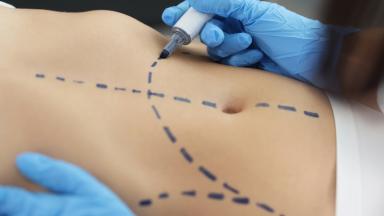
Marking
Morning, standing
Areas and contours drawn
Anesthesia
Start of surgery
General, or sedation for small areas
Surgery
One to four hours
Depends on areas
Garment fitted
End of surgery
Compression over treated areas
Discharge
Same day or next morning
Overnight after larger volumes
1
Incisions
Entry points of three to five millimeters sit in natural creases, the navel, the groin or under the bra line, and fade to small dots.
Tumescent fluid drains through the openings for a day or two, which is normal. Absorbent pads under the garment catch it.
2
Pain
Soreness feels like a hard workout, strongest over the first three days, and responds to regular painkillers.
Recovery
Wear the compression garment day and night for four to six weeks. Walking starts on the day of surgery, and lymphatic drainage massage from the first week helps swelling and lumpiness settle.
Timeline
Recovery after Vaser liposuction
Time
What happens
Activity
Days 1 to 3
Drainage, soreness
Walking at home
Days 4 to 7
Bruising peaks and fades
Desk work
Weeks 3 to 4
Swelling lessens
Light exercise
Week 6
Garment off
Full exercise
Months 3 to 6
Final contour
Photographs
Results over time
1
Timeline
The new outline shows within weeks, but swelling hides fine detail. About three months give a good picture, and skin retraction continues for six months or more.
Fat cells removed do not grow back. The remaining cells can still enlarge, so the proportions stay only as long as weight stays stable.
Keeping the result
Liposuction changes where fat sits. Lifestyle decides how much of it returns.
Regular exercise and a steady weight keep the contour, and weight gained after surgery shows in untreated areas such as the upper back, arms or inside the abdomen.
Photographs at each visit track progress.
For patients from abroad
1
Length of stay
Plan for five to seven days in Istanbul, with a check visit and the first drainage massage before you fly home. Wear the garment and compression stockings on the flight and walk in the aisle.
What to send
Photographs from the front, sides and back in underwear, your height and weight, the areas you want treated and a list of medicines. After you return home, follow-up continues by video at one, three and six months, and a local therapist can continue lymphatic massage.
One coordinator from the international patients office handles arrangements from the first message through discharge and answers the same WhatsApp number after you return. The office works in English, Arabic, French, Russian, Serbian, Romanian and Spanish and books interpreters for other languages, and it arranges the visa invitation letter, airport transfers, daily transport and accommodation near the hospital. Halal, vegetarian and diabetic meals, a prayer room on site, and a female physician on request wherever the rota allows.
Combining with other operations
Vaser is often combined with a tummy tuck, breast surgery or fat transfer, which lengthens the stay by a few days.
Cost
What a quote for Vaser liposuction covers
Item
Included
Priced separately
Surgery
Surgeon, anesthesia, Vaser and suction equipment
Fat transfer if added
Hospital
Day stay or one night
Extra nights
Aftercare
Two compression garments, first massage sessions, video follow-up
Further massage courses
The price depends on the number of areas, the volume removed, whether high-definition etching is planned and any combined operation. We quote after reviewing your photographs, before you travel.
Compare quotes by the areas included, since one clinic's single area may be another clinic's two.
References
Nagy MW, Vanek PF. A multicenter, prospective, randomized, single-blind, controlled clinical trial comparing VASER-assisted lipoplasty and suction-assisted lipoplasty. Plast Reconstr Surg. 2012;129(4):681e-689e.
Tran BNN, Didzbalis CJ, Chen T, Shulzhenko NO, Asaadi M. Safety and efficacy of third-generation ultrasound-assisted liposuction. A series of 261 cases. Aesthetic Plast Surg. 2022;46(5):2310-2318.
Gupta V, Winocour J, Rodriguez-Feo C, et al. Safety of aesthetic surgery in the overweight patient. Analysis of 127,961 patients. Aesthet Surg J. 2016;36(6):718-729.