
Pancreas Tumor Surgery
Where the tumor sits decides the operation, a Whipple for the head of the pancreas, a distal pancreatectomy for the body and tail, and enucleation for some small neuroendocrine tumors. For pancreatic cancer, treating the whole body first raised five-year survival from 6.5 to 20.5 percent in the Dutch PREOPANC trial. Experience counts too. Busy centers lose fewer patients, and hospital mortality came to 1 percent across 1,000 consecutive Whipple operations at Johns Hopkins.
About This Department
Pancreas tumor surgery removes cancers, cysts and neuroendocrine tumors of the pancreas by Whipple, distal or total pancreatectomy. For pancreatic cancer, treatment before surgery has tripled five-year survival in a Dutch trial.
Where the tumor sits decides the operation. A tumor in the head of the pancreas needs a Whipple operation, one in the body or tail a distal pancreatectomy, and a small neuroendocrine tumor sometimes only its own removal. At Johns Hopkins, hospital mortality across 1,000 consecutive Whipple operations came to 1 percent, and the PREOPANC trial raised five-year survival from 6.5 to 20.5 percent with treatment before surgery. Send your CT or MRI, tumor markers and any biopsy, and our pancreas team will tell you whether the tumor can come out.
The pancreas lies behind the stomach, with a head tucked into the curve of the duodenum, a body crossing the spine and a tail reaching the spleen. The bile duct runs through the head, so tumors there turn the skin yellow early, while tumors of the body and tail grow silently for longer.
Which pancreas tumors need surgery
Every adenocarcinoma that can come out with clear margins, most neuroendocrine tumors above 2 cm, and cysts with worrying features. A tumor wrapped around the main arteries cannot come out at first, and chemotherapy decides whether it later can.
Folfirinox is a valuable treatment option in the neoadjuvant therapy of PDAC.Heidelberg series of 575 patients, Annals of Surgery, 2016
Cysts and IPMN
When a cyst needs surgery
Tumor types and operations
The tumor type sets both the operation and the treatment around it.
This table scrolls sideways on a narrow screen. Swipe or drag to see every column.
| Tumor | Behavior | Usual operation |
|---|---|---|
| Adenocarcinoma | Aggressive cancer, the commonest type | Whipple or distal pancreatectomy with chemotherapy |
| Neuroendocrine tumor | Slow growing, some make hormones | Enucleation, Whipple or distal pancreatectomy |
| IPMN or mucinous cyst | Benign at first, can turn to cancer | Resection when high-risk features appear |
| Solid pseudopapillary tumor | Low grade, young women | Resection, cured in nearly all |
The Whipple operation
Over five to seven hours, the surgeon removes the head of the pancreas, the duodenum, the end of the bile duct and the gallbladder, then rebuilds the route with three joins, pancreas to bowel, bile duct to bowel and stomach to bowel.
There was a consistent association between high hospital volume and lower postoperative mortality rates with improved long-term survival.Meta-analysis of 14 studies, British Journal of Surgery, 2011
This table scrolls sideways on a narrow screen. Swipe or drag to see every column.
| Measure | Result |
|---|---|
| Hospital mortality | 1 percent |
| Median hospital stay | 17 days in the 1980s, 9 days in the 2000s |
| Median operating time | 8.8 hours in the 1970s, 5.5 hours in the 2000s |
| Five-year survival, pancreatic cancer | 18 percent overall, 32 percent with clear lymph nodes, 41 percent with clear nodes and margins |
It has become an effective operation for pancreatic cancer in those patients in whom their tumor is margin negative and node negative.Johns Hopkins series of 1,000 operations, Annals of Surgery, 2006
Keeping the stomach outlet
The pylorus-preserving Whipple keeps the whole stomach and its outlet valve. A Cochrane review of six trials with 465 patients found the same mortality, complications and survival as the classic operation, with a shorter operating time, so we choose by where the tumor lies.
No evidence suggests relevant differences in mortality, morbidity and survival between the two operations.Cochrane review of six randomized trials, 2014
Chemotherapy before surgery
Pancreatic cancer spreads early, in many patients before scans can see it. Treating the whole body first, before the operation, deals with that hidden spread. In the Dutch PREOPANC trial of 246 patients, chemoradiotherapy before surgery raised five-year survival from 6.5 to 20.5 percent, though median survival differed by only 1.4 months, which shows the gain came from a group of long-term survivors.
Neoadjuvant gemcitabine-based chemoradiotherapy followed by surgery and adjuvant gemcitabine improves OS compared with upfront surgery and adjuvant gemcitabine in resectable and borderline resectable pancreatic cancer.PREOPANC trial, Journal of Clinical Oncology, 2022
Locally advanced tumors
A tumor wrapped around the main arteries counts as locally advanced. Chemotherapy comes first, and surgery follows only when the cancer has held still or shrunk.
This table scrolls sideways on a narrow screen. Swipe or drag to see every column.
| Outcome | Result |
|---|---|
| Resection after FOLFIRINOX | 61 percent |
| Resection after gemcitabine with radiotherapy | 46 percent |
| Median survival after resection | 15.3 months |
| Median survival after exploration alone | 8.5 months |
What these numbers mean
Results, risks and recovery
- A leak from the pancreatic join.
- Slow stomach emptying after a Whipple.
- Bleeding, early or weeks later.
- A bile leak.
- New diabetes and a need for digestive enzymes.
This table scrolls sideways on a narrow screen. Swipe or drag to see every column.
| Outcome | Treatment first | Surgery first |
|---|---|---|
| Survival at five years | 20.5 percent | 6.5 percent |
| Median survival | 15.7 months | 14.3 months |
Enzymes and blood sugar
Neuroendocrine tumors
Enucleation
A small neuroendocrine tumor at the surface of the pancreas shells out alone. The gland stays intact. This works only when the tumor sits a few millimeters or more from the main pancreatic duct, since a duct injury during enucleation leaks pancreatic juice for weeks, and when scans show no spread to lymph nodes, which would call for a formal resection with node removal instead. Tumors under 2 cm that make no hormones and stay still on scans go to surveillance.
The stay in Istanbul
Planning the trip
What to send for review
Four items.
A complete set saves weeks
- A pancreas protocol CT or MRI under four weeks old.
- CA 19-9 and CEA blood tests, with bilirubin.
- Endoscopic ultrasound and biopsy reports.
- Details of any stent and chemotherapy so far.
Pancreas tumor surgery FAQ
Is pancreatic tumor surgery dangerous?
Can pancreatic cancer be cured by surgery?
Do I need chemotherapy before surgery?
Do all pancreatic cysts need surgery?
Will I get diabetes after pancreas surgery?
References
- Cameron JL, Riall TS, Coleman J, Belcher KA. One thousand consecutive pancreaticoduodenectomies. Annals of Surgery. 2006;244(1):10-15.
- Versteijne E, van Dam JL, Suker M, et al. Neoadjuvant chemoradiotherapy versus upfront surgery for resectable and borderline resectable pancreatic cancer: long-term results of the Dutch randomized PREOPANC trial. Journal of Clinical Oncology. 2022;40(11):1220-1230.
- Hackert T, Sachsenmaier M, Hinz U, et al. Locally advanced pancreatic cancer: neoadjuvant therapy with Folfirinox results in resectability in 60% of the patients. Annals of Surgery. 2016;264(3):457-463.
- Gooiker GA, van Gijn W, Wouters MW, et al. Systematic review and meta-analysis of the volume-outcome relationship in pancreatic surgery. British Journal of Surgery. 2011;98(4):485-494.
- Diener MK, Fitzmaurice C, Schwarzer G, et al. Pylorus-preserving pancreaticoduodenectomy (pp Whipple) versus pancreaticoduodenectomy (classic Whipple) for surgical treatment of periampullary and pancreatic carcinoma. Cochrane Database of Systematic Reviews. 2014;2014(11):CD006053.
Editor's note
Written by the Biruni Hospital medical editorial team. Reviewed by Prof. Dr. Metin GÜDEN, Radiation Oncology.
Medically reviewed by
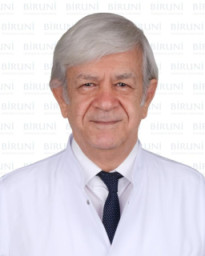
Prof. Dr. Metin GÜDEN
Radiation Oncology
Last updated:


