
Mohs Surgery - Mohs Micrographic Surgery
Mohs micrographic surgery removes basal cell and squamous cell skin cancers in thin layers under local anesthesia, checking the whole edge of each layer under the microscope the same day until it is clear. This guide explains which skin cancers suit Mohs, how the day runs, what the evidence shows on recurrence, how the wound is repaired, the risks, the first week of recovery, how long to plan for in Istanbul and the skin checks that follow at home.
About This Department
Remove the skin cancer layer by layer. With every edge checked under the microscope the same day.
In a pooled analysis in the BMJ, squamous cell skin cancer came back locally in 3.0 percent of cases after Mohs surgery, and a 23-center study of 20,821 procedures recorded adverse events in 0.72 percent.
A biopsy has shown a basal cell or squamous cell skin cancer on the face, ears, scalp, hands or another place where every millimeter of skin matters, or a skin cancer has come back after earlier treatment, and the dermatologist has recommended Mohs surgery. Mohs micrographic surgery removes the cancer in thin layers under local anesthesia, and while you wait, each layer is frozen, cut and examined under the microscope with its entire edge in view. Where cancer remains, only that spot is taken in the next layer, and the process repeats until the edges are clear. The method spares as much healthy skin as possible while checking every edge, which standard excision cannot do. Most patients go home the same day with the wound repaired. Below you will find which skin cancers suit Mohs, how the day runs, what the evidence shows, repair of the wound, the risks, the recovery, how long to stay in Istanbul, and the follow-up at home.
How Mohs differs from standard excision
Standard excision removes the tumor with a fixed margin of normal skin, then the laboratory checks a sample of slices from the specimen days later, which shows only a small fraction of the edge. Mohs flattens and examines the whole deep and side edge of each layer the same day.
On a narrow screen, swipe the table sideways to read every column.
| Feature | Mohs surgery | Standard excision |
|---|---|---|
| Edge checked | The whole edge, the same day | Sample slices, days later |
| Healthy skin removed | As little as possible | A fixed safety margin |
| Repair | Once edges are clear | Before the result is known |
Mohs is chosen where skin is precious or the tumor's edges are uncertain.
Why the whole edge matters
This second table also scrolls sideways on small screens.
| Cancer | Behavior |
|---|---|
| Basal cell carcinoma | The most common, grows locally and rarely spreads |
| Squamous cell carcinoma | Can spread to lymph nodes when large or deep |
| Melanoma in situ | Confined to the top layer of the skin |
Which skin cancers suit Mohs
American dermatology and Mohs societies rated 270 clinical situations together. They judged Mohs appropriate in 200 of them, including
- basal and squamous cell cancers on the face, ears, eyelids, lips, nose, hands, feet and genitals,
- cancers that have come back after earlier treatment,
- tumors with poorly defined edges or aggressive growth patterns under the microscope,
- and cancers in patients with weakened immunity, such as after an organ transplant.
Every edge checked, as little healthy skin lost as possible.
How the day runs
Step by step
Swipe sideways to see the whole day.
| Time | What happens |
|---|---|
| 8 to 9 | Numbing and first layer |
| 9 to 12 | Slides read, more layers if needed |
| Afternoon | Repair and dressing, then home |
One to three layers clear most tumors. Bring a book, snacks and a companion, because the day can last four to six hours.
What the evidence shows
Squamous cell carcinoma
Scroll the recurrence figures sideways on a phone.
| Treatment | Studies | Local recurrence |
|---|---|---|
| Mohs surgery | 10 | 3.0 percent |
| Standard excision | 12 | 5.4 percent |
| External radiotherapy | 7 | 6.4 percent |
A pooled analysis in the BMJ of observational studies found local recurrence after Mohs surgery of 3.0 percent across 10 studies, against 5.4 percent after standard excision and 6.4 percent after radiotherapy. A larger 2023 meta-analysis covering 137,449 patients with primary squamous cell carcinoma found that Mohs carried the lowest rate of nearly all poor outcomes, while noting that some confidence intervals overlapped with other treatments.
Repairing the wound
Three things shape the repair
- the size and depth of the final wound,
- where it sits on the face or body,
- and how much loose skin lies around it.
Small wounds close in a straight line along skin creases. Larger ones on the nose, eyelids or ears may need a local flap of neighboring skin or a skin graft, and some heal well on their own. A plastic or oculoplastic surgeon may take on complex repairs the next day.
The repair guide scrolls sideways on small screens.
| Site | Usual repair |
|---|---|
| Cheek and forehead | Straight-line closure or local flap |
| Nose | Local flap or graft |
| Eyelid | Repair by an oculoplastic surgeon |
Risks and how they are managed
A prospective study of 20,821 Mohs procedures at 23 American centers recorded adverse events in 0.72 percent, serious events in 0.02 percent and no deaths. Infection, poor wound healing and bleeding were the most common problems, and bleeding was seen mostly in people taking blood thinners.
You lower the chance of bleeding if you
- bring a list of every medicine and supplement you take,
- avoid alcohol for two days before and after,
- and keep the head raised the first night after facial surgery.
Specific risks
Is Mohs safe if I take blood thinners
The recovery
The first week
Pain stays mild. Paracetamol eases it. Ice helps too. Keep the dressing dry for 48 hours. Swelling and bruising around the eyes are common after facial surgery and settle within a week. Stitches come out at five to seven days. Body wounds take longer. Avoid heavy lifting and bending for a week.
How long to stay in Istanbul
Plan for one week.
Mohs packages listed on Bookimed for Istanbul hospitals show same-day discharge or one night, with pathology included, and the platform's sample plan lists two days in the country. We plan a week so that stitches can come out before you fly and any flap or graft is checked.
What decides the cost
The number of tumors, their size and site, the number of layers and the type of repair shape the figure.
Photos of the lesion and the biopsy report let our team estimate it. We charge nothing for that.
Arranging the trip
Clear photos of the skin cancer, the biopsy report and notes on any earlier treatment, sent on WhatsApp, open the review. A coordinator answers and remains your contact through surgery, stitch removal and later skin checks. Our staff speak seven languages. Interpreters cover others. If you are admitted overnight, a relative can stay on the companion bed. The international office arranges the hotel, the visa invitation letter ten days before travel and airport transfers, and halal, vegetarian and diabetic meals, a prayer room and a female physician are available on request.
Once you are back home
Skin checks every six to twelve months matter for life, because one skin cancer raises the chance of another. Daily sunscreen and covering up outdoors lower that chance. Send photos of the scar or any new spot through the coordinator for review.
See a doctor soon for bleeding that keeps going after 20 minutes of firm pressure, for spreading redness, warmth or pus, for a fever, or for a new or changing spot near the scar.
Mohs surgery FAQ
Will I be awake?
How big will the scar be?
Is Mohs used for melanoma?
Can several tumors be treated in one visit?
Can a family member come with me?
References
- Connolly SM, Baker DR, Coldiron BM, et al. AAD/ACMS/ASDSA/ASMS 2012 appropriate use criteria for Mohs micrographic surgery. J Am Acad Dermatol. 2012;67(4):531-550. doi:10.1016/j.jaad.2012.06.009
- Lansbury L, Bath-Hextall F, Perkins W, Stanton W, Leonardi-Bee J. Interventions for non-metastatic squamous cell carcinoma of the skin: systematic review and pooled analysis of observational studies. BMJ. 2013;347:f6153. doi:10.1136/bmj.f6153
- Zakhem GA, Pulavarty AN, Carucci J, Stevenson ML. Association of patient risk factors, tumor characteristics, and treatment modality with poor outcomes in primary cutaneous squamous cell carcinoma. JAMA Dermatol. 2023;159(2):160-171. doi:10.1001/jamadermatol.2022.5508
- Alam M, Ibrahim O, Nodzenski M, et al. Adverse events associated with Mohs micrographic surgery: multicenter prospective cohort study of 20,821 cases at 23 centers. JAMA Dermatol. 2013;149(12):1378-1385. doi:10.1001/jamadermatol.2013.6255
Editor's note
Written by the Biruni Hospital medical editorial team. Reviewed by Prof. Dr. Metin GÜDEN, Radiation Oncology.
Medically reviewed by
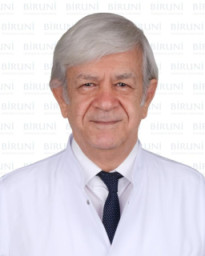
Prof. Dr. Metin GÜDEN
Radiation Oncology
Last updated:


