Skip to content
Mini Abdominoplasty - Mini Tummy Tuck
Plastic, Reconstructive and Aesthetic Surgery

Mini Abdominoplasty - Mini Tummy Tuck

About This Department

 
Plastic Surgery

A mini tummy tuck removes the pouch below the navel through a scar close to the length of a cesarean section. The operation suits a small group of patients well, and choosing it for the wrong abdomen leaves a disappointing result.

After pregnancy or weight change, some people are left with a small bulge of loose skin and fat low on the abdomen, while the skin above the navel stays firm. A mini abdominoplasty takes away that lower skin, tightens the muscles below the navel if they have separated, and leaves the navel where it is. The operation is shorter, the scar shorter and recovery quicker than a full tummy tuck. When the loose skin or muscle separation reaches above the navel, only a full tummy tuck fixes it. Send us photographs of your abdomen standing and sitting, with your height, weight and pregnancy history, and a plastic surgeon will tell you honestly which operation fits and how long to plan.

3.1%
Major complications after a tummy tuck done alone
10.9%
Fluid collection after tummy tucks, pooled from 143 studies
5 to 7 days
In Istanbul before flying home
Free
Plastic surgeon's review of your photos
Free consultation

How does a mini tummy tuck differ from a full one?

Three things separate the two operations. The length of the scar, the fate of the navel, and how much of the muscle wall is repaired.

The scar
A mini leaves a low scar hidden by underwear, 12 to 20 centimeters long in most patients. A full tuck runs from hip to hip.
The navel
In a mini the navel stays untouched. In a full tuck it is freed and brought out through a new opening, which leaves a small scar around it.
The muscles
A mini repairs muscle separation below the navel only. A full tuck can repair it from the breastbone to the pubic bone.
Abdominoplasty results in significantly improved quality of life, body satisfaction, effectiveness, sexual functioning, self-esteem, and mental health.
Prospective study of 64 women, Plastic Surgery International, 2014
Before surgery
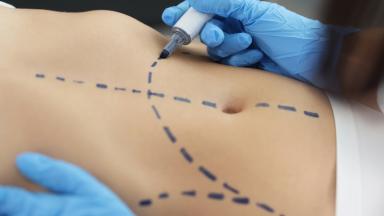
Markings with you standing, blood tests and a clot risk check. The operation is done under general anesthesia or, in some centers, spinal anesthesia with sedation.
The operation
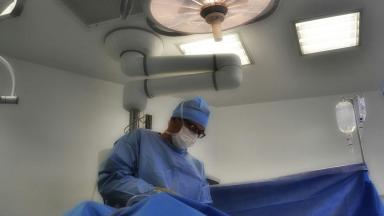
The surgeon removes an ellipse of lower abdominal skin and fat, tightens any separated muscle below the navel with stitches, and closes in layers. Liposuction of the flanks is often added. One to two hours.
Waking up
A compression garment, sometimes a small drain, and walking the same evening. Most patients stay one night.

Who suits a mini

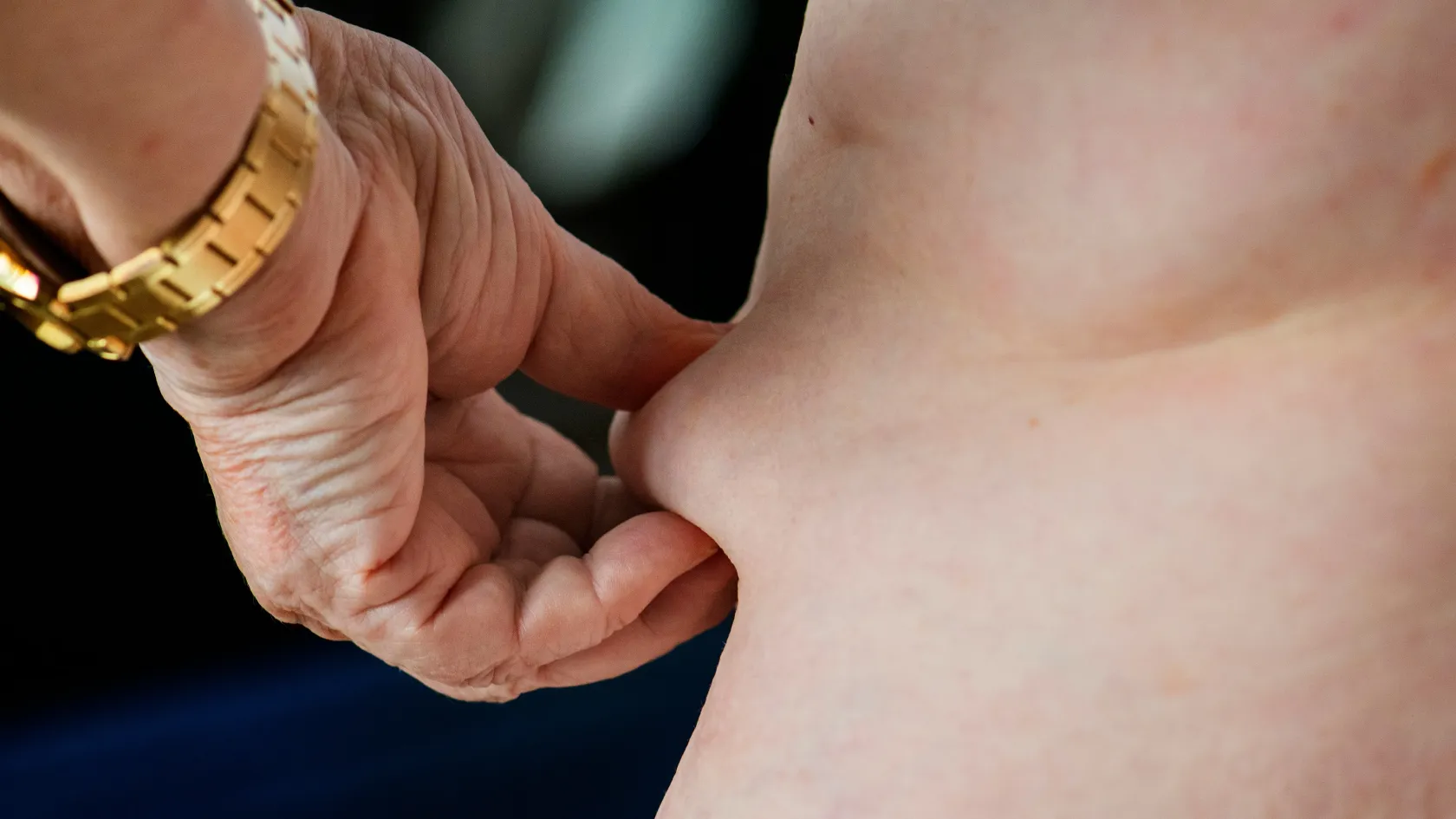
Pinch the skin above and below the navel. If only the lower skin is loose, the upper abdomen is flat when you stand, your weight is close to your goal and stable, and you do not plan more pregnancies, a mini will likely be enough. Slim women with a small post-pregnancy pouch and men with a lower abdominal roll after moderate weight loss are the typical candidates.


When a full tummy tuck is the honest answer
Loose or crepey skin above the navel, stretch marks spread over the whole abdomen, a bulge that reaches the ribs, or muscle separation above the navel all call for a full abdominoplasty. A mini in these patients tightens the lower abdomen and leaves a looser upper one. That can look worse than before. Some surgeons offer an extended mini, which frees the navel from below without a new scar, as a middle step.

Separated muscles after pregnancy

During pregnancy the two vertical bands of the abdominal muscle move apart to make room for the baby. A Norwegian study that followed 300 first-time mothers found a separation of two fingerbreadths or more in 60.0 percent six weeks after birth and in 32.6 percent a year later. Much of it closes on its own in the first months, and exercise helps.

A lasting gap needs surgery. In a Swedish randomized trial of 86 patients with separation, repair by stitching or by mesh reduced pain and improved muscle strength and quality of life at one year, while a three-month training program strengthened the muscles and left patients still in pain. In a mini tummy tuck, only the part of the gap below the navel can be closed.

This table scrolls sideways on a narrow screen. Swipe or drag to see every column.

Mini against full tummy tuck
  Mini abdominoplasty Full abdominoplasty
Skin removed Below the navel only From above the navel to the pubic area
Scar Short, low, 12 to 20 cm Hip to hip, plus a scar around the navel
Navel Untouched Repositioned
Muscle repair Below the navel Full length when needed
Operating time One to two hours Two to four hours
Back to desk work About one week About two weeks
  1. Reach a stable weight within a few kilograms of your goal and keep it for six months.
  2. No nicotine for four weeks either side of surgery, since it starves the skin edges of blood and is the strongest avoidable cause of wound breakdown.
  3. Wait at least six months after birth and after breastfeeding ends.
  4. Pause hormonal contraception and blood thinners if the surgeon advises it.

Timing after pregnancy

Another pregnancy stretches the abdomen again and can undo the result, and surgeons advise waiting until the family is complete. Pregnancy after a tummy tuck carries no extra risk for mother or baby, and many women who later have another child return for a small revision once they have recovered from the birth and finished breastfeeding.

What are the risks, and what do patients gain?

Tummy tucks carry more risk than most cosmetic operations.

Complications in a large registry

Across 25,478 tummy tucks in one American registry, performed between 2008 and 2013, major complications occurred in 4.0 percent overall, against 1.4 percent for other cosmetic operations. When the tummy tuck was done alone the rate was 3.1 percent. Blood collections accounted for 31.5 percent of complications, infections for 27.2 percent and suspected or confirmed blood clots for 20.2 percent.

Risk rose with male sex, age of 55 or more, a body mass index of 30 or more and combined procedures. Adding liposuction raised it to 3.8 percent, and combining several body-contouring operations to 10.4 percent. The registry did not separate mini from full tummy tucks. The smaller operation involves less dissection and is expected to sit at the lower end of these figures.


Fluid under the skin

Seroma means a pocket of clear fluid that gathers where skin was lifted from the muscle. A meta-analysis of 143 studies and 27,834 patients put its frequency at 10.9 percent after abdominoplasty. Small seromas absorb, larger ones are drained with a needle in the clinic, sometimes more than once.

Surgeons reduce the risk with quilting stitches that tack the skin to the muscle, drains in some cases and a compression garment. The limited area lifted in a mini tuck lowers the risk further. Other complications include delayed healing at the scar, a thick or widened scar, numbness of the lower abdominal skin that improves over months, and small dog ears at the ends of the scar that a touch-up removes.


This table scrolls sideways on a narrow screen. Swipe or drag to see every column.

Complications by combination, 25,478 tummy tucks
Operation Major complications
Tummy tuck alone 3.1 percent
With liposuction 3.8 percent
With a breast procedure 4.3 percent
With liposuction and a breast procedure 4.6 percent
With liposuction and another body-contouring operation 10.4 percent

What is recovery like?

Shorter than after a full tuck.

  • Walk the same evening and several times a day after.
  • Sleep bent at the hips.
  • Wear the compression garment day and night for four to six weeks.
  • No lifting above five kilograms and no abdominal exercise for six weeks.

Recovery timeline

The first days feel tight. Tablets control the discomfort. Desk work resumes after a week to ten days, driving once you can brake hard without pain, near the two-week mark. Gym work returns at six weeks, starting gently. The scar stays pink for several months and fades over a year, and silicone gel or sheets from the third week help it settle, while sun on a fresh scar darkens it for good, so it stays covered or protected with a high-factor cream through the first summer, and any thickening or itching after two months deserves a message to the surgeon, since an early steroid injection flattens a scar that is starting to rise far better than treatment months later.


Days, cost and the trip

  1. Photographs of the abdomen from the front and side, standing and sitting.
  2. Height, weight, number of pregnancies and births, including cesarean sections.
  3. Previous abdominal surgery, hernias, medicines and any history of blood clots.

Seven days cover it.

Plan five to seven days in Istanbul. Day one brings the consultation, blood tests and markings. The operation follows, with one night in hospital, then a wound check and drain removal if one was used before you fly. On the plane, keep the garment on, drink water and walk every hour.

The price reflects the operating time, the anesthesia, the hospital night, the garment and the check-ups, and liposuction of the flanks or a muscle repair adds to it. Your own figure follows the free review of your photographs.

From the first WhatsApp message a single coordinator plans the trip, with the visa invitation letter ten days ahead, the transfer from the airport and a hotel near the hospital for you and a companion. Interpreters cover languages beyond the seven the team speaks. Meals come halal, vegetarian or diabetic on request, a prayer room is open to patients, and requests for a female surgeon or anesthetist are honored whenever the schedule allows. Back home, photographs sent at two weeks, six weeks and three months let the surgeon follow the scar and the contour and answer questions on the garment and exercise.

Mini tummy tuck FAQ

What is the difference between a mini and a full tummy tuck?
A mini removes skin below the navel through a short scar and leaves the navel untouched. A full tuck removes skin from above the navel, repositions the navel and can repair the muscles along their full length.
Am I a candidate for a mini tummy tuck?
If only the skin below the navel is loose, the upper abdomen is flat when you stand and your weight is stable, you are a likely candidate. The surgeon decides from photographs and an examination.
Can a mini tummy tuck fix separated muscles?
Only below the navel. Separation above the navel needs a full tummy tuck.
How long is recovery after a mini tummy tuck?
Desk work in a week to ten days, driving at two weeks and exercise at six weeks.
What are the risks?
Fluid collection, blood collection, infection, clots and scar problems. After tummy tucks done alone, major complications occurred in 3.1 percent in a large registry.
Can my family come with me?
Yes. A companion stays at the hotel we book for you, close enough to visit every day.

References

  1. Winocour J, Gupta V, Ramirez JR, et al. Abdominoplasty: Risk Factors, Complication Rates, and Safety of Combined Procedures. Plastic and Reconstructive Surgery. 2015;136(5):597e-606e.
  2. Salari N, Fatahi B, Bartina Y, et al. The Global Prevalence of Seroma After Abdominoplasty: A Systematic Review and Meta-Analysis. Aesthetic Plastic Surgery. 2021;45(6):2821-2836.
  3. Saariniemi KM, Salmi AM, Peltoniemi HH, et al. Abdominoplasty improves quality of life, psychological distress, and eating disorder symptoms: a prospective study. Plastic Surgery International. 2014;2014:197232.
  4. Sperstad JB, Tennfjord MK, Hilde G, et al. Diastasis recti abdominis during pregnancy and 12 months after childbirth: prevalence, risk factors and report of lumbopelvic pain. British Journal of Sports Medicine. 2016;50(17):1092-1096.
  5. Emanuelsson P, Gunnarsson U, Dahlstrand U, et al. Operative correction of abdominal rectus diastasis (ARD) reduces pain and improves abdominal wall muscle strength: A randomized, prospective trial comparing retromuscular mesh repair to double-row, self-retaining sutures. Surgery. 2016;160(5):1367-1375.

Editor's note

Written by the Biruni Hospital medical editorial team. Reviewed by Assoc. Prof. Dr. Fatih CERAN, Plastic, Reconstructive and Aesthetic Surgery.

Related Treatments

View All