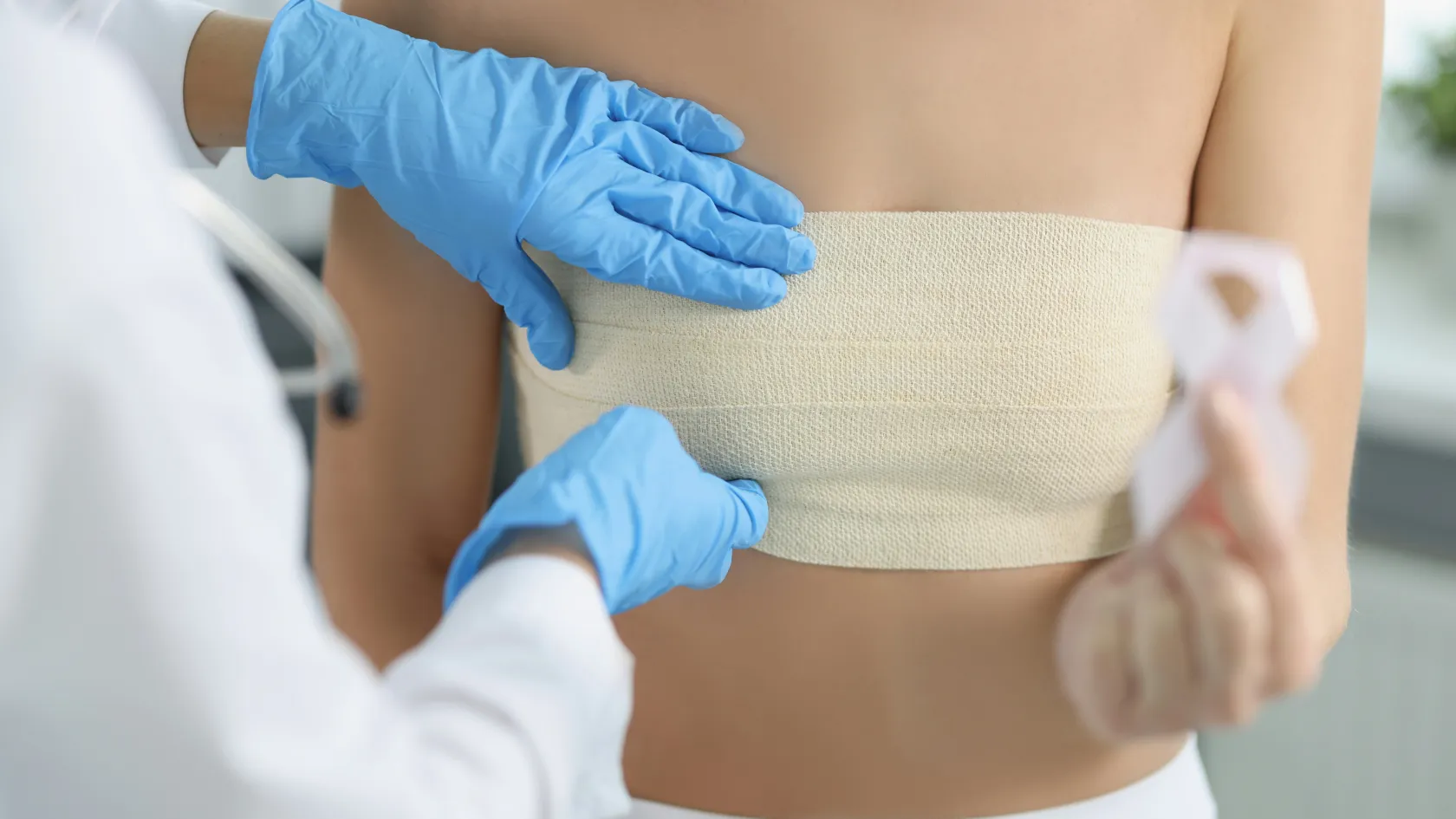
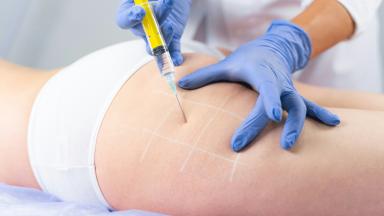
Mastopexy, or breast lift surgery, removes stretched skin, reshapes the breast and raises the nipple and areola after pregnancy, breastfeeding or weight loss. It can be combined with an implant or fat transfer to restore upper fullness. At Biruni Hospital in Istanbul, our plastic surgery team chooses the periareolar, vertical or anchor technique from your measurements, with a stay of six to seven days and video follow-up for a year.
About This Department
Plastic Surgery
Pregnancy, breastfeeding, weight loss and time stretch the skin that holds the breast up. A breast lift reshapes the breast and raises it back to the chest.
Mastopexy, or breast lift surgery, removes excess skin, reshapes the breast tissue and moves the nipple and areola higher, so that a breast that has dropped sits in a younger, firmer position. It does not add volume on its own. Women who have also lost fullness at the top of the breast may combine the lift with an implant or fat transfer. A systematic review of 4,856 lifts combined with implants found a total complication rate of 13.1 percent and a reoperation rate of 10.7 percent, with recurrent sagging the most frequent problem at 5.2 percent (Khavanin and colleagues, Plastic and Reconstructive Surgery, 2014). The price of a lift comes in scars, around the areola and often below it, which fade over a year or two. This page explains the grades of sagging, who is suited, scar patterns, lifts with implants or your own tissue, risks, the operation day, recovery, how long the result lasts, and how patients from abroad arrange a breast lift at Biruni Hospital in Istanbul.
4,856
Lifts combined with implants pooled in a systematic review of 23 studies
10.7
Percent reoperation rate after a lift combined with an implant
5.2
Percent of women whose breasts sagged again after a combined lift, the most common complication
Free
Review of your photos and goals by our plastic surgery team
A lift raises the nipple and areola to the level of the fold under the breast or slightly above it, tightens the skin around the breast and reshapes the tissue into a rounder, higher cone.
Large, stretched areolas are reduced in the same operation to a diameter in proportion with the new breast, usually around four centimeters.
A lift restores position and shape. An implant or fat restores volume. Many women need one, some need both.
2
Related operations
Breast reduction removes a larger amount of tissue for heavy breasts, and augmentation alone adds volume without lifting. Our breast augmentation page covers implants in detail.
Lift, augmentation and reduction
Operation
Main change
Typical candidate
Mastopexy
Position and shape
Sagging with adequate volume
Augmentation-mastopexy
Position, shape and volume
Sagging with empty upper breast
Reduction
Size and weight
Heavy breasts, neck and back pain
Grades of sagging
Regnault classification of breast ptosis
Grade
Nipple position
Usual treatment
Grade 1, mild
At the level of the fold
Periareolar lift or implant alone
Grade 2, moderate
Below the fold, above the lowest part of the breast
Vertical lift
Grade 3, severe
At the lowest point, facing down
Vertical or anchor lift
Pseudoptosis
Nipple above the fold, tissue hangs below
Lift of the lower breast or implant
We measure the distance from the notch at the base of the neck to the nipple, the distance from nipple to fold, the width of the breast and the stretch of the skin. These figures decide the technique more than the grade alone.
1
Asymmetry
Most women have one breast lower or larger than the other. The lift corrects each side to its own measurements, and a small reduction on one side balances size.
The nipple moves with the breast
Sagging happens to the whole breast.
A prospective measurement study of 196 women found that in 60 percent of those presenting with sagging, both nipples still sat at or above the most projecting point of the breast, and the largest displacement measured was 6.5 centimeters (Swanson, Plastic and Reconstructive Surgery, 2013). In other words, the nipple descends with the breast rather than sliding down on it, so a good lift raises and reshapes the breast mound first and then places the nipple on the new peak, instead of hauling the nipple upward on its own and leaving it staring at the sky once the tissue settles.
Overelevation looks worse than mild sagging.
Who is suited
The best time for a lift comes when weight has been stable for six months and family plans are complete, since pregnancy and weight change stretch the breast again.
Before a breast lift
Check
Purpose
Detail
Breast imaging
Exclude hidden disease
Ultrasound, mammogram from age 40 or with family history
Weight stability
Lasting result
Six months at a steady weight
Smoking
Blood supply to skin and nipple
Stop four weeks before and after
Breastfeeding
Tissue settled
Six months after it ends
Diabetes, high blood pressure and blood thinners are managed with your doctors before surgery. Women who have lost a large amount of weight after bariatric surgery often need a more extensive lift and sometimes further body contouring.
Techniques and scars
1
Choice of pattern
The scar pattern follows the amount of excess skin, so a small correction leaves a short scar around the areola while severe sagging with much loose skin needs the longer anchor pattern.
Three patterns
Around the areola, the scar hides at the color border. The vertical scar runs down from the areola to the fold. The horizontal scar lies in the fold.
Breast lift techniques
Technique
Scar
Suited to
Periareolar, donut
Around the areola
Mild sagging, large areolas
Vertical, lollipop
Around the areola and down to the fold
Moderate sagging, the most common choice
Inverted T, anchor
Lollipop plus a scar in the fold
Severe sagging, much loose skin
2
Keeping the nipple alive
In every technique the nipple and areola stay attached to a stalk of tissue that carries their blood and nerve supply. That preserves feeling in most women and keeps the possibility of breastfeeding.
Scars as the price
Every lift leaves scars. That trade deserves a clear look before surgery.
Scars start red and firm, stay prominent for three to six months, and then flatten and fade over one to two years, ending as pale lines that most bras and bikinis cover. Tension, smoking, sun and a personal tendency to thick scars make them wider, and we use silicone gel or tape for several months to help them settle. Women with darker skin carry a higher risk of raised scars, and we plan closure and aftercare with that in mind.
A lower, fuller breast with no scar or a lifted breast with a scar. Each woman chooses her balance.
Lift with an implant
One operation or two
Single-stage augmentation-mastopexy, pooled results
Outcome
Pooled rate
Note
Any complication
13.1 percent
Across 23 studies
Recurrent sagging
5.2 percent
Most common problem
Poor scarring
3.7 percent
Second most common
Capsular contracture
3.0 percent
Short follow-up in most studies
Reoperation
10.7 percent
From 13 studies
How we decide
A lift and an implant pull in opposite directions, the lift tightening the skin and the implant stretching it. For most women we combine them in one operation with a moderate implant. When sagging is severe or the skin very thin, we lift first and place the implant three to six months later, which lowers the risk to the nipple and makes the final shape more predictable (Khavanin and colleagues, 2014).
Lift with your own tissue
1
Autoaugmentation
Tissue from the lower breast, which would otherwise be removed, can be folded under the gland and fixed to the chest wall to fill the upper breast without an implant.
Fat transfer adds a modest amount of volume to the upper breast in the same operation, using fat taken by liposuction from the abdomen or thighs. Only part of the fat survives, so it suits small gains.
2
Internal support
In women with very soft tissue, a dermal flap or an absorbable mesh can act as an internal bra, supporting the lower breast while it heals.
Risks
Most problems after a lift are minor and heal with dressings. Serious complications remain uncommon.
Swelling, bruising and tightness in the first weeks.
Small wound separations where the vertical and horizontal scars meet, healing with dressings over a few weeks.
Changes in nipple feeling, returning in most women over months.
Less common problems
Complications after a breast lift
Complication
How often
Management
Recurrent sagging
5.2 percent after combined lifts
Revision after a year
Wide or raised scars
3.7 percent
Silicone, steroid injection, scar revision
Asymmetry
2.9 percent
Minor revision
Infection, hematoma, seroma
Under 2 percent each
Antibiotics, drainage
Loss of nipple skin
Rare
Dressings, sometimes reconstruction
Smoking multiplies the risk of wound breakdown and nipple loss. We do not operate on active smokers.
Pregnancy and breastfeeding
Can I breastfeed after a breast lift?
Many women do. Because the nipple stays attached to the underlying gland and ducts, the ability to breastfeed survives in most lifts, although no surgeon can guarantee it. Pregnancy after a lift stretches the skin again and can bring back some sagging, and so we suggest waiting until family plans are complete.
Mammograms and ultrasound remain reliable after a lift. Tell the screening center about the operation, since healed scar tissue can show small calcifications that radiologists recognize.
Before a planned pregnancy
With a pregnancy expected within two years, we suggest postponing the lift until after it and after breastfeeding ends, so that the new shape is not stretched out again.
The operation day
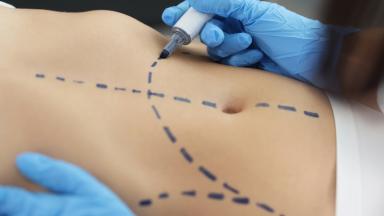
No food for six hours and clear water until two hours before. We mark the breasts while you stand, since the markings define the new position.
Timeline on the day
Step
Timing
Note
Admission and marking
Morning
Photographs and final plan
Surgery
Two to three hours
Longer with an implant
Recovery room
One to two hours
Pain relief, surgical bra fitted
Ward
Overnight
Discharge next morning
Stitches and drains
Dissolving stitches close the skin under the surface, and strips or glue cover the wounds. Drains are used only when a large amount of tissue is removed and come out within a day or two.
1
Pain
A lift without an implant hurts less than an augmentation, with tightness and soreness over the first days that settle with regular painkillers.
Recovery
1
The first weeks
Wear the surgical bra day and night for six weeks, sleep on your back with the upper body raised, and keep arms below shoulder height for the first days.
Showering is allowed from the second day. The breasts look high and square at first, and the lower part softens and rounds over three months as the skin relaxes.
Recovery after mastopexy
Time
What happens
Activity
Days 1 to 3
Tightness, swelling
Walking, light tasks
Week 1
Wound check
Desk work
Weeks 4 to 6
Wounds strong
Gym, running, underwire bra
Month 3
Shape settles
Result close to final
Months 12 to 18
Scars pale
Final review
How long a lift lasts
Gravity keeps working
A lift resets the clock without stopping it. Heavy breasts, thin elastic skin, weight change, pregnancy and a large implant all shorten the result, and a moderate implant, a steady weight and a supportive bra lengthen it.
What affects longevity
Factors that shorten or lengthen a lift
Factor
Effect
What helps
Large implant
Stretches the lower breast
Moderate size
Weight gain or loss
Changes volume and skin
Stable weight
Pregnancy
Stretches skin again
Lift after family plans
Skin quality
Poor elasticity sags sooner
Internal support, realistic goals
1
Touch-up lifts
Some women choose a smaller revision years later, which leaves the same scars and needs a shorter recovery.
Weight and time after a lift
The breast holds fat. Weight changes show there first.
A gain of a few kilograms fills and stretches the breast, and a later loss leaves the skin looser than before, so keeping a steady weight protects the lift better than any technique.
Time still passes.
For patients from abroad
Plan for six to seven days in Istanbul. The wound check on day five or six clears you for the flight home.
Send front, side and three-quarter photographs standing with arms down, your height, weight and bra size, recent breast imaging, and a short note on pregnancies and weight changes. After you return home, follow-up continues by video at one, three, six and twelve months, and we send your local doctor the operative report.
One coordinator from the international patients office handles arrangements from the first message through discharge and answers the same WhatsApp number after you return. The office works in English, Arabic, French, Russian, Serbian, Romanian and Spanish and books interpreters for other languages, and it arranges the visa invitation letter, airport transfers, daily transport and accommodation near the hospital. Halal, vegetarian and diabetic meals, a prayer room on site, and a female physician on request wherever the rota allows.
1
Travel after surgery
Walk in the aisle, drink water and wear compression stockings on the flight to lower the risk of blood clots.
Cost
The price depends on the technique, whether an implant or fat transfer is added and the nights in hospital.
What a quote for mastopexy covers
Item
Included
Priced separately
Surgery
Surgeon, anesthesia, operating room
Implants or fat transfer if added
Hospital
One night, medicines on discharge
Extra nights
Aftercare
Surgical bra, scar silicone, video follow-up for a year
Later revision
We quote after reviewing your photographs, before you travel.
Comparing quotes
Compare quotes for the same technique and aftercare, and ask whether the implant, if planned, and the second stage of a two-stage lift are included.
Single and two-stage plans
Plan
Operations
Cost pattern
Lift alone
One
Single package
Lift with implant, one stage
One
Single package including implants
Lift then implant
Two, months apart
Two packages
References
Khavanin N, Jordan SW, Rambachan A, Kim JYS. A systematic review of single-stage augmentation-mastopexy. Plast Reconstr Surg. 2014;134(5):922-931.
Swanson E. Prospective photographic measurement study of 196 cases of breast augmentation, mastopexy, augmentation/mastopexy, and breast reduction. Plast Reconstr Surg. 2013;131(5):802e-819e.
Editor's note
Written by the Biruni Hospital medical editorial team. Reviewed by Prof. Dr. Atilla ARINCI, Plastic, Reconstructive and Aesthetic Surgery.