A lobectomy removes one lobe of the lung with its lymph nodes and is the standard operation for early lung cancer, done through small keyhole incisions for most patients with three to five nights in hospital. This page explains who needs one and when a smaller segmentectomy is enough, how keyhole, robotic and open approaches compare, the operation and recovery week by week, the risks, what three randomized trials show, and how patients from abroad arrange it in Istanbul.
About This Department
Thoracic surgery
Removing one lobe of the lung is the operation that cures early lung cancer. Done through three small cuts, it sends most patients home in three to five days. The lung that remains does the work of the whole.
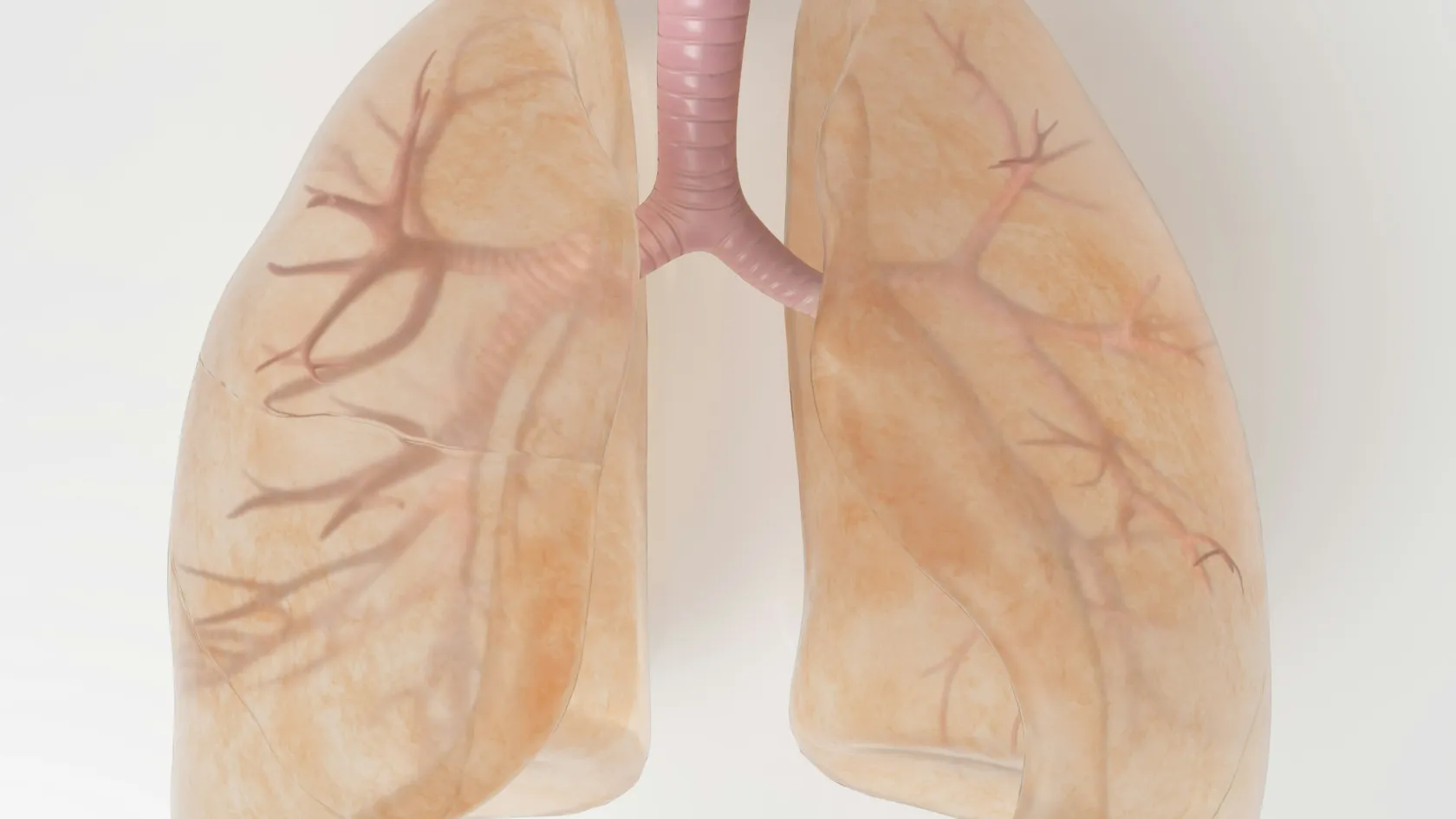
A lobectomy removes one of the five lobes of the lungs, three on the right and two on the left, together with the lymph nodes that drain it. It has been the standard operation for lung cancer since a randomized trial in 1995 showed that taking less than a lobe tripled the rate of recurrence at the site (Ginsberg and Rubinstein, Annals of Thoracic Surgery, 1995). A Japanese trial published in 2022 then showed that for tumors of two centimeters or less at the edge of the lung, removing a single segment gave five-year survival of 94.3 percent against 91.1 percent for lobectomy (Saji and colleagues, Lancet, 2022), so the operation is now matched to the tumor. Done by video-assisted thoracoscopic surgery, VATS, through small incisions, it causes less pain and a better quality of life for the first year than open surgery (Bendixen and colleagues, Lancet Oncology, 2016). This page explains what a lobectomy is and who needs one, how surgeons choose between keyhole, robotic and open approaches, what the operation and recovery involve, the risks, what the trials show, and how patients from abroad arrange it at Biruni Hospital in Istanbul.
94.3
Percent five-year survival after segmentectomy for small peripheral tumors, against 91.1 percent after lobectomy
38
Percent of patients with clinically relevant pain in the first 24 hours after keyhole lobectomy, against 63 percent after open surgery
3
Times the local recurrence rate when less than a lobe was removed for a tumor that needed one, in the 1995 trial
Free
Review of your CT, PET, biopsy and breathing tests
Each lung has lobes, and each lobe has its own airway, artery and vein. A lobectomy divides those three structures, separates the lobe from its neighbors along the fissures, and lifts it out with the tumor inside it and a margin of healthy lung around it. The lymph nodes along the airway and in the center of the chest are removed at the same time and examined, because they decide the stage and whether chemotherapy follows. The remaining lobes expand over the following weeks to fill the space.
Why a whole lobe
Why not remove only the tumor?
Because lung cancer spreads along the lymph channels within the lobe before it shows on any scan. The Lung Cancer Study Group randomized 247 patients with small peripheral cancers to lobectomy or a smaller resection and found the local recurrence rate tripled and the death rate rose by 30 percent after the smaller operation, with no gain in breathing capacity to show for it. Lobectomy became the standard on that evidence, and for tumors over two centimeters, tumors near the center of the lung and tumors of aggressive type, it remains so.
When less is enough
For a solid tumor of two centimeters or less at the edge of the lung, the Japanese trial of 1,106 patients showed that removing the segment that contains it gives survival at least as good, with 3.5 percent more breathing capacity preserved and a local relapse rate of 10.5 percent against 5.4 percent that did not translate into more deaths. A segmentectomy asks more of the surgeon than a lobectomy, because the planes between segments are not marked by fissures, and the choice between the two is made on the CT before surgery and confirmed at the operation.
Who needs one
Cancer, for nine patients in ten. A handful of benign diseases for the rest.
1
Non-small cell lung cancer, stage I and II
The main reason. A tumor confined to the lung, with or without nodes inside the lung, in a patient fit for surgery. Removing the lobe offers the best chance of cure at these stages.
2
Stage III after chemotherapy or immunotherapy
Selected patients whose central nodes were involved and have responded to drug treatment go on to lobectomy, decided at the tumor board, with radiation reserved for those who do not.
3
Benign disease
Bronchiectasis confined to one lobe with repeated infections, fungal balls, tuberculosis that has destroyed a lobe, congenital malformations in children and, rarely, a lung abscess or a lobe destroyed by injury.
How is fitness for the operation judged?
Breathing tests first. Spirometry measures the volume the patient can blow out in one second, FEV1. A diffusion test, DLCO, measures how well gas crosses into the blood. From both, the surgeon calculates what would remain after the lobe is gone, and a predicted value above 40 percent of normal on each makes the operation safe. Below that, a cardiopulmonary exercise test on a bicycle measures oxygen uptake, and a result above 15 milliliters per kilogram per minute still permits surgery. Patients below these thresholds are offered a segmentectomy or stereotactic radiation instead. Smoking is stopped at least four weeks before, and a patient who cannot stop is asked to say so, because the anesthesiologist plans differently.
Keyhole, robotic or open
Same operation inside the chest. Different route in.
Is keyhole surgery as safe as open surgery for cancer?
Yes, when the surgeon does it routinely. The lobe, the margins and the lymph nodes removed are the same, and survival in large registries is the same. The Danish randomized trial of 206 patients found the proportion in clinically relevant pain in the first day was 38 percent after VATS and 63 percent after open surgery, moderate to severe pain was less frequent through the whole first year, and quality of life was better, with the same rate of surgical complications (Bendixen and colleagues, 2016). Open surgery keeps its place for large tumors, tumors invading the chest wall, dense scarring from previous infection, and the rare occasion when bleeding during a keyhole operation demands it.
The three routes
Approaches to lobectomy
Approach
How
Where it fits
VATS, video-assisted thoracoscopic surgery
Two to four incisions of one to four centimeters, a camera and long instruments, no spreading of the ribs
The standard for stage I and II cancer and benign disease
Robotic
The same incisions, with instruments that articulate like a wrist and a three-dimensional view, controlled from a console
Central tumors, difficult node dissection, and segmentectomy where precision at the segmental planes helps
Open thoracotomy
A 12 to 20 centimeter incision between the ribs, which are spread
Large or invasive tumors, dense adhesions, conversion from keyhole
1
Uniportal VATS
A single four-centimeter incision, used by some surgeons for the same operation, with recovery similar to multi-port VATS.
2
Whichever route
The lobe leaves the chest in a bag through the largest incision, and a chest tube is placed to drain air and fluid while the remaining lung seals.
Anesthesia. General anesthesia with a double-lumen tube that lets the anesthesiologist collapse the lung being operated on while the other breathes.
Exposure. The patient lies on the side. The incisions are made, the camera goes in, and the lobe is inspected to confirm the plan.
Division. The vein, the artery and the airway to the lobe are isolated one by one and divided with stapling devices that seal as they cut. The fissures are stapled.
Nodes. Lymph nodes from at least three stations in the center of the chest are removed for the pathologist.
Closure. A chest tube is placed, the lung is reinflated under direct vision to check for leaks, and the incisions are closed with absorbable sutures.
The operation and the days after
Two to three hours in the operating room. Three to five nights in the hospital. Four to six weeks to feel like yourself.
The first days
1
The day of surgery
Awake in the recovery room within an hour, with a chest tube on one side and a pain pump or a nerve block placed by the anesthesiologist. Sitting up by evening, on a ward rather than intensive care for most patients.
2
Day one
Walking the corridor with a physiotherapist, breathing exercises with an incentive spirometer every hour, eating normally. A chest X-ray checks the lung has expanded.
3
Days two to five
The chest tube comes out once the air leak has stopped and the drainage is low, and discharge follows within a day of that.
Week one at home. Walking daily, increasing distance. Painkillers by mouth. The wound check at the clinic.
Weeks two to four. Stairs, light housework, short outings. Breathlessness on effort that improves week by week. The pathology report and the decision on chemotherapy.
Weeks four to eight. Return to desk work, driving, and, after six weeks, lifting and sport. Air travel from two weeks, once the surgeon has confirmed on X-ray that no air remains in the chest.
Three months and beyond. Breathing capacity settles at 80 to 90 percent of what it was, and for most people that difference is not felt in daily life.
1
The chest tube
The part patients remember. It drains air that leaks from the cut surface of the lung until the surface seals, in most patients within three days. A leak that lasts longer, in about one patient in ten, means a longer stay or, occasionally, going home with a small portable drain.
During 52 weeks of follow-up, episodes of moderate-to-severe pain were significantly less frequent after VATS than after anterolateral thoracotomy, and self-reported quality of life was significantly better (Bendixen and colleagues, 2016).
Risks and life with one lobe less
Lower than they were. Not zero.
Complications after lobectomy
Complication
How often
What is done
Prolonged air leak over five days
10 to 15 percent
Longer drainage, sometimes a chemical seal or a portable drain
Irregular heart rhythm, atrial fibrillation
10 to 20 percent, more with age
Medicines, settles within days in nearly all
Pneumonia
5 to 10 percent
Antibiotics, physiotherapy, prevented by early walking and stopping smoking
Bleeding needing a return to surgery
1 to 2 percent
Reoperation
Leak from the airway stump
Under 1 percent
Reoperation or a stent, the most serious complication
Death within 30 days
1 to 2 percent overall, under 1 percent for keyhole stage I
Lower in high-volume centers and in patients with good breathing tests
No 30-day or 90-day mortality was observed in either group, and one or more postoperative complications of grade 2 or worse occurred in 26 percent after lobectomy and 27 percent after segmentectomy (Saji and colleagues, 2022).
Living with one lobe less
Breathing. The remaining lobes take over most of the function of the one removed. Patients who were not short of breath before are rarely short of breath afterward at rest or on ordinary exertion. Climbing, running and altitude are felt for a few months and then, for most, no longer.
Pain. A numb or tender patch below the incisions for months, and in a minority of patients a chronic pain along the rib that needs a nerve block or medicine.
Follow-up. A CT scan every six months for two years and yearly to five years, because a patient who has had one lung cancer is at risk of another, and the second is caught early on the same schedule.
What the trials show
Three randomized trials, thirty years apart, settled the three questions patients ask.
Segmentectomy or lobectomy for a small tumor?
Segmentectomy, for a solid tumor of two centimeters or less at the edge of the lung, according to JCOG0802, which randomized 1,106 patients and found five-year survival of 94.3 percent against 91.1 percent, with the difference driven by fewer deaths from other diseases in the group that kept more lung. Local relapse was more frequent after segmentectomy, 10.5 against 5.4 percent, and was treated when it occurred. The trial authors recommended segmentectomy as the standard for this group, and a parallel North American trial reached a similar conclusion for sublobar resection. For larger or central tumors, lobectomy remains the operation.
The three trials
Trial
Question
Answer
Lung Cancer Study Group, 1995, 247 patients
Can less than a lobe be removed for a small peripheral cancer
Local recurrence tripled and deaths rose. Lobectomy became the standard
Danish VATS trial, 2016, 206 patients
Does keyhole surgery reduce pain and improve quality of life
Yes, in the first day and through the first year, with the same complications
JCOG0802, 2022, 1,106 patients
Is segmentectomy as good as lobectomy for tumors of 2 cm or less
Survival was better, breathing slightly better, local relapse higher. Segmentectomy recommended for this group
Because of the higher death rate and locoregional recurrence rate associated with limited resection, lobectomy still must be considered the surgical procedure of choice for patients with peripheral T1 N0 non-small cell lung cancer (Ginsberg and Rubinstein, 1995). The sentence stood for 27 years, and the tumors it still applies to are the ones larger than two centimeters.
Coming from abroad
One visit or two.
Lung surgery abroad is arranged either way. A patient with a biopsy-proven cancer, a PET scan and breathing tests from home can come once, for the tumor board, the operation and the recovery, and return home after the wound check. A patient whose diagnosis is not yet secure comes for the staging first, which the hospital completes in a week with PET, bronchoscopy with ultrasound of the nodes where needed, and breathing tests, and then either stays on for surgery or returns for it. The length of stay for surgery is 12 to 16 days, covering the pre-operative assessment, three to five nights in hospital, and a week of recovery near the hospital before the surgeon clears the patient to fly, which needs a chest X-ray without residual air, at 10 to 14 days for the majority. Companions may stay on the ward during the day, and a family member who will help at home is shown the breathing exercises and the wound care before discharge, since the first week at home goes better when someone else has heard the instructions too.
One coordinator from the international patients office handles arrangements from the first message through discharge and answers the same WhatsApp number once you are back home. The office works in English, Arabic, French, Russian, Serbian, Romanian and Spanish and books interpreters for other languages. It arranges the visa invitation letter, airport transfers, daily transport and accommodation near the hospital for the patient and a companion. The kitchen prepares halal, vegetarian and diabetic meals, a prayer room is on site, and a request for a female physician is met wherever the rota allows.
What to send
The CT of the chest as image files, the PET report and images, the biopsy report, the breathing tests, a recent ECG and, for patients over 65 or with heart disease, an echocardiogram, the list of medicines including blood thinners, and a note of smoking history. The thoracic surgery team replies within a few working days with a view on whether surgery is the right treatment, which operation and which approach are proposed, the length of stay and a cost estimate. Some patients turn out at review to be better served by radiation or by drug treatment first. The team says so plainly.
Cost
An estimate follows the file review and covers the operation, anesthesia, the hospital stay, pathology of the specimen and the nodes, the chest tube period and the wound check. Hospitals in this market quote lobectomy as a package with keyhole and robotic approaches priced differently, and with staging tests, chemotherapy and a longer stay for complications listed separately.
Confirm what the figure includes and what a longer stay for an air leak would add.
References
Ginsberg RJ, Rubinstein LV. Randomized trial of lobectomy versus limited resection for T1 N0 non-small cell lung cancer. Lung Cancer Study Group. Ann Thorac Surg. 1995;60(3):615-622.
Saji H, Okada M, Tsuboi M, et al. Segmentectomy versus lobectomy in small-sized peripheral non-small-cell lung cancer (JCOG0802/WJOG4607L). A multicentre, open-label, phase 3, randomised, controlled, non-inferiority trial. Lancet. 2022;399(10335):1607-1617.
Bendixen M, Jørgensen OD, Kronborg C, Andersen C, Licht PB. Postoperative pain and quality of life after lobectomy via video-assisted thoracoscopic surgery or anterolateral thoracotomy for early stage lung cancer. A randomised controlled trial. Lancet Oncol. 2016;17(6):836-844.
Editor's note
Written by the Biruni Hospital medical editorial team. Reviewed by Assoc. Prof. Dr. Uğur Temel, Thoracic Surgery.