
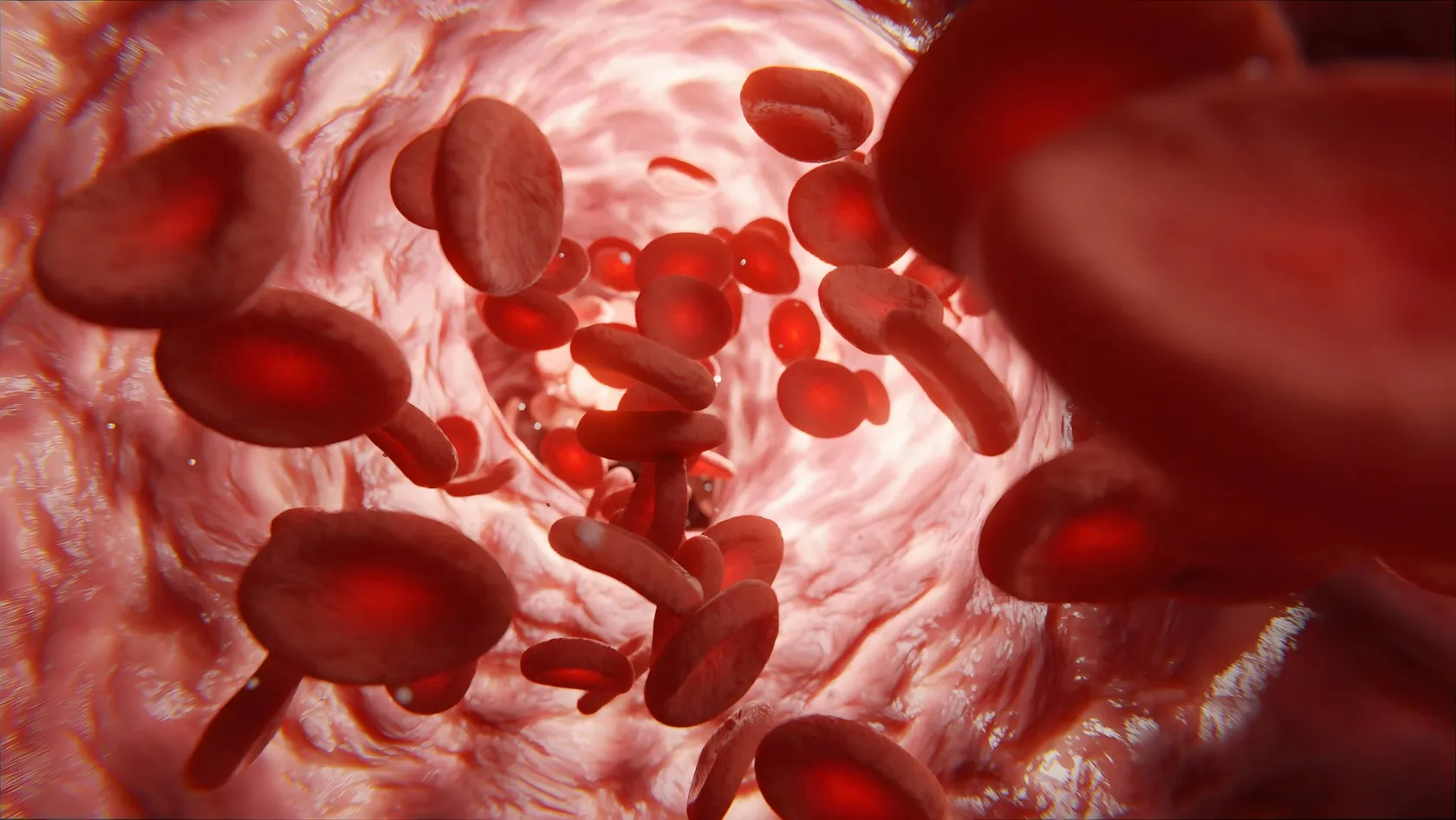
Leukemia Treatment
Leukemia treatment gets chosen by a laboratory report rather than by a scan, and the first days exist to produce that report. Among 2,263 patients with newly diagnosed acute myeloid leukemia, two year survival ran between 44 and 51 percent whether treatment started inside five days or after more than fifteen. This page covers the four tests that decide everything, the emergencies that cannot wait, what treatment looks like in each of the four leukemias, and where a transplant fits.
About This Department
Leukemia treatment gets chosen in a laboratory. Almost none of it is decided by looking at the patient.
Among 2,263 patients with newly diagnosed acute myeloid leukemia, two year overall survival ran between 44 and 51 percent whether treatment started inside five days or after more than fifteen.
The treatment gets chosen by a report you will never see
Solid tumors get staged by scans. Leukemia does not work that way at all. Everything that decides a leukemia treatment comes out of one tube of marrow and one tube of blood, examined four separate ways in a laboratory over the following days. The microscope names the cell type. Flow cytometry reads the proteins on the surface and settles whether the cells are myeloid or lymphoid. Cytogenetics photographs the chromosomes and finds the translocations and deletions that sort patients into risk groups, and a molecular panel looks for mutations in individual genes, some of which now have drugs pointed directly at them. A patient who arrives with a diagnosis and without those four results has arrived with a word, and the word alone does not tell anybody what to do next. Four tests. Four different laboratories, sometimes in four different buildings, reporting on four different timescales, and the treatment cannot be finalized until the slowest of them comes back.
Why this matters for anybody arriving from elsewhere
Families travel with scans because scans are what other cancers run on. In leukemia the file that matters is a set of laboratory reports, and sometimes the actual slides and the actual marrow block, so bring the reports, all of them, including the ones that look like pages of numbers with no conclusion at the bottom. Those pages are the treatment plan in raw form. Bring the paper.
Slide this table sideways on a small screen to reach the second column.
| The test | What it decides |
|---|---|
| Morphology, meaning the microscope | Whether the cells are blasts and roughly what lineage they belong to. The oldest test and still the first one |
| Flow cytometry, sometimes called immunophenotyping | Myeloid against lymphoid, which splits the acute leukemias into two entirely different treatments. Results in hours |
| Cytogenetics and FISH | The chromosome picture. It sorts patients into favorable, intermediate and adverse risk, and it changes whether a transplant enters the plan. Takes days |
| Molecular testing, meaning a gene panel | Individual mutations. Several now have drugs pointed at them, and one becomes the marker used later to measure residual disease. Takes days to weeks |
| What a complete file looks like | All four, with dates, plus the blood counts on the day of diagnosis and the marrow slides if they can travel |
What the first days are actually for
Everybody hearing the word leukemia wants chemotherapy started today. For most patients that instinct is wrong, and there is a large study showing it.
This table scrolls sideways on a phone. Drag it across to reach the second column.
| Time from diagnosis to treatment | Two year overall survival |
|---|---|
| 0 to 5 days | 51 percent |
| 6 to 10 days | 48 percent |
| 11 to 15 days | 44 percent |
| More than 15 days | 50 percent |
| Statistical comparison | P equals 0.211, and the adjusted hazard ratio for delay treated as a continuous variable was 1.00 with a P value of 0.617 |
What that finding does and does not license
The median wait in that study was three days, and the range went out past two weeks without a survival penalty, so the days spent completing the laboratory work are not wasted days, and a hematologist who wants the cytogenetics back before choosing a regimen is doing the patient a service rather than dithering. Take that as the useful half of the finding. The other half needs saying just as plainly. It does not apply to the promyelocytic subtype, where treatment starts on suspicion and cannot wait for confirmation. It does not apply to a patient with a very high white count and breathing trouble. And it does not apply to anybody with an infection, which is treated immediately regardless of what the leukemia is doing.
The emergencies that arrive with the diagnosis
Leukemia brings a short list of problems that need handling within hours, and they have nothing to do with the chemotherapy.
On tumor lysis, one randomized comparison in children measured what the newer drug actually does. Uric acid exposure over the first 96 hours came out at 128 against 329 in the units used, with a P value below 0.0001, and four hours after the first dose uric acid had fallen 86 percent with rasburicase against 12 percent with allopurinol. The trial randomized 52 children across six sites, so the numbers are small and the direction is unambiguous. On hyperleukocytosis the evidence is more sobering. A meta analysis of 13 studies covering 1,743 patients compared those who had the cells filtered out mechanically against those who did not, and found no reduction in early mortality, with a risk ratio of 0.88 and a confidence interval of 0.69 to 1.13. The procedure looks dramatic and it has not been shown to save lives. What does help is the chemotherapy itself, started promptly, along with fluid and close attention to the breathing.
The sample that has to come before the first drug
Once steroids or chemotherapy go in, the cells they were meant to characterize start disappearing, and some of the tests can no longer be run.
The mistake that costs the most
A patient given steroids for a suspected different problem, then referred with a marrow that no longer contains enough abnormal cells to type, has lost information that cannot be recovered without waiting for the disease to return. That happens more than anybody would like. So if a marrow test is being considered, it goes before the steroid and not after it, and any hospital about to start treatment on a transferred patient should ask what has already been given and on what date.
Risk groups, and what they actually decide
Risk group is the phrase that governs everything afterward, and it comes almost entirely from the chromosomes.
What the chromosome picture predicts
A study sorted 5,876 adults aged 16 to 59 with acute myeloid leukemia into 54 cytogenetic subgroups and measured what each one predicted, and favorable abnormalities, including the translocation between chromosomes 15 and 17, the translocation between 8 and 21, and an inversion of chromosome 16, predicted significantly better outcomes with a P value below 0.001. Adverse findings, including loss of chromosome 5, loss of chromosome 7 and a complex karyotype carrying four or more unrelated abnormalities, predicted significantly worse ones. Even within a single group the detail mattered, since patients with the chromosome 16 inversion did better when an extra copy of chromosome 22 was present, with a P value of 0.004. Three consequences follow from a risk group. It sets the intensity of the chemotherapy, and it decides whether a transplant gets planned in first remission or held in reserve. And it sets the expectation the family is given, which is the part most often left vague.
Ask which risk group, in those words, and ask what it was based on.
Acute myeloid leukemia, and what the treatment looks like
Fit adults with acute myeloid leukemia receive an intensive induction course, and the shape of that month surprises everybody who has not seen it. The chemotherapy itself runs about a week. What follows is the part nobody describes properly, which is roughly three weeks with no working marrow, meaning almost no white cells, transfusions of red cells and platelets every few days, and a high probability of at least one episode of fever needing intravenous antibiotics. Patients are in hospital for that entire stretch, usually four to five weeks from admission, and they feel worst somewhere in the middle of that stretch, long after the drugs have finished running. A marrow test around day fourteen and another at count recovery decide whether the leukemia cleared, and if it did, consolidation follows, meaning further cycles given over the following months, each one carrying a shorter version of the same aplastic period. Plan for five weeks in the building and count it a good result if it turns out to be four.
For patients who cannot survive that, and there are many, a lower intensity combination taken largely as an outpatient has changed what is possible over the past decade. Nobody should read it as a gentler version of the same treatment, since it works differently and carries different expectations, and the conversation over which one applies turns on fitness and on the risk group rather than on age alone. Establish which of the two is being proposed and why.
The subtype that changes everything
One form of acute myeloid leukemia behaves so differently that it gets pulled out of the category and treated as its own disease. Delay also kills in this one.
Why the gap exists
The promyelocytic subtype causes a bleeding disorder that can kill within days of presentation, frequently before the laboratory has confirmed which leukemia it is, so retinoic acid gets started on suspicion, before the genetics come back, in any patient whose blood picture raises the possibility. Starting it and being wrong costs a few days of an oral drug. Waiting and being right costs a life. If somebody is being treated for this subtype, the early days are the dangerous ones and the years afterward are among the best in oncology. Two practical consequences follow for anybody arriving from elsewhere. Somebody already started on retinoic acid at another hospital should continue it during the transfer and not have it stopped for the journey. And the coagulation results, meaning the clotting numbers taken on the day of presentation, belong in the file that travels, because they describe the risk that was being managed and they are almost never sent.
Acute lymphoblastic leukemia, and the long protocol
Lymphoblastic leukemia is treated for years rather than months, and that single fact reorganizes a family life.
Children, and what the numbers became
A cooperative group followed 21,626 children and adolescents enrolled on its trials and measured what happened across fifteen years. Five year survival rose from 83.7 percent for those treated between 1990 and 1994 to 90.4 percent for those treated between 2000 and 2005, with a P value below 0.001. Few cancers have recorded a larger improvement, and the same analysis carried an uncomfortable detail, which is that 36 percent of the deaths occurred among children classified as standard risk, meaning the group everybody expects to do well.
- Treatment runs roughly two to three years, with an intensive phase of several months followed by a long maintenance phase of daily oral chemotherapy at home.
- The nervous system gets treated whether or not it is involved, using drugs given into the spinal fluid, because it is a site ordinary chemotherapy reaches poorly.
- Maintenance looks undramatic and is never optional. Interrupted maintenance is where the avoidable relapses come from.
- Adults follow the same logic with worse tolerance, and the protocols now used for young adults were borrowed from pediatrics rather than written for them.
Young adults on a pediatric protocol
One trial gave 295 patients aged 17 to 39 a regimen designed for children. Treatment related mortality came out at 3 percent, with only two deaths after remission. Three year event free survival reached 59 percent, confidence interval 54 to 65 percent, and three year overall survival reached 73 percent, confidence interval 68 to 78 percent. Those figures roughly doubled what the same age group had historically achieved on adult protocols, and they are the reason a 25 year old with this diagnosis should be asking which protocol is being used.
Chronic myeloid leukemia, and the pill
One leukemia changed what the word itself means, and the change happened inside a single generation.
What a tablet did to life expectancy
National registry data followed 2,662 patients diagnosed between 1973 and 2013 and measured how many years of life the disease cost them. For patients diagnosed in 2013, the loss was under three years on average across all ages, which is a fraction of what it had been decades earlier, and the largest gains went to the youngest patients. A disease that once meant a transplant or a short prognosis now means a daily tablet, a blood test every few months, and a life expectancy approaching the general population.
Slide this table sideways on a small screen to reach the second column.
| Element | What it means day to day |
|---|---|
| The drug | A daily oral tyrosine kinase inhibitor, taken indefinitely unless a stopping attempt succeeds. Several exist and they differ in side effects more than in effectiveness for most patients |
| The test | A molecular blood test measuring the abnormal transcript, reported on an international scale, every three months at first and less often once the response is deep and stable |
| The milestones | Response targets at three, six and twelve months. Missing them prompts a check on whether the tablets are actually being taken before anybody changes the drug |
| Side effects | Usually manageable and usually the reason people stop taking it. Report them rather than skipping doses, since an unreported side effect becomes an unexplained rising transcript |
| Stopping | Possible for a subgroup after years of deep response, under close monitoring, and covered in the next paragraph |
On stopping, a trial followed 755 patients who came off the drug after at least a year of deep molecular response. At six months, 61 percent remained free of molecular relapse, confidence interval 57 to 64 percent. At twenty four months, 50 percent did, confidence interval 46 to 54 percent. So 371 patients, 49 percent, lost their response and restarted, meaning half succeed and half do not, the ones who relapse regain control on restarting, and nobody should attempt this outside a program that measures monthly.
Chronic lymphocytic leukemia, including not treating it
Only one leukemia has no treatment at all as its correct first move for many patients, and that recommendation is the hardest one a family ever accepts.
This table scrolls sideways on a phone. Drag it across to reach the second column.
| What was measured | What the trial found |
|---|---|
| Five year overall survival | 82.9 percent with immediate chemoimmunotherapy against 79.9 percent with watch and wait, P equals 0.864 |
| Event free survival | Median not reached with early treatment against 18.5 months with watch and wait, P below 0.001 |
| Overall response rate to early treatment | 92.7 percent |
| What it adds up to | Treating early controls the disease measurably better and does not make anybody live longer, so the toxicity is paid for no gain in survival |
How to hear a recommendation to wait
Watch and wait sounds like abandonment and is the opposite of it. The trial above is one of several making the same point, and the strategy survives because treatment carries real cost and buys no extra years when started before symptoms, so treatment begins when there are symptoms, when the counts move in defined ways, when nodes or spleen cause trouble, or when the marrow starts failing. Until then the work is a blood test every few months and a conversation about what would change the plan. Ask what specifically would trigger treatment in your case. A hematologist recommending observation should be able to name the triggers. Write those triggers down and keep them. Somebody who knows what would change the plan stops treating every blood test as a verdict, and a family holding that list in writing can tell the difference between a number drifting inside the expected range and a number that has crossed a line somebody named in advance.
The test that outranks the microscope
Remission used to mean a pathologist looking at marrow and finding fewer than five percent blasts. That definition is now the weakest one in the building.
A study tracked 346 patients with a particular genetic form of acute myeloid leukemia and looked for the abnormal transcript after the second chemotherapy cycle. It was still detectable in 15 percent of them. Among those patients, 82 percent had relapsed by three years, against 30 percent of the patients in whom it was undetectable, a hazard ratio of 4.80 with a confidence interval of 2.95 to 7.80. Survival ran at 24 percent against 75 percent, a hazard ratio for death of 4.38 with a confidence interval of 2.57 to 7.47. All of these patients were in remission by the microscope.
So two patients can sit in the same clinic, both told they are in remission, with a fourfold difference in the chance of the disease returning, and the only thing separating them is a test one of them was given and the other was not. Measurable residual disease now steers real decisions. Whether to proceed to a transplant in first remission. Whether to change the drug or keep treating at all. Check whether it is being measured, by which method, and what the result was, because a hospital that does not measure it is making those decisions on less information than is available. The method matters as much as the result. Flow cytometry and molecular testing measure different things at different sensitivities, and a negative result means little without knowing which test produced it and how deep it looked. A report saying negative with no method and no sensitivity attached cannot be acted on.
The treatment nobody counts as treatment
Families asked what the leukemia treatment was will name the chemotherapy. Put the same question to the hematologist and they will name everything else. Red cell transfusions when the marrow makes none. Platelet transfusions to stop bleeding before it starts. Antibiotics inside an hour of the first fever, given before anybody knows what the organism is, because waiting for a culture in a patient with no white cells is how people die. Antifungal cover through the long neutropenic stretches. A central line, so that the transfusions, the antibiotics and the chemotherapy go through one route rather than a new needle every day, along with the infection risk that line carries in return. Mouth care, which sounds trivial and prevents a route of infection that is anything but, and nutrition, since nobody eats properly for weeks on end and the weight comes off far faster than it goes back on.
The difference between one hospital and another mostly lives here. The chemotherapy protocols are published and everybody uses the same ones. What varies is how quickly the fever gets antibiotics at three in the morning, whether the platelets are in the building, and how many patients per nurse there are on the ward at the weekend.
Those are fair questions to put to any unit.
Where a transplant sits in all this
Transplants do not treat leukemia the way chemotherapy does. They make a remission permanent, and they only enter once a remission exists.
The logic runs the same way in every leukemia. Chemotherapy gets the disease into remission. The risk group, the genetics and the residual disease measurement then decide whether that remission will hold on its own or whether it needs a donor immune system to keep it. Favorable risk acute myeloid leukemia in a first remission with no detectable residual disease usually does not need one. Adverse risk disease usually does. Chronic myeloid leukemia almost never does any more. Chronic lymphocytic leukemia rarely does. And lymphoblastic leukemia in children hardly ever does in a first remission, while the same disease in an adult more often might.
Two things follow. The transplant question gets asked after the first treatment and never before it, so a plan naming a transplant on day one before the genetics are back should be queried, and the donor search runs in parallel with the chemotherapy rather than after it, because finding a donor takes weeks and a remission does not wait politely. Find out whether a donor search has been started and at what stage.
Bringing this from another country
Leukemia is a poor fit for medical travel in the ordinary sense, and a good fit for one specific version of it.
Acute leukemia in an untreated patient does not travel. Somebody with a white count of 200 and a fever belongs in the nearest hospital that can treat them rather than on an aircraft, and any service that suggests otherwise is describing a risk it will not be carrying. What does travel is the situation after the first phase, meaning a patient in remission whose next decision is a transplant, a patient whose disease has returned and whose options are being weighed, a patient who needs the laboratory work repeating properly because it was never completed, and a family who wants the plan reviewed before committing to years of treatment. Those four all begin with a file rather than a flight.
What to send and what comes back
Send the marrow reports, the flow cytometry, the cytogenetics and the molecular panel, with their dates, together with the blood counts as a series and not as a single day. The treatment record matters as much, meaning which drugs at which doses on which dates, because that determines what can still be given, and the marrow slides should travel too if the laboratory will release them. A written opinion comes back in a language you read, at no cost, and it will say plainly whether the file is complete enough to plan from. Length of stay depends entirely on which of the four situations applies. A review and a plan take days, while a transplant workup takes weeks and the transplant itself takes months, with the nights between hospital stays spent in accommodation near the building rather than at home. Nobody should book a flight before the written opinion arrives. Flights home get booked once the treating team says the counts allow it, which is a date they can usually give a week ahead.
What drives the cost
No figure appears here, because a leukemia treatment is priced by what happens across months and nobody can know that at the start. What can be set out is which elements move it. These are the levers.
The question to put to a quotation
Any estimate for a leukemia treatment is a projection with assumptions inside it. Find out how many inpatient days it assumes, whether it includes the full laboratory panel or only the basic tests, whether transfusion support sits inside the figure or beside it, and what happens if a second induction cycle turns out to be needed. A unit that answers those four in writing has done the arithmetic honestly.
What to ask
Most of this page reduces to a short list, and every item on it can be asked in the first week.
- Which risk group am I in, what was that based on, and what does it change about the plan.
- Is measurable residual disease being monitored, by which method, and what was the last result.
- Is a transplant part of the plan, at what point would that be decided, and has a donor search started.
- How many inpatient days does the first phase involve, and what happens between cycles.
- What is the plan if the first induction does not clear the marrow.
- Who do I call at three in the morning with a fever, and how fast do antibiotics get given here.
That last one tells you more than any brochure will.
What we arrange
Leukemia treatment runs over months, so the arrangements around it matter differently from the way they do for an operation.
A free written opinion on your marrow reports, flow cytometry, cytogenetics and molecular panel, returned in a language you read, before anything is booked. One coordinator from the first message onward and afterward, with a name and a direct number. Seven languages covered directly by the international patients team, namely English, Arabic, French, Russian, Serbian, Romanian and Spanish, with a professional interpreter arranged for anything else. A companion bed in the room across the inpatient stretches, and accommodation nearby for the nights between cycles. Airport transfers and transport between the accommodation and the hospital. Halal, vegetarian and diabetic meals from the hospital kitchen, and a prayer room in the building. A request for a female physician put to the department and met wherever the rota allows. An invitation letter naming the hospital and the treating doctor for the visa application, and a further letter when the treatment runs past the visa. And once you are back home, the same coordinator on the same WhatsApp number.
Send the file first. Nothing else needs deciding until the written opinion is in front of you.
Questions we are asked, a leukemia treatment FAQ
Does treatment have to start the same day
For most patients, no. A study of 2,263 patients with newly diagnosed acute myeloid leukemia found two year overall survival between 44 and 51 percent whether treatment began within five days or after more than fifteen, with a P value of 0.211. The days spent completing the genetics are not lost days. The exceptions are the promyelocytic subtype, a very high white count causing symptoms, and any infection.
Why does everything wait for the laboratory
Because the laboratory chooses the treatment. Morphology, flow cytometry, cytogenetics and a molecular panel between them decide which disease this is, which risk group it falls into, whether a targeted drug applies, and which marker will be used later to measure residual disease. A scan settles almost none of that.
What should I bring or send
Marrow reports, flow cytometry, cytogenetics and the molecular panel, all with dates. The blood counts as a series, the full treatment record showing which drugs at which doses on which dates, and the marrow slides if the laboratory will release them. Scans matter far less here than they do in other cancers. Send all of it.
How long does treatment take
It depends entirely on which leukemia it is. Acute myeloid leukemia means roughly four to five weeks in hospital for induction, then consolidation cycles over months. Acute lymphoblastic leukemia runs two to three years, with a long maintenance phase taken at home, while chronic myeloid leukemia means a daily tablet taken indefinitely. Chronic lymphocytic leukemia frequently needs no treatment at all for years.
Is it true that some leukemia is not treated
Yes, in early stage chronic lymphocytic leukemia. A randomized trial of 201 patients compared immediate chemoimmunotherapy against watch and wait and found five year overall survival of 82.9 percent against 79.9 percent. Early treatment controlled the disease better and made nobody live longer. Treatment begins when symptoms appear.
What is measurable residual disease and does it matter
It tests far more sensitively than the microscope, and it matters a great deal. In 346 patients with one genetic form of acute myeloid leukemia, those with a detectable transcript after the second cycle relapsed in 82 percent of cases by three years against 30 percent of those without, and survival ran at 24 percent against 75 percent. Every one of them was in remission by the microscope.
Will a transplant be needed
That gets decided after the first treatment, using the risk group, the genetics and the residual disease result. Favorable risk acute myeloid leukemia in first remission usually does not need one, and adverse risk usually does. The donor search should still run in parallel with the chemotherapy, since finding a donor takes weeks.
Can we come from abroad for this
It depends on the situation. An untreated acute leukemia belongs in the nearest capable hospital and never on an aircraft, whereas somebody already in remission facing a transplant decision, a patient whose disease has returned, or a family wanting an incomplete laboratory workup finished properly can all be handled here. Start with the file, and the written opinion will say whether it is complete enough to plan from.
References
- Rollig C, Kramer M, Schliemann C, et al. Does time from diagnosis to treatment affect the prognosis of patients with newly diagnosed acute myeloid leukemia. Blood. 2020;136(7):823-830.
- Goldman SC, Holcenberg JS, Finklestein JZ, et al. A randomized comparison between rasburicase and allopurinol in children with lymphoma or leukemia at high risk for tumor lysis. Blood. 2001;97(10):2998-3003.
- Bewersdorf JP, Giri S, Tallman MS, Zeidan AM, Stahl M. Leukapheresis for the management of hyperleukocytosis in acute myeloid leukemia, a systematic review and meta-analysis. Transfusion. 2020;60(10):2360-2369.
- Park JH, Qiao B, Panageas KS, et al. Early death rate in acute promyelocytic leukemia remains high despite all-trans retinoic acid. Blood. 2011;118(5):1248-1254.
- Lo-Coco F, Avvisati G, Vignetti M, et al. Retinoic acid and arsenic trioxide for acute promyelocytic leukemia. N Engl J Med. 2013;369(2):111-121.
- Grimwade D, Hills RK, Moorman AV, et al. Refinement of cytogenetic classification in acute myeloid leukemia, determination of prognostic significance of rare recurring chromosomal abnormalities among 5876 younger adult patients treated in the United Kingdom Medical Research Council trials. Blood. 2010;116(3):354-365.
- Ivey A, Hills RK, Simpson MA, et al. Assessment of minimal residual disease in standard-risk AML. N Engl J Med. 2016;374(5):422-433.
- Hunger SP, Lu X, Devidas M, et al. Improved survival for children and adolescents with acute lymphoblastic leukemia between 1990 and 2005, a report from the childrens oncology group. J Clin Oncol. 2012;30(14):1663-1669.
- Stock W, Luger SM, Advani AS, et al. A pediatric regimen for older adolescents and young adults with acute lymphoblastic leukemia, results of CALGB 10403. Blood. 2019;133(14):1548-1559.
- Bower H, Bjorkholm M, Dickman PW, et al. Life expectancy of patients with chronic myeloid leukemia approaches the life expectancy of the general population. J Clin Oncol. 2016;34(24):2851-2857.
- Saussele S, Richter J, Guilhot J, et al. Discontinuation of tyrosine kinase inhibitor therapy in chronic myeloid leukaemia (EURO-SKI), a prespecified interim analysis of a prospective, multicentre, non-randomised, trial. Lancet Oncol. 2018;19(6):747-757.
- Herling CD, Cymbalista F, Gross-Ophoff-Muller C, et al. Early treatment with FCR versus watch and wait in patients with stage Binet A high-risk chronic lymphocytic leukemia, a randomized phase 3 trial. Leukemia. 2020;34(8):2038-2050.
Editor's note
Written by the Biruni Hospital medical editorial team. Reviewed by Prof. Dr. Ali Hakan KAYA, Hematology.
Medically reviewed by
Prof. Dr. Ali Hakan KAYA
Hematology
Related Treatments
View All
Allogeneic Bone Marrow Transplant
An allogeneic bone marrow transplant is judged against the alternative and never on its own merits. This guide sets out the two estimates that decide it, the chance the disease returns without a transplant and the chance the transplant itself kills, then shows what moves each one, from genomic classification and residual disease testing to the Disease Risk Index, the comorbidity score, donor type and age. Written for families weighing treatment in Istanbul, with every figure sourced.
Autologous Bone Marrow Transplant
An autologous bone marrow transplant collects your own stem cells, freezes them, and returns them after a chemotherapy dose the marrow could not otherwise survive. No donor, no matching, no rejection. This guide covers myeloma, where two randomized trials found it delays the disease without measurably extending life, plus lymphoma, germ cell tumors, multiple sclerosis and scleroderma, and what the collection, the dose and the recovery involve. Written for families weighing treatment here.

Autologous Stem Cell Transplant
An autologous stem cell transplant, still widely called an autologous bone marrow transplant, collects your own stem cells, freezes them, and returns them after a chemotherapy dose the marrow could not otherwise survive. No donor, no matching, no rejection. This guide covers myeloma, where two randomized trials found it delays the disease without measurably extending life, plus lymphoma, germ cell tumors, multiple sclerosis and scleroderma, and what the collection and the recovery involve.
Bone Marrow Transplant - Allogeneic Stem Cell Transplant
A bone marrow transplant, or allogeneic stem cell transplant, replaces a diseased blood and immune system with a donor's. This guide covers who it is for, how donors are found and chosen, why a young half matched relative can now beat an older fully matched stranger, what conditioning intensity decides, graft versus host disease in both forms, and the late risks that keep climbing after year ten. Written for families weighing treatment in Istanbul, with the published figures behind each claim.
Bone Marrow Transplant For Aplastic Anemia
A bone marrow transplant for aplastic anemia replaces failed blood-forming stem cells with healthy donor marrow and cures most younger patients who have a matched sibling. In a study of 599 children, failure-free survival was 87 percent after sibling transplant and 56 percent after drug treatment first. This page explains severity grades, transplant versus immune suppression, registry results, how this transplant differs, risks, the donor's part and planning at Biruni Hospital.