
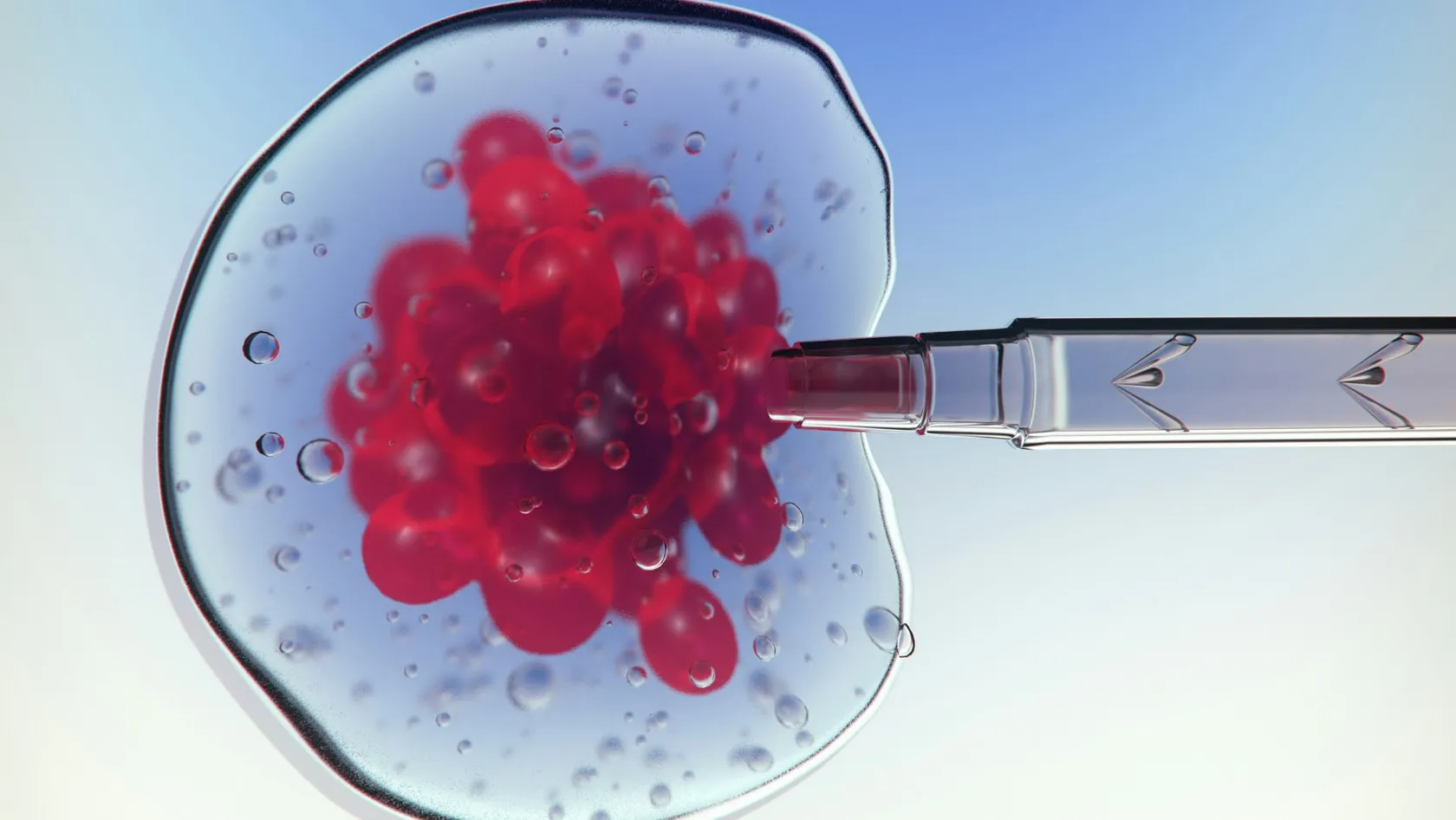
Autologous Stem Cell Transplant
An autologous stem cell transplant, still widely called an autologous bone marrow transplant, collects your own stem cells, freezes them, and returns them after a chemotherapy dose the marrow could not otherwise survive. No donor, no matching, no rejection. This guide covers myeloma, where two randomized trials found it delays the disease without measurably extending life, plus lymphoma, germ cell tumors, multiple sclerosis and scleroderma, and what the collection and the recovery involve.
About This Department
Nothing is transplanted. The cells are yours, and the treatment is the chemotherapy they make survivable.
An autologous transplant collects your own stem cells, freezes them, gives a chemotherapy dose several times higher than the marrow could survive, then returns the cells to rebuild it, and no donor, no tissue matching, no rejection and no graft versus host disease. In its commonest use, multiple myeloma, two large randomized trials found that it buys a long extra stretch without the disease progressing and does not, so far, make people live longer. That result forms the honest starting point for any conversation on having one.
The name is wrong
Calling this a transplant creates a picture that has nothing to do with what happens. Families arrive expecting a donor register, a tissue match and a stranger who agreed to help. None of that exists here.
What actually happens
Blood stem cells are coaxed out of your marrow into your bloodstream, filtered out through a machine, frozen, and kept for a few weeks, because during that gap you receive a chemotherapy dose far above what a body can normally survive, because the marrow is what dies first and the marrow has been put safely in a freezer. Your own cells then go back through a drip and rebuild the blood system over two weeks. Everything came from you. Nobody donated anything. No register was searched.
The words you will hear
Every step comes with a term that nobody stops to define, so here they are in the order they arrive.
Autologous means your own cells, so an autologous stem cell transplant and an autologous bone marrow transplant name the same treatment. Allogeneic means somebody else, and it describes a different operation with a donor, a risk of rejection and a risk of the donated immune system attacking you, and mobilization is the process of pushing stem cells out of the marrow into the blood. Apheresis names the machine that collects them. CD34 names the marker counted to decide whether enough cells were collected, and a target figure will be quoted to you. Conditioning means the high dose chemotherapy itself. Melphalan 200 describes the standard conditioning in myeloma, meaning 200 milligrams for every square meter of body surface. BEAM covers the four drug regimen used in lymphoma. Engraftment names the day the returned cells start producing blood again. Neutropenia covers the period with almost no infection fighting cells, which is when patients feel worst. Mucositis means the mouth and gut lining breaking down, and it gets remembered longer than anything else. Maintenance refers to the drug taken for years afterward in myeloma. And MRD means measurable residual disease, the myeloma or lymphoma a sensitive test finds when the microscope reports none.
Why myeloma
More autologous transplants are performed for multiple myeloma than for anything else, and the reason shapes this whole page.
Myeloma arises from plasma cells in the marrow. It responds well to treatment and comes back, then responds again and comes back again, over years, and nobody expects a single treatment to finish it, so the goal is depth and duration instead of cure. High dose melphalan reaches a depth that standard doses do not, and that is how the operation earned its place in the 1990s. What has changed since is the competition. The drug combinations given before and after a transplant are now so effective that the question has stopped being whether the transplant works and become whether it still adds enough on top of them, and that question has now been asked properly in two large randomized trials. Both of them enrolled newly diagnosed patients, gave every participant the same modern drug combination, and then randomized only the transplant. That design gives their answer its weight, because it isolates the one variable everybody argues about instead of comparing an old era against a new one.
Who it is for
Five broad situations call for this operation, and they have almost nothing in common, which is unusual for a single procedure.
The first trial
Two decades after the operation became standard in myeloma, somebody finally tested it against modern drugs alone.
Investigators in France and the United States randomized 700 newly diagnosed patients. Every one of them received the same three drug combination of lenalidomide, bortezomib and dexamethasone. Half went on to a transplant and half did not, and both groups received maintenance treatment afterward, and median progression free survival came out at 50 months with the transplant against 36 without, with a hazard ratio of 0.65. Complete response came out at 59 percent against 48, and undetectable residual disease 79 percent against 65.
Then the survival figure. Four year overall survival was 81 percent in the transplant group and 82 percent without it. That difference reached no significance and it did not favor the transplant. Grade three or four neutropenia occurred in 92 percent of transplanted patients against 47, and infections in 20 percent against 9, and so the trial found a real and substantial gain in time without progression, bought with a real and substantial increase in toxicity, and no measurable gain in length of life at four years.
The confirming trial
Single trials rarely settle anything. A second one, run in parallel with a different design and a longer follow up, reported five years later.
What it found
Seven hundred and twenty two patients were randomized to the same three drug combination with or without a transplant, and this time maintenance treatment continued until the disease progressed instead of stopping after a fixed period. At a median follow up of 76 months, median progression free survival came out at 67.5 months with the transplant against 46.2 without, with a hazard ratio of 1.53 against the no transplant arm, and complete response was 46.8 percent against 42.0, a difference that did not reach significance. Five year overall survival was 80.7 percent with the transplant and 79.2 without, with a hazard ratio for death of 1.10 and a confidence interval running from 0.73 to 1.65. Severe treatment related adverse events occurred in 94.2 percent of the transplant group against 78.2. Two trials, two continents, two designs. The same shape of answer. The second trial also ran its maintenance treatment differently, continuing it until the disease progressed, and that alone lengthened progression free survival in both arms compared with the first trial. Which reminds everybody that the background treatment moves under these comparisons while they are running.
What no survival difference means
Both directions of reporting get this wrong, so precision matters here.
Framed honestly, in myeloma an autologous transplant delays the disease without extending life measurably so far, that patients who skip it can be transplanted later at relapse with reasonable results, and that both routes are defensible, and a unit presenting the transplant as obviously necessary has not read the second trial. A unit presenting it as obsolete has not read the first.
How the decision is made now
Neither trial removed the transplant from myeloma treatment. What they did was turn an automatic step into a decision, and the decision runs on five things.
A third trial, asking a different question
European investigators compared transplant against a drug regimen of bortezomib, melphalan and prednisone in 1,197 newly diagnosed patients, then separately tested whether extra consolidation treatment helped, and median progression free survival came out at 56.7 months with the transplant against 41.9 with the drug regimen, and the hazard ratio was 0.73. Severe thrombocytopenia occurred in 83 percent of transplanted patients against 16, and infections in 30 percent against 4. Of 311 deaths across the study, 38 were judged likely to be treatment related and 26 of those were in the transplant group. That trial supports transplanting in a comparison the other two did not make, and it puts the cost of doing so in plain view at the same time.
Whether a second one helps
If one high dose treatment is good, two should be better. That reasoning sounds intuitive and it has been tested.
What the three arm trial showed
An American trial randomized 758 patients after an initial transplant into three groups, and one received a second transplant followed by maintenance, one received four cycles of consolidation treatment followed by maintenance, and one went straight to maintenance alone. Progression free survival at 38 months came out at 58.5 percent, 57.8 percent and 53.9 percent across the three arms. Overall survival came out at 81.8, 85.4 and 83.7 percent. Not one of those gaps was large enough to establish a benefit. The practical consequence is that a second transplant is no longer routine, that consolidation treatment is no longer routine either, and that maintenance treatment after a single transplant is where the evidence sits. Anybody being offered a planned double transplant should ask which patients that plan is based on, because for most patients it adds toxicity without adding measurable benefit.
Collecting the cells
Patients worry over this step far more than it deserves and worry over the chemotherapy far less.
Growth factor injections go under the skin for several days, usually after a chemotherapy dose, and it pushes stem cells out of the marrow into the bloodstream, and the commonest side effect is a deep ache in the hips and lower back, which is a marrow working hard and responds to simple painkillers. Collection then runs through a machine connected to a large vein, sometimes through a line placed in the neck or the groin, and takes three to five hours. Blood leaves, passes through a centrifuge that skims off the stem cell layer, and returns. People read and talk through it. Tingling around the mouth from the anticoagulant in the circuit is common and gets corrected during the session.
Most people need one to three sessions, and where too few cells come out, a second mobilization follows, sometimes with an additional drug that shifts cells more forcefully, and that delay is frustrating without being dangerous. Nothing comes out of the bone itself. The image of a long needle into the hip under general anesthetic belongs to donor marrow collection, which is a different procedure performed on a different person.
The dose itself
Conditioning does the treating, and it gets the least explanation of anything in the process.
What is actually given
In myeloma the standard is melphalan at 200 milligrams per square meter of body surface, given over one or two days, and the dose is reduced for patients with poor kidney function or advanced age, so in lymphoma the usual regimen combines four drugs over about six days. In germ cell tumors the combination is carboplatin with etoposide, given as two separate courses with a stem cell return after each. Each of these was chosen because it kills the specific disease at high dose and because its non marrow toxicities are survivable. Ask which regimen is planned and why, ask whether the dose has been adjusted for your kidney function, and ask how many days it runs, because the answer determines how long the difficult period lasts. Ice chips during the melphalan infusion reduce mouth ulceration measurably and cost nothing, and a unit that does not offer them is missing something simple.
The hospital stay
Two to four weeks as an inpatient, most of it in a single room, with the difficult stretch sitting in the middle and not at the start.
The shape of it
The chemotherapy days themselves are tolerable for most patients. The cells go back a day or two later and that day is uneventful. Then the counts fall, and days five to twelve after the cells are when people feel worst, and mouth and gut lining break down, eating becomes difficult, diarrhea is common and a fever almost always arrives at some point, which is expected and treated with antibiotics immediately and never watched. Transfusions of red cells and platelets are routine. Around day twelve to fourteen the returned cells start producing neutrophils, the fever settles, the mouth heals over a few days and appetite returns unevenly. Discharge follows once the count is holding and the patient can eat and drink.
Families find it distressing that the worst days come after the transplant and not before it, so it helps to say plainly in advance that this is the expected pattern and not a sign anything has gone wrong.
The risks
Of the transplant operations this one carries the least danger, and it remains dangerous.
Early risks
Serious infection during the low count period is the main cause of death, and in fit patients the risk of dying from the procedure sits in the low single figures, and both myeloma trials quantified the toxicity instead of the mortality, and the toxicity was substantial. Severe neutropenia affected 92 percent of transplanted patients in one trial, infections 20 percent, and severe treatment related adverse events 94.2 percent in the other.
Late risks
- A second cancer of the blood years afterward, driven by the chemotherapy and not by the cells. In one germ cell series three patients developed acute leukemia after treatment.
- Reduced fertility, which is why the conversation has to happen before conditioning and not after it.
- Lung and heart effects from particular drugs, appearing long after the transplant has stopped being anybody main concern, sometimes a decade later.
- Loss of childhood vaccination immunity, which means the whole schedule has to be given again on a written plan.
- Fatigue that outlasts every other symptom, commonly for three to six months and occasionally longer.
The myeloma figures
Three randomized trials give the numbers a myeloma patient should have in front of them before deciding.
Narrow screens scroll this table sideways. Swipe or drag to reach every column.
| Trial | What was compared | Progression free survival | Overall survival |
|---|---|---|---|
| French and American, 700 patients | Three drug combination with or without transplant | 50 months against 36, hazard ratio 0.65 | 81 percent against 82 at four years, with no significant difference |
| American, 722 patients, 76 month follow up | Same comparison with maintenance continued until progression | 67.5 months against 46.2, hazard ratio 1.53 against no transplant | 80.7 percent against 79.2 at five years, hazard ratio 1.10 |
| European, 1,197 patients | Transplant against bortezomib, melphalan and prednisone | 56.7 months against 41.9, hazard ratio 0.73 | Not the primary comparison, 38 of 311 deaths judged treatment related |
| American three arm, 758 patients | Second transplant against consolidation against maintenance alone | 58.5, 57.8 and 53.9 percent at 38 months | 81.8, 85.4 and 83.7 percent |
Read across the survival column and the same thing appears each time. Transplanting delays myeloma reliably. Proving it lengthens life has not happened yet. Not in either trial.
Lymphoma, briefly
Lymphoma proved the concept in the first place, and it now shares the ground with engineered cell treatments.
Where it stands
Autologous transplant remains standard for relapsed Hodgkin lymphoma that responds to salvage chemotherapy, for some mantle cell and T cell lymphomas in first remission, and for large B cell lymphoma relapsing more than a year after first treatment. For large B cell lymphoma relapsing inside a year, randomized trials now favor engineered T cells over the transplant, and most groups have moved accordingly, and the word that decides all of it is chemosensitive, meaning the lymphoma still shrinks when salvage chemotherapy is given. High dose chemotherapy is still chemotherapy, so a lymphoma that ignores a normal dose will ignore a large one, and so the interval scan after salvage treatment confirms the plan instead of delaying it.
Germ cell tumors
Least known of all the uses, and the one where this operation most clearly cures people, and it involves a cancer nobody associates with marrow at all.
One center treated 184 consecutive men whose germ cell tumors had relapsed after platinum chemotherapy with two courses of high dose carboplatin and etoposide, each followed by a return of their own stem cells, and over a median follow up of four years, 116 of the 184 were in continuous complete remission. Among those treated in the second line setting, 94 of 135 were free of disease. Among those treated third line or later, 22 of 49. Even among men whose disease had been resistant to platinum, 18 of 40 remained disease free.
- These figures describe cure and not delay, which separates germ cell tumors from every other use on this page.
- The treatment is given as two separate high dose courses, so the collection has to yield enough cells for both.
- Three of the 184 men died of the treatment and three later developed acute leukemia, so the price is stated and not hidden.
- Referral to a unit that performs this regularly matters more here than almost anywhere else. The published numbers come from centers doing it repeatedly.
- Sperm banking belongs before the first course, and in relapsed disease it has frequently already been done before the original chemotherapy.
Autoimmune disease
Here the operation changes purpose entirely. No cancer gets killed here. An immune system that has turned on its owner is being taken apart and rebuilt.
The reasoning is that autoimmune disease is driven by long lived immune cells carrying a memory of self attack. High dose chemotherapy destroys those cells, and the returned stem cells produce a new immune population that has not learned the attack. It works as a reset and not a suppression. That is what separates it from drugs taken forever. Whether the reset holds is the whole question, and in two diseases it has been tested against the best available drug treatment in randomized trials.
This use stays far less known than the cancer ones and keeps growing, and it also carries the widest gap between what a specialist center can offer and what a general hospital can is widest, so the referral matters.
Multiple sclerosis
The strongest randomized evidence in autoimmune transplantation comes from relapsing remitting multiple sclerosis that keeps relapsing despite treatment.
Hazard ratios of 0.07 represent an unusually large effect for any treatment in any disease, and it should be read alongside its limits, and the trial enrolled a specific group, namely people with active relapsing disease who kept relapsing despite treatment, and it followed them for a median of two years. It does not say that transplanting progressive multiple sclerosis without active relapses achieves the same thing, and the distinction between those two situations is the one that decides who benefits.
Scleroderma
Systemic sclerosis with internal organ involvement carries a worse outlook than many cancers, and it is the second autoimmune disease where this operation has randomized evidence.
The trial and its timeline
Seventy five adults with severe scleroderma affecting the lungs or kidneys were randomized to a myeloablative autologous transplant or to a year of monthly cyclophosphamide, and the comparison was designed to be read over years instead of months, because scleroderma changes slowly, and the results widened as the follow up lengthened.
On a phone this table slides left and right. Drag it across to see the second column.
| Measured at | Transplant against cyclophosphamide |
|---|---|
| 54 months, global ranked outcome | Favored transplant in 67 percent of 1,404 pairwise comparisons |
| 54 months, event free survival | 79 percent against 50 percent |
| 72 months, event free survival | 74 percent against 47 percent |
| 72 months, overall survival | 86 percent against 51 percent |
| 54 months, needing to start a disease modifying drug | 9 percent against 44 percent |
| Treatment related mortality | 3 percent at 54 months and 6 percent at 72 months, against none |
An overall survival difference of 86 against 51 percent is the largest benefit on this page, and it sits next to a treatment related mortality of 6 percent, and both numbers are true at the same time and both belong in the conversation.
What autoimmune transplant costs
Transplanting somebody who does not have cancer changes how the risk feels, even when the numbers are identical. A patient with myeloma is weighing a dangerous treatment against a disease that will certainly progress, and a patient with multiple sclerosis is weighing a dangerous treatment against a disease that might stay stable for years, and against drugs that are imperfect but rarely lethal. The same 3 to 6 percent treatment related mortality reads differently in those two situations, and anybody presenting autoimmune transplantation without leading with that figure is presenting it dishonestly. Two further things belong in the conversation. The evidence holds strongest in specific, well defined groups, meaning active relapsing multiple sclerosis and severe scleroderma with organ involvement, and weaker or absent elsewhere. And the centers with real experience are few, so this becomes one of the very few situations where traveling for treatment is genuinely the correct decision and not a marketing proposition.
Fertility
Fertility gets skipped more than any other step when a transplant is arranged quickly, and it cannot be revisited afterward.
Recovery
Patients say the recovery timetable is the single thing they wish somebody had given them in writing beforehand.
Pull this table sideways on a small screen to reach the second column.
| When | What it usually looks like |
|---|---|
| Days five to twelve after the cells | The hardest stretch. Mouth and gut lining break down, fever arrives, transfusions are given |
| Days twelve to twenty | Counts recover, fever settles, eating becomes possible, discharge follows |
| Weeks three to eight | Clinic visits weekly then every two weeks. Energy poor, taste strange, appetite unreliable |
| Months two to four | Steady improvement with bad days mixed in. Hair regrows. Vaccinations restart on a written schedule |
| Months four to twelve | Most people return to work in some form. Persistent fatigue past a year deserves investigating |
What helps
Walking every day from the first week, even a short distance inside a room, shortens the deconditioning that causes most of the later fatigue, and eating small amounts frequently beats waiting for an appetite that arrives late. Telling an employer the honest timetable at the start avoids a second conversation at the point of failing to meet an optimistic one. And treating fatigue that persists past a year as a symptom and not as a personality change repays the effort, since thyroid function, iron stores, vitamin D and mood are all measurable and all treatable.
What to ask
Every question below has a short correct answer, and the ones that produce a long vague answer are telling you something.
- Is this autologous or allogeneic, and why that one.
- What conditioning regimen is planned, at what dose, and was it adjusted for my kidney function.
- What is your own unit rate of dying from this procedure, given as a range, in patients who resemble me.
- For myeloma, what did the two randomized trials show about survival, and why are you recommending a transplant given that.
- How many of these do you perform a year in my disease specifically.
The answer that should worry you
Anybody who describes this as a routine procedure with a quick recovery has either not performed many or is not telling you what they know, and the recovery is not quick, the toxicity figures in the published trials are not small, and a unit comfortable saying so is a unit that has been through it with enough patients to be honest about it.
What we will not claim
Hospital pages on transplantation tend to promise. Here follows what this one will not.
No survival figure will be quoted to you before somebody has read your diagnosis, your response to treatment so far and your organ function. Nobody here will tell a myeloma patient that a transplant will make them live longer, because two randomized trials have now looked for that and not found it. Nobody will present autoimmune transplantation without stating the treatment related mortality first. Our own results will not be given as a single percentage without naming the patients behind it. And the procedure will not be called safe, because people still die of it.
If another unit has handed you a clean number with no range attached, ask which patients produced it and watch what happens next.
Deciding from another country
Distance changes this decision in ways no trial measured.
What travel adds
Time costs first, and reports have to be translated, a visa obtained and flights booked, and a myeloma held in response or a lymphoma held by salvage chemotherapy does not wait while that happens. Continuity costs second, because the drug taken for years after a myeloma transplant is prescribed and monitored at home, and a handover that is not written properly does not exist. Money comes third and it belongs in the open. What drives the cost here is the number of collection sessions needed, which conditioning regimen is used, whether a second high dose course is planned as it is in germ cell tumors, how long the inpatient stay runs, whether complications need intensive care and how long a companion stays. None of those are knowable to the last figure before you arrive, so what a unit owes you is the list of what moves the number and a written estimate of the range, produced before anybody books a flight, with the parts that could change named as parts that could change.
What travel buys
Reaching a unit that performs the operation frequently enough to be good at it, and one that will say plainly when waiting, or taking drugs instead, or to be treated closer to home. For autoimmune transplantation the argument is stronger than anywhere else on this page, because experienced centers are genuinely few and the difference between an experienced one and an occasional one is measurable.
Plan on fourteen to twenty eight nights as an inpatient. Then four to six weeks within reach of the hospital while the clinic checks counts twice a week and then weekly. Fitness to fly home is judged on the neutrophil count, on whether any infection has fully settled and on whether you can eat and drink reliably, so no date gets agreed in advance.
What we arrange
Roughly two months away from home, most of it outside a hospital bed, which makes the practical arrangements part of the treatment and not an extra.
Ask for the coordinator name before you book anything. A unit that cannot supply one is telling you how the next two months will go.
Afterward
The transplant ends and a longer, quieter phase begins, and this is the part most poorly handled when a patient goes home to a different country.
What has to be written down
Childhood vaccination immunity is erased by the conditioning and the entire schedule has to be given again, starting at around six months and running past two years for the live vaccines, and that schedule should leave with you written out by date and by vaccine, in English, so a family doctor anywhere can act on it. Maintenance treatment in myeloma has to be prescribed, monitored and adjusted for years, and the plan for who does that should be named before you fly. Blood counts, kidney function, thyroid function and vitamin D all need periodic checking. Skin examination and age appropriate cancer screening start earlier and repeat more frequently than for people who have not had high dose chemotherapy. Nothing here is complicated. All of it gets lost when nobody owns it, and the patient carrying a dated document in their own hands is the most reliable form of ownership there is.
The free second opinion
Send the reports before booking anything. It costs nothing and it occasionally changes the answer.
What to send is the diagnosis and any genetic or chromosomal report, the treatment given so far with dates, the response assessment after that treatment, any measurable residual disease result, recent blood counts with kidney and liver function, and recent imaging. What comes back is a written opinion saying whether this operation is the right move for you now, whether waiting or a different treatment would serve you better, and what the realistic range of outcomes looks like for somebody in your position.
Where that opinion says the plan you already have is the right one, it says so in those words, and that is a common outcome and not a rare one.
Questions we are asked, an autologous transplant FAQ
Do I need a donor for an autologous transplant
No. The cells are yours. An autologous stem cell transplant uses nothing else. They come out of your blood, get frozen, and go back after high dose chemotherapy. No donor, no tissue matching, no rejection and no graft versus host disease. The donor operation goes by the name allogeneic, and it is a different procedure carrying a different and larger set of risks.
Is anything taken from my bones
Almost never now. Injections push stem cells out of the marrow into the bloodstream, and a machine collects them from a vein over a few hours, and the image of a long needle into the hip under anesthetic belongs to donor marrow collection, which is performed on a different person.
If it does not help people live longer in myeloma, why do it
Because it delays the disease substantially. In the larger trial, median progression free survival was 67.5 months with a transplant against 46.2 months without. That buys roughly twenty one extra months off further treatment and out of hospital, and overall survival at five years was 80.7 percent against 79.2, a difference that was not significant, and both of those facts belong in the decision.
Can I skip the transplant and have one later if the myeloma comes back
In many cases yes, which is one reason both routes are defensible. Cells can be collected and frozen now and used at relapse, and the argument for transplanting earlier is that the disease is at its most controlled and the patient at their fittest, and the argument for waiting is that the toxicity is avoided for as long as possible.
How dangerous is it
In a fit patient the risk of dying from an autologous transplant sits in the low single figures, with serious infection during the low count period as the main cause, and the toxicity short of death is not small. In one myeloma trial severe treatment related adverse events occurred in 94.2 percent of transplanted patients.
Is it used for anything other than cancer
Yes, and the evidence is randomized. In relapsing remitting multiple sclerosis that kept relapsing despite drugs, disease progression occurred in 3 of 55 transplanted patients against 34 of 55 who continued on drugs, and in severe scleroderma, overall survival at 72 months was 86 percent against 51 percent with cyclophosphamide, with treatment related mortality of 6 percent.
How long is the hospital stay
Two to four weeks, most of it in a single room with restricted visiting, and the worst days sit in the middle rather than at the start, usually days five to twelve after the cells go back, which surprises families who expect the chemotherapy days themselves to be the hardest.
How long until I feel normal
Longer than anybody warns you. Most people function reasonably by three months and return to work in some form between four and twelve months, and fatigue persisting past a year should be investigated rather than accepted, because thyroid function, iron stores, vitamin D and mood are all treatable causes.
Will it affect my fertility
Often, and the conversation has to happen before conditioning starts. Sperm banking takes a day or two, and egg or embryo freezing takes longer and sometimes cannot be fitted into the schedule, and so it belongs in the first week of planning instead of the last.
References
- Attal M, Lauwers-Cances V, Hulin C, et al. Lenalidomide, bortezomib, and dexamethasone with transplantation for myeloma. N Engl J Med. 2017;376(14):1311-1320.
- Richardson PG, Jacobus SJ, Weller EA, et al. Triplet therapy, transplantation, and maintenance until progression in myeloma. N Engl J Med. 2022;387(2):132-147.
- Cavo M, Gay F, Beksac M, et al. Autologous haematopoietic stem cell transplantation versus bortezomib, melphalan and prednisone, with or without consolidation therapy and lenalidomide maintenance for newly diagnosed multiple myeloma. Lancet Haematol. 2020;7(6):e456-e468.
- Stadtmauer EA, Pasquini MC, Blackwell B, et al. Autologous transplantation, consolidation, and maintenance therapy in multiple myeloma, results of the BMT CTN 0702 trial. J Clin Oncol. 2019;37(7):589-597.
- Burt RK, Balabanov R, Burman J, et al. Effect of nonmyeloablative hematopoietic stem cell transplantation versus continued disease modifying therapy on disease progression in patients with relapsing remitting multiple sclerosis, a randomized clinical trial. JAMA. 2019;321(2):165-174.
- Sullivan KM, Goldmuntz EA, Keyes-Elstein L, et al. Myeloablative autologous stem cell transplantation for severe scleroderma. N Engl J Med. 2018;378(1):35-47.
- Einhorn LH, Williams SD, Chamness A, et al. High dose chemotherapy and stem cell rescue for metastatic germ cell tumors. N Engl J Med. 2007;357(4):340-348.
Editor's note
Written by the Biruni Hospital medical editorial team. Reviewed by Gökhan Özgür, Internal Medicine (Hematology).
Medically reviewed by
Gökhan Özgür
Internal Medicine (Hematology)
Related Treatments
View All
Allogeneic Bone Marrow Transplant
An allogeneic bone marrow transplant is judged against the alternative and never on its own merits. This guide sets out the two estimates that decide it, the chance the disease returns without a transplant and the chance the transplant itself kills, then shows what moves each one, from genomic classification and residual disease testing to the Disease Risk Index, the comorbidity score, donor type and age. Written for families weighing treatment in Istanbul, with every figure sourced.
Autologous Bone Marrow Transplant
An autologous bone marrow transplant collects your own stem cells, freezes them, and returns them after a chemotherapy dose the marrow could not otherwise survive. No donor, no matching, no rejection. This guide covers myeloma, where two randomized trials found it delays the disease without measurably extending life, plus lymphoma, germ cell tumors, multiple sclerosis and scleroderma, and what the collection, the dose and the recovery involve. Written for families weighing treatment here.
Bone Marrow Transplant - Allogeneic Stem Cell Transplant
A bone marrow transplant, or allogeneic stem cell transplant, replaces a diseased blood and immune system with a donor's. This guide covers who it is for, how donors are found and chosen, why a young half matched relative can now beat an older fully matched stranger, what conditioning intensity decides, graft versus host disease in both forms, and the late risks that keep climbing after year ten. Written for families weighing treatment in Istanbul, with the published figures behind each claim.
Bone Marrow Transplant For Aplastic Anemia
A bone marrow transplant for aplastic anemia replaces failed blood-forming stem cells with healthy donor marrow and cures most younger patients who have a matched sibling. In a study of 599 children, failure-free survival was 87 percent after sibling transplant and 56 percent after drug treatment first. This page explains severity grades, transplant versus immune suppression, registry results, how this transplant differs, risks, the donor's part and planning at Biruni Hospital.
Bone Marrow Transplant For Hodgkin Lymphoma
Most people with Hodgkin lymphoma are cured by first line chemotherapy, and a transplant enters only when that fails. In a trial of 1,214 patients, three year overall survival reached 97.2 percent. For the minority who relapse, the scan before the transplant decides more than the transplant does, with five year progression free survival of 79 percent when it is clear against 23 percent when it is not. This page covers the salvage, the newer drugs, the donor transplant and the forty year tail.