
Laparoscopic Gastrectomy - Keyhole Stomach Cancer Surgery
Keyhole gastrectomy removes part or all of the stomach with its lymph nodes through small openings, and large Asian trials found fewer complications and the same cancer control as open surgery. This guide explains who is suited to it, which gastrectomies can be done this way, robotic surgery, what KLASS-01, KLASS-02, JCOG0912 and CLASS02 showed, the enhanced recovery plan, the risks, a typical Istanbul stay and follow-up at home.
About This Department
The same cancer operation, through small cuts. With fewer wound problems and a faster start.
In KLASS-02, keyhole surgery for locally advanced stomach cancer cut early complications from 23.4 to 15.7 percent with the same three-year relapse-free survival.
Stomach cancer has been confirmed on biopsy, scans show it can be removed, and the surgeon has offered to do the operation through small cuts instead of one long incision down the abdomen. A laparoscopic gastrectomy removes part or all of the stomach with its lymph nodes using a camera and long thin instruments passed through five or six openings of 5 to 12 millimeters, with one slightly longer cut to lift the specimen out. The cancer operation inside is the same as in open surgery. The wound differs. So do the pain, the wound infections, the bowel obstructions from scar tissue and the time before normal life returns. Below you will find who is suited to keyhole surgery, which stomach operations can be done this way, what four large Asian trials found on safety and survival, how the operation and recovery run, the risks, how long to stay in Istanbul, and the follow-up at home.
What keyhole stomach surgery means
Carbon dioxide gently inflates the abdomen to create working space, and a high-definition camera shows the inside on a screen in magnified detail. The surgeon divides the stomach's blood supply, clears the lymph nodes around its arteries, cuts the stomach with staplers and rejoins the bowel, all through the small openings. The specimen leaves through a cut of about 4 to 5 centimeters, near the navel.
On a narrow screen, swipe the table sideways to read every column.
| Approach | Wound | Main feature |
|---|---|---|
| Open | One cut of 15 to 25 centimeters | Direct touch and view |
| Laparoscopic | Five or six small openings and a short extraction cut | Magnified view, less pain and fewer wound problems |
| Robotic | Similar small openings | Wristed instruments and a steady three-dimensional view |
Is the gas inflation safe
Robotic gastrectomy
In robotic surgery the surgeon sits at a console and controls wristed instruments through the same kind of small openings, with a steady three-dimensional view. The steps do not change.
Is robotic surgery better than laparoscopic
Who is suited to keyhole surgery
Good candidates
- early stomach cancers too deep for removal through the endoscope,
- locally advanced cancers of the lower and middle stomach without bulky nodes,
- patients who finished chemotherapy before surgery and responded to it,
- and older patients, for whom less pain and earlier walking matter most.
When the operation turns open
What conversion means
Which operations can be done this way
In each, the extent of lymph node removal follows the stage, D1 plus for early cancers and D2 for more advanced ones. It does not change because the operation is done through small openings.
What the trials found
Safety
Same cancer operation, smaller wound.
Korea's KLASS-01 trial randomized 1,416 patients with stage I cancer to keyhole or open distal gastrectomy, and complications within 30 days fell from 19.9 percent after open surgery to 13.0 percent after keyhole surgery, with wound complications at 3.1 against 7.7 percent. In locally advanced cancer, KLASS-02 randomized 1,050 patients and found early complications of 15.7 against 23.4 percent and late complications, mostly bowel obstruction, of 4.7 against 9.5 percent. For the whole stomach, China's CLASS02 trial of 227 patients found complication rates of 18.1 and 17.4 percent, the same with both approaches, when experienced surgeons operated.
Cancer control
Scroll the table sideways on small screens.
| Trial | Patients | Survival |
|---|---|---|
| JCOG0912, Japan | 921 with stage I cancer | Relapse-free at five years, 95.1 percent keyhole and 94.0 open |
| KLASS-02, Korea | 1,050 with locally advanced cancer | Relapse-free at three years, 80.3 percent keyhole and 81.3 open |
How the operation and first days run
Before surgery we confirm the stage with CT, endoscopy and, for deeper tumors, a staging look inside the abdomen, and we review nutrition and fitness. An enhanced recovery plan follows.
- Carbohydrate drinks until two hours before surgery instead of a long fast.
- Pain control with local anesthetic blocks and regular tablets, so that strong opioid painkillers stay low and the bowel wakes up sooner after the operation.
- Walking on the evening of surgery or the next morning.
- Sips of water on the first day and soft food within a few days.
It takes three to five hours. Intensive care is rarely needed.
Risks and how they are managed
In the first days
In the months after
The recovery
Discharge comes five to eight days after a keyhole distal gastrectomy and a few days later after a total gastrectomy. Walking builds daily. The small wounds need little care. Desk work returns in three to four weeks. Six small meals a day replace three large ones. Chemotherapy after surgery, when the stage calls for it, starts four to six weeks after the operation, and an easier recovery makes that timing more reliable.
How long to stay in Istanbul
Plan for two to three weeks.
Swipe the timeline sideways on a phone.
| Days | What happens |
|---|---|
| 1 to 3 | Consultations, CT, endoscopy review and anesthesia check |
| 4 to 11 | Surgery and recovery on the ward |
| 12 to 18 | Hotel stay, wound check, pathology and the plan for further treatment |
A Bookimed listing for an Istanbul hospital group offers stomach cancer surgery by open or laparoscopic approach with 5 to 10 days in hospital, accommodation and transfers, and the platform's general guidance for stomach surgery is 7 to 14 days in Turkey. Cancer surgery runs longer. Pathology arrives within a week, and the plan for any chemotherapy is agreed before you fly.
What decides the cost
Keyhole or robotic surgery, distal or total gastrectomy, staging laparoscopy, nights in hospital and any chemotherapy set most of the figure.
Ask every quote for the approach, the extent of node removal and the nights included. Our surgical oncology team prepares one after reviewing your endoscopy, biopsy and CT. That review costs nothing.
Arranging the trip
Endoscopy and biopsy reports with CT images, sent on WhatsApp, open the review. One coordinator then follows you. We speak English, Arabic, French, Russian, Serbian, Romanian and Spanish, and interpreters help with other languages. Your relative stays on the companion bed in your room. The international office books a hotel for others, sends the visa invitation letter ten days before travel and arranges airport transfers. Halal, vegetarian and diabetic meals are served, a prayer room is open, a female physician is available on request, and chemotherapy, radiotherapy and immunotherapy are given on the same site.
Once you are back home
CT every six months for the first three years and endoscopy yearly check for recurrence, with blood counts, iron and vitamin B12 tested along the way. Send the results through the coordinator for review.
See a doctor the same day for any of these.
- Fever or abdominal pain that worsens
- Vomiting that does not settle, or vomiting blood
- Black stools
- Redness or discharge from a wound
Laparoscopic gastrectomy FAQ
Is keyhole surgery as good for cancer as open surgery?
Will the scars be small?
Can a total gastrectomy be done by keyhole?
How soon can I eat?
Can a family member stay with me?
References
- Kim W, Kim HH, Han SU, et al. Decreased morbidity of laparoscopic distal gastrectomy compared with open distal gastrectomy for stage I gastric cancer, short-term outcomes from a multicenter randomized controlled trial (KLASS-01). Ann Surg. 2016;263(1):28-35.
- Katai H, Mizusawa J, Katayama H, et al. Survival outcomes after laparoscopy-assisted distal gastrectomy versus open distal gastrectomy with nodal dissection for clinical stage IA or IB gastric cancer (JCOG0912), a multicentre, non-inferiority, phase 3 randomised controlled trial. Lancet Gastroenterol Hepatol. 2020;5(2):142-151.
- Hyung WJ, Yang HK, Park YK, et al. Long-term outcomes of laparoscopic distal gastrectomy for locally advanced gastric cancer, the KLASS-02-RCT randomized clinical trial. J Clin Oncol. 2020;38(28):3304-3313.
- Liu F, Huang C, Xu Z, et al. Morbidity and mortality of laparoscopic vs open total gastrectomy for clinical stage I gastric cancer, the CLASS02 multicenter randomized clinical trial. JAMA Oncol. 2020;6(10):1590-1597.
Editor's note
Written by the Biruni Hospital medical editorial team. Reviewed by Prof. Dr. Metin GÜDEN, Radiation Oncology.
Medically reviewed by
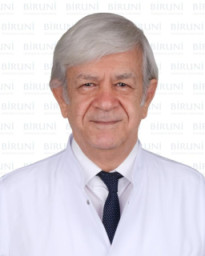
Prof. Dr. Metin GÜDEN
Radiation Oncology
Last updated:


