A modern facelift lifts the deeper tissue layer of the lower face and neck and redrapes the skin without tension, so the result looks natural. Patients in two outcome studies felt six to seven years younger, and the effect held at a year. This guide covers techniques, the neck, results, bleeding and other risks, recovery day by day and the days to plan.
About This Department
Plastic Surgery
A modern facelift repositions the deeper tissues of the lower face and neck and then redrapes the skin without pulling it tight. Patients in two outcome studies judged themselves six to seven years younger, and the result held at a year.
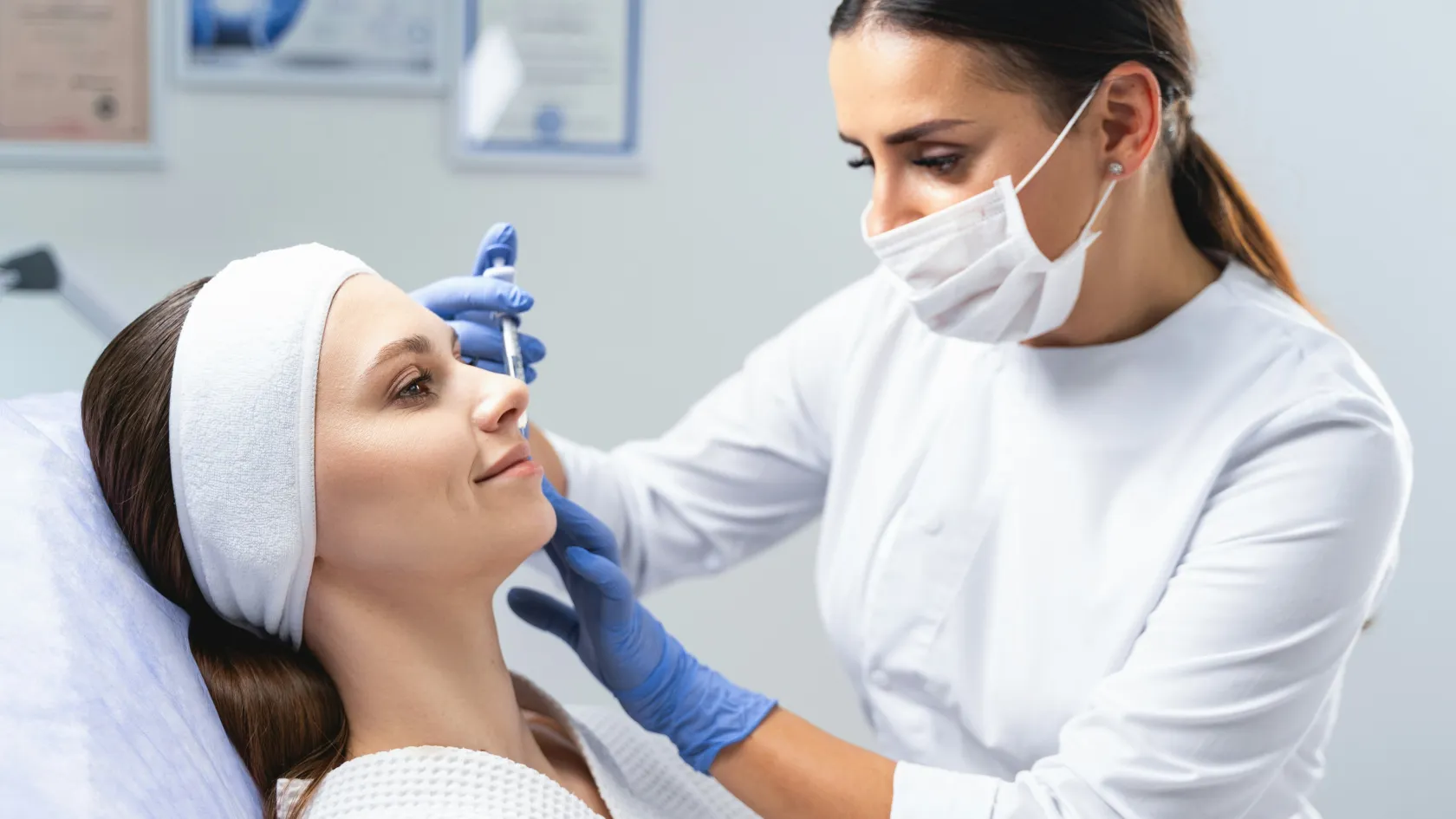
With age, the cheek fat slides down, jowls form along the jaw, and the neck loosens into bands and folds. Creams, fillers and threads soften these changes for a while. A facelift corrects them at their source, by lifting the layer of muscle and connective tissue beneath the skin, called the SMAS, and fixing it higher. Done well, it looks like a rested version of the same face. The commonest early problem is a collection of blood under the skin, which careful blood pressure control and good technique keep to a few percent. Send us photographs of your face at rest, from the front and both sides, and a plastic surgeon will tell you what a facelift could achieve and how long to plan.
6 to 7 years
How much younger patients felt they looked after surgery
0.97%
Major bleeding under the skin, pooled from 8,841 patients
The lower two thirds of the face and the neck are its territory.
Jowls and a blurred jawline.
Deep folds from the nose to the corners of the mouth, and the lines running down from the mouth.
Cheeks that have slid down and flattened.
Loose neck skin, vertical neck bands and fat under the chin, when a neck lift is included.
Forehead, eyelids and fine surface wrinkles need other treatments, a brow lift, eyelid surgery or skin resurfacing, and these frequently share the same session.
How a modern facelift works
The deeper layer, and where the scars go
Under the skin of the face lies the SMAS, a sheet of muscle and fibrous tissue that holds the cheek fat and continues into the platysma muscle of the neck. Pulling only the skin gives a stretched, windswept look that lasts a short time. Lifting the SMAS moves the sagging tissue back to where it sat years earlier, and the skin is then laid over it and trimmed without tension. Modern results look natural for that reason, and the scars stay fine.
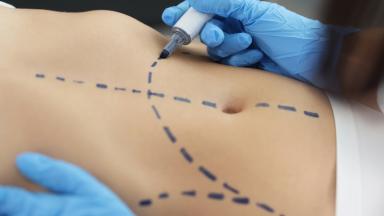
The incision starts in the hairline at the temple, follows the natural crease in front of the ear, or runs just inside the ear, curves around the earlobe and ends behind the ear in the hairline. A neck lift adds a short cut under the chin. Once healed, the scars are hard to see in the majority, and a woman can wear her hair up.
This table scrolls sideways on a narrow screen. Swipe or drag to see every column.
Facelift techniques
Technique
What it moves
Suited to
Skin-only lift
Skin alone
Rarely used now, results fade quickly
SMAS plication or SMASectomy
The SMAS, folded or partly removed and stitched higher
Moderate jowls and cheek descent
Extended SMAS or deep plane
The SMAS and cheek released from their deep attachments and lifted as one
Marked descent of the cheek and jowls
Short-scar or mini lift
A limited SMAS lift through a shorter incision
Early changes in younger patients
The neck
Neck changes bother many patients most. In the largest satisfaction study, patients were less pleased with their neck and the area under the chin than with their cheeks and jawline, and many surgeons therefore open the area under the chin to tighten the neck muscles and remove fat there in the same operation.
Combined procedures
Eyelid surgery, a brow lift, fat grafting to hollow cheeks and temples, and skin resurfacing are the common partners. In a French study, three quarters of patients had at least one, and adding eyelid surgery raised their rating of their overall facial appearance the most.
This table scrolls sideways on a narrow screen. Swipe or drag to see every column.
What patients reported after a facelift
Study
Patients
Findings
New York, Plastic and Reconstructive Surgery 2015
53 who answered the FACE-Q
Satisfaction with the decision 90.5 out of 100. Felt 6.9 years younger. Least satisfied with the area under the chin, 67.9
France, five centers, Aesthetic Plastic Surgery 2019
36 followed prospectively
Every FACE-Q score improved by three months. Felt 6 years younger, stable at six and twelve months
How long it lasts
The clock resets, and the face keeps aging from there. Patients in the French study still looked and felt six years younger at a year. Surgeons expect the improvement to remain visible for a decade or so, with the neck and jowls the first to show change, and a smaller touch-up years later keeps the effect.
How safe is a facelift?
Bleeding under the skin
A hematoma, a collection of blood under the lifted skin, is the commonest early complication. A meta-analysis of 31 studies and 8,841 deep-plane facelifts put the overall rate at 2.7 percent and the rate of major hematomas, those needing a return to the operating room, at 0.97 percent. Men, patients with high blood pressure and those who strain, vomit or become agitated in the first night face higher risk. Most appear within 24 hours, which is one reason for a night in hospital.
Smoking and the skin
Nicotine in any form narrows the small vessels that feed the lifted skin. A classic study traced a significant number of skin losses after facelift to smoking, a finding confirmed by decades of later experience and the reason many surgeons now refuse to operate on active smokers or test for nicotine in the weeks before surgery. Surgeons ask patients to stop all nicotine at least four weeks before and after surgery, and some test for it.
Our data demonstrate that a significant number of skin sloughs observed after face lift surgery are due to patients' cigarette smoking.
Retrospective study, Plastic and Reconstructive Surgery, 1984
Blood pressure, and tranexamic acid
Keeping blood pressure low and steady during and after surgery, treating nausea and pain promptly, and avoiding aspirin, anti-inflammatories, fish oil and some herbal supplements for two weeks before surgery all lower the risk of bleeding. Tranexamic acid slows the breakdown of blood clots and is widely used. In a small randomized trial of 44 patients it reduced bruising and fluid collections after surgery without adding complications. The meta-analysis found no clear winner among tranexamic acid, sealants and quilting sutures.
Evidence from this review suggests that deep plane facelifts have a 2.7% overall and 0.97% major hematoma rate, with no clearly superior adjunct among TXA, sealants, or hemostatic nets.
Systematic review and meta-analysis, Facial Plastic Surgery and Aesthetic Medicine, 2026
1
Arrival and marking
The morning of surgery, the surgeon marks the incisions and reviews the plan. Blood pressure is checked and treated if raised.
2
The operation
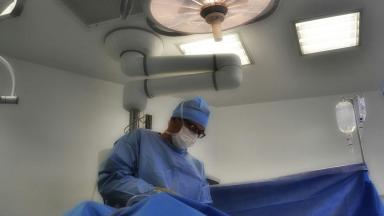
Under general anesthesia or deep sedation with local anesthesia, three to five hours depending on the neck work and combined procedures. Thin drains are placed in many cases.
3
The first night
A night in hospital with the head raised, blood pressure watched hourly and a dressing around the face. Drains come out the next morning.
Stop smoking and all nicotine four weeks before and after surgery.
Stop aspirin, anti-inflammatories, fish oil, vitamin E and herbal supplements two weeks before, unless a doctor has prescribed them for a reason, in which case the surgeon discusses them with that doctor.
Bring your blood pressure under good control before travel.
Other complications
Temporary weakness of a facial muscle, from bruising or stretching of a nerve branch, occurs in a small number of patients and recovers over weeks to months. Permanent nerve injury is rare. Numbness of the cheeks and earlobes is expected and fades over months.
Small areas of skin loss behind the ear, mainly in smokers, heal with dressings and may leave a wider scar. Thick scars, hair loss along the temple incision, a changed position of the earlobe and slight asymmetry can occur and are treated with time, injections or a minor revision.
What is recovery like, and how many days in Istanbul?
Days one to three, peak swelling.
Days five to seven, stitches in front of the ear come out, bruising fades toward yellow.
Days ten to twelve, the last stitches.
Weeks two to three, ready to be seen in public with light makeup.
Months three to six, residual swelling and numbness settle and the final result appears.
Stitches set the timetable.
Plan ten to twelve days in Istanbul. The first day covers the consultation, blood tests and photographs, the operation follows with one night in hospital, and the final stitches come out before you fly. A companion is helpful for the first days, when the face is swollen and you will want someone to handle errands.
Cost depends on the technique, the neck work, any combined procedures, the anesthesia and the hospital night, and includes the follow-up visits. Your own figure follows the free review of your photographs.
Write to us on WhatsApp, and one coordinator takes it from there. Ten days before your flight you receive an invitation letter for the visa, and on arrival a driver takes you to a hotel near the hospital, booked for you and a companion. Seven languages are spoken by the team, with interpreters for others. The kitchen cooks halal, vegetarian and diabetic meals, the prayer room is open to patients, and a female doctor is arranged on request when the rota allows. Back home, send photographs at one, three and six months, and the surgeon reviews the scars and the result and advises on scar care and sun protection, since a fresh scar in front of the ear darkens easily in strong sun during the first year, and on when to restart hair coloring, massage, facial treatments and sport, each of which has its own safe interval after a lift and all of which patients understandably want back as soon as they feel well.
Facelift FAQ
How long does a facelift last?
The improvement remains visible for many years, and the face continues to age from its new starting point. In a French study, patients felt six years younger at three months and still at twelve.
Will I look pulled or different?
A modern facelift lifts the deeper layer and lays the skin over it without tension, which keeps the expression natural.
What are the main risks?
A collection of blood under the skin, 2.7 percent overall and 0.97 percent needing a second operation in a meta-analysis, temporary nerve weakness, numbness, scarring and skin loss in smokers.
When can I be seen in public?
The majority feel comfortable after two to three weeks, with light makeup.
Does a facelift include the neck?
Many do. A neck lift adds a small incision under the chin to tighten the neck muscles and remove fat.
Can my family come with me?
Yes. A companion stays with you at the hotel we arrange, and their help is welcome in the first days.
References
Sinno S, Schwitzer J, Anzai L, Thorne CH. Face-Lift Satisfaction Using the FACE-Q. Plastic and Reconstructive Surgery. 2015;136(2):239-242.
Berger M, Weigert R, Pascal E, Hufschmidt K, Casoli V. Assessing Improvement of Patient Satisfaction Following Facelift Surgery Using the FACE-Q Scales: A Prospective and Multicenter Study. Aesthetic Plastic Surgery. 2019;43(2):370-375.
Azzi JL, Hadian A, Zabihi-Pour D, et al. Prevention of Hematoma in Patients Undergoing Facelift (Rhytidectomy): A Systematic Review and Meta-Analysis. Facial Plastic Surgery and Aesthetic Medicine. 2026;28(3):260-266.
Cohen JC, Glasgold RA, Alloju LM, Glasgold MJ. Effects of Intravenous Tranexamic Acid During Rhytidectomy: A Randomized, Controlled, Double-Blind Pilot Study. Aesthetic Surgery Journal. 2021;41(2):155-160.
Rees TD, Liverett DM, Guy CL. The effect of cigarette smoking on skin-flap survival in the face lift patient. Plastic and Reconstructive Surgery. 1984;73(6):911-915.
Editor's note
Written by the Biruni Hospital medical editorial team. Reviewed by Assoc. Prof. Dr. Fatih CERAN, Plastic, Reconstructive and Aesthetic Surgery.