Skip to content
Burn Reconstruction Surgery
Plastic, Reconstructive and Aesthetic Surgery

Burn Reconstruction Surgery

About This Department

 
Plastic Surgery

Burn scars can tighten across joints, thicken, itch and hurt for years after the wound has closed. Surgery releases what is tight, and laser treatment has changed the outlook for scars that are thick but free to move.

Between a third and seven in ten burn survivors develop raised, hypertrophic scars, and scars that cross the neck, armpit, elbow or hand can pull into contractures that limit movement. Burn reconstruction treats both problems. Surgeons release contractures and fill the gap with a skin graft, a local flap or a dermal substitute. Thick, red or itchy scars respond to fractional carbon dioxide laser, which in an Australian series reduced scar thickness, pain, itch and improved quality of life after a single session, even in scars more than twenty years old. Send us photographs of the scars, a short video of the movement they restrict and the history of the burn, and a reconstructive surgeon will tell you what will improve and how many visits it would take.

32 to 72%
Burn survivors with hypertrophic scars, across studies
2.9%
Complications after fractional CO2 laser in 167 patients
3 to 14 days
In Istanbul, from laser to graft surgery
Free
Reconstructive surgeon's review of your file
Free consultation

Burn reconstruction moves through three levels, and the majority of patients need more than one.

Scar care
Silicone gel or sheets, massage, moisturizers, splints and in many centers pressure garments, started as soon as the wounds close and continued while the scar is active.
Laser
Fractional carbon dioxide laser for thick, stiff scars, and pulsed dye laser for redness, in sessions six to eight weeks apart.
Surgery
Release of contractures with grafts or flaps, excision of unstable scars, and reshaping of the eyelids, lips, ears, nose or breast.

What burn scars do

Deep burns heal with scar. In the months after healing, the scar may thicken, redden, itch and become painful, and it shrinks as it matures. A systematic review of 48 studies found hypertrophic scarring in 32 to 72 percent of burn survivors, the wide range reflecting different burns, populations and definitions. Most scars soften and flatten over one to two years. Many never regain the texture and flexibility of normal skin.

Who is at higher risk

Darker skin, female sex, young age, burns on the neck and arms, many operations, meshed skin grafts, slow healing and more severe burns all raised the risk of thick scars in that review. Children deserve special attention, since a scar that does not grow with the body can pull joints and limbs out of position as they grow.

When to operate
Most reconstruction waits until the scar has matured, twelve to eighteen months after the burn, when it is pale, soft and no longer changing. Waiting lets the scar settle and shows its true extent. Exceptions are a contracture that threatens the eye, the mouth, a child's growth or a joint that is stiffening, which are released earlier.

Contractures

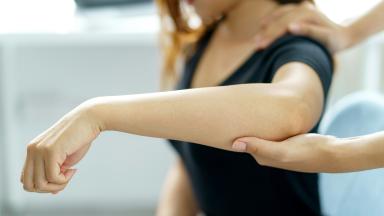
A contracture forms when scar crosses a joint or a free border and shortens as it matures. The neck pulls the chin down, the armpit limits raising the arm, the elbow and knee will not straighten, the fingers curl, the eyelid turns out and cannot close, the mouth narrows. Each limits daily life, and in the eye and mouth can cause harm on its own.


  • Neck, where contractures limit head movement and can make anesthesia and breathing tubes difficult.
  • Armpit and elbow, limiting reaching and dressing.
  • Hand.
  • Eyelids, where an everted lid exposes and dries the eye.
  • Mouth, where narrowing affects eating, dental care and speech.

Release and resurfacing

A linear band responds to Z-plasty, interlocking triangular flaps that lengthen the scar and break its line. The surgeon cuts across a broad contracture until the joint moves freely and fills the gap with a thick skin graft, a local flap of healthy skin, or a dermal substitute, a collagen template that is grafted over once it has formed a new dermis. Large defects, or exposed tendon and bone, need a pedicled or free flap. Tissue expanders stretch healthy skin next to the scar over several weeks so it can replace scar on the scalp, face and trunk.

What happens during a contracture release?

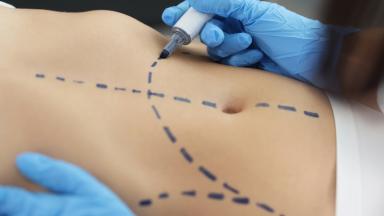
  1. Marking of the scar and the planned incisions, with photographs and measurement of joint movement.
  2. Release under general anesthesia.
  3. Covering of the gap with a flap, graft or dermal substitute, chosen for the site and depth.
  4. A bulky dressing and a splint holding the joint in its new position for five to seven days.
  5. Hand therapy or physiotherapy starting as soon as the graft or flap is secure.

What does scar care involve, and how well does it work?

Pressure garments

Custom-made pressure garments, worn 23 hours a day for a year or more, have long been standard in burn care. A meta-analysis of six randomized trials in 316 patients found they reduced scar height by a small amount, of questionable clinical importance, and did not change overall scar appearance, color, vascularity or pliability.

Many burn units still use them, especially for large scars and in children, alongside silicone and massage. The evidence argues for using them where they help comfort and shape, and for not relying on them alone.

PGT does not appear to alter global scar scores. It does appear to improve scar height, although this difference is small and of questionable clinical importance.
Meta-analysis of six randomized trials, Journal of Plastic, Reconstructive and Aesthetic Surgery, 2009
  • Silicone gel or sheets daily for several months.
  • Firm massage with a moisturizer, several times a day, pressing hard enough to blanch the scar, which softens it and eases the itch that keeps many patients awake at night.
  • Night splints.
  • Sun protection, since young scars darken in sunlight.
  • Steroid injections for small, very thick or itchy areas.
Warning signs after surgery
Spreading redness, fever, a graft that turns dark or lifts off with fluid beneath, increasing pain under a splint, or numbness and coldness of the fingers or toes beyond a dressing need the surgeon the same day.

What can laser treatment do for burn scars?

Quality of life of patients with both immature and mature scars (up to 23 years after injury) improved significantly after just one treatment session.
Prospective study of 47 patients, Burns, 2017

This table scrolls sideways on a narrow screen. Swipe or drag to see every column.

One session of fractional CO2 laser, 47 patients with 118 scars
Measure Before About two months after
Scar thickness on ultrasound 2.4 mm 1.9 mm
Vancouver Scar Scale 7 6
Patient scar score 9 5
Burn quality of life score 120 135
This study demonstrates that AFL-CO2 is an effective and safe treatment modality for burn scars improving thickness, symptoms and quality of life of burn survivors when compared to conventional scar treatment.
Case-control study of 187 patients, Burns, 2021

This table scrolls sideways on a narrow screen. Swipe or drag to see every column.

Laser against conventional scar care, 187 patients
Outcome Laser group, 167 patients Conventional care, 20 patients
Scar thickness and Vancouver scale Significant reduction No significant change
Pain and itch Significant reduction Unchanged
Quality of life Improved Worsened
Complications 2.9 percent Not applicable
The results obtained from this study support the use of laser therapy to improve hypertrophic burn scars in the pediatric population.
Pediatric series of 125 patients, Journal of Burn Care and Research, 2018

This table scrolls sideways on a narrow screen. Swipe or drag to see every column.

Laser in children, Toronto, 125 patients and 289 sessions
Finding Result
Patients under five at first treatment More than half
Lasers used Pulsed dye and CO2, in combination in most sessions
Vancouver Scar Scale after one treatment 7.37 to 5.76

Children

Children receive a short general anesthetic. The laser hurts. Many combine laser with release of tight bands in the same session. As they grow, a scar that was fine at five may tighten at ten, so follow-up continues until growth is complete.

Days, cost and the trip

The stay depends on the plan.

A laser session needs three to five days in Istanbul, including the assessment, the treatment and a check of the skin, and repeat sessions follow every six to eight weeks, three or more in all for many scars. A contracture release with a graft needs ten to fourteen days, since the graft is checked and the splint adjusted before you fly. Flap reconstructions take longer. Fly home the day after a laser session. After surgery, wait until the graft has taken and you can manage the splint.

Cost depends on the number and size of the areas, the type of laser, the surgery, the anesthesia, the hospital nights and therapy sessions. Your own figure follows the free review of your file.

Your coordinator stays your single contact from the first WhatsApp message. Ten days before travel the visa invitation letter goes out, a driver meets you at the airport, and a hotel close to the hospital is booked for you and a companion, or a parent for a child. The team works in seven languages, with interpreters for any other. The kitchen prepares halal, vegetarian and diabetic meals, the prayer room stays open, and a female doctor is assigned on request when the schedule allows. Back home, a written plan for scar care, splinting and exercises goes with you, and photographs or short videos sent every few weeks let the surgeon decide when the next laser or operation will help most.


Burn reconstruction FAQ

When is the best time for surgery on a burn scar that is still red and thick?
Twelve to eighteen months after the burn for most scars, once they have matured. Contractures that threaten the eye, mouth, a child's growth or a joint are released earlier.
Can old burn scars be improved?
Yes. In an Australian study, scars up to 23 years old improved in thickness, symptoms and quality of life after one fractional CO2 laser session.
Do pressure garments work?
A meta-analysis found they reduce scar height slightly but do not change overall scar appearance. Many units still use them alongside other treatments.
How many laser sessions will I need?
Three or more in most cases, six to eight weeks apart, depending on the scar.
Can children have burn reconstruction?
Yes. Children are treated under general anesthesia and followed until growth is complete, since scars can tighten as they grow.
Can my family come with me?
Yes. A companion, or a parent for a child, stays with you at the hotel we arrange.

References

  1. Lawrence JW, Mason ST, Schomer K, Klein MB. Epidemiology and impact of scarring after burn injury: a systematic review of the literature. Journal of Burn Care and Research. 2012;33(1):136-146.
  2. Anzarut A, Olson J, Singh P, Rowe BH, Tredget EE. The effectiveness of pressure garment therapy for the prevention of abnormal scarring after burn injury: a meta-analysis. Journal of Plastic, Reconstructive and Aesthetic Surgery. 2009;62(1):77-84.
  3. Issler-Fisher AC, Fisher OM, Smialkowski AO, et al. Ablative fractional CO2 laser for burn scar reconstruction: An extensive subjective and objective short-term outcome analysis of a prospective treatment cohort. Burns. 2017;43(3):573-582.
  4. Issler-Fisher AC, Fisher OM, Haertsch PA, Li Z, Maitz PKM. Effectiveness and safety of ablative fractional CO2 laser for the treatment of burn scars: A case-control study. Burns. 2021;47(4):785-795.
  5. Zuccaro J, Muser I, Singh M, et al. Laser Therapy for Pediatric Burn Scars: Focusing on a Combined Treatment Approach. Journal of Burn Care and Research. 2018;39(3):457-462.

Editor's note

Written by the Biruni Hospital medical editorial team. Reviewed by Prof. Dr. Atilla ARINCI, Plastic, Reconstructive and Aesthetic Surgery.

Related Treatments

View All