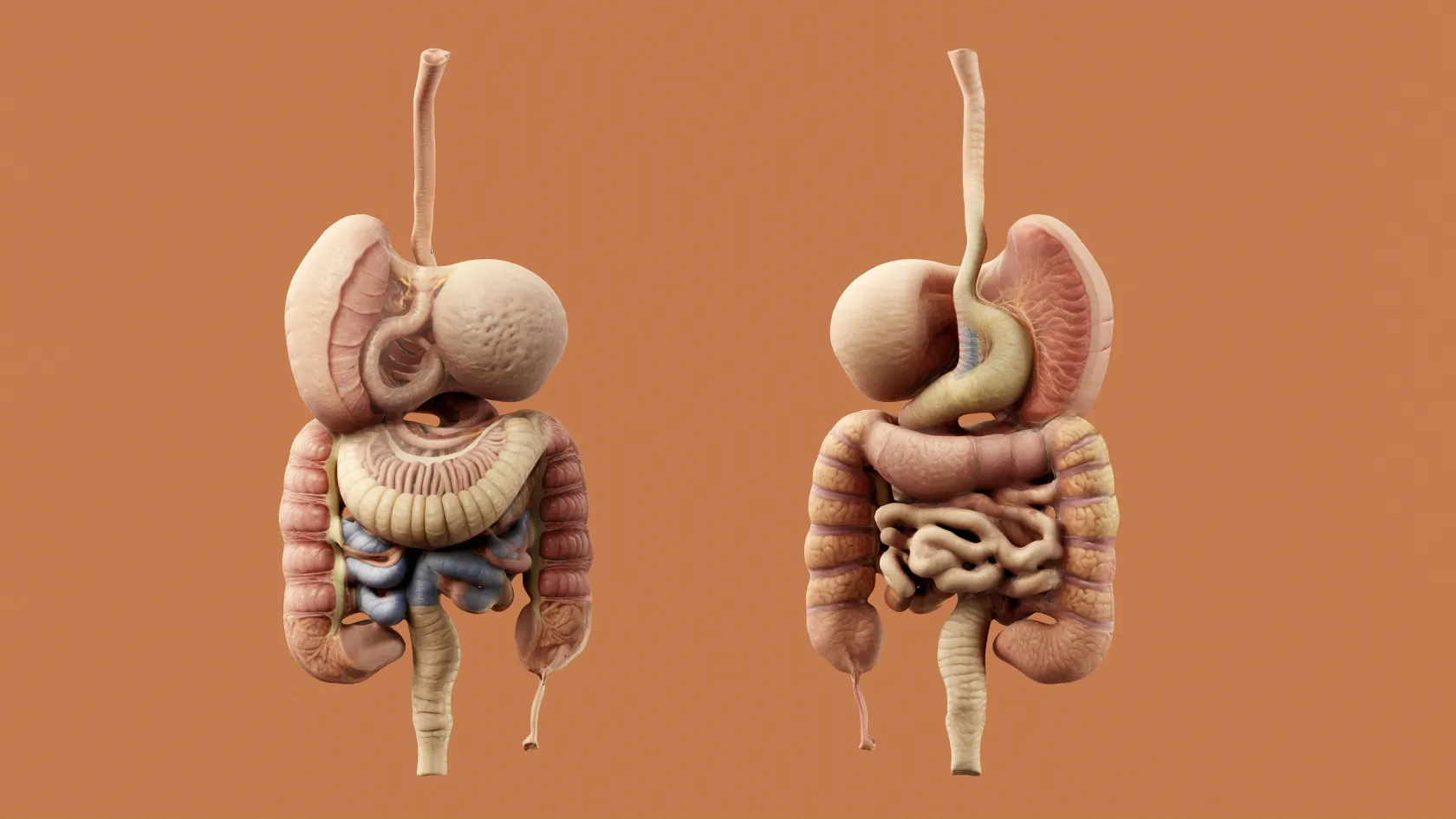
Ulcerative colitis that no longer responds to medicines, familial polyposis, Lynch syndrome or cancers in several parts of the colon can mean removing the whole large bowel. This guide explains why total colectomy is done, how a severe colitis attack is managed, the choice between an ileorectal join, a pouch and an ileostomy, life with a pouch, the risks, the recovery and how long to stay in Istanbul.
About This Department
General Surgery
The whole colon removed. A pouch, a join or a stoma to follow.
In a series of 3,707 patients with an ileal pouch, functional outcome and quality of life were good or excellent in 95 percent.
95%
Good or excellent quality of life with an ileal pouch
27%
Patients with a severe colitis attack who needed colectomy
5 to 7 days
Hospital stay in a published Istanbul laparoscopic colectomy package
Free
Review of your reports before you book
Free consultation
The review costs nothing and carries no obligation. Send your colonoscopy and pathology reports, any genetic test and your scans, and our general surgery team will tell you which reconstruction suits you, how many stages to expect, and how long to plan for. A coordinator replies in your own language.
Ulcerative colitis no longer responds to medicines, a genetic test has shown familial adenomatous polyposis or Lynch syndrome, colonoscopy has found cancers or polyps in more than one part of the colon, or severe constipation has not yielded to any treatment, and your team has recommended removing the whole colon. Total colectomy removes the entire large bowel, and the small bowel is then joined to the rectum, brought out as an ileostomy, or, after removal of the rectum as well, shaped into an internal pouch joined to the anus. Below you will find why the operation is done, how an acute attack of colitis is managed, the choices for what happens after the colon is removed, what life with a pouch looks like, why the extent matters in hereditary cancer, how the operation is done, the risks, the recovery, how long to stay in Istanbul, and the follow-up at home.
Why the whole colon is removed
The colon absorbs water and stores stool. People live well without it, because the small bowel takes over much of the work of absorbing fluid within a few months, although stools stay looser and more frequent than before. Surgeons remove the whole colon when disease affects all of it or will. In ulcerative colitis, inflammation starts in the rectum and can spread through the entire colon, and when medicines fail, when a severe attack threatens life or when dysplasia appears, removing the colon cures the bowel disease. In familial adenomatous polyposis, hundreds to thousands of polyps carpet the colon from the teenage years, and cancer is close to certain without surgery. In Lynch syndrome, a first colon cancer is often treated with a more extensive operation. The aim is a lower risk of a second cancer. Several cancers in different segments, a colon that has stopped moving in slow-transit constipation, and a dangerously swollen colon in toxic megacolon are other reasons.
Conditions that lead to it
Swipe or drag sideways on a narrow screen to see every column.
Common reasons for total colectomy
Condition
Why the whole colon
Usual reconstruction
Ulcerative colitis
Disease involves the whole colon and rectum
Staged pouch, or ileostomy
Familial adenomatous polyposis
Polyps throughout the colon
Ileorectal join or pouch, by rectal polyp load
Lynch syndrome with colon cancer
High risk of a second cancer
Ileorectal join
Several cancers or polyps
Disease in more than one segment
Ileorectal join
Slow-transit constipation
The whole colon fails to move stool
Ileorectal join
1
Diagnosis
Colonoscopy, biopsies and, for inherited conditions, genetic testing.
2
Team review
Surgeon, gastroenterologist and, for cancer, an oncologist agree the plan.
3
Your choice
The reconstruction is chosen with you, weighing bowel function, fertility plans and future checks.
Living without a colon
Work, travel, sport and family life go on. Most people adjust their diet a little and drink more fluid.
When colitis becomes an emergency
1
Days one to three
Intravenous steroids, fluids, blood tests and daily review of stools and pulse.
2
Day three to five
If there is not enough response, rescue treatment or surgery is discussed.
A severe attack of ulcerative colitis brings six or more bloody stools a day, fever, a fast pulse or anemia. Treatment starts in hospital with intravenous steroids. Across 32 studies with 1,991 patients, 27 percent of those admitted with a severe attack needed a colectomy, a rate that had not changed over 30 years. When steroids fail after three to five days, rescue treatment with infliximab or ciclosporin is tried, and if that fails too, surgery should not be delayed.
Rescue options include
infliximab, given by drip,
ciclosporin, given by drip and then tablets,
and colectomy when these fail or are unsuitable.
Warning signs that call for same-day review include
a swelling, tender abdomen,
fever with a racing pulse,
bleeding that is not slowing,
and a colon that looks widened on X-ray.
Why the emergency operation is staged
In a sick patient on high-dose steroids, the colon is removed and the end of the small bowel is brought out as a temporary ileostomy, leaving the rectum in place. A pouch can be made months later, once you have recovered and stopped steroids.
Timely surgery saves lives in severe colitis.
What happens after the colon is removed
The choice depends on
whether the rectum is diseased,
the strength of the anal muscles,
plans for pregnancy,
and how you feel about a stoma.
There is no single right reconstruction, only the right one for you.
Three ways to restore the bowel
Scroll sideways on small screens to see every column.
Options after the colon is removed
Option
What it involves
Bowel function
Ileorectal anastomosis
Small bowel joined to the rectum
Four to six motions a day, rectum needs yearly checks
Ileal pouch-anal anastomosis
Rectum removed, small bowel folded into a J-pouch joined to the anus
Five to seven motions a day, usually staged with a temporary stoma
End ileostomy
Small bowel brought out to the abdominal wall into a bag
No motions through the anus
1
Stage one
Colectomy with a temporary ileostomy, often keyhole.
2
Stage two
Removal of the rectum and creation of the pouch, with a protective loop ileostomy.
3
Stage three
Closure of the loop ileostomy two to three months later.
Life with a pouch
In the largest single-center series, 3,707 patients who had pouch surgery at the Cleveland Clinic between 1984 and 2010, most of them for ulcerative colitis, the team reported early complications in 33.5 percent and a mortality of 0.1 percent. Late complications other than pouchitis affected 29.1 percent, and the pouch failed in 5.3 percent over a median of seven years. Functional outcome and quality of life were good or excellent in 95 percent.
1
First months
Frequent stools, including at night, while the pouch stretches, the anal muscles regain strength and the small bowel learns to absorb more water.
2
Six to twelve months
Stools settle to five to seven a day.
What pouchitis is
Inflammation of the pouch lining, causing more frequent stools that are hard to hold, cramps and sometimes fever. It responds to a course of antibiotics in most patients, and a few need long-term treatment.
Fertility and pregnancy
Pelvic surgery for a pouch can lower fertility in women, so some choose an ileorectal join or delay the pouch until after having children. Your surgeon discusses this before planning.
Hereditary cancer and the extent of surgery
For people with Lynch syndrome who develop a first colon cancer, the choice is between removing only the affected segment or removing most or all of the colon. Among 382 carriers of a mismatch repair gene mutation in an international registry, none of the 50 who had extensive colectomy developed a second colorectal cancer, while 22 percent of the 332 who had a segmental resection did, with a cumulative risk of 16 percent at ten years and 41 percent at twenty. Every 10 centimeters of bowel removed cut the risk by 31 percent.
Signs it may be time
Ulcerative colitis that has failed medicines or shows dysplasia, familial adenomatous polyposis, Lynch syndrome with a first colon cancer, several cancers in different segments, or slow-transit constipation confirmed by testing.
Talk to us first
Crohn's disease that also affects the small bowel or anus, which makes a pouch risky, weak anal muscles for a pouch, or constipation from a problem at the pelvic floor rather than the colon.
How the operation is done
1
Preparation
Stoma nurse visit to mark the best site, and bowel preparation if planned.
2
Keyhole access
Five or six small cuts, or an open incision in emergencies.
3
Freeing the colon
The colon is released along its whole length and its vessels divided.
4
Reconstruction
The small bowel is joined to the rectum, shaped into a pouch, or brought out as a stoma.
5
Closure
Small cuts closed and the stoma, if any, fitted with a bag.
Risks and how they are managed
What a high-output stoma means
More than about one and a half liters of output a day. It is treated with salty rehydration drinks, less plain water, and medicines that slow the bowel.
Leak from a join or pouch
A small proportion leak in the first weeks, and a protective loop ileostomy reduces the harm when it happens, while early CT, antibiotics and drainage treat the leak itself.
Dehydration
Loose output from a new ileostomy can dehydrate quickly. Drinking oral rehydration solution and limiting plain water help.
Small bowel obstruction
Adhesions can block the bowel months or years later, settling with rest in most cases.
Infection and blood clots
Antibiotics at surgery and clot prevention for four weeks after pelvic surgery.
The recovery
After keyhole colectomy, you walk on the first day, start drinking and soft food early and go home in five to seven days, longer after a pouch or an emergency operation. A stoma nurse teaches bag changes before you leave and checks that you can empty and change the bag alone. Stools are frequent and loose at first. They settle over three to six months as the small bowel adapts, helped by soluble fiber, regular meals, salty snacks, foods such as bananas, rice, oats and potatoes that thicken output, and medicines that slow the bowel when needed. Night-time stools become less frequent with time and with an evening meal taken earlier. Skin around the anus or the stoma needs gentle care and a barrier cream. Heavy lifting waits six weeks, and longer with a stoma to reduce the risk of a hernia around it, with a support belt advised for gardening or sport. Most people are back at desk work within a month.
How long to stay in Istanbul
Plan for two to three weeks.
A published Istanbul laparoscopic subtotal colectomy package lists five to seven days in hospital and seven nights in total, including a CT scan, anesthetic and gastroenterology consultations, a follow-up visit, meals and transfers, with the hotel left out, while another platform listing describes a ten-day hospital stay for total colectomy with an ileoanal pouch. Staged pouch surgery means two or three trips. Fitness to fly is confirmed once you manage the stoma confidently and your fluid intake keeps up with the output.
What decides the cost
One stage or several, keyhole or open surgery, a pouch or an ileorectal join, nights in hospital, stoma supplies and pathology set most of the figure.
A quote you can compare names each stage and the stay, and that figure comes only after a colorectal surgeon reviews your colonoscopy, pathology, genetic results and scans. The review costs nothing.
Arranging the trip
One WhatsApp message with your colonoscopy, pathology and any genetic report starts the review, and the coordinator who replies stays with you across every stage and the follow-up at home. Talk with the team in English, Arabic, French, Russian, Serbian, Romanian or Spanish, or through an interpreter for other languages. A family member sleeps on the companion bed in your room. The international office books the hotel, sends the visa invitation letter ten days before travel and arranges transfers, and halal, vegetarian and diabetic meals, a prayer room and a female physician on request are available.
Once you are back home
Near home, a stoma nurse helps with supplies. After an ileorectal join, the rectum is checked by endoscopy every year, and after a pouch for familial polyposis, the pouch is checked too.
No output from the stoma for six hours with cramps, dizziness and dark urine, fever, worsening abdominal pain, or bleeding. Each needs a doctor the same day.
Total colectomy FAQ
Short answers to common questions
Can I live normally without a colon?
Yes. The small bowel adapts over months, and most people return to work, travel and sport.
Will I have a permanent bag?
Not necessarily. An ileorectal join or a pouch avoids a permanent stoma for many patients.
How many times a day will I go?
Four to seven times on average after an ileorectal join or pouch, once function settles.
Does colectomy cure ulcerative colitis?
Removing the colon and rectum removes the disease from the bowel.
Can colectomy be done by keyhole surgery?
Yes, in most planned operations and many emergency ones.
Can a family member stay with me?
Yes. A relative stays overnight on the companion bed, and the international office books a hotel for others.
References
Turner D, Walsh CM, Steinhart AH, Griffiths AM. Response to corticosteroids in severe ulcerative colitis. A systematic review of the literature and a meta-regression. Clin Gastroenterol Hepatol. 2007;5(1):103-110.
Fazio VW, Kiran RP, Remzi FH, et al. Ileal pouch anal anastomosis. Analysis of outcome and quality of life in 3707 patients. Ann Surg. 2013;257(4):679-685.
Parry S, Win AK, Parry B, et al. Metachronous colorectal cancer risk for mismatch repair gene mutation carriers. The advantage of more extensive colon surgery. Gut. 2011;60(7):950-957.
Editor's note
Written by the Biruni Hospital medical editorial team. Reviewed by Prof. Dr. Mustafa Teoman YANMAZ, Medical Oncology.