
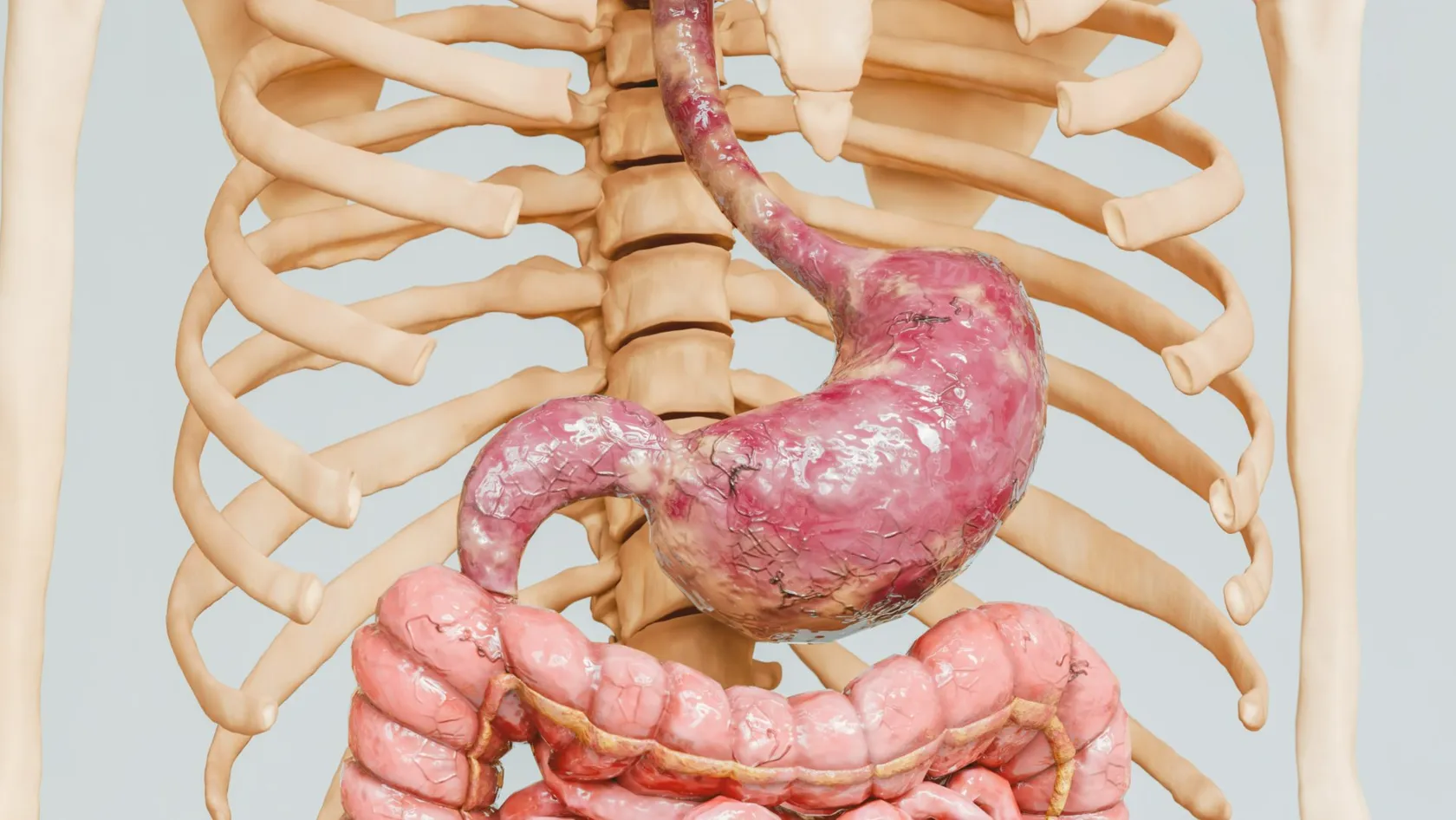
Stomach Cancer Surgery - Gastric Cancer Surgery
How much stomach, how many lymph nodes, keyhole or open, and whether chemotherapy comes first. Written from the randomized trials, including the two operations that were added for decades and then tested and abandoned.
About This Department
German investigators randomly assigned 716 patients either to the chemotherapy regimen that had been standard for a decade or to a newer four-drug combination given before and after surgery, and median survival went from 35 months to 50. Nothing that happened in the operating room accounted for that. Stomach cancer surgery is one of the few cancer operations where the decisions made around the surgery have moved outcomes further than the decisions made during it, and this page is arranged to reflect that.
Free consultation
Find out what should happen before any operation
Send the endoscopy report with the biopsy result and the exact tumor location, the staging scans of chest, abdomen and pelvis with their written reports, any HER2 or mismatch repair result, your recent blood results including hemoglobin and albumin, your weight now and six months ago, and your medication list. A surgeon and a medical oncologist read the file together and tell you whether chemotherapy should come first, whether a staging laparoscopy is needed, and how much stomach is likely to be removed. No fee, no obligation, and a coordinator replies in your own language, usually within the same working day.
The four decisions
Everything on this page belongs to one of four questions, and they are answered in this order rather than the order patients usually ask them in.
- Does treatment start with drugs or with surgery? For anything beyond the earliest tumors, chemotherapy before and after the operation is now standard in Europe, and the trial evidence behind that is stronger than the evidence behind any surgical refinement of the last twenty years.
- How much stomach comes out? Total or partial, and that is decided by where the tumor sits rather than by how aggressive anybody wants to be. It is the single decision that most changes your life afterwards.
- Where does the lymph node clearance stop? The argument between a limited and an extended clearance ran for thirty years, produced three randomized trials with different answers, and has settled in a way worth understanding.
- Keyhole, open or robotic? Well studied for early tumors and now well studied for advanced ones too, with several thousand patients randomized. This matters for your fortnight and very little for your cancer.
- One thing sits underneath all four. Where the operation is done. In Swiss national data covering 4,404 gastric cancer resections, postoperative death fell from 4.9 percent in low volume hospitals to 3.3 percent in high volume ones, with an adjusted odds ratio of 0.68 and a confidence interval of 0.48 to 0.98.
Before anything is removed
Looking inside before committing to an operation
Scans miss small deposits on the lining of the abdomen, and those deposits change the whole plan. A short keyhole look under anesthetic, with fluid washed into the abdomen and examined for cancer cells, is how that is checked before anybody commits to a major resection. Across 156 patients having a staging laparoscopy, visible disease was found in 38 of them, meaning 24 percent, and among the 118 whose laparoscopy looked clean, the washings still found cancer cells in 8. That is the value of the procedure stated plainly, which is that roughly a quarter of people thought to be operable on scans are not, and finding that out through a keyhole is far better than finding it out through a full incision. Cells in the washings without visible disease is a genuinely difficult situation, and a Japanese study of 100 such patients found that having chemotherapy was strongly associated with longer survival while having the stomach removed was not significantly so, which is an argument for treating first and deciding about surgery afterwards.
Chemotherapy before the operation
A British trial randomized 503 patients to three cycles of chemotherapy before surgery and three after, or to surgery alone, and five year survival was 36 percent against 23 percent, with a hazard ratio for death of 0.75 and a confidence interval of 0.60 to 0.93. Postoperative complications occurred in 46 percent against 45 percent, so the drugs did not make the operation more dangerous. A German trial then compared that regimen against a newer four-drug combination in 716 patients and found median survival of 50 months against 35, with a hazard ratio of 0.77 and a confidence interval of 0.63 to 0.94, and with serious side effects and hospitalizations for toxicity almost identical between the two arms. Those two results, taken together, are why an operation offered without any discussion of chemotherapy first should prompt a question rather than a booking, and the question is simply whether your case has been through a meeting where an oncologist was present.
How much stomach
Where the tumor sits decides this, and the decision is largely made for the surgeon rather than by them. An Italian trial randomized 618 patients with tumors in the lower stomach to a partial or a total removal and found five year survival of 65.3 percent against 62.4 percent, which met their statistical test for equivalence. Since the two operations cure equally well when both are possible, the smaller one wins on everything else.
Wide table ahead. On a narrow screen it scrolls sideways instead of shrinking, so swipe or drag it.
| Operation | When it is used | What you are left with |
|---|---|---|
| Endoscopic resection | The earliest tumors, lifted out through the scope with no incision at all and no lymph node clearance. | A whole stomach. In one matched comparison of 117 pairs, five year survival was 96.5 against 99.1 percent with no significant difference, though disease-free survival was lower at 90.3 against 98.0 percent. |
| Distal or subtotal gastrectomy | Tumors in the lower two thirds, where enough clearance can be left above the tumor. | The upper stomach and its reservoir function. Less weight loss and easier eating than a total removal, and the operation this page's evidence mostly concerns. |
| Total gastrectomy | Tumors high in the stomach, diffuse tumors spreading through the wall, and anything where a partial removal cannot reach clear tissue. | No stomach. The small bowel is joined directly to the esophagus, and eating becomes a set of small meals rather than three normal ones. |
| Proximal gastrectomy | Selected early tumors at the top of the stomach, where the lower part can be spared. | The lower stomach. In 506 patients with stage I upper-stomach cancer it gave significantly less anemia and vitamin B12 deficiency than a total removal, with comparable cancer outcomes. |
| Prophylactic total gastrectomy | Carriers of an inherited gene fault, with no cancer diagnosed. Covered further down this page. | The same anatomy as a total gastrectomy for cancer, chosen deliberately by somebody who feels perfectly well. |
One old rule deserves qualifying. Surgeons were long taught to take a fixed margin of normal stomach above the tumor, and for cancers at the top of the stomach that rule has not held up. Across 162 patients from seven American centers the average clear margin was 2.6 centimeters, and greater distance was not associated with either local recurrence or survival. What mattered was whether the margin was clear at all, and a margin containing cancer went with much heavier lymph node involvement, which suggests it was marking aggressive disease rather than causing it.
The operation itself
Three to five hours, depending on how much comes out and how the abdomen is entered.
How many lymph nodes
The argument that took thirty years
Japanese surgeons had long performed an extended clearance and reported better survival than Western centers, and two European trials set out to test whether the technique or the patients explained it. A British trial of 400 patients found five year survival of 33 percent after the extended operation and 35 percent after the limited one, with a hazard ratio for death of 1.10 and a confidence interval of 0.87 to 1.39. A Dutch trial of 711 patients undergoing curative surgery found the same at first, and then something changed with time. At fifteen years, overall survival was 29 percent after the extended clearance and 21 percent after the limited one, a difference that did not reach statistical significance, while death specifically from stomach cancer was 37 percent against 48 percent and local recurrence was 12 percent against 22 percent. The cost was heavy and it was paid early, with operative death of 10 percent against 4 percent, complications in 43 percent against 25 percent and reoperation in 18 percent against 8 percent. Almost all of that excess came from removing the spleen and part of the pancreas as part of the clearance, which is no longer done, and the modern conclusion is that an extended clearance performed without those additions, in a hospital that does many of them, is worth having.
Two things that were added and then taken back out
Surgery gets more radical until somebody randomizes it. Removing the spleen during a total gastrectomy was standard for years on the reasoning that nodes at its hilum could not otherwise be cleared, and a Japanese trial of 505 patients found five year survival of 75.1 percent with splenectomy and 76.4 percent without, formally confirming that keeping the spleen was not inferior while causing less bleeding and fewer complications. Stripping out the thin membrane behind the omentum, on the reasoning that stray cells might lurk there, was tested in 1,204 patients and stopped early for futility, with five year survival of 76.9 percent against 76.7 percent and a hazard ratio of 1.05. Pancreatic leaks were more common in the group that had the extra dissection, at 5 percent against 2 percent, and the five year follow-up confirmed both the absence of benefit and an excess of abdominal abscesses. Two large trials, two operations abandoned, and no patient worse off for the change.
Keyhole, open or robotic
Few operations have been tested this thoroughly. Korean, Japanese and Chinese groups have between them randomized several thousand patients, first for early cancers and then for advanced ones.
- For early cancer, keyhole surgery is settled. A Korean trial of 1,416 patients found complications in 13.0 percent against 19.9 percent and wound problems in 3.1 percent against 7.7 percent, then reported five year survival of 94.2 percent against 93.3 percent. A Japanese trial of 921 patients found relapse-free survival at five years of 95.1 percent against 94.0 percent.
- For advanced cancer it took longer and the answer is the same. A Korean trial of 1,050 patients found complications within 30 days in 16.6 percent against 24.1 percent and, at five years, overall survival of 88.9 percent against 88.7 percent. A Chinese trial of 1,056 patients found three year disease-free survival of 76.5 percent against 77.8 percent, meeting its threshold for non-inferiority.
- Japanese investigators confirmed it independently. Among 502 patients with advanced disease, relapse-free survival at five years was 75.7 percent against 73.9 percent, with severe complications in 3.5 percent against 4.7 percent. Its authors stated that the result holds for qualified surgeons, which is a condition rather than a footnote.
- Node counts come out the same either way. In the Korean advanced-cancer trial the average was 46.6 against 47.4, which is the measure that would show a compromised cancer operation and it shows nothing.
- Robotic surgery has one randomized trial and it missed its target. Among 241 patients, abdominal infections were 6.2 percent robotic against 8.5 percent laparoscopic, which was the primary question and was not significant. Complications of any severity were lower with the robot as a secondary finding, and a pooled analysis of 5,447 patients found less bleeding and fewer overall complications with the robot alongside a longer operation and a higher cost.
- Total gastrectomy by keyhole is less well evidenced. The published Korean work on it is a single-arm study of 160 patients rather than a randomized comparison, and it found narrowing at the join in 10.9 percent with one reconstruction method against 0 percent with another. Ask specifically about experience with the total operation, which is harder than the partial one.
Drugs around the surgery
What is standard depends heavily on where you are being treated, and the trials behind each approach were run in different populations. Knowing which one your plan comes from tells you a great deal.
Scroll this table sideways on a narrow screen. Swipe or drag it to reach the final column.
| Approach | What the trial found | Where it is used |
|---|---|---|
| Chemotherapy before and after surgery | In 503 patients, five year survival 36 against 23 percent, hazard ratio 0.75 with a confidence interval of 0.60 to 0.93, and no increase in surgical complications. | Europe. This is the trial that made surgery-first the exception rather than the rule. |
| The newer four-drug regimen | In 716 patients, median survival 50 months against 35, hazard ratio 0.77 with a confidence interval of 0.63 to 0.94, and serious side effects in 27 percent of both arms. | Europe, for patients fit enough. It replaced the older regimen on this result. |
| Chemotherapy only after surgery | In 1,035 patients across East Asia, five year disease-free survival 68 against 53 percent and overall survival 78 against 69 percent, with hazard ratios of 0.58 and 0.66. | East Asia, after an extended node clearance. A different but equally valid strategy. |
| A single oral drug afterwards | Five year survival 71.7 against 61.1 percent, hazard ratio 0.669 with a confidence interval of 0.540 to 0.828, in Japanese patients after an extended clearance. | Japan. The drug is metabolized differently in East Asian and Western populations. |
| Chemotherapy with radiotherapy afterwards | In 556 patients, median survival 36 months against 27, with severe toxicity in 41 percent and life-threatening toxicity in 32 percent. | Mainly the United States, and mainly where the node clearance was limited. |
| Adding radiotherapy after a full clearance | In 458 patients who had an extended clearance, adding radiotherapy gave a disease-free survival hazard ratio of 0.740 with a confidence interval of 0.520 to 1.050, which did not reach significance. | Nowhere, as a routine. Radiotherapy adds less once the surgery has been thorough. |
What can go wrong
Gastrectomy is major surgery in the upper abdomen and the list below is honest rather than comforting. Reading it beforehand is what lets you recognize a problem early.
Drag or swipe this table sideways on a small screen, since it scrolls instead of shrinking.
| Problem | How common and when | What is done |
|---|---|---|
| Leak at the join to the esophagus | 6.6 percent across 1,750 total gastrectomies in Italian centers, usually in the first week. | A third needed reoperation, a quarter were managed by endoscopy or a drain and the rest settled with feeding through a tube. Stay went from 12 days to 27. |
| Infection deep in the abdomen | 5.8 percent in a Japanese trial of 910 patients, most often in the first ten days. | Antibiotics and a drain placed under scan guidance. Male sex and one type of reconstruction carried roughly double the odds. |
| Pancreatic leak | 2 percent in the trial of standard surgery and 5 percent where extra dissection was added, in the first week. | Drainage and time. This is the specific reason the extra dissection was abandoned. |
| Narrowing at the join | Weeks to months. Reported at 10.9 percent with one reconstruction technique and 0 percent with another in a study of 160 patients. | Stretching at endoscopy, often more than once. Rarely needs another operation. |
| Death within thirty days | 3.3 percent in high volume Swiss hospitals and 4.9 percent in low volume ones. Under 1 percent in the modern Korean and Japanese trials. | The gap between those figures is the argument for asking how many of these the hospital does each year. |
| Clots in the legs or lungs | The first weeks, and raised by cancer, by abdominal surgery and by weight loss together. | Blood thinning injections, often continued for weeks after discharge. A long flight taken early adds to the risk. |
Recovery
Structured recovery programs have been tested here specifically, and across 25 randomized trials covering 2,809 patients they shortened hospital stay by 1.88 days, brought wind back 18 hours sooner and reduced complications with a relative risk of 0.55 and a confidence interval of 0.44 to 0.69.
- Day of surgery. Sitting out of bed, and sips of water if the surgeon allows. Pain relief is usually delivered through a fine tube in the back or by a pump you control yourself.
- Days one to three. Walking the corridor, breathing exercises taken seriously because chest infection is the commonest avoidable setback, and clear fluids in small amounts. Drains and lines start coming out.
- Days three to seven. The window when a leak declares itself, and the reason nobody sends you home early. A heart rate that climbs and stays up, worsening pain, a fever or new breathlessness all need reporting the same day.
- Around day five to seven, food restarts. Some units check the join with a swallow test first. Portions are tiny and that is the permanent new normal rather than a temporary restriction.
- Discharge at seven to twelve days. Longer after a total gastrectomy than a partial one, longer after an open operation than a keyhole one, and longer again if anything went wrong.
- Weeks two to eight. Tiredness out of proportion to what you did, weight still falling, and appetite that has not returned. All three are expected. Chemotherapy afterwards, where it is planned, usually starts around six to eight weeks.
Flying home
Two to three weeks after the operation, and later after a total gastrectomy or if anything was complicated. The number is set by the leak, which appears in the first week and which turned a twelve day stay into a twenty-seven day one in the Italian series, and by the pathology report, which takes one to two weeks and which decides what chemotherapy you need afterwards. Leaving before either is settled means leaving at exactly the wrong moment.
Three things belong in the conversation before you book a flight. Whether blood thinning injections continue and for how long, since cancer, abdominal surgery and weight loss stack on top of one another. Whether you are going home with a feeding tube, and if so who will manage it and where the supplies come from. And whether your own oncologist has an appointment booked already, because the gap between surgery and starting chemotherapy is where cross-border care most often falls apart, and six to eight weeks disappears quickly when nobody has arranged anything.
Eating, and dumping
The stomach holds food back and releases it slowly. Take it away, or take away the valve at its outlet, and food arrives in the small bowel all at once. The consequences of that have a name and they are far more common than most patients are warned about.
Among 1,153 patients surveyed after gastrectomy, 67.6 percent reported early dumping, which is cramping, nausea, flushing, a racing heart and sometimes diarrhea within half an hour of eating. Late dumping, which is sweating, shaking and weakness one to three hours after a meal as blood sugar falls, affected 38.4 percent.
Those figures come from a questionnaire rather than from formal testing, so they capture symptoms as patients experience them, which is arguably the more useful measure. The same study found what reduced the risk, and it is a short and practical list. Losing less weight after the operation, being older, having the valve at the stomach outlet preserved, and having the reconstruction done in one particular way rather than another all went with less early dumping. Nothing on that list is under your control except the first, which is the strongest argument on this page for taking the eating advice seriously from the first week rather than the third month. Dumping is also treatable when it persists, with dietary changes first and medication afterwards for the minority in whom that is not enough, so a patient who has been living with it for a year without mentioning it has usually been suffering unnecessarily. Say it out loud at the first follow-up appointment.
The first six months
Weight loss after gastrectomy is expected, and how much you lose is partly decided by how you eat in the first weeks. Six habits do most of the work.
What stops being absorbed
The stomach does chemistry as well as storage, and losing it has consequences that appear months or years later rather than immediately.
Spread to the lining
Stomach cancer spreads to the lining of the abdomen more readily than most cancers, and this is the situation where you are most likely to be offered something unproven. Three things are worth knowing before that conversation.
The inherited kind
Why a healthy person has their stomach removed
A small proportion of stomach cancers run in families through a fault in a single gene, and the cancer it causes spreads through the stomach wall without forming a lump that endoscopy can find. Surveillance therefore does not work well, and carriers are offered removal of a healthy-looking stomach as prevention. It is one of the hardest decisions in surgery and the strongest justification for it comes from the pathology reports afterwards. Among 150 people who had this operation with no cancer diagnosed and no symptoms, the final examination found early cancer cells hiding in the stomach wall in 132 of them, which is 88.0 percent. Nobody in that series developed stomach cancer or died of it over a median of three years of follow-up. Read that 88 percent figure carefully, because it does not mean 88 percent of carriers would have gone on to develop a life-threatening cancer, and it does mean that the disease process was already underway in almost everybody who chose the operation. The decision is still a hard one and the pathology at least tells you it was not made on a hypothetical.
What it costs
The same series reported serious complications in 11.3 percent, with a leak at the join in 7.3 percent, and its authors said plainly that work is still needed on reducing the long-term burden of living without a stomach. Everything in the eating and absorption sections above applies to these patients too, and they are typically decades younger than the average person having this operation for cancer. If stomach cancer has affected two or more close relatives, particularly at a young age, or if any relative had the diffuse type, genetic counseling is the right next step rather than more frequent endoscopy. That referral is worth asking for by name, because it is rarely offered. A counselor will take a proper family history, explain what a test result would and would not tell you, and set out what surveillance exists for people who decide against surgery, and none of those three conversations happens well in a fifteen minute clinic appointment with a surgeon. Ask for it early.
Where you have it
Almost every trial on this page carries the same quiet condition. The Japanese advanced-cancer trial stated its result held for qualified surgeons. The Dutch trial's authors said their conclusion applied to an extended clearance performed in specialist centers. Swiss national data covering 4,404 gastric cancer resections found postoperative death fell from 4.9 percent in the lowest volume hospitals to 3.3 percent in the highest, with an adjusted odds ratio of 0.68 and a confidence interval of 0.48 to 0.98, and the same pattern held for esophageal, pancreatic and rectal surgery.
Set that against the modern trials, where thirty day mortality ran below 1 percent in Korean and Japanese centers doing very high numbers, and the size of the gap becomes clear. It is a bigger difference than any of the surgical refinements argued over in the rest of this page. Ask how many gastrectomies the hospital does in a year and how many the surgeon does personally. Both are facts, both are known, and a unit that will not answer has told you something by declining.
Questions to ask
Before you agree to anything
Whether chemotherapy should come before the operation, and if the answer is no, why your case differs from the trials that established it. Whether a staging laparoscopy with washings is planned, given that a quarter of patients thought operable on scans had visible disease at laparoscopy in one series. Whether the plan is a total or a partial removal, and what decides that in your case. Whether the lymph node clearance will be the extended one and whether the spleen will be kept, since keeping it was formally shown to be no worse in a trial of 505 patients. Whether the operation is planned as keyhole, and specifically how many total gastrectomies by keyhole the surgeon has done, because the evidence for the partial operation is far stronger than for the total one. How many gastrectomies the hospital does each year. And whether your case has been through a meeting with a surgeon, an oncologist, a radiologist and a pathologist present.
Before you leave the hospital
Ask for the operation note and the pathology report as documents rather than as a summary, and check that the pathology report states how much stomach was removed, whether the margins were clear, how many lymph nodes were examined and how many contained cancer. Ask what reconstruction was used, because it predicts dumping and it is the first thing a dietitian will want to know. Ask whether vitamin B12 injections start now and how often. Ask whether a feeding tube is going home with you and who manages it. Ask when chemotherapy should start and get that in writing to hand to your own oncologist. And ask for a dietitian appointment at home to be arranged before you fly, since it is the referral that changes the next six months most and the one nobody arranges for you. Ask for all of it on paper and in English, and check on the ward that the documents say what you were told in conversation, because a discharge summary that names the diagnosis without naming the operation and the reconstruction is common and is close to useless to whoever reads it next.
Reading a quote
No figure appears on this page, and for this operation a number quoted without a set of conditions attached is close to meaningless, because the same word covers an eight day stay and a four week one.
Seven things belong in writing. Which operation, named as total or distal. How many nights are budgeted and what an extra one costs. Whether a leak and its treatment are covered, given that a leak took the stay from 12 days to 27 in the Italian series. Whether the staging laparoscopy is included or billed separately. Whether pathology is inside the number. Whether chemotherapy before or after is inside it, alongside it, or expected at home. And what is excluded.
Your own file moves the total here more than in most operations. Whether the whole stomach comes out, whether chemotherapy is given first and where, whether a staging laparoscopy is done as a separate admission, and whether a feeding tube goes home with you are the four variables that decide the number. Packages published by Turkish hospitals and medical travel agencies generally include transfers, pre-operative testing, surgeon and anesthesia fees, the operating room, the planned nights, pathology, an interpreter and a review before departure, and generally exclude flights, insurance, chemotherapy, treatment of a complication, extra nights, feeding supplies and follow-up beyond the first weeks. Read what arrives against both lists rather than against the headline. A quote that answers every one of those seven points is usually from a unit that has thought about the pathway, and a quote that answers none of them has moved the whole of the financial risk onto you without saying so in writing.
Coming to Istanbul
Eighteen to twenty-four days covers assessment, the operation and a safe departure for somebody arriving with staging complete, and that is longer than for most operations on this site for reasons the first card explains.
Stomach cancer surgery FAQ
Should chemotherapy come before the operation?
Will my whole stomach be removed?
What is a D2 lymph node clearance and do I need one?
Will my spleen be removed?
Is keyhole surgery safe for stomach cancer?
What will eating be like afterwards?
Will I need vitamin injections for the rest of my life?
Can an early stomach cancer be removed without surgery?
Does hospital volume matter?
How long should I stay in Turkey?
References
- Al-Batran SE, Homann N, Pauligk C, Goetze TO, Meiler J, Kasper S, Kopp HG, Mayer F, Haag GM, Luley K, Lindig U, Schmiegel W. Perioperative chemotherapy with fluorouracil plus leucovorin, oxaliplatin, and docetaxel versus fluorouracil or capecitabine plus cisplatin and epirubicin for locally advanced, resectable gastric or gastro-oesophageal junction adenocarcinoma (FLOT4), a randomised, phase 2/3 trial. The Lancet. 2019;393(10184):1948-1957.
- Cunningham D, Allum WH, Stenning SP, Thompson JN, Van de Velde CJH, Nicolson M, Scarffe JH, Lofts FJ, Falk SJ, Iveson TJ, Smith DB, Langley RE, Verma M, Weeden S, Chua YJ. Perioperative chemotherapy versus surgery alone for resectable gastroesophageal cancer. The New England Journal of Medicine. 2006;355(1):11-20.
- Songun I, Putter H, Kranenbarg EM, Sasako M, van de Velde CJH. Surgical treatment of gastric cancer, 15-year follow-up results of the randomised nationwide Dutch D1D2 trial. The Lancet Oncology. 2010;11(5):439-449.
- Cuschieri A, Weeden S, Fielding J, Bancewicz J, Craven J, Joypaul V, Sydes M, Fayers P. Patient survival after D1 and D2 resections for gastric cancer, long-term results of the MRC randomized surgical trial. British Journal of Cancer. 1999;79(9-10):1522-1530.
- Degiuli M, Sasako M, Ponti A, Vendrame A, Tomatis M, Mazza C, Borasi A, Capussotti L, Fronda G, Morino M. Randomized clinical trial comparing survival after D1 or D2 gastrectomy for gastric cancer. British Journal of Surgery. 2014;101(2):23-31.
- Bozzetti F, Marubini E, Bonfanti G, Miceli R, Piano C, Gennari L. Subtotal versus total gastrectomy for gastric cancer, five-year survival rates in a multicenter randomized Italian trial. Annals of Surgery. 1999;230(2):170-178.
- Bozzetti F, Marubini E, Bonfanti G, Miceli R, Piano C, Crose N, Gennari L. Total versus subtotal gastrectomy, surgical morbidity and mortality rates in a multicenter Italian randomized trial. Annals of Surgery. 1997;226(5):613-620.
- Sano T, Sasako M, Mizusawa J, Yamamoto S, Katai H, Yoshikawa T, Nashimoto A, Ito S, Kaji M, Imamura H, Fukushima N, Fujitani K. Randomized controlled trial to evaluate splenectomy in total gastrectomy for proximal gastric carcinoma. Annals of Surgery. 2017;265(2):277-283.
- Kurokawa Y, Doki Y, Mizusawa J, Terashima M, Katai H, Yoshikawa T, Kimura Y, Takiguchi S, Nishida Y, Fukushima N, Iwasaki Y, Kaji M, Hirao M, Katayama H, Sasako M. Bursectomy versus omentectomy alone for resectable gastric cancer (JCOG1001), a phase 3, open-label, randomised controlled trial. The Lancet Gastroenterology and Hepatology. 2018;3(7):460-468.
- Kurokawa Y, Doki Y, Mizusawa J, Yoshikawa T, Yamada T, Kimura Y, Takiguchi S, Nishida Y, Fukushima N, Cho H, Kaji M, Hirao M, Sasako M, Terashima M. Five-year follow-up of a randomized clinical trial comparing bursectomy and omentectomy alone for resectable gastric cancer (JCOG1001). British Journal of Surgery. 2022;110(1):50-56.
- Postlewait LM, Squires MH, Kooby DA, Poultsides GA, Weber SM, Bloomston M, Fields RC, Pawlik TM, Votanopoulos KI, Schmidt CR, Ejaz A, Acher AW. The importance of the proximal resection margin distance for proximal gastric adenocarcinoma, a multi-institutional study of the US Gastric Cancer Collaborative. Journal of Surgical Oncology. 2015;112(2):203-207.
- Kim W, Kim HH, Han SU, Kim MC, Hyung WJ, Ryu SW, Cho GS, Kim CY, Yang HK, Park DJ, Song KY, Lee SI, Ryu SY, Lee JH, Lee HJ. Decreased morbidity of laparoscopic distal gastrectomy compared with open distal gastrectomy for stage I gastric cancer, short-term outcomes from a multicenter randomized controlled trial (KLASS-01). Annals of Surgery. 2016;263(1):28-35.
- Kim HH, Han SU, Kim MC, Kim W, Lee HJ, Ryu SW, Cho GS, Kim CY, Yang HK, Park DJ, Song KY, Lee SI, Ryu SY, Lee JH, Hyung WJ. Effect of laparoscopic distal gastrectomy vs open distal gastrectomy on long-term survival among patients with stage I gastric cancer, the KLASS-01 randomized clinical trial. JAMA Oncology. 2019;5(4):506-513.
- Katai H, Mizusawa J, Katayama H, Takagi M, Yoshikawa T, Fukagawa T, Terashima M, Misawa K, Teshima S, Koeda K, Nunobe S, Fukushima N, Yasuda T, Asao Y, Fujiwara Y, Sasako M. Short-term surgical outcomes from a phase III study of laparoscopy-assisted versus open distal gastrectomy with nodal dissection for clinical stage IA/IB gastric cancer, JCOG0912. Gastric Cancer. 2017;20(4):699-708.
- Katai H, Mizusawa J, Katayama H, Morita S, Yamada T, Bando E, Ito S, Takagi M, Takagane A, Teshima S, Koeda K, Nunobe S, Yoshikawa T, Terashima M, Sasako M. Survival outcomes after laparoscopy-assisted distal gastrectomy versus open distal gastrectomy with nodal dissection for clinical stage IA or IB gastric cancer (JCOG0912). The Lancet Gastroenterology and Hepatology. 2020;5(2):142-151.
- Lee HJ, Hyung WJ, Yang HK, Han SU, Park YK, An JY, Kim W, Kim HI, Kim HH, Ryu SW, Hur H, Kong SH, Cho GS, Kim JJ, Park DJ, Ryu KW, Kim YW, Kim JW, Lee JH, Kim MC. Short-term outcomes of a multicenter randomized controlled trial comparing laparoscopic distal gastrectomy with D2 lymphadenectomy to open distal gastrectomy for locally advanced gastric cancer (KLASS-02-RCT). Annals of Surgery. 2019;270(6):983-991.
- Son SY, Hur H, Hyung WJ, Park YK, Lee HJ, An JY, Kim W, Kim HI, Kim HH, Ryu SW, Kim MC, Kong SH, Cho GS, Kim JJ, Park DJ, Ryu KW, Kim YW, Kim JW, Lee JH, Yang HK, Han SU. Laparoscopic vs open distal gastrectomy for locally advanced gastric cancer, 5-year outcomes of the KLASS-02 randomized clinical trial. JAMA Surgery. 2022;157(10):879-886.
- Yu J, Huang C, Sun Y, Su X, Cao H, Hu J, Wang K, Suo J, Tao K, He X, Wei H, Ying M, Hu W, Du X, Hu Y, Liu H, Zheng C, Li P, Xie J, Liu F, Li Z, Zhao G, Yang K, Liu C, Li H, Chen P, Ji J, Li G. Effect of laparoscopic vs open distal gastrectomy on 3-year disease-free survival in patients with locally advanced gastric cancer, the CLASS-01 randomized clinical trial. JAMA. 2019;321(20):1983-1992.
- Etoh T, Ohyama T, Sakuramoto S, Tsuji T, Lee SW, Yoshida K, Koeda K, Hiki N, Kunisaki C, Tokunaga M, Otsubo D, Takagane A, Misawa K, Kinoshita T, Cho H, Doki Y, Nunobe S, Shiraishi N, Kitano S. Five-year survival outcomes of laparoscopy-assisted vs open distal gastrectomy for advanced gastric cancer, the JLSSG0901 randomized clinical trial. JAMA Surgery. 2023;158(5):445-454.
- Yang HK, Hyung WJ, Han SU, Lee YJ, Park JM, Cho GS, Kwon OK, Kong SH, Kim HI, Lee HJ, Kim W, Ryu SW, Jin SH, Oh SJ, Ryu KW, Kim MC, Ahn HS, Park YK, Kim YH, Hwang SH, Kim JW, Kim JJ. Comparison of surgical outcomes among different methods of esophagojejunostomy in laparoscopic total gastrectomy for clinical stage I proximal gastric cancer, results of a single-arm multicenter phase II clinical trial in Korea, KLASS 03. Surgical Endoscopy. 2021;35(3):1156-1163.
- Ojima T, Nakamura M, Hayata K, Kitadani J, Katsuda M, Takeuchi A, Tominaga S, Nakai T, Nakamori M, Ohi M, Kusunoki M, Yamaue H. Short-term outcomes of robotic gastrectomy vs laparoscopic gastrectomy for patients with gastric cancer, a randomized clinical trial. JAMA Surgery. 2021;156(10):954-963.
- Yu X, Lei W, Zhu L, Qi F, Liu Y, Feng Q. Robotic versus laparoscopic distal gastrectomy for gastric cancer, a systematic review and meta-analysis. Asian Journal of Surgery. 2024.
- Jeon HK, Kim GH, Lee BE, Park DY, Song GA, Kim DH, Jeon TY. Long-term outcome of endoscopic submucosal dissection is comparable to that of surgery for early gastric cancer, a propensity-matched analysis. Gastric Cancer. 2018;21(1):133-143.
- Noh SH, Park SR, Yang HK, Chung HC, Chung IJ, Kim SW, Kim HH, Choi JH, Kim HK, Yu W, Lee JI, Shin DB, Ji J, Chen JS, Lim Y, Ha S, Bang YJ. Adjuvant capecitabine plus oxaliplatin for gastric cancer after D2 gastrectomy (CLASSIC), 5-year follow-up of an open-label, randomised phase 3 trial. The Lancet Oncology. 2014;15(12):1389-1396.
- Sasako M, Sakuramoto S, Katai H, Kinoshita T, Furukawa H, Yamaguchi T, Nashimoto A, Fujii M, Nakajima T, Ohashi Y. Five-year outcomes of a randomized phase III trial comparing adjuvant chemotherapy with S-1 versus surgery alone in stage II or III gastric cancer. Journal of Clinical Oncology. 2011;29(33):4387-4393.
- Macdonald JS, Smalley SR, Benedetti J, Hundahl SA, Estes NC, Stemmermann GN, Haller DG, Ajani JA, Gunderson LL, Jessup JM, Martenson JA. Chemoradiotherapy after surgery compared with surgery alone for adenocarcinoma of the stomach or gastroesophageal junction. The New England Journal of Medicine. 2001;345(10):725-730.
- Park SH, Sohn TS, Lee J, Lim DH, Hong ME, Kim KM, Sohn I, Jung SH, Choi MG, Lee JH, Bae JM, Kim S, Kim ST, Park JO, Park YS, Lim HY, Kang WK. Phase III trial to compare adjuvant chemotherapy with capecitabine and cisplatin versus concurrent chemoradiotherapy in gastric cancer, final report of the Adjuvant Chemoradiotherapy in Stomach Tumors trial (ARTIST). Journal of Clinical Oncology. 2015;33(28):3130-3136.
- Wong J, Kelly KJ, Mittra A, Gonen M, Allen P, Fong Y, Coit D. Rt-PCR increases detection of submicroscopic peritoneal metastases in gastric cancer and has prognostic significance. Journal of Gastrointestinal Surgery. 2012;16(5):889-896.
- Kobayashi H, Honda M, Kawamura H, Takiguchi K, Muto A, Yamazaki S, Teranishi Y, Shiraso S, Kono K, Hori S, Kamiga T, Iwao T, Yamashita N. Clinical impact of gastrectomy for gastric cancer patients with positive lavage cytology without gross peritoneal dissemination. Journal of Surgical Oncology. 2022;125(4):615-620.
- Ishigami H, Fujiwara Y, Fukushima R, Nashimoto A, Yabusaki H, Imano M, Imamoto H, Kodera Y, Uenosono Y, Amagai K, Miwa H, Yamaguchi H, Yamaguchi T, Miyaji T, Kitayama J. Phase III trial comparing intraperitoneal and intravenous paclitaxel plus S-1 versus cisplatin plus S-1 in patients with gastric cancer with peritoneal metastasis, PHOENIX-GC trial. Journal of Clinical Oncology. 2018;36(19):1922-1929.
- Mine S, Sano T, Tsutsumi K, Murakami Y, Ehara K, Saka M, Hara K, Fukagawa T, Udagawa H, Katai H. Large-scale investigation into dumping syndrome after gastrectomy for gastric cancer. Journal of the American College of Surgeons. 2010;211(5):628-636.
- Song JH, Park SH, Cho M, Kim YM, Hyung WJ, Kim HI. Proximal gastrectomy is associated with lower incidence of anemia and vitamin B12 deficiency compared to total gastrectomy in patients with upper gastric cancer. Cancer Research and Treatment. 2025;57(1):174-185.
- Noh HM, Yoo JH, Jeong JY, Park YS. Bone mineral density after treatment for gastric cancer, endoscopic treatment versus gastrectomy. Medicine. 2018;97(1):e9582.
- Lee JH, Lee HJ, Choi YS, Kim TH, Huh YJ, Suh YS, Kong SH, Yang HK. Postoperative quality of life after total gastrectomy compared with partial gastrectomy, longitudinal evaluation by EORTC-OG25 and STO22. Journal of Gastric Cancer. 2016;16(4):230-239.
- Du N, Chen M, Shen Z, Li S, Chen P, Khadaroo PA, Mao D, Gu L. Comparison of quality of life and nutritional status of between Roux-en-Y and Billroth-I reconstruction after distal gastrectomy, a systematic review and meta-analysis. Nutrition and Cancer. 2020;72(5):849-857.
- Taki Y, Ito S, Mizusawa J, Yura M, Sato Y, Nomura T, Tsuda M, Omori T, Kunisaki C, Choda Y, Cho H, Hiki N, Boku N, Yoshikawa T, Katai H, Terashima M. Risk factors for abdominal surgical infectious complications after distal gastrectomy for gastric cancer, a post-hoc analysis of a randomized controlled trial (JCOG0912). European Journal of Surgical Oncology. 2024;50(3):107982.
- Trapani R, Rausei S, Reddavid R, Degiuli M. Risk factors for esophago-jejunal anastomosis leakage after total gastrectomy for cancer, a multicenter retrospective study of the Italian research group for gastric cancer. European Journal of Surgical Oncology. 2020;46(12):2243-2247.
- Guller U, Warschkow R, Ackermann CJ, Schmied B, Cerny T, Ess S. Lower hospital volume is associated with higher mortality after oesophageal, gastric, pancreatic and rectal cancer resection. Swiss Medical Weekly. 2017;147:w14473.
- Jin H, Song S, Lu T, Ma S, Wang Y, Fu L, Zhang G, Han X, Zhang L, Yang K, Cai H. The application of enhanced recovery after surgery in minimally invasive gastrectomy for gastric cancer, a meta-analysis of randomized controlled trials. Expert Review of Gastroenterology and Hepatology. 2022;16(11-12):1089-1100.
- Gallanis AF, Bowden C, Lopez R, Gamble LA, Samaranayake SG, Payne C, Snyder D, Fasaye GA, Joyce S, Broesamle R, Miao N, Miettinen M, Quezado M, Kim SA, Korman L, Heller T, Blakely AM, Hernandez JM, Davis JL. Lessons learned from 150 total gastrectomies for prevention of cancer. Journal of Gastrointestinal Surgery. 2025;29(1):101889.
Editor's note
Written by the Biruni Hospital medical editorial team. Reviewed by Assistant Professor Ertan EMEK, General Surgery.
Medically reviewed by

Assistant Professor Ertan EMEK
General Surgery
Related Treatments
View All
Bariatric Surgery - Weight Loss Surgery
Followed for 24 years, people who had weight loss surgery lived a median of 3.0 years longer than those who did not, and 5.5 years less than the general population. Both numbers come from the same study.
Breast Cancer Surgery
Across 202,934 women with the same early disease, the proportion who kept the breast ran from 58.5 to 75.5 percent depending on the region. Breast cancer surgery is not one decision. It is four, and this page maps them.

Breast Conserving Surgery
Two hundred and four women with two or three cancers in the same breast kept that breast, and recurrence at five years was 3.1 percent. Most of the reasons women are told they cannot keep the breast have quietly stopped being true.

Breast Lump Removal
Of 3,305 people under forty seen at one breast clinic, 29 had cancer. Most lumps are something else, and most of those never need an operation. This page covers how to tell which lump yours is and when removal earns its place.
Central Venous Port Implantation
A port is implanted in half an hour and then kept for years. Almost everything that later goes wrong with it was settled in that half hour, or is settled by how the device is flushed and accessed every week.