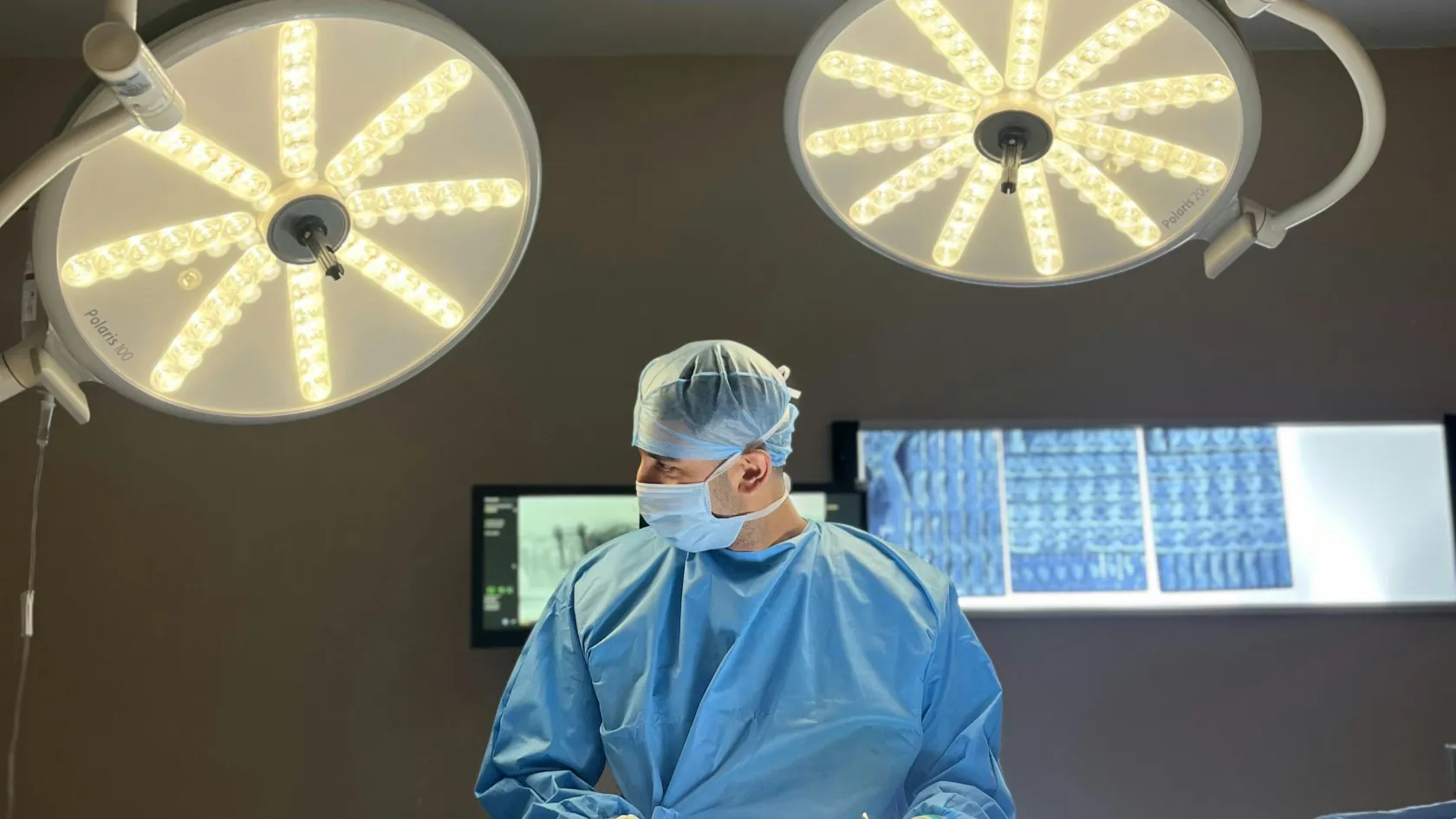
Removing the gallbladder through one cut hidden in the navel gives a better scar than standard keyhole surgery with the same safety in 48 randomized trials, with a slightly longer operation and a higher chance of a hernia at the navel.
About This Department
General Surgery
One cut hidden in the navel. The same operation inside.
In 48 randomized trials with 5,794 patients, single-incision and standard laparoscopic cholecystectomy had the same rates of bile duct injury, bile leak and wound infection.
1 scar
Hidden in the navel instead of three or four
48 trials
Showing the same bile duct safety as standard surgery
4 to 5 days
Usual stay in Istanbul
Free
Review of your ultrasound before you book
Free consultation
The review costs nothing and carries no obligation. Send your ultrasound report, recent liver blood tests and any CT or MRI, and a general surgeon will tell you whether the gallbladder should come out, whether a single incision suits you, and how long to plan for. A coordinator replies in your own language.
Gallstones have caused attacks of pain under the right ribs, an inflamed gallbladder or a blocked duct, and your surgeon has recommended removing the gallbladder. Single-incision cholecystectomy removes it through one cut of two to three centimeters hidden in the navel, instead of the three or four small cuts of standard keyhole surgery, using a special port that carries the camera and instruments together. Below you will find who it suits, what the large reviews of randomized trials found about scars, pain and hernias, how it compares with standard and robotic surgery, how to prepare, the risks, the recovery, how long to stay in Istanbul, and the follow-up at home.
Why the gallbladder comes out
Gallstones are common, and most never cause trouble. Women, people over forty and people with diabetes carry them more frequently, along with anyone who has lost a lot of weight quickly. Once they do, with attacks of pain after meals, inflammation of the gallbladder, a stone that slips into the bile duct and causes jaundice, or pancreatitis, the attacks return in many patients, and removing the gallbladder is the standard treatment. The body manages well without it, because bile still flows from the liver into the intestine, and normal eating returns within weeks, though a few notice looser stools after fatty meals for a while. Gallbladder polyps of a certain size and a porcelain gallbladder, where the wall has turned chalky, are other reasons to remove it, and in these cases the pathologist examines the gallbladder after surgery as a matter of routine. Pregnancy, rapid weight loss after bariatric surgery and some blood disorders make stones more likely, and the same operation applies.
Symptoms that point to the gallbladder include
pain under the right ribs or in the upper middle abdomen after a fatty meal,
pain that spreads to the right shoulder blade,
nausea and vomiting during attacks,
and, with a duct stone, yellow eyes, dark urine and pale stools.
This table scrolls sideways on a narrow screen. Swipe or drag to see every column.
Common reasons for removing the gallbladder
Problem
What happens
Timing of surgery
Biliary colic
Attacks of pain after meals that settle within hours
Planned
Acute cholecystitis
An inflamed, tender gallbladder with fever
Within days, or after the attack settles
Stone in the bile duct
Jaundice or infection of the bile
After the stone is cleared by endoscopy
Gallstone pancreatitis
Inflamed pancreas from a passing stone
During the same admission for mild cases
Polyps or a chalky wall
A small risk of cancer
Planned
Why the attacks keep coming back
Stones stay in the gallbladder after an attack settles, and the next fatty meal can push one into the outlet again. Diet changes reduce attacks for some people but do not dissolve the stones.
Stones that cause no symptoms
Silent stones found by chance on a scan are left alone in most cases, because the chance that they will ever cause an attack is low and an operation, however small, carries risks of its own that are not worth taking for a stone that may never move.
What single-incision surgery changes
One scar instead of four.
The single port carries
the camera,
two working instruments,
and the gas that lifts the abdominal wall.
The surgeon opens the abdomen through the navel, under general anesthesia, and places a single soft port with three or four channels, through which the camera and the instruments enter side by side. The steps inside are the same as in standard laparoscopic surgery, identifying the cystic duct and artery, clipping and dividing them, and lifting the gallbladder from the liver, but working with instruments close together is harder, so the operation takes longer and suits straightforward cases best. Because the instruments enter from almost the same point, they cross inside the abdomen or are curved, and surgeons who do this operation regularly train specifically for it. Training matters more than the equipment. The navel scar fades into its natural fold. When the operation needs it, the surgeon adds a small port without hesitation, and patients are told before surgery that this can happen.
When a second port is added
Inflammation, scarring or an unclear view of the ducts. Safety comes before the single scar every time, and you agree to this before surgery.
What the trials show
Two large reviews
Two large reviews of randomized trials have compared single-incision with standard keyhole surgery.
Scroll sideways on small screens to see both columns.
Single-incision compared with standard laparoscopic cholecystectomy
Outcome
Finding
Cosmetic and body image scores
Better with single-incision at every time point, in 37 trials with 3,051 patients
Pain
Slightly lower at 12 hours in one review, no difference in the other
Operating time
14 to 15 minutes longer on average
Extra ports needed
More often with single-incision
Incisional hernia
2.5 times more likely, in both reviews
Bile duct injury, bile leak, infection
No difference, in 48 trials with 5,794 patients
Safety was the same.
What a higher hernia risk means for you
The absolute numbers stay small in most trials, but anyone who lifts heavy loads at work, smokes, carries extra weight or has a chronic cough should weigh this before choosing a single incision.
A better scar, a small extra hernia risk.
Robotic surgery
Robots have entered the picture too. Robotic cholecystectomy has also been compared with both, and a 2025 meta-analysis found it took longer and needed conversion to open surgery less often, with similar complications.
Who it suits
Signs it may be time
A gallbladder removed for uncomplicated stones, a normal body weight, no previous upper abdominal surgery, and a strong wish for a single, hidden scar.
Talk to us first
Acute severe inflammation, a stone in the bile duct, previous abdominal surgery, significant obesity, an existing umbilical hernia or a high hernia risk, such as heavy lifting at work or a chronic cough.
Getting ready
1
Ultrasound and blood tests
Confirm stones and check liver tests for a stone in the bile duct.
2
MRCP if needed
An MRI of the bile ducts when the liver tests or ultrasound raise doubt.
3
Fasting
Six hours.
4
Medicines
Blood thinners are paused on the surgeon's instructions.
On a phone, slide the table sideways to see the right-hand column.
The day of surgery
When
What happens
Morning
Admission, final checks and meeting the anesthetist
Operation
Under general anesthesia, under an hour and a half in most cases
Evening
Sips of water, then a light meal and a first walk
Next morning
Wound check, painkillers explained, discharge
Risks and how they are managed
A clear view of the ducts is the safeguard.
Incisional hernia at the navel
The main extra risk of the single-incision approach, appearing as a bulge at the navel months or years later. Careful closure of the fascia and avoiding heavy lifting for six weeks reduce it.
Bile duct injury
Rare and no more common than with standard surgery. A clear view of the anatomy before anything is cut is the safeguard, and the surgeon adds ports whenever the view is not clear.
Bile leak
Usually from the small ducts in the liver bed, managed by a drain or an endoscopic stent.
Wound infection
Uncommon. The navel is cleaned carefully before surgery.
Retained stone
A stone left in the bile duct is removed by endoscopy.
The recovery
Walking the same evening.
Day one, home.
First week, light activity and desk work.
Six weeks, lifting, sit-ups and the gym.
Most patients eat a light meal and walk the evening of surgery and go home the next day. Shoulder tip pain from the gas used during surgery fades within a day or two, light activity and desk work return within a week, and driving waits until you can brake hard without pain. Lifting more than five kilograms, sit-ups and heavy gym work wait six weeks to protect the navel closure, which is the one part of this operation that needs patience. A low-fat diet for the first weeks helps some people. Small bruising around the navel is common and fades in a week or two, the stitches under the skin dissolve on their own, and a waterproof dressing lets you shower from the next day. The navel looks swollen for a few weeks before the scar settles into its fold, so judge the cosmetic result at three months rather than at the first dressing change.
How long to stay in Istanbul
Plan for four to five days.
Published gallbladder removal packages in Istanbul list one day in hospital. They include the operation, transfers, a companion's accommodation and an interpreter, and leave out flights and hotel nights. A few days after discharge allow a wound check and confidence before the flight, and flying is fine once you are eating, walking and off strong painkillers.
What decides the cost
Single-incision or standard technique, any additional tests such as MRCP, endoscopy for a duct stone, nights in hospital and the hotel set most of the figure.
Your quote should name the technique, the tests and the stay, and that figure comes only from a general surgeon reading your ultrasound and blood results. The review costs nothing.
Arranging the trip
Your ultrasound report and liver tests, sent on WhatsApp, open the case, and from that first reply until the follow-up call after you are home, the same coordinator handles every detail of the trip and the stay. The team works in English, Arabic, French, Russian, Serbian, Romanian and Spanish, with interpreters for the rest. One person sleeps in your room on the companion bed through the admission. Hotel bookings for the nights around surgery, the medical visa invitation sent ten days ahead and the car from the airport are handled by the international office, meals come halal, vegetarian or diabetic from the hospital kitchen, there is a prayer room in the building, and a female physician is available on request.
Once you are back home
Pathology results arrive within a week. Watch the navel for a bulge in the months after surgery, especially when you cough or lift.
Fever, yellowing of the eyes or skin, increasing abdominal pain, vomiting, or a red, leaking wound. Each needs a doctor the same day.
Single-incision cholecystectomy FAQ
Is single-incision cholecystectomy better than standard laparoscopy?
It gives a better scar and body image, with similar safety, a slightly longer operation and a higher risk of hernia at the navel.
Will I have a visible scar?
The single scar sits inside the navel and fades into its natural fold.
How long is the hospital stay?
One night.
Can every gallbladder be removed through one incision?
No. Severe inflammation, duct stones, obesity and earlier surgery favor the standard approach.
What can I eat after gallbladder removal?
Normal food within weeks, starting with lighter, lower-fat meals.
Can a family member stay with me?
Yes. A companion sleeps in your room on the companion bed.
References
Lyu Y, Cheng Y, Wang B, Zhao S, Chen L. Single-incision versus conventional multiport laparoscopic cholecystectomy. A current meta-analysis of randomized controlled trials. Surg Endosc. 2020;34(10):4315-4329.
Haueter R, Schütz T, Raptis DA, Clavien PA, Zuber M. Meta-analysis of single-port versus conventional laparoscopic cholecystectomy comparing body image and cosmesis. Br J Surg. 2017;104(9):1141-1159.
Tang K, Zhou W, Zhou Y, Li Y, Liao L, Dong X. Robotic-assisted versus conventional/single-incision laparoscopic cholecystectomy for benign gallbladder disease. A systematic review and meta-analysis. Medicine (Baltimore). 2025;104(21):e42493.
Editor's note
Written by the Biruni Hospital medical editorial team. Reviewed by Prof. Dr. Cemalettin ERTEKİN, General Surgery.