
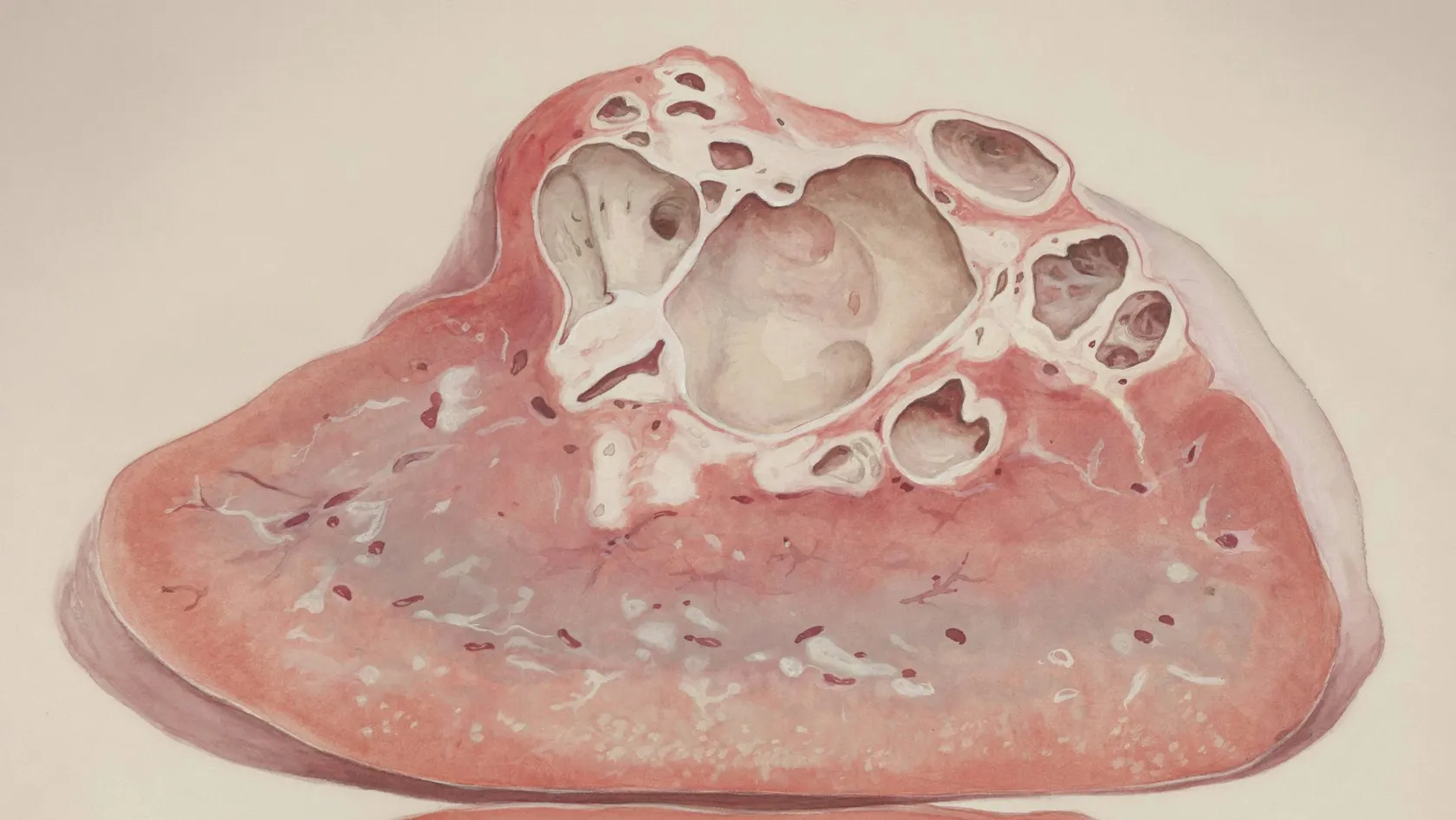
Pancreatic Tumor Resection
Two randomized trials in this field were stopped early because patients were dying. Which operation, what the pancreatic leak is and how your risk of one is scored, and why the hospital you choose changes your survival more than the technique does.
About This Department
A randomized trial comparing pancreatic surgery with and without a drain was stopped early by its safety monitors, because deaths in the no-drain group had risen from 3 percent to 12 percent. A second trial, comparing keyhole with open Whipple surgery, was stopped for the same reason. Pancreatic resection is the operation where the difference between a good unit and an average one shows up fastest, and most of this page is about the specific things that difference consists of.
Free consultation
Ask whether the tumor is resectable and whether drugs should come first
Send the cross-sectional images themselves rather than only the reports, since resectability turns on how the tumor sits against the arteries and veins behind the pancreas and that can only be judged from the pictures. Send also any biopsy or endoscopic ultrasound result, your liver and pancreatic blood tests, the tumor marker if it has been checked, your weight now and six months ago, whether you have diabetes and for how long, your medication list, and details of any previous abdominal surgery. A pancreatic surgeon and a medical oncologist review the file together and tell you which operation is being contemplated, whether chemotherapy should come first, and what the realistic sequence is. No fee, no obligation, and a coordinator replies in your own language, usually within the same working day.
Two questions first
Can it be removed completely
The pancreas lies draped across the major arteries and veins feeding the intestines, and whether a tumor can be removed with a clear margin depends on how far it has grown around them. That is a judgment made from scan images rather than from a report, which is why a pancreatic surgeon will ask for the pictures themselves, and where a tumor touches the vein while sparing the arteries, that vein can be removed and reconstructed alongside the pancreas. A pooled analysis of 32 studies covering 2,216 patients who had a vein resected against 5,380 who did not found similar ninety day mortality and similar overall survival, with slightly more incomplete margins in the vein group, at 36.7 percent against 28.6 percent. One detail in that analysis is worth carrying into a consultation, which is that only 64.6 percent of the resected veins actually contained tumor when examined under the microscope, so a third of those operations removed and rebuilt a vein that turned out to be uninvolved.
Should treatment start with drugs
This question is answered differently in different countries and it is the one most worth pressing on. A Dutch trial randomized 246 patients with resectable or borderline resectable pancreatic cancer to chemoradiotherapy before surgery or to surgery first, and at a median follow-up of 59 months the hazard ratio for death was 0.73 with a confidence interval of 0.56 to 0.96. Survival at five years was 20.5 percent against 6.5 percent. Set against that, a pooled analysis of six randomized trials covering 805 patients found overall survival with a hazard ratio of 0.76 and a confidence interval of 0.52 to 1.11, which does not reach significance, while complete removal improved with a hazard ratio of 1.2. Most of those trials used older drug regimens. The honest position is that treating first is now a reasonable and often preferred option rather than a settled requirement, and that a plan going straight to surgery without an oncologist having seen the file deserves a question.
The operations
Where the tumor sits in the pancreas decides the operation almost entirely, and the four possibilities differ enormously in what they take out and what they leave behind.
Wide table. Swipe or drag it sideways on a narrow screen, because it scrolls instead of shrinking.
| Operation | What comes out | What you should know about it |
|---|---|---|
| Whipple operation | The head of the pancreas, the duodenum, the gallbladder, part of the bile duct and often part of the stomach, with three new joins made afterwards. | The operation this page mostly concerns. In a German randomized trial of 440 patients, in-hospital mortality was 6 percent even across specialist centers. |
| The stomach-preserving version | The same, except that the stomach and its outlet valve are kept whole. | Pooling 8 trials and 512 patients, survival was no different, the operation was 45 minutes shorter with less blood loss, and delayed stomach emptying was commoner, with odds of 3.03. |
| Distal pancreatectomy | The body and tail of the pancreas, on the left. No new joins are made, and the cut end is simply closed. | A smaller operation with a lower death rate, and a leak rate that is no lower. New diabetes affects around 29 percent of people afterwards. |
| Keeping the spleen with it | The spleen sits alongside the tail and shares its blood supply, so it is often taken with the specimen. | Pooling 18 studies and 1,156 patients, preserving it gave odds of 0.57 for infection, 0.66 for complications overall and 0.42 for a clinically significant leak. |
| Total pancreatectomy | The whole gland, the spleen and the duodenum. Nothing is left to leak, which is its one advantage. | Across 21 studies and 1,536 patients, 43.5 percent had symptoms of failing digestion and 18.6 percent were readmitted for problems relating to their diabetes. |
| Enucleation | Just the tumor, shelled out of the gland, for small neuroendocrine tumors sitting away from the main duct. | Faster and with less bleeding, and it leaks more. Pooled across 15 studies, the relative risk of a leak was 2.08 compared with a formal resection. |
| Adding a vein resection | A segment of the vein behind the pancreas is removed with the tumor and rebuilt, where the tumor is stuck to it. | Ninety day mortality and survival were similar to resection without it. Only 64.6 percent of removed veins turned out to contain tumor. |
Not everything is cancer
Hormone-producing tumors and their quiet cousins
Neuroendocrine tumors arise from the hormone-producing cells of the pancreas, behave far more slowly than the common pancreatic cancer, and are increasingly found by accident on a scan done for something else. Whether a small one needs removing at all is genuinely unsettled. An Italian center followed 101 patients with an incidental tumor of two centimeters or less, and 72 percent were simply watched. At a median of forty months, every one of those 73 patients was alive, none had developed spread to another organ, none had crossed over to surgery, and only 5 had grown by more than a fifth. Against that, a pooled analysis of 11 studies comparing removal with no removal found better survival with surgery at five years, including in tumors of two centimeters or less, and a population study of 5,172 patients suggested two and a half centimeters predicts aggressive behavior better than two does. The two bodies of evidence disagree because they are answering slightly different questions, and the practical conclusion is that this is a decision for a specialist center rather than a general surgeon.
Cysts that make mucus
A cystic tumor growing inside the pancreatic ducts is now one of the commonest reasons somebody is referred to a pancreatic surgeon, and most of them never cause trouble. What matters is whether the cyst involves the main duct or only a side branch, and in a German series of 142 such patients, 26 involved the main duct and 8 were mixed, with three quarters of those having an operation straight away. Of the 108 side-branch cysts, only 27.8 percent were operated on initially. Among the side-branch cysts smaller than twenty millimeters, the risk of eventually needing an operation was 8 percent and the risk of turning malignant during follow-up was 2 percent. Those two numbers are the reason surveillance rather than surgery is the usual answer for a small side-branch cyst, and the reason a main-duct cyst is treated quite differently. If you have been offered a Whipple operation for a cyst, ask which of those two categories yours falls into and what specific features made the case for operating.
Drugs around the surgery
Afterwards, where the evidence is strongest
Three randomized trials built the modern standard. The first randomized 354 patients to chemotherapy after surgery or to observation and found median disease-free survival of 13.4 months against 6.7, with survival at five years of 20.7 percent against 10.4 and at ten years of 12.2 against 7.7. The second randomized 730 patients between one drug and two, finding median survival of 28.0 months against 25.5 with a hazard ratio of 0.82. The third randomized 493 patients to a four-drug combination against the single agent and found median disease-free survival of 21.6 months against 12.8 and median overall survival of 54.4 months against 35.0, with a hazard ratio of 0.64. That last result is the largest single step forward in this disease, and it came at a price of severe side effects in 75.9 percent against 52.9 percent, so fitness after the operation decides who can have it. Ask which of those three regimens is planned for you and why, because the answer depends on how well you have recovered rather than on what the hospital usually gives, and the difference between them is measured in years.
The thing nobody mentions before surgery
All of that assumes you actually receive the treatment, and a large share of people do not. Across 13,501 American patients, 33.7 percent of those having a distal pancreatectomy and 32.0 percent of those having a Whipple operation never received chemotherapy afterwards, a difference of no statistical significance and a number that ought to be discussed before an operation rather than discovered after one. The mirror image applies to treating first. Among 17,495 patients with early-stage disease, 26.6 percent were given chemotherapy before any operation, only 33.5 percent of those went on to have their tumor removed, and being treated at a high-volume center made subsequent resection four times more likely. Read those two findings together and the conclusion is uncomfortable but useful, which is that roughly a third of people never get the treatment that follows their operation, and two thirds of those treated first never reach the operating table at all.
The operation itself
Allow five to eight hours for a Whipple operation, which divides into two halves, one that removes and one that rebuilds.
- Inspection comes before commitment. The liver and the lining are examined for deposits the scans could not see, and finding one usually ends the operation there. Some units do this as a separate short procedure days beforehand.
- Separating the tumor from the artery behind it. This is the step that decides whether the operation can be completed and whether the margin will be clear, and it is the most demanding dissection in abdominal surgery, which is where a specialist unit earns its reputation.
- Everything comes out in one piece. The head of the pancreas, the duodenum, the gallbladder and the lower bile duct, with the surrounding lymph nodes, and part of the stomach unless the stomach-preserving version is being done.
- Joining the pancreas to the bowel or the stomach. This one join causes most of what goes wrong afterwards. A German trial of 440 patients found leaks in 20 percent when it was joined to the stomach and 22 percent when joined to the bowel, so the choice matters less than the tissue does.
- Bile duct and stomach are joined next. Two more anastomoses, both far more forgiving than the pancreatic one. A leak from the bile duct is uncommon and usually manageable with a drain.
- Drains are placed and the specimen goes to pathology. The report gives the margins, the lymph nodes and, where treatment was given first, how much of the tumor it killed. It takes one to two weeks and it decides what happens next.
Why the pancreas leaks
Pancreatic enzymes are designed to digest food, and a leak releases them into the abdomen where they digest whatever they touch, including the blood vessels running behind the new joins. That is why a pancreatic leak is dangerous in a way that a bowel leak is not, and why the whole architecture of this operation, the drains, the drugs, the choice of where to sew the gland and the decision about where to have the surgery at all, is arranged around preventing one and catching it early.
An international group of 33 pancreatic surgeons agreed a common definition in 2016 so that figures from different hospitals could be compared. A leak counts when fluid from the drain contains amylase at more than three times the upper limit of normal for blood, together with a change in your care. What used to be called a grade A leak was renamed a biochemical leak and no longer counts as a complication at all, because it does nothing, while grade B means your management changes, with drains left in beyond three weeks or repositioned. Grade C means a reoperation, organ failure or death. Reading any published leak rate without knowing which of those it refers to is close to meaningless, and it is the first question to ask about any figure a unit quotes you. A hospital quoting a very low leak rate may simply be counting only the grade C leaks, and one quoting a high figure may be counting every biochemical leak that never troubled anybody, so the number alone settles nothing.
Predicting the leak
Unusually for surgery, your personal risk can be calculated, and the score that does it is used in specialist units around the world.
- Four things predict a leak. A soft pancreas rather than a hard scarred one, a narrow pancreatic duct, the underlying diagnosis and how much blood is lost during the operation, and those four together make up a ten-point score, developed on 233 patients and then validated prospectively on another 212.
- It works at both ends of the range. In that validation, no patient scoring zero developed a clinically significant leak, and every patient scoring nine or ten did. Overall, 13 percent of patients had one.
- A soft gland is the thing you cannot change. In a randomized trial of 440 patients, soft pancreatic texture was the only independent risk factor for a leak, carrying odds of 2.1, and paradoxically a pancreas already damaged by a tumor blocking its duct is firmer and safer to sew.
- One small group carries most of the risk. Across 5,323 operations by 62 surgeons at 17 institutions, 522 patients, meaning 9.8 percent, fell into the highest risk band, and 29.1 percent of them developed a significant leak.
- And in that group, technique changed the outcome. In the same analysis, placing an external stent across the join carried odds of 0.45 and omitting a preventive drug carried odds of 0.49, and matched patients managed with the optimal combination had leaks in 13.2 percent against 33.5 percent.
- How to use this. Ask whether your unit uses the fistula risk score and what your score is, since it is calculated from things known before or during the operation and a surgeon who uses it will be able to tell you without checking.
What can go wrong
Pancreatic resection has the highest complication rate of any planned abdominal operation, and international definitions exist for each of the three problems specific to it.
Narrow screens scroll this table sideways. Drag or swipe it to reach the last column.
| Problem | How common and when | What is done |
|---|---|---|
| Leak from the pancreatic join | Around 21 percent in a randomized trial of 440 patients and 13 percent in a validated risk study, usually declaring itself in the first week. | A drain kept in place, antibiotics, and nutrition support. A minority need a return to the operating room. |
| The stomach refusing to empty | Defined internationally as being unable to return to a normal diet by the end of the first week. Commoner after the stomach-preserving operation, with odds of 3.03. | A tube through the nose, feeding through a different route, and time. It resolves in almost everybody. |
| Bleeding after the operation | Graded internationally by timing, site and severity. Late bleeding usually follows a leak that has eroded a vessel. | An interventional radiologist blocking the bleeding vessel through a catheter. Which is why on-site availability out of hours matters. |
| Infected fluid collection | 10 percent in the drain group and 25 percent in the no-drain group of the randomized trial, in the first fortnight. | A drain placed under scan guidance, and antibiotics. This is the commonest reason for a readmission. |
| Death within ninety days | 6 percent in-hospital in a specialist multicenter trial, 5.2 percent across a French national dataset of 19,938 operations, and 3.0 percent after distal resections specifically. | The figure that most justifies asking where the operation is done, and the reason the next sections exist. |
| Being transferred elsewhere afterwards | 5.8 percent of that national cohort. Mortality among transferred patients was 13.3 percent against 4.7 percent. | Nothing you can do afterwards. Those authors titled their paper to say that referring patients after surgery is too late. |
Drains
Whether to leave a drain beside the pancreatic join sounds like a technical detail and it produced the most striking safety finding in modern pancreatic surgery.
Reducing the risk
Four things have been tested properly, and the results are more mixed than a surgeon's confidence usually suggests.
Sideways scrolling here on a small screen. Swipe or drag the table to see every column.
| What is done | What the evidence shows | How to read it |
|---|---|---|
| A drug that suppresses pancreatic secretion | In 300 randomized patients, the primary endpoint occurred in 9 percent against 21 percent, a relative risk of 0.44 with a confidence interval of 0.24 to 0.78. In those with a dilated duct the relative risk was 0.11. | The strongest single result here, from one center and funded by the drug's maker. Not universally adopted. |
| Joining the pancreas to the stomach instead of the bowel | In 320 analyzed patients, significant leaks occurred in 20 percent against 22 percent, a difference of no significance. A separate small trial found no difference in stomach emptying either. | Settled as a matter of surgeon preference. Note that joining to the stomach was associated with more enzyme deficiency later. |
| A stent across the join, brought out through the skin | In the high-risk group of 522 patients drawn from 5,323 operations, an external stent carried odds of 0.45 for a significant leak. | Observational rather than randomized, and specific to the highest risk band. Worth asking about if your score is high. |
| Combining measures for high-risk glands | Matched high-risk patients managed with the optimal strategy had significant leaks in 13.2 percent against 33.5 percent. | A halving of risk in the group with most to lose, and again observational. The direction is consistent across every analysis. |
| Keeping the spleen in a left-sided resection | Across 18 studies and 1,156 patients, preservation carried odds of 0.42 for a clinically significant leak and 0.57 for infection. | Not always possible when operating for cancer, where the nodes around the splenic vessels matter. Ask why in your case. |
A trial stopped early
Two large randomized trials in this field were terminated by their independent safety monitors because patients in one arm were dying, which is rare in surgery and a pattern worth naming, because it says something about the operation itself.
The drain trial was halted when mortality in the group operated on without a drain rose from 3 percent to 12 percent. Its authors changed their conclusion from a question about whether drains were necessary to a statement that eliminating them in all cases should be avoided.
What that episode illustrates is the narrowness of the margin in this operation, since a pancreatic leak is survivable when it is detected within hours and drained, and kills when it is detected late. Everything that makes detection faster, which is a drain in place, a nurse who recognizes a rising heart rate, a radiologist available at two in the morning and an intensive care unit familiar with this specific problem, is worth more than any refinement of the surgery itself. That is the practical meaning of the phrase failure to rescue, and it is measurable. In one American statewide collaborative covering 1,007 patients across 19 hospitals, mortality in the first period studied was 6.2 percent in lower-caseload hospitals against 0.8 percent in higher-caseload ones, while major complications differed far less, at 27.8 percent against 17.8. The complications happened almost everywhere. Surviving them did not. That distinction is worth holding onto, because it explains why a hospital cannot make this operation safe by being careful, and can only make it safe by being ready for the moment when carefulness has not been enough.
Keyhole and robotic
Pancreatic surgery is the one abdominal cancer operation where the minimally invasive approach has not simply won, and the reason is that the two halves of the pancreas behave completely differently. A left-sided resection makes no new joins and lends itself to keyhole surgery, while a Whipple operation makes three, one of them the most difficult anastomosis in general surgery, and the evidence there is mixed.
For left-sided resections the answer is clear. A Dutch trial of 108 analyzed patients found time to functional recovery of 4 days against 6, blood loss of 150 milliliters against 400, and delayed stomach emptying in 6 percent against 20. Complications overall did not differ. Pooling that trial with a Swedish one at the level of individual patients, across 166 people, hospital stay was 6 days against 8 and delayed emptying 4 percent against 16. And for cancer specifically, an international trial across 35 centers in 12 countries randomized 258 patients and found complete removal in 73 percent against 69 percent, meeting its threshold for non-inferiority, with identical lymph node yields and overall survival at a hazard ratio of 0.99. That is as close to a settled answer as surgical questions get, and it means a left-sided pancreatic resection offered as an open operation now deserves a question about why.
The trials compared
For the Whipple operation, four randomized trials reached three different conclusions, which is unusual and informative.
Drag this table sideways on a narrow screen, since it scrolls rather than shrinking to fit.
| Trial and size | What it found | How to read it |
|---|---|---|
| Keyhole against open left-sided resection, 108 analyzed | Recovery 4 days against 6, blood loss 150 against 400 milliliters, delayed emptying 6 percent against 20. Conversion 8 percent. | Positive and settled. Overall complications were not reduced, so the benefit is in the speed of recovery. |
| The same question for cancer, 258 randomized in 12 countries | Complete removal 73 percent against 69 percent, meeting non-inferiority. Node yield 22 against 23. Survival hazard ratio 0.99. | The cancer question answered for left-sided disease, on a pathological endpoint with about two years of follow-up. |
| Keyhole against open Whipple, 99 operated | Stopped by its safety board. Complication-related death within ninety days in 10 percent against 2 percent. Recovery 10 days against 8. | The mortality difference did not reach statistical significance, and its authors named experience, learning curve and annual volume as likely explanations. |
| A Spanish Whipple trial, 66 randomized | Hospital stay 13.5 days against 17, serious complications in 5 patients against 11, and an operation 2 hours longer. Conversion 23.5 percent. | Positive, small, single center. Read alongside the halted trial rather than instead of it. |
| An Indian Whipple trial, 64 randomized | Hospital stay 7 days against 13 and blood loss 250 against 401 milliliters, with complication rates broadly similar and one death in each group. | Also positive, also small, also from a single very high-volume center. The pattern is becoming clear. |
| Robotic against open Whipple, 161 analyzed | Hospital stay 11.0 days against 13.5, a median difference of 2 days. Serious complications and ninety day mortality were no different. | The surgeons involved had already passed 40 robotic and 60 open operations. That entry requirement is the finding. |
The second stopped trial
The halted keyhole Whipple trial deserves reading carefully rather than being used as an argument, because both sides of the debate misuse it.
Among 99 patients operated on, complication-related death within ninety days occurred in 5 of 50 in the keyhole group and 1 of 49 in the open group, a relative risk of 4.90 with a confidence interval running from 0.59 to 40.44 and a probability value of 0.20. The difference was not statistically significant. The safety board stopped the trial anyway, which is what a safety board is for.
Its authors wrote that experience, learning curve and annual volume might have influenced the outcomes, which is a careful way of saying the trial may have measured the surgeons rather than the technique. Set that against the Spanish and Indian trials, both positive, both from single centers doing very high volumes, and against the robotic trial where the participating surgeons had to have completed forty robotic and sixty open operations before they could enroll a patient. The pattern across all of them is consistent, which is that a keyhole or robotic Whipple operation performed by somebody well past their learning curve produces a shorter stay and no more complications, and the same operation performed by somebody still on that curve is dangerous. Learning curve analyses across three European centers put the plateau at 61 cases for the laparoscopic approach and 68 for the robotic one. Those numbers are the right thing to ask about.
Where you have it
If you take one thing from this page, take this section. The evidence here is stronger and more consistent than for any surgical technique described above.
- Volume changes mortality after a Whipple operation. Across 8,534 Swiss pancreatic resections over two decades, adjusted mortality after a Whipple was significantly higher in low-volume hospitals, with odds of 1.45 and a confidence interval of 1.15 to 1.84.
- Left-sided resections appear different. Across 3,314 French distal pancreatectomies, overall mortality was 3.0 percent and hospital volume had no measurable effect, with odds of 0.954 and a wide confidence interval, so the two halves of the pancreas are different operations in this respect as in others.
- Rescuing people is where the difference lies. In the Michigan collaborative, major complications were 27.8 percent against 17.8 percent while mortality was 6.2 percent against 0.8 percent. In an Italian study of 856 patients where all the surgeons trained under the same mentor, complication rates were statistically indistinguishable and failure to rescue from a serious leak was 6.2 percent against 15.0 percent.
- Arriving after the complication is too late. Across 19,938 French pancreatectomies, 5.8 percent of patients were transferred to another hospital afterwards, mortality among them was 13.3 percent against 4.7 percent, and failure to rescue carried odds of 2.17 in that transferred group. Half of them had already been reoperated on before transfer. Read that as the strongest single argument on this page for deciding where to have the operation before it happens, since almost nothing about the decision can be corrected once the complication has started.
- Training may matter as much as raw numbers. That Italian study found low-volume community hospitals led by surgeons trained at a high-volume center reached broadly comparable outcomes, with a longer hospital stay of 15 days against 10. It is the only finding on this page that softens the volume argument, and it does so by pointing at how the surgeon was trained.
- What to ask for. Annual Whipple operations for the unit, the surgeon's personal number, whether an interventional radiologist is available on site out of hours, and whether the intensive care unit routinely manages pancreatic leaks. All four are facts, and a unit with good answers gives them immediately.
What is left afterwards
Digesting food
Your pancreas makes the enzymes that break down fat and protein, so removing part of it means many people can no longer make enough, and the symptoms are greasy floating stools, wind, weight that keeps falling and a general failure to thrive, all treated with capsules taken at every meal. How often this happens depends on the operation. In a study of 186 patients, enzyme deficiency in the first year affected 75.0 percent of those whose pancreas had been joined to the stomach and 45.7 percent of those joined to the bowel, and three quarters against two fifths were taking replacement capsules within a year. Among 245 people surveyed a median of nine years after a Whipple operation, half were still taking pancreatic enzymes and 54.6 percent were taking antacids. None of that is a complication and all of it is treatable, and the mistake to avoid is accepting continuing weight loss as inevitable rather than asking for enzyme replacement and a dietitian.
Blood sugar
Insulin comes from the pancreas too, so taking part of it away can leave you diabetic. The numbers differ sharply by operation. Pooling 18 studies covering 2,356 patients, new diabetes after a left-sided resection occurred in 29 percent, with a confidence interval of 25 to 33, rising to 38 percent where the underlying problem was chronic pancreatitis and falling to 23 percent where it was a tumor. After a Whipple operation the figure is lower, and among those 245 long-term survivors new diabetes affected 10.6 percent, while after a total pancreatectomy diabetes is universal and of a difficult kind, because the hormone that raises blood sugar is lost alongside the one that lowers it. Across 21 studies of that operation, 18.6 percent of patients were readmitted at some point for problems relating to their diabetes, though no diabetes-related deaths occurred in the studies covering more recent years. Ask before surgery who will manage your blood sugar afterwards and whether that person has been told what operation you are having. Somebody who already has diabetes needs that conversation even more urgently, because doses that were correct beforehand can become dangerous within days of an operation that removes part of the organ making the hormone.
Questions to ask
Six questions before the operation, all with short answers, and none of them rude.
Recovery and flying home
Recovery from a Whipple operation is slower than from anything else on this site, and the timetable is set by the leak rather than by the wound.
Coming to Istanbul
Twenty-two to twenty-eight days covers assessment, the operation and a safe departure for somebody arriving with staging complete, and that is longer than for any other operation on this site.
Reading a quote
No figure appears on this page. Seven things belong in writing before any figure means anything, and for this operation the complication clauses matter more than the headline.
Pancreatic resection FAQ
Does it matter where I have this operation?
What is a pancreatic fistula?
Can my risk of a leak be predicted?
Should chemotherapy come before the operation?
Can a Whipple operation be done through keyhole surgery?
Is keyhole surgery settled for left-sided resections?
Will I become diabetic?
Will I need enzyme capsules?
My scan found a small cyst. Do I need surgery?
How long should I stay in Turkey?
References
- Van Buren G, Bloomston M, Hughes SJ, Winter J, Behrman SW, Zyromski NJ, Vollmer C, Velanovich V, Riall T, Muscarella P, Trevino J, Nakeeb A. A randomized prospective multicenter trial of pancreaticoduodenectomy with and without routine intraperitoneal drainage. Annals of Surgery. 2014;259(4):605-612.
- McMillan MT, Fisher WE, Van Buren G, McElhany A, Bloomston M, Hughes SJ, Winter J, Behrman SW, Zyromski NJ, Velanovich V, Brown K, Morgan KA, Vollmer C. The value of drains as a fistula mitigation strategy for pancreatoduodenectomy, something for everyone, results of a randomized prospective multi-institutional study. Journal of Gastrointestinal Surgery. 2015;19(1):21-30.
- Bassi C, Molinari E, Malleo G, Crippa S, Butturini G, Salvia R, Talamini G, Pederzoli P. Early versus late drain removal after standard pancreatic resections, results of a prospective randomized trial. Annals of Surgery. 2010;252(2):207-214.
- Bassi C, Marchegiani G, Dervenis C, Sarr M, Abu Hilal M, Adham M, Allen P, Andersson R, Asbun HJ, Besselink MG, Conlon K, Del Chiaro M. The 2016 update of the International Study Group (ISGPS) definition and grading of postoperative pancreatic fistula, 11 years after. Surgery. 2017;161(3):584-591.
- Callery MP, Pratt WB, Kent TS, Chaikof EL, Vollmer CM. A prospectively validated clinical risk score accurately predicts pancreatic fistula after pancreatoduodenectomy. Journal of the American College of Surgeons. 2013;216(1):1-14.
- Ecker BL, McMillan MT, Asbun HJ, Ball CG, Bassi C, Beane JD, Behrman SW, Berger AC, Dickson EJ, Bloomston M, Callery MP, Christein JD. Characterization and optimal management of high-risk pancreatic anastomoses during pancreatoduodenectomy. Annals of Surgery. 2018;267(4):608-616.
- Wente MN, Bassi C, Dervenis C, Fingerhut A, Gouma DJ, Izbicki JR, Neoptolemos JP, Padbury RT, Sarr MG, Traverso LW, Yeo CJ, Buchler MW. Delayed gastric emptying after pancreatic surgery, a suggested definition by the International Study Group of Pancreatic Surgery. Surgery. 2007;142(5):761-768.
- Wente MN, Veit JA, Bassi C, Dervenis C, Fingerhut A, Gouma DJ, Izbicki JR, Neoptolemos JP, Padbury RT, Sarr MG, Yeo CJ, Buchler MW. Postpancreatectomy hemorrhage, an International Study Group of Pancreatic Surgery definition. Surgery. 2007;142(1):20-25.
- Keck T, Wellner UF, Bahra M, Klein F, Sick O, Niedergethmann M, Wilhelm TJ, Farkas SA, Borner T, Bruns C, Kleespies A, Kleeff J. Pancreatogastrostomy versus pancreatojejunostomy for reconstruction after pancreatoduodenectomy (RECOPANC). Annals of Surgery. 2016;263(3):440-449.
- Eguchi H, Iwagami Y, Matsushita K, Tomimaru Y, Akita H, Noda T, Gotoh K, Kobayashi S, Nagano H, Mori M, Doki Y. Randomized clinical trial of pancreaticogastrostomy versus pancreaticojejunostomy regarding incidence of delayed gastric emptying after pancreaticoduodenectomy. Langenbeck's Archives of Surgery. 2020;405(7):921-928.
- Allen PJ, Gonen M, Brennan MF, Bucknor AA, Robinson LM, Pappas MM, Carlucci KE, D'Angelica MI, DeMatteo RP, Kingham TP, Fong Y, Jarnagin WR. Pasireotide for postoperative pancreatic fistula. The New England Journal of Medicine. 2014;370(21):2014-2022.
- Huttner FJ, Fitzmaurice C, Schwarzer G, Seiler CM, Antes G, Buchler MW, Diener MK. Pylorus-preserving pancreaticoduodenectomy versus pancreaticoduodenectomy for surgical treatment of periampullary and pancreatic carcinoma. Cochrane Database of Systematic Reviews. 2016;2(2):CD006053.
- Shi N, Liu SL, Li YT, You L, Dai MH, Zhao YP. Splenic preservation versus splenectomy during distal pancreatectomy, a systematic review and meta-analysis. Annals of Surgical Oncology. 2016;23(2):365-374.
- Scholten L, Stoop TF, Del Chiaro M, Busch OR, van Eijck C, Molenaar IQ, de Vries JH, Besselink MG. Systematic review of functional outcome and quality of life after total pancreatectomy. British Journal of Surgery. 2019;106(13):1735-1746.
- Finkelstein P, Sharma R, Picado O, Gadde R, Stuart H, Ripat C, Livingstone AS, Sleeman D, Merchant N, Yakoub D. Pancreatic neuroendocrine tumors, analysis of overall survival of nonsurgical management versus surgical resection. Journal of Gastrointestinal Surgery. 2017;21(5):855-866.
- Zwart ES, Yilmaz BS, Halimi A, Ahola R, Kurlinkus B, Laukkarinen J, Ceyhan GO. Venous resection for pancreatic cancer, a safe and feasible option, a systematic review and meta-analysis. Pancreatology. 2022;22(6):803-809.
- Partelli S, Mazza M, Andreasi V, Muffatti F, Crippa S, Tamburrino D, Falconi M. Management of small asymptomatic nonfunctioning pancreatic neuroendocrine tumors, limitations to apply guidelines into real life. Surgery. 2019;166(2):157-163.
- Yang Z, Zhang D, Shi G. Reappraisal of a 2-cm cutoff size for the management of nonfunctional pancreatic neuroendocrine tumors, a population-based study. Frontiers in Endocrinology. 2022;13:928341.
- Hipp J, Mohamed S, Pott J, Sick O, Makowiec F, Hopt UT, Fichtner-Feigl S, Wittel UA. Management and outcomes of intraductal papillary mucinous neoplasms. BJS Open. 2019;3(4):490-499.
- Versteijne E, van Dam JL, Suker M, Janssen QP, Groothuis K, Akkermans-Vogelaar JM, Besselink MG, Bonsing BA, Buijsen J, Busch OR, Creemers GM, van Dam RM. Neoadjuvant chemoradiotherapy versus upfront surgery for resectable and borderline resectable pancreatic cancer, long-term results of the Dutch randomized PREOPANC trial. Journal of Clinical Oncology. 2022;40(11):1220-1230.
- Uson Junior PLS, Dias E Silva D, de Castro NM, da Silva Victor E, Rother ET, Araujo SEA, Borad MJ, Moura F. Does neoadjuvant treatment in resectable pancreatic cancer improve overall survival, a systematic review and meta-analysis of randomized controlled trials. ESMO Open. 2023;8(1):100771.
- Oettle H, Neuhaus P, Hochhaus A, Hartmann JT, Gellert K, Ridwelski K, Niedergethmann M, Zulke C, Fahlke J, Arning MB, Sinn M, Hinke A, Riess H. Adjuvant chemotherapy with gemcitabine and long-term outcomes among patients with resected pancreatic cancer, the CONKO-001 randomized trial. JAMA. 2013;310(14):1473-1481.
- Neoptolemos JP, Palmer DH, Ghaneh P, Psarelli EE, Valle JW, Halloran CM, Faluyi O, O'Reilly DA, Cunningham D, Wadsley J, Darby S, Meyer T. Comparison of adjuvant gemcitabine and capecitabine with gemcitabine monotherapy in patients with resected pancreatic cancer (ESPAC-4). The Lancet. 2017;389(10073):1011-1024.
- Conroy T, Hammel P, Hebbar M, Ben Abdelghani M, Wei AC, Raoul JL, Chone L, Francois E, Artru P, Biagi JJ, Lecomte T, Assenat E. FOLFIRINOX or gemcitabine as adjuvant therapy for pancreatic cancer. The New England Journal of Medicine. 2018;379(25):2395-2406.
- Bergquist JR, Ivanics T, Shubert CR, Habermann EB, Smoot RL, Kendrick ML, Nagorney DM, Farnell MB, Truty MJ. Type of resection does not affect the national failure to provide post-resection adjuvant chemotherapy in localized pancreatic cancer. Annals of Surgical Oncology. 2017;24(6):1731-1738.
- Ellis RJ, Ho JW, Schlick CJR, Merkow RP, Bentrem DJ, Bilimoria KY, Yang AD. National use of chemotherapy in initial management of stage I pancreatic cancer and failure to perform subsequent resection. Annals of Surgical Oncology. 2020;27(3):909-918.
- de Rooij T, van Hilst J, van Santvoort H, Boerma D, van den Boezem P, Daams F, van Dam R, Dejong C, van Duyn E, Dijkgraaf M, van Eijck C, Festen S. Minimally invasive versus open distal pancreatectomy (LEOPARD), a multicenter patient-blinded randomized controlled trial. Annals of Surgery. 2019;269(1):2-9.
- Korrel M, Vissers FL, van Hilst J, de Rooij T, Dijkgraaf MG, Festen S, Groot Koerkamp B, Busch OR, Luyer MD, Sandstrom P, Abu Hilal M, Besselink MG, Bjornsson B. Minimally invasive versus open distal pancreatectomy, an individual patient data meta-analysis of two randomized controlled trials. HPB. 2021;23(3):323-330.
- Korrel M, Jones LR, van Hilst J, Balzano G, Bjornsson B, Boggi U, Bratlie SO, Busch OR, Butturini G, Capretti G, Casadei R, Edwin B. Minimally invasive versus open distal pancreatectomy for resectable pancreatic cancer (DIPLOMA), an international randomised non-inferiority trial. The Lancet Regional Health Europe. 2023;31:100673.
- van Hilst J, de Rooij T, Bosscha K, Brinkman DJ, van Dieren S, Dijkgraaf MG, Gerhards MF, de Hingh IH, Karsten TM, Lips DJ, Luyer MD, Busch OR, Festen S, Besselink MG. Laparoscopic versus open pancreatoduodenectomy for pancreatic or periampullary tumours (LEOPARD-2), a multicentre, patient-blinded, randomised controlled phase 2/3 trial. The Lancet Gastroenterology and Hepatology. 2019;4(3):199-207.
- Poves I, Burdio F, Morato O, Iglesias M, Radosevic A, Ilzarbe L, Visa L, Grande L. Comparison of perioperative outcomes between laparoscopic and open approach for pancreatoduodenectomy, the PADULAP randomized controlled trial. Annals of Surgery. 2018;268(5):731-739.
- Palanivelu C, Senthilnathan P, Sabnis SC, Babu NS, Srivatsan Gurumurthy S, Anand Vijai N, Nalankilli VP, Praveen Raj P, Parthasarathy R, Rajapandian S. Randomized clinical trial of laparoscopic versus open pancreatoduodenectomy for periampullary tumours. British Journal of Surgery. 2017;104(11):1443-1450.
- Liu Q, Li M, Gao Y, Jiang T, Han B, Zhao G, Lin C, Lau WY, Zhao Z, Liu R. Effect of robotic versus open pancreaticoduodenectomy on postoperative length of hospital stay and complications for pancreatic head or periampullary tumours, a multicentre, open-label randomised controlled trial. The Lancet Gastroenterology and Hepatology. 2024;9(5):428-437.
- Tyutyunnik P, Klompmaker S, Lombardo C, Lapshyn H, Menonna F, Napoli N, Wellner U, Izrailov R, Baychorov M, Besselink MG, Abu Hilal M, Fingerhut A. Learning curve of three European centers in laparoscopic, hybrid laparoscopic, and robotic pancreatoduodenectomy. Surgical Endoscopy. 2022;36(2):1515-1526.
- Gavriilidis P, Lim C, Menahem B, Lahat E, Salloum C, Azoulay D. Robotic versus laparoscopic distal pancreatectomy, the first meta-analysis. HPB. 2016;18(7):567-574.
- Healy MA, Krell RW, Abdelsattar ZM, McCahill LE, Kwon D, Frankel TL, Hendren S, Campbell DA, Wong SL. Pancreatic resection results in a statewide surgical collaborative. Annals of Surgical Oncology. 2015;22(8):2468-2474.
- El Amrani M, Lenne X, Clement G, Turrini O, Theis D, Pruvot FR, Bruandet A, Truant S. Referring patients to expert centers after pancreatectomy is too late to improve outcome, inter-hospital transfer analysis in nationwide study of 19,938 patients. Annals of Surgery. 2020;272(5):723-730.
- Kuemmerli C, Schneider MA, Joliat GR, Moeckli B, Ukegjini K, Bolli M, Worni M, Birrer DL. Trends in pancreatic surgery in Switzerland, a survey and nationwide analysis over two decades. Langenbeck's Archives of Surgery. 2022;407(8):3423-3435.
- Roussel E, Clement G, Lenne X, Pruvot FR, Schwarz L, Theis D, Truant S, El Amrani M. Is centralization needed for patients undergoing distal pancreatectomy, a nationwide study of 3314 patients. Pancreas. 2019;48(9):1188-1194.
- Capretti G, Balzano G, Gianotti L, Stella M, Ferrari G, Baccari P, Zuliani W, Braga M, Zerbi A. Management and outcomes of pancreatic resections performed in high-volume referral and low-volume community hospitals lead by surgeons who shared the same mentor, the importance of training. Digestive Surgery. 2018;35(1):42-48.
- Roeyen G, Jansen M, Ruyssinck L, Chapelle T, Vanlander A, Bracke B, Hartman V, Ysebaert D, Berrevoet F. Pancreatic exocrine insufficiency after pancreaticoduodenectomy is more prevalent with pancreaticogastrostomy than with pancreaticojejunostomy, a retrospective multicentre observational cohort study. HPB. 2016;18(12):1017-1022.
- Yu J, Sun R, Han X, Liu Z. New-onset diabetes mellitus after distal pancreatectomy, a systematic review and meta-analysis. Journal of Laparoendoscopic and Advanced Surgical Techniques. 2020;30(11):1215-1222.
- Fong ZV, Alvino DM, Fernandez-Del Castillo C, Nipp RD, Traeger LN, Ruddy M, Lubitz CC, Johnson CD, Chang DC, Warshaw AL, Lillemoe KD, Ferrone CR. Health-related quality of life and functional outcomes in 5-year survivors after pancreaticoduodenectomy. Annals of Surgery. 2017;266(4):685-692.
- Tan E, Song J, Lam S, D'Souza M, Crawford M, Sandroussi C. Postoperative outcomes in elderly patients undergoing pancreatic resection for pancreatic adenocarcinoma, a systematic review and meta-analysis. International Journal of Surgery. 2019;72:59-68.
Editor's note
Written by the Biruni Hospital medical editorial team. Reviewed by Assistant Professor Pırıltı ÖZCAN, General Surgery.
Medically reviewed by

Assistant Professor Pırıltı ÖZCAN
General Surgery
Related Treatments
View All
Bariatric Surgery - Weight Loss Surgery
Followed for 24 years, people who had weight loss surgery lived a median of 3.0 years longer than those who did not, and 5.5 years less than the general population. Both numbers come from the same study.
Breast Cancer Surgery
Across 202,934 women with the same early disease, the proportion who kept the breast ran from 58.5 to 75.5 percent depending on the region. Breast cancer surgery is not one decision. It is four, and this page maps them.

Breast Conserving Surgery
Two hundred and four women with two or three cancers in the same breast kept that breast, and recurrence at five years was 3.1 percent. Most of the reasons women are told they cannot keep the breast have quietly stopped being true.

Breast Lump Removal
Of 3,305 people under forty seen at one breast clinic, 29 had cancer. Most lumps are something else, and most of those never need an operation. This page covers how to tell which lump yours is and when removal earns its place.
Central Venous Port Implantation
A port is implanted in half an hour and then kept for years. Almost everything that later goes wrong with it was settled in that half hour, or is settled by how the device is flushed and accessed every week.