
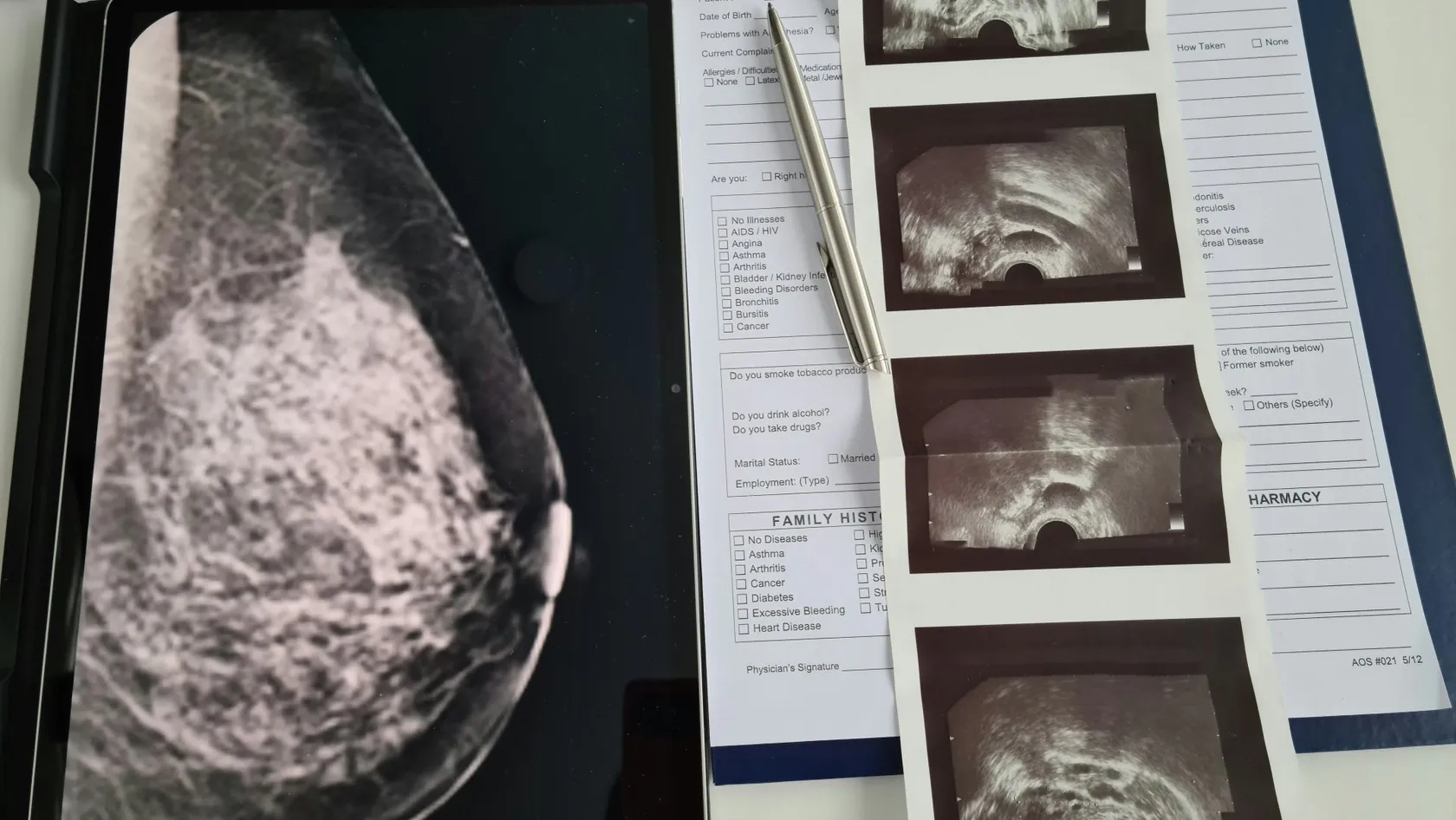
Lumpectomy - Breast-Conserving Surgery
In 500 women over fifty-five with a small, hormone-driven breast cancer, skipping radiotherapy after lumpectomy left a 2.3 percent recurrence rate at five years. The operation has barely changed. What gets added to it has changed completely.
About This Department
In 500 women over fifty-five with a small, slow-growing, hormone-driven breast cancer who had a lumpectomy and then no radiotherapy at all, the cancer came back in the same breast in 2.3 percent within five years. A generation ago every one of those women would have been irradiated. The operation has barely changed in twenty years. What has changed, and changed enormously, is how much treatment now gets added to it.
Free consultation
Ask what you can safely leave out as well as what has to be done
Radiotherapy, armpit surgery and a second operation for margins are three separate decisions, and each one has moved in the patient's favor in the last decade. Send the biopsy report with the receptor results and the Ki67 percentage, the ultrasound and mammogram reports, the breast MRI if you have had one, any armpit ultrasound or node biopsy, and your medication list. A breast surgeon, a radiation oncologist and a medical oncologist review the file together and tell you which parts of the standard package your own tumor still needs. No fee, no obligation, and a coordinator replies in your own language.
Against mastectomy, in numbers
Lumpectomy means removing the cancer with a rim of normal tissue around it and leaving the rest of the breast in place, and radiotherapy to the remaining breast is the usual second half of the treatment, so the pair together is what the evidence below describes. The old question was whether keeping the breast cost you anything. It does not, and a Dutch national study of 37,207 women found the survival curves running the other way, with breast conservation and radiotherapy showing better adjusted ten-year overall survival than mastectomy, at a hazard ratio of 0.81 with a confidence interval of 0.78 to 0.85. Those authors were careful about what that means, and so is this page. Women offered conservation are on average healthier than women who end up having a mastectomy, and the researchers said openly that confounding by severity probably explains part of the gap. What the finding rules out is the idea that keeping the breast is the weaker option.
This table scrolls sideways on a narrow screen. Swipe or drag to see every column.
| What you are comparing | Lumpectomy with radiotherapy | Mastectomy |
|---|---|---|
| Survival | At least equal, and better in the Dutch cohort at an adjusted hazard ratio of 0.81 for ten-year overall survival. | Removing the whole breast has never been shown to add survival for a woman who could have kept it, and no trial since has changed that. |
| Radiotherapy | Standard, though a growing group can now omit it entirely and others need only five treatments. | Avoided in many cases, but still needed after mastectomy when nodes are involved or the tumor is large. |
| Chance of a second operation | Around one in five historically, falling since the margin rules were rewritten, and lower again with cavity shaving. | Margins are rarely the problem. Reconstruction, where chosen, brings its own sequence of procedures. |
| How patients score the result | Higher on satisfaction with breasts, psychosocial wellbeing and sexual wellbeing at six months and again at one, two and three years. | Lower on those same measures in a matched comparison of 2,616 patients, even with reconstruction. |
| Recovery | Day case or one night for most, with weeks of radiotherapy afterwards for those who need it. | Longer, with drains, and much longer again where reconstruction is part of the plan. |
| When it is not an option | Cancer in several separate parts of the breast, a tumor too large for the breast, or an inability to have radiotherapy. | Always available, and the right answer for a genuine minority rather than a safer default for everyone. |
How the plan is built
Everything that follows on this page depends on five pieces of information, and all five exist before anybody picks up a scalpel.
One multidisciplinary meeting puts those five together. Ask for its conclusion in writing. That document is what a second opinion anywhere in the world reads first.
The margin rule
Margin means the strip of normal tissue between the cancer and the cut edge of what was removed, and surgeons argued about how wide it should be for forty years before two consensus documents settled the matter, one for each kind of disease.
- For invasive cancer, no ink on tumor. If the pathologist's ink marking the outside of the specimen does not touch cancer cells, the margin is clear. The panel behind that rule drew on a meta-analysis of 33 studies and 28,162 patients, which found a positive margin roughly doubled the risk of the cancer coming back in the same breast, at an odds ratio of 2.44 against a clear margin.
- Wider does not mean safer. Once the margin is clear, going wider adds nothing measurable. In that meta-analysis, taking one millimeter as the reference, two millimeters gave an odds ratio of 0.91 and five millimeters gave 0.77, and the trend across the widths was not statistically significant.
- For pre-invasive disease, two millimeters. Ductal carcinoma in situ follows a different rule, drawn from 20 studies and 7,883 patients. Two millimeters minimizes the risk of recurrence, and margins wider than that do not lower it further.
- A narrow margin is not a reason for a mastectomy. The pre-invasive guideline says this in as many words. A margin under two millimeters is a reason for a conversation about re-excision, weighed against everything else about your case.
Why this matters to a patient rather than to a surgeon is straightforward. Under the old habits, plenty of women were sent back to the operating room for a margin that today would be reported as clear, and a proportion of them ended up losing the breast over it. Ask which rule your unit follows and ask it before the first operation, since the answer determines what a report saying close margin will trigger.
Second operations
Being called back for more surgery is the commonest disappointment after a lumpectomy, and it is worth knowing the size of the risk before you consent rather than afterwards. Across 11,639 older American women having conservation and radiotherapy between 2012 and 2016, the overall re-excision rate was 21.7 percent. The margin guideline moved it. Before the rule, 23.5 percent went back to the operating room. After it, 19.3 percent did, a relative risk of 0.84 once everything else was accounted for.
One cancer center that adopted the new margin rule early saw re-excisions fall from 21.4 percent to 15.1 percent across 1,205 operations. The tumors had not changed. The definition of a good enough margin had.
Two things push the number the other way for an individual patient. Lobular cancer carried a relative risk of 1.32 for re-excision in that national cohort, which follows from how it grows. Pre-invasive disease sitting alongside the invasive tumor is the other, and in the single center analysis an extensive intraductal component roughly two and a half times the odds of going back. Neither is a reason to skip conservation. Both are reasons to ask, before the first operation, what this particular surgeon does to reduce the chance of a second one.
Getting it right first time
Three things measurably reduce the chance of being called back, and all three are questions you can ask at the consultation.
Three weeks, one week, or none
Radiotherapy after a lumpectomy used to mean daily hospital visits for five or six weeks, which is the single biggest reason patients chose mastectomy instead. That schedule has been dismantled from three directions at once.
One week instead of three
British investigators randomized 4,096 patients across 97 hospitals to fifteen treatments over three weeks or to five treatments in one week at two different doses. At a median follow-up of about six years, the cancer had come back in the same breast in 2.1 percent after the three week schedule, and the lower of the two one week doses did numerically better, with a hazard ratio of 0.67 and a confidence interval running from 0.38 to 1.16. There is a real detail hiding in that trial. Of the two one week doses, only the lower one matched the standard schedule for late side effects, so the schedule that entered practice is a specific one and not simply any five day course. Ask which dose and how many treatments are being proposed, because a unit offering a one week schedule and a unit offering the one week schedule that the trial actually endorsed are two different offers and the difference sits in a number the patient is rarely shown.
Part of the breast instead of all of it
Another British trial randomized 2,018 women over fifty to whole breast treatment, to a reduced dose to most of the breast, or to treating only the part of the breast the tumor came out of. Five year relapse in the same breast was 1.1 percent with whole breast treatment, 0.2 percent with the reduced dose and 0.5 percent with partial breast treatment. Both of the smaller approaches were confirmed as non-inferior, and side effects such as change in the breast's appearance and hardness of the breast were reported significantly less often with them.
None at all
For a defined group, radiotherapy can be left out entirely. That is the subject of the next section, because who qualifies is now specific enough to write down.
Can you skip radiotherapy
Three studies built this answer over thirty years, and each narrowed the group further while raising the confidence. Here is the ground each one covers.
The armpit
Armpit surgery causes more long-term trouble than the breast operation does, and it has been shrinking for twenty years. Three trials mark the retreat.
Oncoplastic surgery
Oncoplastic breast-conserving surgery borrows techniques from breast reduction and reshaping, and applies them in the same operation that removes the cancer. Instead of taking the tumor out and closing over the hole, the surgeon rearranges the remaining breast tissue to fill the gap and, where necessary, adjusts the other breast to match. What it buys you comes down to three things.
- A wider excision without a worse result. The limit on a standard lumpectomy is how much tissue can be taken before the breast looks damaged, and reshaping raises that limit, which is how some women whose tumors would otherwise force a mastectomy end up keeping it.
- Fewer second operations. Pooling eleven studies of patients treated after chemotherapy or hormone therapy given before surgery, re-excision for margins ran at 2.9 percent with oncoplastic technique against 6.1 percent with standard conservation, an odds ratio of 0.35. Positive margin rates and survival did not differ significantly between the groups.
- A better appearance, reported by patients. In those same studies, between 50 and 66 percent of oncoplastic patients described themselves as very satisfied with the cosmetic result, against between 37.6 and 55 percent after standard conservation.
Two honest caveats. That pooled analysis covered patients treated after drug therapy given before surgery, which is a particular population and not every lumpectomy patient. And the operation takes longer, involves more scars, sometimes involves the other breast, and demands a surgeon trained in it, so ask directly whether these techniques are performed here, because a unit that does not offer them will describe your options within the limits of what it does.
When the plan changes
Some women who set out to keep the breast end up without it. Knowing the routes in advance takes most of the shock out of it.
- Margins that will not clear. A second attempt is normal. A third is unusual, and at that point the conversation turns to removing the breast, which is why everything in the section on getting it right first time is worth pushing for.
- The specimen shows more disease than the scans did. Extensive pre-invasive disease spreading through the ducts is the usual culprit, and lobular cancer is the usual histology.
- Imaging done before surgery raised the estimate. Among 243 patients whose cancer had disappeared completely on drug treatment given before surgery, 39.5 percent still had a mastectomy, and the only independent predictors were how many separate areas the ultrasound had shown and how far the disease extended on MRI. What the scans said at the beginning kept driving the operation after the cancer was gone.
- You change your mind. A legitimate route and a common one. If the anxiety of surveillance is heavier than the loss of the breast, that is your calculation to make and it should not be argued out of you.
Ask before the first operation what happens if the margins are involved, and ask what the unit's own re-excision rate is. A team that knows its own number is a team that measures itself.
What patients report afterwards
Most comparisons between conservation and mastectomy are written by doctors measuring recurrence. A large American center did something different, using a questionnaire designed and validated for breast surgery patients and asking the patients themselves. Six thousand two hundred and fifteen people were eligible, and 2,616 were matched into comparable pairs, conservation against mastectomy with reconstruction, at time points out to three years. At six months the conservation group scored higher on every domain the questionnaire measures. Those gaps cleared a threshold the researchers had set in advance, so they were clinically meaningful and not statistical curiosities. At one year, two years and three years, they remained ahead on satisfaction with their breasts, on psychosocial wellbeing and on sexual wellbeing. The authors drew the obvious conclusion, which is that a woman eligible for either operation should hear this before she chooses. It is worth being careful about what the finding does not say. It does not mean reconstruction fails, and it does not describe women who had no choice. It describes the specific decision facing somebody who could go either way, and in that decision the evidence points one direction and patients are rarely shown it.
What can go wrong
The operation is short and safe. Most of what troubles patients afterwards comes from the armpit or from radiotherapy rather than from the breast itself, and the table separates them so you can see which decisions carry which consequences.
This table scrolls sideways on a narrow screen. Swipe or drag to see every column.
| Problem | Which part causes it | What is done |
|---|---|---|
| Being called back for margins | The breast operation. | A second, smaller operation. Cavity shaving at the first attempt cut the need for one from 23.5 percent to 8.7 percent in a randomized trial. |
| Arm swelling | The armpit, and radiotherapy to the armpit. | Compression, specialist physiotherapy and lifelong care. Rate was 19.9 percent after clearing the armpit against 5.6 percent after sentinel node biopsy alone. |
| Numbness and nerve pain | Mostly the armpit. | Time, and nerve pain medication where it persists. A numb patch on the inner upper arm is common after any armpit surgery. |
| Fluid collecting under the wound | Either site, more often the armpit. | Usually reabsorbed. Drained with a needle in clinic if it is tight or painful. |
| Change in the breast's shape or firmness | Surgery and radiotherapy together. | Reported significantly less often with partial breast and reduced dose schedules than with standard whole breast treatment. |
| Skin reaction and fatigue | Radiotherapy. | Creams, and it settles within weeks of finishing. Shorter schedules mean fewer visits and less accumulated skin reaction. |
| The cancer returning in that breast | The disease, modified by what was left out. | Treated on its merits, usually with mastectomy. Low with radiotherapy and a few points higher without it in the omission studies. |
Recovery and flying home
Most patients go home the same day or after one night. The first two days bring soreness rather than pain, and a supportive bra worn day and night does more for comfort than the painkillers do. If the armpit was operated on, a drain sometimes stays in for a few days and shoulder exercises begin almost immediately, because a shoulder that is protected for a fortnight stiffens and takes months to loosen. Desk work is reasonable after several days. Driving waits until you can turn and brake without hesitating, usually one to two weeks. Flying is generally cleared at around five to seven days once the wound is dry, and later if a drain is still in place or the armpit was cleared. The pathology report on the removed tissue is the thing worth waiting for, since it names the final tumor size, the margin status, how many nodes were involved and the receptor results, and it is what every subsequent decision is built from. Take it home in your hand along with the operation note and the multidisciplinary meeting conclusion. Radiotherapy usually begins several weeks after surgery, or after chemotherapy where that is part of the plan, and it can be delivered at home or here depending on what you arrange.
Once you are back home the follow-up has three strands. A wound check in the first fortnight. An oncology appointment to start or continue endocrine therapy and to arrange radiotherapy if it is being given at home, and then a surveillance mammogram of the treated breast, usually beginning about a year after the operation. Book the oncology appointment before you fly, because the interval between surgery and the rest of the treatment is the part of the pathway that goes wrong when two health systems are involved.
Questions to ask
Start with the margin rule the unit uses, because no ink on tumor for invasive disease and two millimeters for pre-invasive disease is the modern standard and anything wider means more second operations for no measured benefit. Ask what this unit's own re-excision rate is and whether cavity shaving is done routinely. Ask how many conservation operations this surgeon performed last year, given what the volume data shows about positive margins, and ask whether oncoplastic reshaping is available here, since a surgeon who can rebuild the breast can afford to take a wider piece.
Then ask the question this whole page is built around. Given my age, my tumor size, my grade, my receptors and my Ki67, what is the shortest radiotherapy schedule I qualify for, and do I qualify to omit it altogether?
Finish with the armpit. Ask whether your armpit ultrasound was normal and what that permits, whether a sentinel node biopsy is planned and what happens if it is positive, and whether the unit clears the armpit for one or two positive nodes. The answer to that last one tells you how current the team's practice is, and it is the single question with the most consequence for how your arm works for the rest of your life.
Reading a quote
No figure appears on this page, because breast cancer treatment is a sequence and not a single operation, and a number quoted for the surgery alone is answering a smaller question than the one you are asking. Six things belong in writing before you compare two offers. Whether the armpit procedure is inside the number or added, given that a sentinel node biopsy, a clearance and no armpit surgery at all are three different operations with three different prices. Whether the pathology examination of everything removed is included, which is the report the rest of your treatment depends on, and whether a second operation for margins is charged again and at what proportion, since roughly one patient in five has historically needed one. Whether radiotherapy is inside the quote, alongside it, or expected to happen at home, and if it is included, how many treatments are budgeted. Whether the multidisciplinary meeting and the oncology consultations are counted separately. And what a longer stay costs if the pathology report is delayed or a drain keeps you here.
Your own file moves the total more here than in most operations, and the variables are identifiable. Whether the armpit is being cleared, whether oncoplastic reshaping and any procedure on the other breast are part of the plan, and whether chemotherapy is being given before surgery are the three that shift it most.
Packages published by Turkish hospitals and medical travel agencies for breast cancer surgery generally include the airport transfer, pre-operative testing, the surgeon and anesthesia fees, the operating room, the planned nights, the pathology, an interpreter and the review before departure. They generally exclude flights, insurance, radiotherapy, drug treatment, a second operation, treatment of a complication and hotel stays past an agreed number. Read what arrives against both lists.
Coming to Istanbul
Ten to fourteen days covers surgery and the pathology report for a patient arriving with the diagnostic work complete. Assessment and the multidisciplinary meeting fill the first days, the operation takes part of one morning, one night usually follows, and the wait is for the report. Send the biopsy result before anything else, with the receptor status, the HER2 result, the grade and the Ki67 written out. A report saying only that cancer was found cannot be turned into a plan, and neither can one missing the Ki67, which is the number that decides whether radiotherapy can be left out. Add the mammogram and ultrasound reports with the measurements, the breast MRI if you have had one, the armpit ultrasound and any node biopsy, and a list of your medications. A file that arrives complete is discussed at the next multidisciplinary meeting and comes back as a plan, while a file missing the receptor results comes back as a request for the receptor results, which costs a fortnight nobody wants to spend.
Say in your first message how you feel about radiotherapy and where you would have it, because that answer shapes the surgical recommendation and not the other way around. Somebody who cannot return for weeks of daily treatment needs the schedule and the omission criteria discussed at the very first consultation. Only one coordinator holds your file from the first message to discharge, and the international patients team works in English, Arabic, French, Russian, Serbian, Romanian and Spanish, with other languages arranged on request. Ask in your first message if you would prefer a female physician. Someone can stay overnight with you on the ward, where the rooms carry a companion bed. Meals from the hospital kitchen cover halal, vegetarian and diabetic diets and a prayer room is available. The international patients office books accommodation for both of you, arranges the airport transfer and daily transport, and prepares the appointment confirmation and the invitation letter naming the hospital and your treating doctor for a medical visa application, around ten days before travel.
Take home the pathology report itself and not a summary of it. It should give the final tumor size, the type and grade, the margin status in millimeters, the number of nodes removed and the number involved, and the full receptor and HER2 results. Add the operation note. Then the multidisciplinary meeting conclusion with its recommendation about radiotherapy and drug treatment, and the date the first surveillance mammogram is due. Address the file to a breast oncologist near you and book that appointment before you fly, because endocrine therapy runs for years and somebody close to home has to hold that thread. Your coordinator stays reachable on the same WhatsApp number, so a question about the wound or a line in the report reaches somebody with your notes in front of them. Keep that number after the wound has healed, because the questions that matter most in this disease arrive months later, when a mammogram is due or an oncologist at home wants to know exactly what was found and exactly what was recommended.
Lumpectomy FAQ
Is a mastectomy safer than keeping the breast?
How wide does the clear margin have to be?
How likely am I to need a second operation?
Can I avoid radiotherapy after a lumpectomy?
Is radiotherapy still five weeks of daily visits?
If a sentinel node is positive, does the whole armpit come out?
What is the risk of a swollen arm?
Will I be happy with how the breast looks?
How long should I stay in Turkey?
References
- van Maaren MC, de Munck L, de Bock GH, Jobsen JJ, van Dalen T, Linn SC, Poortmans P, Strobbe LJA, Siesling S. Ten year survival after breast-conserving surgery plus radiotherapy compared with mastectomy in early breast cancer in the Netherlands, a population-based study. The Lancet Oncology. 2016;17(8):1158-1170.
- Houssami N, Macaskill P, Marinovich ML, Morrow M. The association of surgical margins and local recurrence in women with early-stage invasive breast cancer treated with breast-conserving therapy, a meta-analysis. Annals of Surgical Oncology. 2014;21(3):717-730.
- Moran MS, Schnitt SJ, Giuliano AE, Harris JR, Khan SA, Horton J, Klimberg S, Chavez-MacGregor M, Freedman G, Houssami N, Johnson PL, Morrow M. Society of Surgical Oncology and American Society for Radiation Oncology consensus guideline on margins for breast-conserving surgery with whole-breast irradiation in stages I and II invasive breast cancer. Annals of Surgical Oncology. 2014;21(3):704-716.
- Morrow M, Van Zee KJ, Solin LJ, Houssami N, Chavez-MacGregor M, Harris JR, Horton J, Hwang S, Johnson PL, Marinovich ML, Schnitt SJ, Wapnir I, Moran MS. Society of Surgical Oncology, American Society for Radiation Oncology and American Society of Clinical Oncology consensus guideline on margins for breast-conserving surgery with whole-breast irradiation in ductal carcinoma in situ. Annals of Surgical Oncology. 2016;23(12):3801-3810.
- Tamirisa N, Lei X, Caudle AS, Giordano SH, Zhao H, Chavez-MacGregor M. Impact of SSO and ASTRO no ink on tumor guidelines on reexcision rates among older breast cancer patients. Annals of Surgical Oncology. 2021;28(7):3703-3713.
- Rosenberger LH, Mamtani A, Fuzesi S, Stempel M, Eaton A, Morrow M, Gemignani ML. Early adoption of the SSO and ASTRO consensus guidelines on margins for breast-conserving surgery with whole-breast irradiation in stage I and II invasive breast cancer, initial experience from Memorial Sloan Kettering Cancer Center. Annals of Surgical Oncology. 2016;23(10):3239-3246.
- Dupont E, Tsangaris T, Garcia-Cantu C, Howard-McNatt M, Chiba A, Berger AC, Levine EA, Gass JS, Gallagher K, Lum SS, Martinez RD, Willis AI, Pandya SV, Brown EA, Fenton A, Mendiola A, Murray M, Solomon NL, Senthil M, Ollila DW, Edmonson D, Lazar M, Namm JP, Li F, Butler M, McGowan NE, Herrera ME, Avitan YP, Yoder B, Walters LL, McPartland T, Chagpar AB. Resection of cavity shave margins in stage 0 to III breast cancer patients undergoing breast conserving surgery, a prospective multicenter randomized controlled trial. Annals of Surgery. 2021;273(5):876-881.
- Hughes KS, Schnaper LA, Bellon JR, Cirrincione CT, Berry DA, McCormick B, Muss HB, Smith BL, Hudis CA, Winer EP, Wood WC. Lumpectomy plus tamoxifen with or without irradiation in women age 70 years or older with early breast cancer, long-term follow-up of CALGB 9343. Journal of Clinical Oncology. 2013;31(19):2382-2387.
- Kunkler IH, Williams LJ, Jack WJL, Cameron DA, Dixon JM. Breast-conserving surgery with or without irradiation in women aged 65 years or older with early breast cancer (PRIME II), a randomized controlled trial. The Lancet Oncology. 2015;16(3):266-273.
- Whelan TJ, Smith S, Parpia S, Fyles AW, Bane A, Liu FF, Rakovitch E, Chang L, Stevens C, Bowen J, Provencher S, Theberge V, Mulligan AM, Kos Z, Akra MA, Voduc KD, Hijal T, Dayes IS, Pond G, Wright JR, Nielsen TO, Levine MN. Omitting radiotherapy after breast-conserving surgery in luminal A breast cancer. The New England Journal of Medicine. 2023;389(7):612-619.
- Coles CE, Griffin CL, Kirby AM, Titley J, Agrawal RK, Alhasso A, Bhattacharya IS, Brunt AM, Ciurlionis L, Chan C, Donovan EM, Emson MA, Harnett AN, Haviland JS, Hopwood P, Jefford ML, Kaggwa R, Sawyer EJ, Syndikus I, Tsang YM, Wheatley DA, Wilcox M, Yarnold JR, Bliss JM. Partial-breast radiotherapy after breast conservation surgery for patients with early breast cancer (UK IMPORT LOW trial), five year results from a multicenter, randomized, controlled, phase 3, non-inferiority trial. The Lancet. 2017;390(10099):1048-1060.
- Murray Brunt A, Haviland JS, Wheatley DA, Sydenham MA, Alhasso A, Bloomfield DJ, Chan C, Churn M, Cleator S, Coles CE, Goodman A, Harnett A, Hopwood P, Kirby AM, Kirwan CC, Morris C, Nabi Z, Sawyer E, Somaiah N, Stones L, Syndikus I, Bliss JM, Yarnold JR. Hypofractionated breast radiotherapy for one week versus three weeks (FAST-Forward), five year efficacy and late normal tissue effects results from a multicenter, non-inferiority, randomized, phase 3 trial. The Lancet. 2020;395(10237):1613-1626.
- Giuliano AE, Ballman KV, McCall L, Beitsch PD, Brennan MB, Kelemen PR, Ollila DW, Hansen NM, Whitworth PW, Blumencranz PW, Leitch AM, Saha S, Hunt KK, Morrow M. Effect of axillary dissection versus no axillary dissection on 10-year overall survival among women with invasive breast cancer and sentinel node metastasis, the ACOSOG Z0011 randomized clinical trial. JAMA. 2017;318(10):918-926.
- de Boniface J, Filtenborg Tvedskov T, Ryden L, Szulkin R, Reimer T, Kuhn T, Kontos M, Gentilini OD, Olofsson Bagge R, Sund M, Lundstedt D, Appelgren M, Ahlgren J, Norenstedt S, Celebioglu F, Sackey H, Scheel Andersen I, Hoyer U, Nyman PF, Vikhe Patil E, Wieslander E, Dahl Nissen H, Alkner S, Andersson Y, Offersen BV, Bergkvist L, Frisell J, Christiansen P. Omitting axillary dissection in breast cancer with sentinel-node metastases. The New England Journal of Medicine. 2024;390(13):1163-1175.
- Gentilini OD, Botteri E, Sangalli C, Galimberti V, Porpiglia M, Agresti R, Luini A, Viale G, Cassano E, Peradze N, Toesca A, Massari G, Sacchini V, Munzone E, Leonardi MC, Cattadori F, Di Micco R, Esposito E, Sgarella A, Cattaneo S, Busani M, Dessena M, Bianchi A, Cretella E, Ripoll Orts F, Mueller M, Tinterri C, Chahuan Manzur BJ, Benedetto C, Veronesi P. Sentinel lymph node biopsy versus no axillary surgery in patients with small breast cancer and negative results on ultrasonography of axillary lymph nodes, the SOUND randomized clinical trial. JAMA Oncology. 2023;9(11):1557-1564.
- DiSipio T, Rye S, Newman B, Hayes S. Incidence of unilateral arm lymphedema after breast cancer, a systematic review and meta-analysis. The Lancet Oncology. 2013;14(6):500-515.
- Ahmed GA, Baron DH, Agrawal A. Oncologic and cosmetic outcomes of oncoplastic breast-conserving surgery after neoadjuvant systemic therapy, systematic review and meta-analysis. Breast Cancer Research and Treatment. 2024;209(2):229-252.
- Kim M, Tadros AB, Boe LA, Vingan P, Allen RJ, Mehrara BJ, Morrow M, Nelson JA. Breast-conserving therapy versus postmastectomy breast reconstruction, propensity score-matched analysis. Annals of Surgical Oncology. 2024;31(12):8030-8039.
- Makineli S, Gernaat SAM, Richir MC, Veldhuis WB, Veenendaal LM, Moman MR, Ferdinandus PI, Vriens MR, van Diest PJ, Maarse W, Witkamp AJ. Clinicopathological factors affecting positive margins after breast-conserving surgery, a comparative study of low- and high-volume hospitals. Breast Care. 2025;20(4):238-247.
- Gentile D, Martorana F, Karakatsanis A, Caruso F, Caruso M, Castiglione G, Di Grazia A, Pane F, Rizzo A, Vigneri P, Tinterri C, Catanuto G. Predictors of mastectomy in breast cancer patients with complete remission of primary tumor after neoadjuvant therapy, a retrospective study. European Journal of Surgical Oncology. 2024;50(12):108732.
Editor's note
Written by the Biruni Hospital medical editorial team. Reviewed by Assistant Professor Ertan EMEK, General Surgery.
Medically reviewed by

Assistant Professor Ertan EMEK
General Surgery
Related Treatments
View All
Bariatric Surgery - Weight Loss Surgery
Followed for 24 years, people who had weight loss surgery lived a median of 3.0 years longer than those who did not, and 5.5 years less than the general population. Both numbers come from the same study.
Breast Cancer Surgery
Across 202,934 women with the same early disease, the proportion who kept the breast ran from 58.5 to 75.5 percent depending on the region. Breast cancer surgery is not one decision. It is four, and this page maps them.

Breast Conserving Surgery
Two hundred and four women with two or three cancers in the same breast kept that breast, and recurrence at five years was 3.1 percent. Most of the reasons women are told they cannot keep the breast have quietly stopped being true.

Breast Lump Removal
Of 3,305 people under forty seen at one breast clinic, 29 had cancer. Most lumps are something else, and most of those never need an operation. This page covers how to tell which lump yours is and when removal earns its place.
Central Venous Port Implantation
A port is implanted in half an hour and then kept for years. Almost everything that later goes wrong with it was settled in that half hour, or is settled by how the device is flushed and accessed every week.