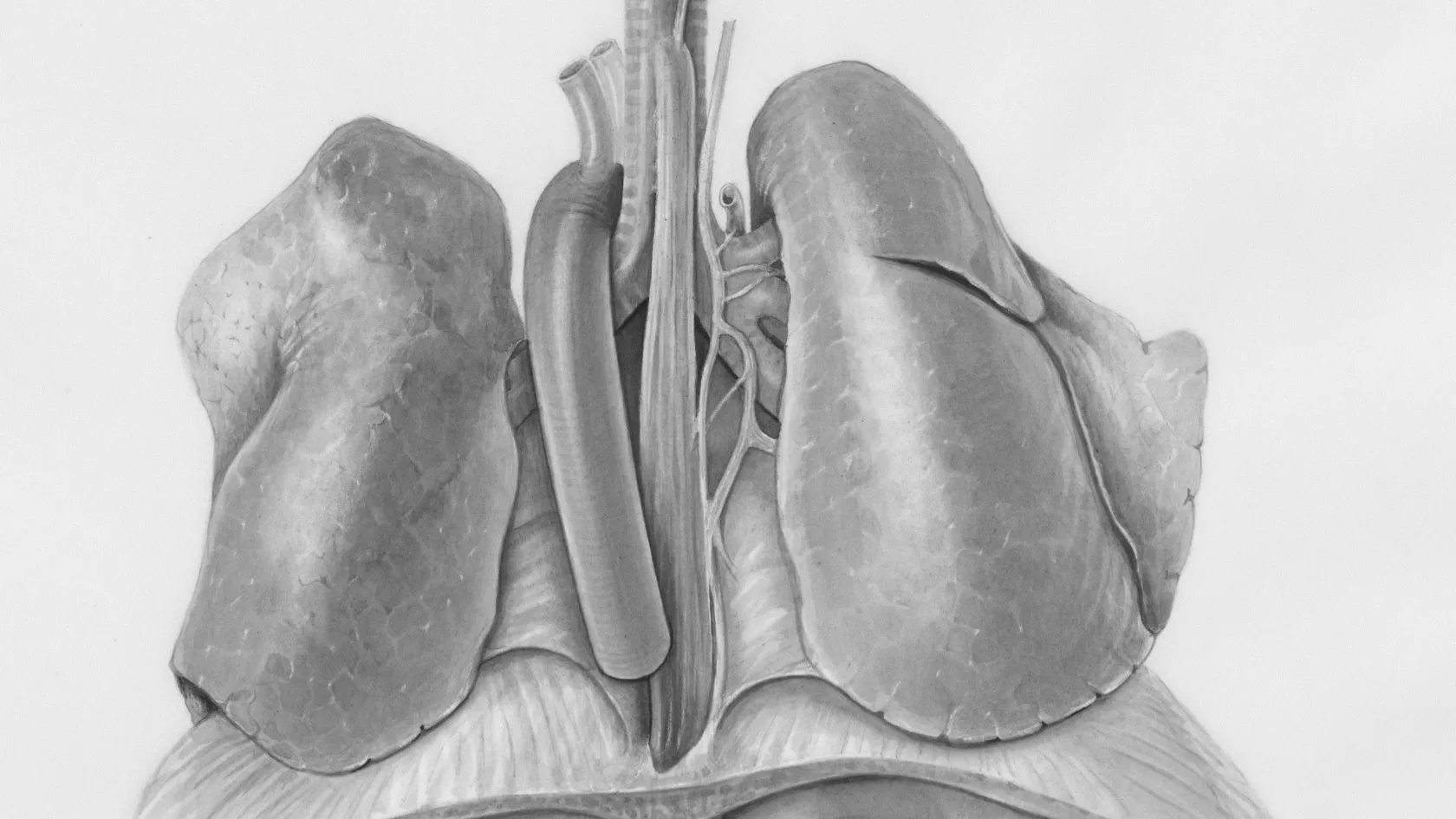
A tumor in the liver, whether a bowel cancer metastasis, a primary liver cancer or a large benign growth, can often be removed with part of the liver, and the healthy liver grows back within months. This guide explains how the liver is divided, why the operation is done, how surgeons make sure enough liver remains, long-term results, keyhole and open surgery, the risks and how long to stay in Istanbul.
About This Department
General Surgery
Part of the liver removed. The rest grows back within months.
In the OSLO-COMET trial, keyhole liver resection caused complications in 19 percent of patients against 31 percent after open surgery, with the same clear margins.
19% vs 31%
Complications after keyhole against open liver resection
37%
Five-year survival after resection of colorectal liver metastases
20%
Minimum liver remnant considered safe in a healthy liver
Free
Review of your scans before you book
Free consultation
The review costs nothing and carries no obligation. Send your CT or MRI, blood tests, pathology and any chemotherapy history, and our liver surgery team will tell you whether resection is possible, how much liver would remain, and how long to plan for. A coordinator replies in your own language.
A scan has shown a tumor in the liver, perhaps a metastasis from bowel cancer, a primary liver cancer, a bile duct cancer or a large benign growth, and the team has recommended removing the part of the liver that holds it. Liver lobectomy, also called hepatectomy, removes the right or left lobe of the liver, or a smaller set of its segments, while the liver that remains regrows to near its full size within weeks. Below you will find how the liver is divided, why the operation is done, how surgeons make sure enough liver is left, what long-term results look like for bowel cancer metastases, how keyhole surgery compares with open surgery in the first randomized trial, how the operation is done, the risks, the recovery, how long to stay in Istanbul, and the follow-up at home.
How the liver is divided
Surgeons divide the liver into eight segments, each with its own blood supply and bile drainage, which allows them to remove one part while the rest keeps working. A right hepatectomy removes segments five to eight, 60 to 65 percent of the liver, and a left hepatectomy removes segments two to four. An extended resection, sometimes called a trisectionectomy, removes even more, and a segmentectomy or wedge removes only a small area. The healthy liver regenerates. Few other organs can do this. The remaining part begins to grow within days and recovers most of its volume within a few months, which is why a person can lose more than half the liver and live normally, with blood tests returning to normal within weeks in most cases and the regrown liver working as well as the original one. A liver scarred by cirrhosis regrows less well, and a liver damaged by months of chemotherapy may need time to recover, so the surgeon checks liver function and quality before deciding how much can safely come out.
Lobe and segment
A lobectomy removes a whole half of the liver along its natural dividing line. Smaller operations follow the borders of individual segments.
The liver is the only organ that regrows after a large part is removed.
This table scrolls sideways on a narrow screen. Swipe or drag to see every column.
Types of liver resection
Operation
Segments removed
Share of the liver
Right hepatectomy
Five to eight
About 60 to 65 percent
Left hepatectomy
Two to four
About 35 percent
Extended right resection
Four to eight
About 80 percent
Segmentectomy or wedge
One or part of one
Small
Why the operation is done
Common reasons include
metastases from colorectal cancer confined to the liver,
hepatocellular carcinoma in a liver with enough reserve,
cholangiocarcinoma, a cancer of the bile ducts inside or at the hilum of the liver,
neuroendocrine tumor metastases,
and benign tumors such as a large adenoma or a symptomatic hemangioma.
Can liver metastases really be cured by surgery
For bowel cancer that has spread only to the liver, yes in a meaningful share of patients. Removing all the metastases, combined with chemotherapy in most patients, offers the best chance of long-term survival.
Removal is planned by a team, never by the surgeon alone.
1
Imaging
Liver MRI and CT of the chest and abdomen, often with PET-CT for cancer.
2
Tumor board
The team agrees the order of treatment.
3
Planning the resection
The operation is drawn on 3D images of the vessels and tumors.
Making sure enough liver remains
The portion left behind, the future liver remnant, must be large enough to keep you well while it regrows. At one American cancer center, 301 consecutive patients had an extended right hepatectomy after their remnant was measured on CT. Liver insufficiency followed in 15 percent overall. It caused 61 percent of the deaths, and it was clearly more frequent when the standardized remnant was 20 percent or less of the total liver. A remnant above 20 percent proved sufficient in a healthy liver, and patients whose small remnant was enlarged first did as well as those who started with enough.
1
CT volumetry
The CT scan is used to calculate the volume of liver that will remain.
2
Liver function tests
Blood tests and, where needed, a functional scan show how well the liver works.
3
Portal vein embolization if needed
Blocking the vein to the diseased side through a needle makes the remaining side grow over four to six weeks.
Targets most centers use
More than 20 percent of the liver in a healthy liver, about 30 percent after heavy chemotherapy, and about 40 percent in cirrhosis.
Results for bowel cancer metastases
What these numbers include
The series ran from 1985 to 1998, before modern chemotherapy and targeted drugs. Results today are generally better.
On a phone, slide the table sideways to see both columns.
Liver resection for colorectal metastases in 1,001 patients
Measure
Result
Surgical mortality
2.8 percent
Survival at five years
37 percent
Survival at ten years
22 percent
In 1,001 consecutive patients who had liver resection for colorectal metastases at Memorial Sloan Kettering, surgical mortality was 2.8 percent, survival was 37 percent at five years and 22 percent at ten. Survival depended on five factors known before surgery, and patients with up to two of them did well.
Node-positive primary bowel cancer.
Less than 12 months from the bowel cancer to the liver metastases.
More than one liver tumor.
A largest tumor over 5 centimeters.
A CEA blood level above 200.
Fewer risk factors, better long-term results.
Keyhole or open surgery
Keyhole resection suits
tumors at the edge of the liver,
left lateral and many right-sided resections in experienced hands,
and parenchyma-sparing operations that remove several small tumors.
In Norway, the OSLO-COMET trial randomized 280 patients with colorectal liver metastases to keyhole or open liver-sparing resection. Complications within 30 days occurred in 19 percent after keyhole surgery and 31 percent after open surgery, the hospital stay was 53 hours against 96, and blood loss, operating time and clear margins were the same. Costs were equal too.
Scroll sideways on small screens to see every column.
OSLO-COMET trial of laparoscopic and open liver resection
Measure
Laparoscopic
Open
Complications within 30 days
19 percent
31 percent
Hospital stay
53 hours
96 hours
Clear margins
Same
Same
Deaths at 90 days
None
One
When open surgery is still chosen
Large tumors close to major vessels, extended resections, bile duct reconstruction and some repeat operations are often safer done open.
Signs it may be time
Tumors confined to the liver that can be removed completely, a future liver remnant large enough on volumetry, good general health and liver function, and a plan agreed by the cancer team.
Talk to us first
Cancer spread widely outside the liver, cirrhosis with high pressure in the portal vein, a remnant too small even after embolization, or heart and lung disease that needs treatment first.
How the operation is done
How long it takes
Three to six hours for a lobectomy, less for a wedge or segment.
1
Anesthesia and access
General anesthesia, with keyhole cuts or an incision under the ribs.
2
Intraoperative ultrasound
Maps the tumors and vessels inside the liver.
3
Controlling inflow
The vessels and bile duct to the part being removed are divided first.
4
Dividing the liver
Special instruments seal small vessels and bile ducts as the liver tissue is divided, and blood flow into the liver may be paused briefly in short cycles to reduce bleeding.
5
Checks and closure
Bleeding and bile leaks are checked, and a drain is sometimes left.
Risks and how they are managed
Measure first, then cut.
Liver insufficiency
Jaundice, fluid in the abdomen or confusion if the remnant struggles. Careful planning prevents most cases, and supportive care in intensive care, with nutrition, fluids and treatment of infection, carries the rest through while the liver regrows.
Bile leak
Leaking from the cut surface, drained through a tube and settling within weeks.
Bleeding
Rare with modern techniques.
Chest and wound problems
Breathing exercises and early walking prevent most chest infections.
The recovery
After a major resection, patients spend the first night in intensive care or a high-dependency unit, where nurses watch blood pressure, urine output, blood sugar and liver tests closely, then walk the next day and start drinking early. Hospital stay runs two to four days after keyhole liver-sparing surgery and five to ten days after an open right hepatectomy. Blood tests show the liver recovering day by day. Tiredness is the main complaint for six to eight weeks while the liver regrows, and many patients need an afternoon rest for the first month. Appetite returns gradually, so small, protein-rich meals help, and alcohol is best avoided until the liver has recovered. Lifting waits six weeks after an open operation. Breathing exercises with a small device, taught by the physiotherapist, protect the lungs after an incision under the ribs. Chemotherapy, when planned, starts four to eight weeks after surgery, once the wound has healed and blood tests have returned to normal.
How long to stay in Istanbul
Plan for two weeks.
A published Istanbul package for an open left hepatectomy lists five nights in hospital including intensive care, and covers the surgery, preoperative tests, pathology and transfers, while the platform's overview gives seven to ten days in hospital and fourteen days in Turkey. Pathology results arrive within a week. We discuss them with you before you fly. Fitness to fly is confirmed at the final visit. Bring clot prevention for the flight.
What decides the cost
Extent of resection, keyhole or open surgery, portal vein embolization, intensive care nights, imaging and pathology set most of the figure.
A quote you can compare names the operation, any embolization and the stay, and that figure comes only after a liver surgeon reviews your CT or MRI, blood tests and cancer history. The review costs nothing.
Arranging the trip
Your CT or MRI, pathology and chemotherapy history, shared on WhatsApp, open the review, and the coordinator who replies stays with you through the operation and the follow-up after you return. The team speaks English, Arabic, French, Russian, Serbian, Romanian and Spanish, and interpreters cover other languages. A relative stays with you on the companion bed in your room. The international office books a hotel, sends the visa invitation letter ten days before travel and arranges transfers, with halal, vegetarian and diabetic meals, a prayer room and a female physician on request.
Once you are back home
Scans every three to six months for the first two years, with blood tests such as CEA for bowel cancer or AFP for liver cancer at the same visits, look for recurrence in the liver or elsewhere, and a new tumor in the regrown liver can often be treated with a second resection or with ablation, because the liver tolerates repeat surgery well. Our hospital gives chemotherapy on the same site, or it continues near home.
Fever, yellowing of the eyes or skin, a swelling abdomen, increasing pain, or bile-stained fluid from the wound. Each needs a doctor the same day.
Liver lobectomy FAQ
Does the liver grow back after a lobectomy?
Yes. A healthy liver recovers most of its volume within a few months.
How much liver can be removed?
Up to about 70 to 80 percent in a healthy liver, if the remaining part is measured as large enough.
Is keyhole liver surgery safe?
In the OSLO-COMET trial, it caused fewer complications than open surgery, with the same margins.
What is the survival after resection of bowel cancer metastases?
In a series of 1,001 patients, 37 percent were alive at five years and 22 percent at ten.
Will I need chemotherapy?
For metastases, chemotherapy before or after surgery is common.
Can a family member stay with me?
Yes. A relative sleeps on the companion bed in your room, and a nearby hotel is booked for others.
References
Kishi Y, Abdalla EK, Chun YS, et al. Three hundred and one consecutive extended right hepatectomies, evaluation of outcome based on systematic liver volumetry. Ann Surg. 2009;250(4):540-548.
Fong Y, Fortner J, Sun RL, Brennan MF, Blumgart LH. Clinical score for predicting recurrence after hepatic resection for metastatic colorectal cancer. Analysis of 1001 consecutive cases. Ann Surg. 1999;230(3):309-321.
Fretland ÅA, Dagenborg VJ, Bjørnelv GMW, et al. Laparoscopic versus open resection for colorectal liver metastases. The OSLO-COMET randomized controlled trial. Ann Surg. 2018;267(2):199-207.
Editor's note
Written by the Biruni Hospital medical editorial team. Reviewed by Prof. Dr. Özcan YILDIZ, Medical Oncology.