
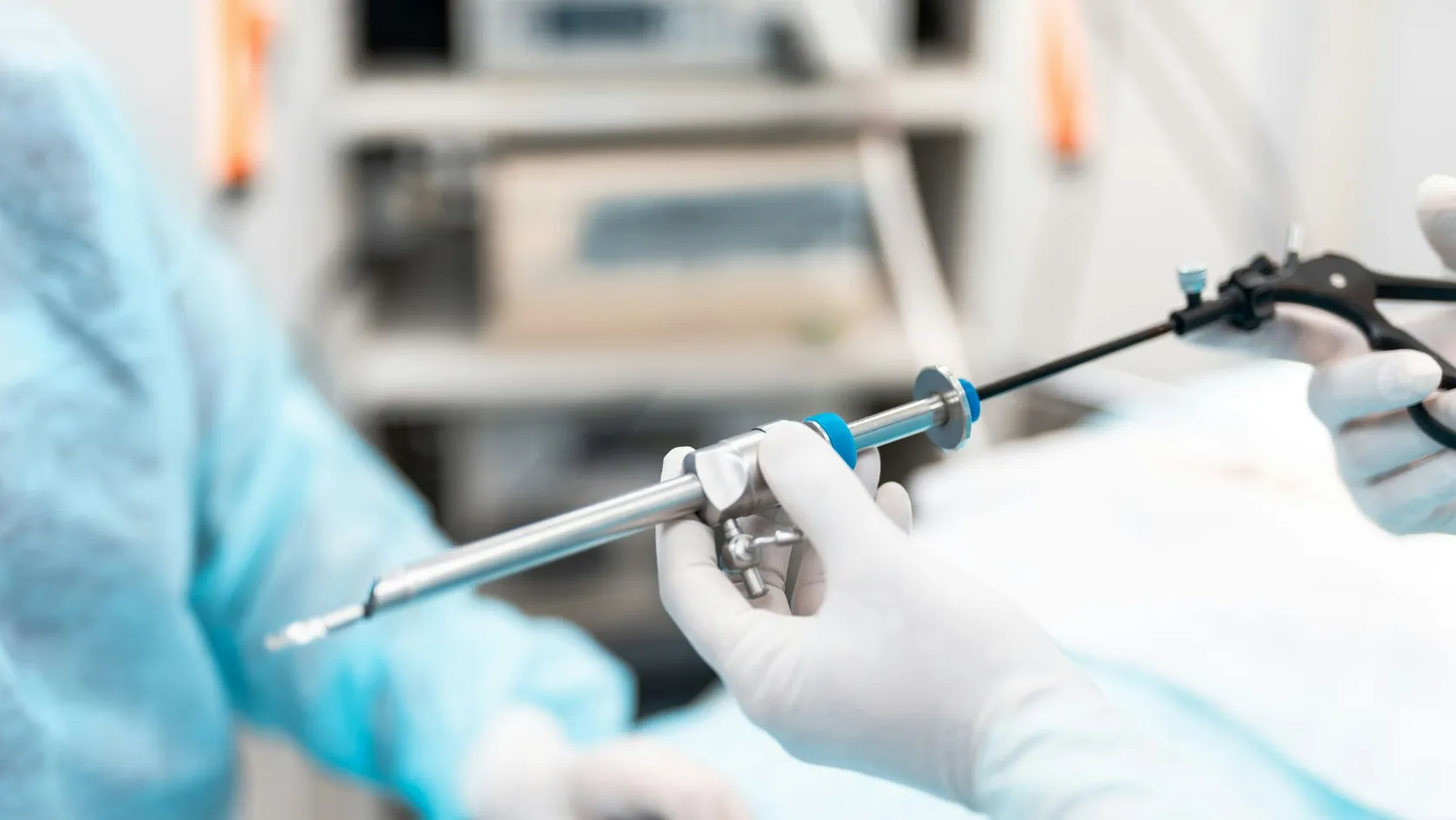
Laparoscopic Colectomy
The trials settled whether keyhole colectomy works. What is left is whether you are a suitable candidate, which version you are being offered, and how many your surgeon has done. The published learning curve runs from 88 to 152 cases.
About This Department
An analysis of 4,852 laparoscopic colorectal operations performed by 19 surgeons found that the number of cases needed before results stopped improving was somewhere between 88 and 152, depending on which outcome you measured. That figure is the most useful thing on this page. Whether keyhole colectomy works is settled and the trials are covered elsewhere on this site. What is left, and what decides your result, is whether you are a suitable candidate for it, which version of it you are being offered, and how many of these the person operating has actually done.
Free consultation
Ask whether your case is suitable for a keyhole approach
Send the colonoscopy report, the scan reports of abdomen and pelvis, your height and weight, a list of every previous abdominal or pelvic operation with approximate dates, and any biopsy result. A colorectal surgeon reads the file and tells you whether the operation is planned as laparoscopic, what would prompt a conversion to open surgery in your case, and how many of these that surgeon does in a year. No fee, no obligation, and a coordinator replies in your own language, usually within the same working day.
What keyhole means here
Four things about the approach are worth understanding before anything else, because most of the misunderstandings on this subject come from one of them.
Who is a candidate
Two patient factors come up in every discussion of suitability, and both of them are more nuanced than the usual advice suggests.
Body weight, and where the fat sits
Pooling 43 comparative studies, a higher body mass index was associated with a longer operation, more blood loss, more conversions to open surgery, more complications overall, more wound infection, more leaks at the join and fewer lymph nodes retrieved. That analysis reported probability values without effect sizes, so it establishes the direction and not the magnitude. A more specific question is where the fat sits, because fat inside the abdomen obstructs the view in a way that fat under the skin does not, and four studies measuring visceral fat on a scan found the operation took about 24 minutes longer, the odds of conversion were 2.24 times higher with a confidence interval of 1.05 to 4.78, the odds of a complication were 2.33 times higher, and about six fewer lymph nodes were retrieved. None of that makes a heavier patient unsuitable, and it is precisely why an experienced surgeon matters more in those cases than in easy ones. Ask the question directly and expect an honest answer about difficulty rather than a refusal.
Previous abdominal operations
Previous surgery is the factor patients most often assume rules them out, and the evidence says otherwise. A matched study of 756 patients compared 378 with previous abdominal surgery against 378 without, and conversion ran at 16.67 percent against 9.55 percent, with adhesions responsible for 55.56 percent of the conversions in the first group against 27.78 percent in the second. The operation took twenty minutes longer. Everything else was the same, including recovery time, length of stay, complications, deaths, lymph node yield and survival at three years. A second series of 181 patients found no significant difference in conversion at all, and found that the extra operating time appeared only in the surgeon's first 90 cases, which points at experience rather than at the adhesions. Two patients in that series had a small bowel injury during the freeing of adhesions and one of them was not noticed at the time, which is the specific risk worth naming.
Genuinely harder cases
Some situations are difficult in a way that no amount of patient optimism changes, and being told so plainly is more useful than being reassured. Repeat surgery for Crohn's disease is the clearest example. Among 65 patients having a second ileocolic resection, 28.1 percent of the laparoscopic attempts were converted to an open operation and 43.1 percent had a complication in the first month, most of them minor. A previous open operation in the same area was the strongest thing pushing toward conversion. Against that, a series of 27 patients having laparoscopic surgery for recurrent Crohn's disease reported conversion in only 2 of them, a median operating time of 110 minutes, a median stay of 4 days and a return to work at three and a half weeks, so the approach is far from futile in the right hands.
Complicated diverticular disease is the other one. Where the inflamed colon has stuck itself to the bladder and formed a fistula, a review of 202 patients across 25 studies reported operating times ranging from 150 to 321 minutes, a single leak and no deaths, though its authors were explicit that they could not work out the conversion rate at all from the published data. In an emergency, four non-randomized studies covering 436 patients found fewer complications after a laparoscopic approach, with a relative risk of 0.62 and a confidence interval of 0.49 to 0.80, and no difference in operating time, reoperation or 30-day mortality. Those authors put their own warning in unusually blunt language, saying the patients who had open surgery were sicker and that the results must be treated with extreme caution, which is a fair way of saying that laparoscopy is feasible in some emergencies and that the published numbers flatter it. The decision in a genuine emergency turns on how stable you are rather than on anybody's preference, and it is made by the surgeon who is looking at you at the time.
Conversion
How often it happens, and why
Across 4,796 elective colorectal operations in an American state-wide quality collaborative, 18.2 percent of laparoscopic cases were converted to open surgery against 7.7 percent of robotic ones, and the factors pushing toward conversion in the laparoscopic group were moderate or severe adhesions, obesity, cancer as the diagnosis, high blood pressure, operations on the rectum, unplanned scheduling and smoking. Notice what is missing from that list, which is age, and notice that most of the items are things about you rather than things about the surgeon. That study also found that a higher surgeon caseload protected against conversion in both groups, which is the same finding that runs through everything else on this page. A single-center series of 183 right colectomies reported conversion in 12 percent, with advanced disease, a tumor longer than five centimeters and having the operation in the earlier years all making it more likely, and the year effect is the learning curve showing up again.
What it means if it happens to you
The honest answer is that converted operations do worse than completed ones, and the honest interpretation is that this reflects who gets converted more than what conversion does. In that series of right colectomies, patients whose operation was converted had wound infection in 27.3 percent against 5 percent, 30-day mortality of 9.1 percent against 0.62 percent, and five year survival after curative surgery of 53.8 percent against 72.6 percent. The same pattern shows up in a much larger American database of 25,253 operations, where the 6.0 percent of robotic cases that were converted had higher mortality, more complications, longer stays and more infections than the ones that were completed. What none of that tells you is whether starting open in the first place would have been better, because nobody randomizes patients to that. The practical conclusion is the opposite of what many patients take from it, which is that you want a surgeon who converts when the operation demands it and who tells you beforehand what would make them do so.
How much the surgeon matters
The learning curve, measured
Statistical methods exist that track a surgeon's results case by case and identify the point at which they stop improving, and they have been applied to this operation repeatedly. The largest analysis pooled 4,852 cases from 19 surgeons and found the curve flattened at 152 cases for conversions, 143 for complications, 103 for length of stay, 96 for operating time and 87 for blood loss, which its authors summarized as a learning curve of 88 to 152 cases. A study of two experienced surgeons doing hand-assisted resections found the change point at 105 and 108 cases, with mean operating time falling from 263 minutes to 185 and with fewer complications, fewer infections and fewer readmissions in the later period. Single incision surgery has its own separate curve, and one surgeon's 113 cases put it at 61 to 65. A different number appears for supervised trainees, where 13 residents doing proctored sigmoid resections were performing them consistently without failure after about 11 cases, and that figure means something quite different because it describes one narrowly defined procedure with an expert standing beside them.
What a national training program changed
England ran a formal training and mentoring program for consultant surgeons who wanted to convert their practice to laparoscopic colorectal surgery, and the results were measured against every other surgeon in the country. Across 108 delegates, comparing 4,586 operations before with 5,115 afterwards and against 72,930 matched operations by surgeons who did not take part, the proportion of operations done laparoscopically rose by 20.9 percentage points more than the national trend, with a confidence interval of 18.5 to 23.3. Thirty day mortality fell by a relative 1.6 percent with a confidence interval of 0.2 to 3.4, and ninety day mortality by 2.3 percent with a confidence interval of 0.4 to 4.3. That is a rare thing to be able to show, which is that structured training of already qualified surgeons measurably changed how many patients survived. It is also the reason asking about training and caseload is a reasonable question rather than an impolite one.
Hospital volume
What it affects
A Dutch national study of 61,394 patients compared hospitals by how many colorectal resections they did each year. Hospitals doing fewer than 50 colon resections a year converted laparoscopic operations to open more often than those doing 100 or more, with an odds ratio of 1.25 and a confidence interval of 1.06 to 1.46. Thirty day mortality after colon surgery was also higher in the lower volume group, with an odds ratio of 1.17 and a confidence interval of 1.02 to 1.35. Both of those are modest effects and both are real, and together they describe a hospital where the difficult case is a little more likely to become an open operation and the sick patient is a little less likely to be rescued. Neither figure is a reason to travel past a competent hospital, and both are a reason to ask how many colorectal resections a year the unit does, which is a number every hospital knows and most will give you if you ask directly.
What it does not affect
In that same study of 61,394 patients, leak rates at the join did not differ between high and low volume hospitals, and neither did survival at five years. That is a genuinely reassuring result and it deserves to be stated as clearly as the other one. Volume is a proxy for something, and the something it appears to be a proxy for is the ability to complete a difficult operation laparoscopically and to recognize and rescue a patient who is deteriorating, rather than the quality of the cancer operation itself. The study's authors noted that they had no data on the individual surgeon's caseload, which is probably the variable that matters most and the one nobody publishes. Since you cannot look it up, ask it.
Single incision surgery
Instead of four or five separate ports, everything goes through one opening, usually at the navel. It is offered in some centers as an upgrade and the evidence for it is more mixed than the marketing suggests.
- Complications are the same. Pooling 11 randomized trials covering 1,370 patients, overall complications gave an odds ratio of 0.99 with a confidence interval of 0.75 to 1.30, and operating time was no different either.
- Wounds are genuinely shorter, and the pain is genuinely less. Across 16 studies and 2,425 patients, total incision length was 3.31 centimeters shorter and pain scores were lower on the first and second days after surgery, both by a clear margin.
- Conversion may be more likely. In the same 11 trials, converting to conventional keyhole or to open surgery gave an odds ratio of 3.10 with a confidence interval of 0.95 to 10.14, which the authors described as just missing statistical significance. That is a wide interval and it means the question is unresolved rather than answered.
- One careful review disagreed with the enthusiasm. A group that assessed six earlier meta-analyses found all of them methodologically weak, and when they restricted their own analysis to properly randomized evidence they were left with 2 trials and 82 patients. Their conclusion was that single incision colectomy should still be considered experimental.
- It has a longer learning curve of its own. One surgeon's series put the curve at 61 to 65 cases for a procedure they were already doing conventionally, so the question to ask is how many of these specifically the surgeon has done.
No abdominal wound at all
If the specimen leaves through the rectum or the vagina, the larger incision disappears entirely and only the port holes remain. This has better randomized evidence behind it than single incision surgery does, and it is offered far less often.
- Wound infection falls sharply. Across 21 randomized trials and 2,112 patients, infection overall gave a relative risk of 0.34 and infection of the incision a relative risk of 0.24. There is very little in surgery that halves a complication rate, let alone quarters it.
- Recovery is faster. Hospital stay was 2.21 days shorter with a confidence interval of 1.06 to 3.36, gas returned about half a day sooner, pain scores were lower and cosmetic scores were higher.
- Total complications fall too. The relative risk was 0.81 with a confidence interval of 0.71 to 0.93, and a separate analysis of 1,437 patients found an odds ratio of 0.48 for complications and 0.13 for wound infection.
- Operating time rises a little. About 8 minutes in the randomized data and about 14 in the wider analysis, which is the price and it is a small one.
- It only suits certain specimens. A bulky tumor or a thickened inflamed colon will not pass through the rectum, so this is a decision made on the size of what is coming out. Ask whether it is possible in your case and, if the answer is no, ask what the limiting factor is.
Hand-assisted and fewer ports
Two more variants exist at either end of the spectrum, and they answer different questions.
- Hand-assisted surgery puts one of the surgeon's hands inside the abdomen. A sealed sleeve in a small incision, made where the extraction wound was going to be anyway, lets the surgeon feel the tissue and retract with a hand while operating with instruments through the ports.
- Its main measured benefit is fewer conversions. A Cochrane review of three randomized trials covering 189 patients found conversion significantly reduced, with operating time and complication rates no different. That review reported no pooled effect size, and its authors said the trials had methodological limitations and that better ones were needed.
- It is a reasonable middle position rather than a compromise. For a large or inflamed colon, for a heavier patient, or for a surgeon partway through the learning curve, keeping a hand inside is a sensible way of finishing an operation laparoscopically that would otherwise have been opened.
- At the other end, some surgeons use three ports instead of five. A retrospective comparison of 163 right colectomies reported the three-port operation was faster, at 140.9 minutes against 178.2, retrieved more lymph nodes and had faster return of gas, with no difference in complications or conversion.
- Treat that last one carefully. A single retrospective series where the same team chose which patients got which approach cannot separate the technique from the selection, and no randomized trial of reduced-port colectomy exists to check it against.
The operation, port by port
Knowing the sequence explains why some of the aftermath feels the way it does.
What differs in recovery
Some of the advantages people expect from keyhole surgery are real and some are not, and it is worth separating them.
Port site problems
Small wounds are the part nobody discusses beforehand, and one number about them is quoted misleadingly often.
Questions to ask
Six questions, in the order that gets the most useful answers. None of them is rude and all of them have short answers.
Robotic or laparoscopic
The robot is a laparoscopic instrument with a different interface, and the comparison is often presented with more confidence than the evidence supports. Almost all of it is observational.
Three columns here, and on a narrow screen the table scrolls sideways instead of shrinking. Swipe or drag it.
| What is compared | What the pooled data show | How to read it |
|---|---|---|
| Operating time | Laparoscopic is faster by 42.01 minutes across 25 studies and 16,099 patients, and by 41.52 minutes in a separate analysis of 4,148. | Consistent and substantial. Longer anesthesia is the cost of the robot and it is not trivial in an older patient. |
| Conversion to open | Robotic converts less often, with an odds ratio of 1.65 against laparoscopy and a confidence interval of 1.28 to 2.13. A state-wide registry found 7.7 against 18.2 percent. | The clearest robotic advantage, and partly explained by the robot being used on selected cases in high volume units. |
| Hospital stay | Shorter after robotic surgery by 0.84 days in the larger analysis and 0.68 days in the smaller one. | Real but small, and less than a day either way. |
| Complications | An odds ratio of 0.74 favoring robotic in one analysis, with no difference in ileus, leak or lymph node yield. | A modest signal from observational data, which is exactly the kind of finding that selection bias produces. |
| Cancer outcomes | No difference in long-term oncological results in the 16,099 patient analysis. | Reassuring, and it means this choice is about the recovery rather than about the cancer. |
| Cost | Higher with the robot in every analysis that measured it. | Ask who is paying for that difference and what it buys you specifically. |
| Quality of the evidence | Both large analyses state that most included studies were retrospective, giving low quality evidence. | The single most important row. Nobody has randomized enough patients to settle this. |
What can go wrong
Some problems belong to the keyhole approach specifically. The complications of the colectomy itself, principally the leak at the join, are the same whichever way the abdomen was entered.
Narrow screens scroll this table sideways. Drag or swipe it to reach the last column.
| Problem | When and how likely | What is done |
|---|---|---|
| Conversion to open surgery | Around 18 percent in a large elective registry, higher with obesity, adhesions or urgent scheduling. | Nothing, except a longer recovery. It is a safety judgment and it should be described as one beforehand. |
| Bowel injury while dividing adhesions | During the operation, and mainly in people with previous abdominal surgery. | Repaired if seen. The danger is one that is missed, which presents in the following days as worsening pain and fever. |
| Shoulder tip pain | The first two or three days, and very common. | Simple painkillers and walking. It resolves on its own as the gas is absorbed. |
| Port site hernia | Months to years. Reported at 0.74 percent overall, 1.47 percent in colorectal series and 23.5 percent when actively looked for. | Repair only where it causes symptoms, which was 2.6 percent of patients in the study that looked hardest. |
| Hernia at the extraction wound | Months to years. Reported at 7.9 percent against 10.9 percent after open surgery in randomized long-term data. | Repair if symptomatic. Avoiding heavy lifting for six weeks is the part under your control. |
| Longer operation and longer anesthesia | Around 48 minutes longer than open surgery for a right colectomy in pooled data. | Nothing, and it matters mainly for patients with significant heart or lung disease, which the anesthetist assesses. |
Reading a quote
No figure appears on this page. The table below is what has to be in writing before any figure means anything, and the first row is the one people forget.
Sideways scrolling here on a small screen. Swipe or drag the table to see every column.
| Ask for | Why it changes the number |
|---|---|
| What happens if it converts to open | Roughly one in five elective laparoscopic colorectal operations converts in registry data. If the quote is silent on this, the risk has quietly been moved to you. |
| The named operation rather than the word keyhole | A laparoscopic right hemicolectomy and a laparoscopic subtotal colectomy are different operations with different stays. |
| Which variant, and whether it costs more | Robotic surgery costs more in every analysis that measured it. Single incision and natural orifice extraction generally do not. |
| Nights included, and the price of an extra one | A leak declares itself between the third and seventh day and turns a short stay into a long one, whatever the approach was. |
| Whether pathology is inside the number | Every specimen is examined whatever the reason for surgery, and that report is a document you need to take home. |
| What is excluded | Packages published by Turkish hospitals and medical travel agencies generally exclude flights, insurance, complications, extra nights, stoma supplies and follow-up beyond the first weeks. |
Does age change it
Older patients are offered keyhole surgery less often, on the reasoning that a longer operation under a longer anesthetic is riskier in someone with less reserve. The pooled evidence points the other way and it is worth knowing before anybody decides on your behalf.
Across seven studies covering 528 patients aged over 80 who had keyhole surgery and 484 who had open surgery, death carried an odds ratio of 0.48, complications overall 0.54 and prolonged ileus 0.56, all in favor of the keyhole approach, with a shorter hospital stay and faster return of bowel function. Leak rates at the join and reoperation rates were no different. Every one of those studies was observational.
A large American database looking at 79,581 elective colectomies found that laparoscopy reduced 30-day readmission and reduced the chance of being discharged to a nursing facility rather than home, in both older and younger patients, though the size of that second benefit was larger in the younger group. A Spanish cost-effectiveness study of 1,591 patients found laparoscopy produced slightly more quality-adjusted life years overall and cost less, and its authors noted a subgroup in which open surgery appeared to do better in older patients with early or very advanced disease. That last observation comes from a subgroup of an observational cohort and it should be read as a question rather than as an answer. Taken together, being older is a reason to ask for a keyhole approach and to ask about the surgeon's experience rather than a reason to accept an open operation without discussion. The practical version of all this is that age on its own is a weak basis for being offered an open operation, and that fitness, heart and lung reserve and the surgeon's own experience are the things actually doing the work in that decision.
Cancer at a port site
When keyhole colon cancer surgery began, cases were reported of tumor growing in the small port wounds, and the fear that gas and instruments were spreading cancer cells nearly stopped the technique before the trials had run. It is the single reason those trials were done, and the answer that came back is unambiguous.
A review pooling the long-term results of randomized trials, covering 3,346 patients, found no difference between keyhole and open surgery in recurrence at the wound or port sites. Recurrence at the site of the original tumor in the colon was 5.2 percent against 5.6 percent, and the hazard ratio for any recurrence after keyhole surgery in colon cancer was 0.86 with a confidence interval of 0.70 to 1.08.
One historical figure puts the size of the original worry in perspective. A German five-center registry of 399 curative laparoscopic resections performed between 1991 and 1997, in the earliest years of the technique, recorded a single port site recurrence in the whole series at an average follow-up of thirty months. The precautions that came out of that period are still standard practice, which is that the specimen is brought out inside a protective sleeve and the abdomen is handled to avoid seeding, and they are done on every case without anybody discussing them. If somebody raises port site spread with you as a current reason to avoid keyhole surgery, they are describing a problem that was solved before most of today's surgeons started training. Nothing in that history is a reason to worry now, and it stands as a good illustration of what happens when a surgical fear is taken seriously rather than dismissed, tested properly in randomized trials, and then settled by the answer that comes back.
Coming to Istanbul
Twelve to sixteen days covers assessment, the operation and a safe departure for a planned laparoscopic segmental colectomy in somebody arriving with the workup already done.
After you get home
Flying is generally cleared at around ten to fourteen days, and later if the operation was converted to open, because a leak at the join declares itself between the third and seventh day and is far easier to manage in the hospital that made the join. Ask for the operation note in particular, because it is the document that records how many ports were used, where the extraction incision was placed, whether the fascia was closed and whether anything unexpected was found. None of that can be reconstructed later and all of it matters if you develop a problem at home.
Two things then belong in your own diary. The six week restriction on heavy lifting applies exactly as it would after an open operation, because the extraction wound is where the hernia risk lives and the small scars are misleading about how much healing is going on underneath. And a wound review at around two weeks with your own doctor, who should be given the operation note, the pathology report and the discharge summary together rather than one at a time. Your coordinator stays reachable on the same WhatsApp number, so a question about a port wound or a line in the report reaches somebody with your notes in front of them.
Laparoscopic colectomy FAQ
How many of these should my surgeon have done?
Am I too heavy for keyhole surgery?
I have had abdominal surgery before. Does that rule it out?
What does it mean if my operation is converted to open?
Is single incision surgery better?
Can the specimen come out without a bigger cut?
Is the robot better than laparoscopic surgery?
Why does my shoulder hurt afterwards?
Will I get a hernia in one of the small scars?
I am over 80. Should I still ask for keyhole surgery?
References
- Miskovic D, Ni M, Wyles SM, Tekkis P, Hanna GB. Learning curve and case selection in laparoscopic colorectal surgery, systematic review and international multicenter analysis of 4852 cases. Diseases of the Colon and Rectum. 2012;55(12):1300-1310.
- Pendlimari R, Holubar SD, Dozois EJ, Larson DW, Pemberton JH, Cima RR. Technical proficiency in hand-assisted laparoscopic colon and rectal surgery, determining how many cases are required to achieve mastery. Archives of Surgery. 2012;147(4):317-322.
- Bosker R, Groen H, Hoff C, Totte E, Ploeg R, Pierie JP. Early learning effect of residents for laparoscopic sigmoid resection. Journal of Surgical Education. 2013;70(2):200-205.
- Kim CW, Kim WR, Kim HY, Kang J, Hur H, Min BS, Baik SH, Lee KY, Kim NK. Learning curve for single-incision laparoscopic anterior resection for sigmoid colon cancer. Journal of the American College of Surgeons. 2015;221(2):397-403.
- Hanna GB, Mackenzie H, Miskovic D, Ni M, Wyles S, Aylin P, Parvaiz A, Cecil T, Gudgeon A, Griffith J, Robinson JM, Selvasekar C, Rockall T, Acheson A, Maxwell-Armstrong C, Jenkins JT, Horgan A, Cunningham C, Lindsey I, Arulampalam T, Motson RW, Francis NK, Kennedy RH, Coleman MG. Laparoscopic colorectal surgery outcomes improved after national training program (LAPCO) for specialists in England. Annals of Surgery. 2022;275(6):1149-1155.
- Coleman MG, Hanna GB, Kennedy R. The National Training Programme for Laparoscopic Colorectal Surgery in England, a new training paradigm. Colorectal Disease. 2011;13(6):614-616.
- Bos ACRK, van Erning FN, Elferink MAG, Rutten HJ, van Oijen MGH, de Wilt JHW, Lemmens VEPP. No difference in overall survival between hospital volumes for patients with colorectal cancer in The Netherlands. Diseases of the Colon and Rectum. 2016;59(10):943-952.
- He Y, Wang J, Bian H, Deng X, Wang Z. BMI as a predictor for perioperative outcome of laparoscopic colorectal surgery, a pooled analysis of comparative studies. Diseases of the Colon and Rectum. 2017;60(4):433-445.
- Yang T, Wei M, He Y, Deng X, Wang Z. Impact of visceral obesity on outcomes of laparoscopic colorectal surgery, a meta-analysis. ANZ Journal of Surgery. 2015;85(7-8):507-513.
- Makino T, Shukla PJ, Rubino F, Milsom JW. The impact of obesity on perioperative outcomes after laparoscopic colorectal resection. Annals of Surgery. 2012;255(2):228-236.
- Zeng WG, Liu MJ, Zhou ZX, Hou HR, Liang JW, Wang Z, Zhang XM, Hu JJ. Impact of previous abdominal surgery on the outcome of laparoscopic resection for colorectal cancer, a case-control study in 756 patients. Journal of Surgical Research. 2015;199(2):345-350.
- Naguib N, Saklani A, Shah P, Mekhail P, Alsheikh M, AbdelDayem M, Masoud AG. Short-term outcomes of laparoscopic colorectal resection in patients with previous abdominal operations. Journal of Laparoendoscopic and Advanced Surgical Techniques. 2012;22(5):468-471.
- Bhama AR, Wafa AM, Ferraro J, Collins SD, Mullard AJ, Vandewarker JF, Krapohl G, Byrn JC, Cleary RK. Comparison of risk factors for unplanned conversion from laparoscopic and robotic to open colorectal surgery using the Michigan Surgical Quality Collaborative database. Journal of Gastrointestinal Surgery. 2016;20(6):1223-1230.
- Li JCM, Lee JFY, Ng SSM, Yiu RYC, Hon SSF, Leung WW, Leung KL. Conversion in laparoscopic-assisted colectomy for right colon cancer, risk factors and clinical outcomes. International Journal of Colorectal Disease. 2010;25(8):983-988.
- Lee YF, Albright J, Akram WM, Wu J, Ferraro J, Cleary RK. Unplanned robotic-assisted conversion-to-open colorectal surgery is associated with adverse outcomes. Journal of Gastrointestinal Surgery. 2018;22(6):1059-1067.
- Emile SH, Freund MR, Horesh N, Garoufalia Z, Gefen R, Silva-Alvarenga E, Wexner SD. Risk factors and predictors of 30-day complications and conversion to open surgery after repeat ileocolic resection of Crohn's disease. Surgical Endoscopy. 2023;37(2):941-949.
- Bandyopadhyay D, Sagar PM, Mirnezami A, Lengyel J, Morrison C, Gatt M. Laparoscopic resection for recurrent Crohn's disease, safety, feasibility and short-term outcomes. Colorectal Disease. 2011;13(2):161-165.
- Cirocchi R, Cochetti G, Randolph J, Listorti C, Castellani E, Renzi C, Mearini E, Fingerhut A. Laparoscopic treatment of colovesical fistulas due to complicated colonic diverticular disease, a systematic review. Techniques in Coloproctology. 2014;18(10):873-885.
- Cirocchi R, Fearnhead N, Vettoretto N, Cassini D, Popivanov G, Henry BM, Tomaszewski K, D'Andrea V, Davies J, Di Saverio S. The role of emergency laparoscopic colectomy for complicated sigmoid diverticulitis, a systematic review and meta-analysis. The Surgeon. 2019;17(6):360-369.
- ElSherbiney M, Khawaja AH, Noureldin K, Issa M, Varma A. Single incision laparoscopy versus conventional multiport laparoscopy for colorectal surgery, a systematic review and meta-analysis. Annals of the Royal College of Surgeons of England. 2023;105(8):709-720.
- Gu C, Wu Q, Zhang X, Wei M, Wang Z. Single-incision versus conventional multiport laparoscopic surgery for colorectal cancer, a meta-analysis of randomized controlled trials and propensity-score matched studies. International Journal of Colorectal Disease. 2021;36(7):1407-1419.
- Brockhaus AC, Sauerland S, Saad S. Single-incision versus standard multi-incision laparoscopic colectomy in patients with malignant or benign colonic disease, a systematic review, meta-analysis and assessment of the evidence. BMC Surgery. 2016;16(1):71.
- Moloo H, Haggar F, Coyle D, Hutton B, Duhaime S, Mamazza J, Poulin EC, Boushey RP, Grimshaw J. Hand assisted laparoscopic surgery versus conventional laparoscopy for colorectal surgery. Cochrane Database of Systematic Reviews. 2010;2010(10):CD006585.
- Zhou Z, Chen L, Liu J, Ji F, Shang Y, Yang X, Yang Y, Fu C. Laparoscopic natural orifice specimen extraction surgery versus conventional surgery in colorectal cancer, a meta-analysis of randomized controlled trials. Gastroenterology Research and Practice. 2022;2022:6661651.
- Lin J, Lin S, Chen Z, Zheng B, Lin Y, Zheng Y, Liu Y, Chen SQ. Meta-analysis of natural orifice specimen extraction versus conventional laparoscopy for colorectal cancer. Langenbeck's Archives of Surgery. 2021;406(2):283-299.
- Kim HG, Ju YT, Lee JK, Hong SC, Lee YJ, Jeong CY, Kim JY, Park JH, Jang JY, Kwag SJ. Three-port laparoscopic right colectomy versus conventional five-port laparoscopy for right-sided colon cancer. Journal of Laparoendoscopic and Advanced Surgical Techniques. 2019;29(4):465-470.
- Tschann P, Szeverinski P, Weigl MP, Rauch S, Lechner D, Adler S, Girotti PNC, Clemens P, Tschann V, Presl J, Schredl P, Mittermair C, Jager T, Emmanuel K, Konigsrainer I. Short- and long-term outcome of laparoscopic- versus robotic-assisted right colectomy, a systematic review and meta-analysis. Journal of Clinical Medicine. 2022;11(9):2387.
- Trastulli S, Cirocchi R, Desiderio J, Coratti A, Guarino S, Renzi C, Corsi A, Boselli C, Santoro A, Minelli L, Parisi A. Robotic versus laparoscopic approach in colonic resections for cancer and benign diseases, systematic review and meta-analysis. PLoS One. 2015;10(7):e0134062.
- Owens M, Barry M, Janjua AZ, Winter DC. A systematic review of laparoscopic port site hernias in gastrointestinal surgery. The Surgeon. 2011;9(4):218-224.
- Cano-Valderrama O, Sanz-Lopez R, Sanz-Ortega G, Anula R, Romera JL, Rojo M, Catalan V, Muguerza J, Torres AJ. Trocar-site incisional hernia after laparoscopic colorectal surgery, incidence and risk factors from a single-center cohort. Surgical Endoscopy. 2021;35(6):2907-2913.
- Li YS, Meng FC, Lin JK. Procedural and post-operative complications associated with laparoscopic versus open abdominal surgery for right-sided colonic cancer resection, a systematic review and meta-analysis. Medicine. 2020;99(40):e22431.
- Xie M, Qin H, Luo Q, He X, Lan P, Lian L. Laparoscopic colorectal resection in octogenarian patients, is it safe, a systematic review and meta-analysis. Medicine. 2015;94(42):e1765.
- Mehta HB, Hughes BD, Sieloff E, Sura SO, Shan Y, Adhikari D, Senagore A. Outcomes of laparoscopic colectomy in younger and older patients, an analysis of Nationwide Readmission Database. Journal of Laparoendoscopic and Advanced Surgical Techniques. 2018;28(4):370-378.
- Mar J, Anton-Ladislao A, Ibarrondo O, Arrospide A, Lazaro S, Gonzalez N, Bare M, Callejo D, Redondo M, Quintana JM. Cost-effectiveness analysis of laparoscopic versus open surgery in colon cancer. Surgical Endoscopy. 2018;32(12):4912-4922.
- Kim MH, Lee KY, Lee KY, Min BS, Yoo YC. Maintaining optimal surgical conditions with low insufflation pressures is possible with deep neuromuscular blockade during laparoscopic colorectal surgery, a prospective, randomized, double-blind, parallel-group clinical trial. Medicine. 2016;95(9):e2920.
- Kuhry E, Schwenk WF, Gaupset R, Romild U, Bonjer HJ. Long-term results of laparoscopic colorectal cancer resection. Cochrane Database of Systematic Reviews. 2008;2008(2):CD003432.
- Schiedeck TH, Schwandner O, Baca I, Baehrlehner E, Konradt J, Kockerling F, Kuthe A, Buerk C, Herold A, Bruch HP. Laparoscopic surgery for the cure of colorectal cancer, results of a German five-center study. Diseases of the Colon and Rectum. 2000;43(1):1-8.
Editor's note
Written by the Biruni Hospital medical editorial team. Reviewed by Assistant Professor Emir NEKAY, General Surgery.
Medically reviewed by

Assistant Professor Emir NEKAY
General Surgery
Related Treatments
View All
Bariatric Surgery - Weight Loss Surgery
Followed for 24 years, people who had weight loss surgery lived a median of 3.0 years longer than those who did not, and 5.5 years less than the general population. Both numbers come from the same study.
Breast Cancer Surgery
Across 202,934 women with the same early disease, the proportion who kept the breast ran from 58.5 to 75.5 percent depending on the region. Breast cancer surgery is not one decision. It is four, and this page maps them.

Breast Conserving Surgery
Two hundred and four women with two or three cancers in the same breast kept that breast, and recurrence at five years was 3.1 percent. Most of the reasons women are told they cannot keep the breast have quietly stopped being true.

Breast Lump Removal
Of 3,305 people under forty seen at one breast clinic, 29 had cancer. Most lumps are something else, and most of those never need an operation. This page covers how to tell which lump yours is and when removal earns its place.
Central Venous Port Implantation
A port is implanted in half an hour and then kept for years. Almost everything that later goes wrong with it was settled in that half hour, or is settled by how the device is flushed and accessed every week.