

Cytoreductive, Debulking Surgery - Ovarian Cancer
Debulking surgery for ovarian cancer, from complete cytoreduction to HIPEC. Surgery or chemotherapy first, recovery, hospital stay and when you can fly.
About This Department
One number predicts how long a woman with advanced ovarian cancer lives better than her stage, her age or her CA-125, and it is the amount of tumour left behind when the surgeon closes. The EORTC trial that compared surgery first against chemotherapy first found complete removal of all visible disease to be the strongest independent predictor of survival in its whole dataset. Everything on this page follows from that single finding.
What follows explains what debulking surgery sets out to achieve, how the decision between operating first and giving chemotherapy first is made, what the operation involves hour by hour, what the upper abdomen has to do with any of it, and what a woman travelling from abroad should plan for.
Free consultation
Send the CT, the CA-125 and the biopsy, and get an opinion on whether complete resection is achievable
A gynaecological oncologist reads the CT of your chest, abdomen and pelvis alongside the histology and the tumour markers, then tells you whether removing all visible disease looks achievable, whether the sequence should open with surgery or with chemotherapy, and how long the whole treatment would take. The review costs nothing and carries no obligation. Send the files on WhatsApp and a coordinator answers in your own language.
What the operation is trying to achieve
Ovarian cancer spreads by shedding cells that settle across the lining of the abdomen, so by the time it causes symptoms it is rarely one lump in one place. Hundreds of deposits sit across the abdomen, some the size of a grape and most the size of a grain of rice, spread over the omentum, the bowel surface, the pelvic peritoneum and the underside of the diaphragm. Chemotherapy works well against this cancer. It works considerably better against a small number of cells than against a large one, which is the entire logic of operating.
Two things follow from that. The first is that this is a long operation performed through a midline incision running from the pubic bone to well above the navel, because the surgeon has to see and reach every surface where disease can sit, and no keyhole approach gives that access in advanced disease. The second is that where the operation is done matters more here than in almost any other cancer, since achieving no visible residual disease depends on a team willing and equipped to work in the upper abdomen, and not one that stops at the pelvis.
Ask what proportion of cases a unit completes with no visible residual disease. It is the one question that separates centres.
Surgery first, or chemotherapy first?
Two large randomised trials asked whether the operation has to come first, and their answer changed practice worldwide, beginning with the EORTC trial published in the New England Journal of Medicine in 2010, which randomised 670 women with stage IIIC or IV disease and found that starting with three cycles of chemotherapy and operating afterwards was not inferior to operating first, with a hazard ratio for death of 0.98. The British CHORUS trial, published in the Lancet in 2015, randomised 550 women and reached the same conclusion, with median overall survival close to 23 months after primary surgery and just over 24 months after primary chemotherapy.
Read those figures carefully, because the trials are often quoted as though chemotherapy first were simply better, and that is not what they showed. Survival came out the same. What differed was how often the surgeon achieved a clean result and how sick the patient was afterwards, and chemotherapy given first shrinks the disease so that the operation is smaller, safer and more often complete. Where a surgeon looks at the scan and believes all visible disease can be removed at the outset in a woman fit enough for a long operation, operating first is still a good choice, and it avoids the risk of the cancer proving resistant to the chemotherapy.
This table scrolls sideways on a narrow screen. Swipe or drag to see every column.
| Sequence | What it looks like | When it is chosen |
|---|---|---|
| Primary debulking | Operation first, then six cycles of carboplatin and paclitaxel | Disease the surgeon judges completely removable on imaging, in a woman fit for a long anaesthetic and a demanding recovery |
| Interval debulking | Three cycles of chemotherapy, then the operation, then three more cycles | Extensive disease, involvement the surgery cannot clear at the outset, poor nutritional state, large volumes of fluid in the abdomen or chest, or significant other illness |
| Diagnostic laparoscopy first | A short keyhole look, tissue for diagnosis, then the sequence decided on what is seen | Where imaging leaves the question genuinely open, so the decision rests on the surgeon's own eyes rather than on a scan |
Getting a second opinion on that decision costs you nothing and can change everything, because the sequence is the one part of ovarian cancer treatment where reasonable specialists still disagree.
Inside the operation, step by step
The seven stages, in order
Between six and ten hours, under general anaesthetic, with two surgeons operating and a colorectal surgeon available in theatre. Not every step below happens in every case, because the disease decides the list.
Opening and mapping
A midline incision from the pubic bone to above the navel. Fluid is drained and sent for cytology, then every surface of the abdomen is inspected and scored, so the surgeon knows the full extent before removing anything.
Hysterectomy and removal of both ovaries
The uterus, both tubes and both ovaries come out together with the pelvic peritoneum they sit on, which is taken as one sheet because disease coats it.
Omentectomy
The omentum, a fatty apron hanging in front of the bowel, is the commonest site of bulky spread and is removed whether or not it looks involved. Losing it causes no lasting problem.
Peritoneal stripping
Sheets of the abdominal lining carrying deposits are peeled away from the muscle beneath. The lining regenerates. Slow, meticulous work, and it takes most of the operating hours.
Bowel resection where it is needed
Disease encasing the rectum and sigmoid colon is removed with that segment of bowel and the two ends rejoined. A temporary stoma is used in a minority of cases to protect the join, and it is usually reversed within a few months.
Upper abdominal work
Stripping the peritoneum from the underside of the diaphragm, removing the spleen where disease sits in the hilum, mobilising the liver to reach deposits on its surface and capsule. Section four explains why this step decides the outcome.
Final inspection and closure
Every quadrant is checked again and the residual disease is recorded honestly in the operation note, which is the line that will govern everything your oncologist does next. Drains go in. The abdomen is closed and you go to intensive care for the first night as a planned step.
HIPEC, where it is used, is given after step seven and before closure, and section six covers who it suits.
The upper abdomen decides the result
Fluid in the abdomen circulates upwards and pools under the right diaphragm, so that is where ovarian cancer deposits congregate, and it sits directly above the liver in a space most gynaecological surgeons were never trained to enter. A team that stops at the pelvis will report an optimal result with disease still coating the diaphragm, and the operation note will be honest while the outcome is quietly worse.
Three procedures make the difference, and all three are performed here.
Diaphragmatic peritonectomy strips the lining from the underside of the diaphragm, and where disease has grown into the muscle a full-thickness piece is removed and repaired, which sometimes means opening the chest cavity and leaving a drain for a day or two. Splenectomy removes the spleen when deposits sit in its hilum or on its surface, at the price of a lifelong need for certain vaccinations and, in some patients, a low-dose antibiotic, while liver mobilisation lifts the organ out of its bed so that deposits on the dome and on the capsule can be resected, sometimes with a hepatobiliary surgeon scrubbed in.
That question in section one matters for the same reason. Any surgeon can quote for a debulking operation. What you are buying is the willingness to spend three extra hours in the upper abdomen when the disease is there.
Why fewer lymph nodes come out now
Removing every pelvic and para-aortic lymph node used to be standard in this operation, on the assumption that clearing them helped. The LION trial tested that assumption and found it wrong. Published in the New England Journal of Medicine in 2019, it randomised 647 women who had already achieved complete removal of visible disease and whose nodes looked normal before and during surgery, and compared taking the nodes out against leaving them alone. Median overall survival came to just over 69 months in the women who kept their nodes and just under 66 months in those who had them removed, with a hazard ratio of 1.06, and progression-free survival was identical in the two groups. A median of 57 nodes came out in the lymphadenectomy group. Serious postoperative complications were more frequent in that group, and every participating centre had to demonstrate its surgical standard before it was allowed to enter patients, so the result cannot be explained away as poor surgery.
So an hour of extra dissection, more bleeding, more lymphatic leaks and no benefit whatsoever.
Any node that looks abnormal on the scan, or feels enlarged during the operation, still comes out, because those are disease and removing them is part of clearing the abdomen. What stopped is the routine stripping of normal-looking nodes, and a unit still doing that as a matter of course has not read the trial.
HIPEC, and who it suits
HIPEC stands for hyperthermic intraperitoneal chemotherapy, and the mechanics are simpler than the name. Once the surgeon has removed everything visible, warmed cisplatin is circulated through the open abdomen for ninety minutes at around 41 degrees, reaching microscopic cells left on surfaces that the surgery cannot see, at a concentration the bloodstream could never tolerate. Then it is drained, the abdomen is washed out and closed, and the patient goes to intensive care. The OVHIPEC trial in the New England Journal of Medicine in 2018 randomised 245 women having interval debulking after three cycles of chemotherapy, and reported median recurrence-free survival close to 11 months with surgery alone against just over 14 months with HIPEC added, and median overall survival of 34 months against nearly 46 months. Grade 3 or 4 side effects ran at 25 per cent in the surgery group and 27 per cent with HIPEC, which is the part that surprises people and the reason the technique is used at all.
Nearly a year of median survival.
For ninety minutes at the end of an operation you were already having.
Practically, HIPEC adds around two hours to theatre, one further night to the stay, and a period of closer kidney monitoring afterwards, since cisplatin is hard on the kidneys and is given with protective fluids.
When this operation is the wrong step
An operation that leaves visible disease behind gives the patient every cost of major surgery and almost none of the benefit, so the decision to operate deserves more scepticism than the decision to proceed usually gets. Disease wrapped around the root of the small bowel mesentery, extensive involvement of the liver hilum or the porta hepatis, multiple deposits inside the liver rather than on it, and disease in the chest beyond a small effusion all make complete clearance unlikely, and the right answer is chemotherapy first with the question revisited afterwards. Poor nutrition, low albumin and significant weight loss all raise the risk of the join in the bowel breaking down, and correcting them before operating is worth several weeks of delay. Severe heart or lung disease may rule out an eight-hour anaesthetic altogether, which falls to the anaesthetist. And a woman who is already frail from her disease will do better with chemotherapy to gain ground before anyone attempts a long operation.
Get the scan read before you book anything.
Any unit that reviews your CT and recommends starting with chemotherapy, or a laparoscopy to settle the question first, has given you something a date in a diary cannot.
Risks and how they are managed
Nothing else in gynaecology reaches the scale of this operation, and the risks match it, which is why the consent conversation takes an hour. CHORUS recorded serious postoperative complications in 24 per cent of women who had primary surgery, against 14 per cent of those who had chemotherapy first, and that gap is one of the reasons the sequence is chosen carefully. Every item below has a planned response and most are managed on the ward without anything dramatic.
Surgical volume matters here more than in any other gynaecological operation. Ask how many debulking procedures the unit performs each year, who else is in theatre, and whether an intensive care bed is booked in advance.
Recovery from a long operation
You wake in intensive care with a drip, a urinary catheter, one or two abdominal drains and an epidural or a pain pump you control yourself, and that first night is a planned part of the operation, and no sign that anything went wrong. Most women move to the ward the following day. Sitting out of bed starts then, walking to the door on day two, and the corridor on day three, because moving is what prevents the chest problems and the clots that are the real threats in the first week.
Bowel function sets the pace after that. It has been handled for hours and it sulks for several days, so eating restarts with sips and builds slowly, and a nasogastric tube is used for a day or two if the stomach stays full. Drains come out once the fluid settles. The catheter follows.
Five to eight nights covers an uncomplicated case, and longer where a bowel join or a chest drain needs watching.
Weeks one and two after discharge are dominated by exhaustion of a kind most women have not experienced, and by a wound that aches whenever the abdominal muscles work, which is every time you stand, cough or laugh. Appetite returns slowly and weight often falls before it turns. Short walks several times a day beat one long one. By weeks three and four most women manage stairs, light housework and a car journey, and this is the window in which chemotherapy usually restarts, so recovery and treatment overlap. Full return of energy takes three to six months, and it is slower again where chemotherapy is running alongside. Nobody warns women adequately about the emotional weight of that first fortnight, so consider this the warning. You are recovering from a very large operation, waiting for a pathology report, and facing months of chemotherapy, all at once, and finding that hard is a normal response.
How long you stay, and flying home
Three to four weeks in Istanbul, which is considerably longer than the other operations described on this site and there is no honest way to shorten it.
That covers three to five days of assessment, imaging review, nutritional preparation and anaesthetic clearance, then the operation, then five to eight nights in hospital, then ten to fourteen days of walking, eating and wound healing under review before anyone signs a fitness-to-fly letter, and the full pathology report arrives inside that window, seven to ten working days after surgery, with the chemotherapy plan set from it before you leave.
Where interval debulking is the plan, the chemotherapy either side of the operation adds considerably more, and most women have the first three cycles at home, travel for the surgery, then return home for the last three. That arrangement works well when the operating team and your own oncologist are writing to each other, which is arranged as part of the plan.
Fitness to fly
Clot risk after this operation is higher than after any other procedure described on this site, because the cancer itself, the length of the surgery and the pelvic dissection all push in the same direction, and injected anticoagulation therefore continues for four weeks after discharge. General guidance after major abdominal surgery puts the earliest reasonable flight at around two weeks, and the three to four week stay described above places you well past that. Where a chest drain has been used, the lung is checked and cleared before departure, because flying with air trapped in the chest is genuinely dangerous rather than merely uncomfortable.
Chemotherapy, BRCA and maintenance
Surgery does half the work. Carboplatin and paclitaxel every three weeks for six cycles is the backbone, given after the operation in a primary debulking pathway or split around it in an interval one, and bevacizumab is added in some higher-risk cases.
Two tests taken from the tumour and from your blood shape what comes after that. BRCA testing looks for an inherited or tumour-acquired fault in the BRCA1 or BRCA2 genes, and HRD testing asks the broader question of whether the tumour has lost its ability to repair DNA damage properly. Both are done here, and both matter for two separate reasons.
Maintenance treatment comes first. PARP inhibitors are tablets taken after chemotherapy finishes, and they extend the time before the cancer returns substantially in women whose tumours carry a BRCA fault or show homologous recombination deficiency, with a smaller effect elsewhere. Maintenance is prescribed and monitored here for women who complete their treatment with us, and the recommendation travels in writing for women who continue at home.
The second reason concerns your family. An inherited BRCA fault carries real implications for your sisters and your daughters, and for your own risk of breast cancer, so genetic counselling is built into the pathway, and a positive result changes screening for people who have not been ill at all.
Both chemotherapy and radiotherapy are delivered at Biruni Hospital, on the same site as the surgery, so a woman who chooses to complete her treatment here does so with the surgeons who operated still involved and the pathology in the same building.
What drives the cost
Of every operation on this site, this is the one where a published figure is least meaningful.
How far the surgery has to go moves the total further than anything else, because a pelvic clearance with omentectomy and a full procedure with diaphragmatic stripping, splenectomy, liver mobilisation and a bowel resection differ by hours of theatre, by the number of surgeons scrubbed and by the equipment on the trolley. Intensive care is the next line, since one planned night is standard and any additional night adds directly. Then the ward stay, which is five to eight nights when everything goes to plan and longer when it does not. HIPEC adds theatre time, the cisplatin itself and closer monitoring afterwards. A stoma brings appliances and a stoma nurse. Blood products, the pathology on a specimen that may fill several pots, the BRCA and HRD testing, and any chemotherapy given around the surgery all sit on the same invoice or deliberately outside it, and which of those is true is the thing to establish before you travel.
Your own condition moves the figure as well. Low albumin, anaemia, diabetes, heart or lung disease and previous abdominal surgery each lengthen either the operation or the stay, and correcting nutrition before surgery is both better medicine and cheaper than treating a wound that will not heal.
A package quoted in this market covers the pre-operative work-up, the surgeon and anaesthetist, theatre, the planned nights including intensive care, routine pathology, the coordinator and interpreter, transfers, an agreed run of hotel nights and the reviews before departure, and it stops short of flights and insurance, nights beyond the plan, prolonged intensive care, the treatment of a complication, and the chemotherapy cycles themselves.
Six questions turn a headline number into a real one. How extensive an operation the figure assumes, and what happens to it if the surgeon has to go into the upper abdomen. How many intensive care nights are included. Whether HIPEC sits inside the figure or outside it. Whether bowel resection and a possible stoma are priced. Whether BRCA and HRD testing are included. And whether the chemotherapy cycles are part of the quote or a separate arrangement.
Every figure you can rely on starts with a surgeon reading your CT and your histology. That reading is free.
Your trip, arranged end to end
Bring someone, and plan for a month rather than a fortnight. A woman recovering from an eight-hour operation cannot carry a bag, cook a meal or sit through a hospital appointment alone in a language she does not speak, and the rooms here have a companion bed so whoever travels with you sleeps beside you for the whole admission. Accommodation for both of you either side of the stay is arranged by the international patients office, along with the driving between airport, hotel and hospital. Consultations, consent and the ward round run in English, Arabic, French, Russian, Serbian, Romanian or Spanish, with interpreting in other languages arranged on request, and the consent conversation for this operation is long enough that having it in your own language matters more than usual. One coordinator picks up your first message and is still the person beside you on discharge day, a request for a female surgeon goes to the department and is accommodated wherever the rota allows, and halal, vegetarian and diabetic diets are handled by the hospital kitchen, with a prayer room available on site.
Once a plan and a date are agreed, the office issues an appointment confirmation and an invitation letter naming the hospital and the treating doctor. Most consulates ask for exactly that, and the longer stay is worth mentioning on the visa application.
What to send before you travel
Gather the CT of chest, abdomen and pelvis with the actual image files and not only the radiologist's report, since the surgeon needs to look at the images rather than read about them. Any PET CT. The biopsy or cytology report with the histological type. CA-125 and other tumour markers with their dates. Details and dates of any chemotherapy already given, including how many cycles and the response. Recent bloods including albumin and haemoglobin, a current medication list, and a note of every previous abdominal operation. Missing image files are the commonest reason an assessment stalls, and in this operation the images are the assessment.
After you fly home
Ovarian cancer runs as a long illness with a treatment plan measured in years, so the handover to your own oncologist is a bigger piece of work here than after any other operation on this site, and it is done before you board.
You leave with a document pack in English that an oncology team anywhere can act on. The operation note stating in plain terms what was removed and, crucially, what residual disease remained. The full histopathology with the stage. The BRCA and HRD results, or the date they are expected. The anaesthetic and intensive care records. A discharge summary listing every medication with doses and stop dates, including how long the anticoagulation runs. The splenectomy card and vaccination record where the spleen was removed. And a written recommendation for the chemotherapy regimen, the number of cycles and the maintenance plan.
Check that the residual disease statement is on the operation note before you leave. Your oncologist looks for that line first.
Follow-up runs on examination, CA-125 and symptoms, typically every three months for two years and then less frequently. Routine scanning has no place in it. A rising CA-125 in a woman who feels perfectly well is one of the genuinely difficult situations in this illness, with more than one reasonable response and no agreement on which is right, so it belongs in a long conversation with an oncologist who knows your whole history and not in a search engine at two in the morning.
Your coordinator stays on the same WhatsApp number after you land, and the surgical team answers questions from women who are already back home as an ordinary part of the week. Forward your oncologist's letters so the operating team can follow what happens next, and make contact directly if a wound problem, a stoma problem or increasing abdominal pain appears in the first weeks.
Symptoms that should send you to a doctor without waiting include fever, increasing abdominal pain or swelling, vomiting or an abdomen that stops working, breathlessness, pain or swelling in one calf, and any discharge from the wound. None of them improve with waiting.
Debulking surgery FAQ
How long do I need to stay in the country?
Can debulking surgery be done by keyhole?
Should I have chemotherapy before or after the operation?
Will I need a stoma?
Is HIPEC worth having?
Can my husband or my daughter stay with me?
When can I start chemotherapy afterwards?
What if the surgeon cannot remove everything?
References
- Vergote I, Trope CG, Amant F, et al. Neoadjuvant chemotherapy or primary surgery in stage IIIC or IV ovarian cancer. N Engl J Med. 2010;363(10):943-953.
- Kehoe S, Hook J, Nankivell M, et al. Primary chemotherapy versus primary surgery for newly diagnosed advanced ovarian cancer (CHORUS). An open-label, randomised, controlled, non-inferiority trial. Lancet. 2015;386(9990):249-257.
- Harter P, Sehouli J, Lorusso D, et al. A Randomized Trial of Lymphadenectomy in Patients with Advanced Ovarian Neoplasms. N Engl J Med. 2019;380(9):822-832.
- van Driel WJ, Koole SN, Sikorska K, et al. Hyperthermic Intraperitoneal Chemotherapy in Ovarian Cancer. N Engl J Med. 2018;378(3):230-240.
Editor's note
Written by the Biruni Hospital medical editorial team. Reviewed by Assistant Professor Fulya Özkal MOLLA, Gynecology and Obstetrics.
Medically reviewed by

Assistant Professor Fulya Özkal MOLLA
Gynecology and Obstetrics
Related Treatments
View All-

Gynecologic HIPEC Surgery
Heated chemotherapy improved five-year survival in one precise situation in ovarian cancer and did nothing measurable in the others. Knowing which one you are in is everything.
-

HIPEC
Heated chemotherapy soaks into tissue by about three millimetres. Everything this treatment can and cannot do for you follows from that one measurement.
-
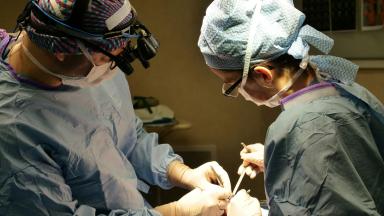
Laparoscopic Gynecologic Surgery
Three or four cuts the width of a pencil do the work of a 20 cm incision, and randomised data put the return to normal life almost two weeks earlier.
-
Uterine Cancer Surgery
Keyhole hysterectomy matched open surgery in uterine cancer at 81.6 against 81.3 percent. The same approach lost by ten points in cancer of the cervix.
-

Vulvar Cancer Surgery
Operating on the vulva alone caused complications in 21.8 percent of women. Adding a full groin clearance took that figure to 54.2 percent in the same cohort.