
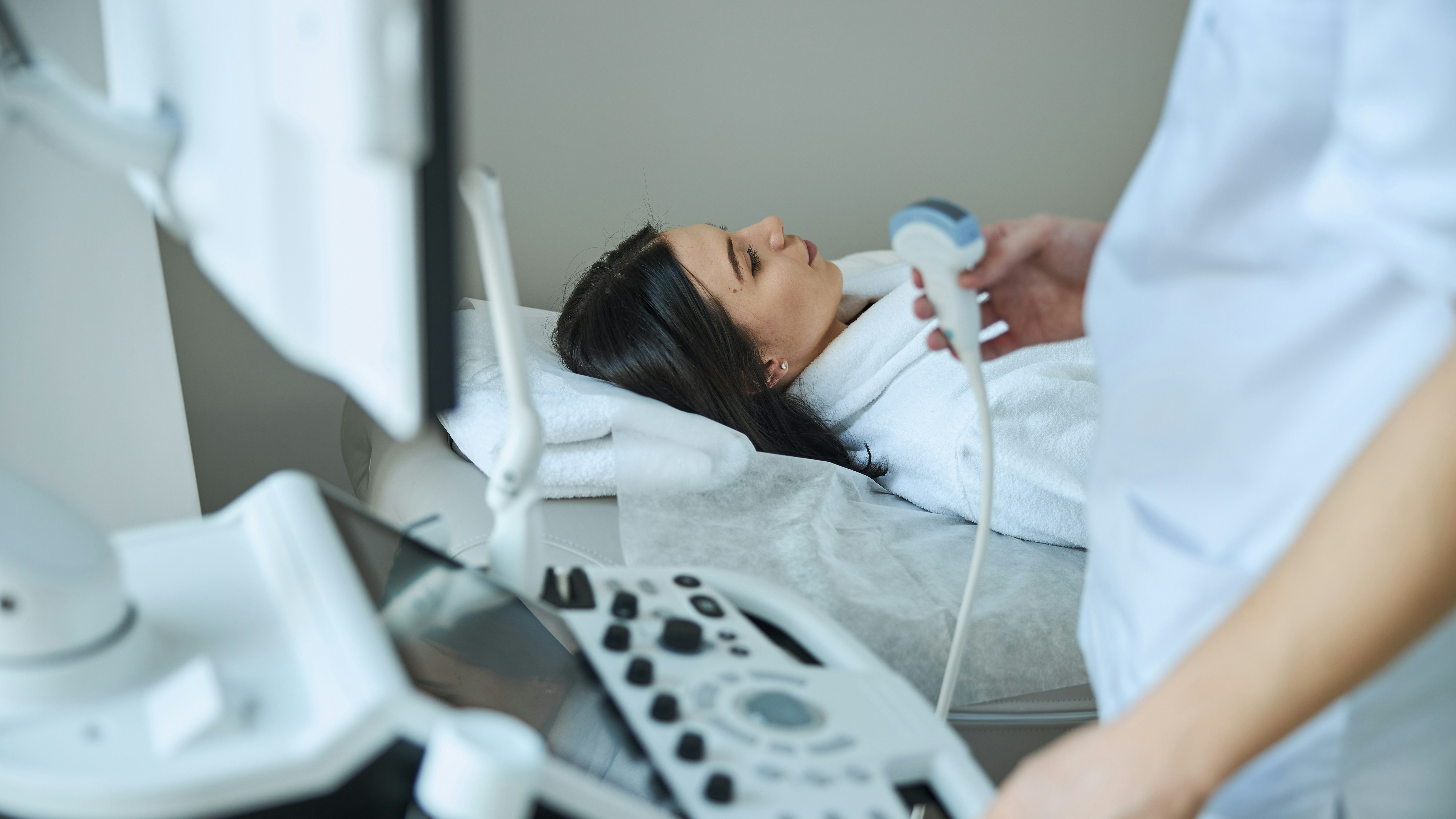
Cytoreductive, Debulking Surgery
Whether heated chemotherapy helps depends entirely on which cancer you have. For bowel cancer the largest randomised trial found it added nothing but complications.
About This Department
Most gynaecological operations that once needed a long cut across the abdomen are now done through three or four openings the width of a pencil. The surgeon works from a camera inside the abdomen, the muscle wall is never cut open, and the woman who would have spent five nights in hospital and six weeks off work goes home the next morning. Cochrane data put the return to normal activity almost two weeks earlier than after open surgery.
This page explains which conditions keyhole surgery solves, what the trials show when it is compared against the alternatives, who is better served by a different approach, and what the whole trip involves for a patient travelling from abroad.
Free consultation
Send your scan and your diagnosis, and find out whether keyhole surgery suits your case
A gynaecological surgeon reads your ultrasound or MRI, looks at the size and position of the fibroid, cyst or endometriotic disease and at any previous abdominal operation, then tells you whether the case can be done laparoscopically, how many nights it needs and what the recovery looks like. The review costs nothing and carries no obligation. Send the files on WhatsApp and a coordinator answers in your own language.
Which conditions it solves
Laparoscopic gynecologic surgery covers most of what a benign gynaecology unit does in an operating theatre. The five below account for the overwhelming majority of cases, and each of them was an open operation within living memory.
When the camera is the diagnosis too
Diagnostic laparoscopy sits alongside these. Where scans and blood tests cannot explain chronic pelvic pain or unexplained infertility, a camera inside the pelvis answers the question in twenty minutes, and anything treatable found on the way is dealt with in the same anaesthetic.
What happens inside the abdomen
Carbon dioxide gas is put into the abdomen first, which lifts the wall away from the organs and creates a working space roughly the size of a football. A camera goes in through a 10 mm opening at the navel and projects the pelvis onto a screen at ten times life size, which is the part patients find hardest to believe and the part that makes the technique work, because a surgeon operating through a long incision at arm's length sees less than one watching a magnified image from twenty centimetres away. Two or three further openings of 5 to 12 mm go in low across the abdomen, hidden along the bikini line. Through those pass graspers, scissors, a suction irrigator and an energy device that seals blood vessels before it cuts them, so blood loss in keyhole gynaecology is measured in tens of millilitres where open surgery counts hundreds.
The whole operation runs under general anaesthetic. Forty minutes covers a straightforward cyst, and a large fibroid uterus or extensive endometriosis takes two to three hours.
The gas is released at the end, the openings are closed with dissolving stitches or glue, and there is nothing to remove afterwards.
Keyhole against open, by the numbers
Cochrane's review of surgical approaches to hysterectomy for benign disease pooled 47 randomised trials and 5,102 women and is the reference every gynaecologist argues from, and twenty-five of those trials compared laparoscopic against open abdominal hysterectomy in 2,983 women. The findings split three ways.
The number competitor pages leave out
Urinary tract injury is the figure competitor pages leave out, and leaving it out is what makes the rest of their claims hard to believe, because the ureters run within a centimetre of where the uterine blood supply is divided, they are harder to feel through an instrument than through a gloved hand, and the pooled odds of injuring one are more than double those of open surgery. Absolute numbers stay low. Knowing the ratio and the reason lets you ask a surgeon the right question, which is how many of these they do in a year.
Operating time runs longer with the keyhole route.
Against that sit the shorter stay, the smaller wounds, the lower infection rate and almost two weeks of your life back, and the technique has become the default for benign disease everywhere it is available.
Vaginal, laparoscopic or robotic?
Four routes exist for a hysterectomy and the marketing around them does not match the evidence. The same Cochrane review compared all four, and its conclusion has been stable for a decade. Vaginal hysterectomy, done entirely from below with no abdominal opening at all, is the best option where the uterus is small enough and mobile enough to allow it. Where it is not feasible, laparoscopic surgery avoids the need for an open operation, and open surgery keeps its place for the cases neither of the other two can reach. Robotic assistance is the fourth, and it is where honesty costs a hospital something. The Cochrane review of robot-assisted gynaecological surgery pooled 12 randomised trials and 1,016 women and found complication rates comparable to conventional laparoscopy, longer operating times, and no survival or safety advantage that the evidence could confirm. A robot is available here and it is used in selected cases where the surgeon judges that the wristed instruments and the three-dimensional view help, most often deep pelvic dissection in a difficult space, and choosing it because it sounds more advanced is a different matter entirely, since no reputable unit will tell you the machine improves your outcome in a routine hysterectomy when the trials do not show that.
This table scrolls sideways on a narrow screen. Swipe or drag to see every column.
| Route | Where it fits | What the evidence shows |
|---|---|---|
| Vaginal | A small, mobile uterus with adequate descent and no need to inspect the rest of the pelvis | Fastest return to normal activities of the four, and preferred over the open route whenever it is technically possible |
| Laparoscopic | A larger uterus, endometriosis, adhesions from previous surgery, or when the ovaries need inspecting too | Almost two weeks faster back to normal than open surgery, fewer wound infections, longer theatre time, and higher odds of urinary tract injury |
| Robot-assisted | Selected complex dissection where wristed instruments and a three-dimensional view genuinely help the surgeon | Complication rates comparable to conventional laparoscopy, longer operating time, and no confirmed advantage in benign disease |
| Open abdominal | A very large uterus, dense adhesions, suspected cancer, or a keyhole operation that has to be converted mid-way | Slowest recovery and most wound complications, and still the safest choice for the cases the others cannot handle |
One exception runs the other way. In cervical cancer, a randomised trial found keyhole radical hysterectomy gave worse survival than the open operation, so that specific cancer operation is done open. Nothing in that finding applies to fibroids, cysts, endometriosis or benign hysterectomy, which is what this page is about.
Endometriosis, pain and fertility
Endometriosis is the one condition on this page where laparoscopy is diagnosis and treatment at once, and where the evidence splits cleanly between two questions the patient usually asks together. A 2020 Cochrane review of 14 randomised trials and 1,563 women found that laparoscopic treatment probably improves the rate of viable intrauterine pregnancy compared with a purely diagnostic laparoscopy, with an odds ratio of 1.89 across three trials and 528 women, graded as moderate quality evidence. Pain is the harder half. The same review rated the evidence on overall pain relief as uncertain, because the trials that measured it were small and inconsistently reported, and it found no difference between excising the deposits and ablating them. Surgeons who do a great deal of this work report reliable pain relief in practice. The randomised literature has not yet caught up with that experience, and a page that pretends otherwise is selling something.
Ovarian endometriomas add a second consideration, because peeling out the cyst wall takes some ovarian tissue with it, so a woman with low egg reserve who wants a pregnancy needs that discussed, and sometimes measured, before the operation rather than afterwards.
Who should not have keyhole surgery
Turning a patient down is the part of this specialty that almost no clinic website describes, and it is the part that tells you whether you are reading a surgical opinion or a sales page, so here is the list of situations in which the answer here is no.
A uterus much beyond the size of a twenty-week pregnancy leaves no working space once the gas is in, and forcing a keyhole approach onto it trades a planned open operation for an unplanned one. Dense adhesions from several previous abdominal operations, particularly after peritonitis or bowel surgery, can make the first entry the most dangerous part of the case. Suspected malignancy changes the plan entirely, because tissue must come out intact and staging follows different rules. Severe heart or lung disease sometimes rules out the head-down position and the abdominal pressure that laparoscopy requires, which is a decision for the anaesthetist, and a patient who is bleeding heavily and unstable goes straight to an open operation, because speed matters more than the size of the wound. Each of those points to a planned open operation.
Send your imaging before you book anything.
Any unit that reads your scan and tells you the case needs an open operation, or none at all, has given you something a quotation cannot.
The day of your operation
Recovery, day by day
The strangest part of the first two days is shoulder pain, and too few patients are warned.
Gas left under the diaphragm irritates a nerve that reports to the shoulder tip, so the ache turns up in a place nothing was done to, and walking, warmth and simple painkillers clear it within forty-eight hours.
Days three to seven are dominated by tiredness and by a swollen, bloated feeling as the last of the gas absorbs, while the port sites themselves rarely hurt much beyond the first few days, since each one is smaller than a fingernail and no muscle was divided to make it. Light bleeding from the vagina continues for a week or two after a hysterectomy while the vault heals.
The first six weeks
Those windows describe an uncomplicated keyhole case and run to roughly half what the same operation would cost you through an open incision, since a hysterectomy done by the open route takes six to eight weeks before ordinary life resumes and up to three months before energy returns fully, which is the gap the Cochrane figure of 13 to 14 days is measuring.
Risks and how they are managed
Serious complications in benign keyhole gynaecology are uncommon, and each one has a standard response that the theatre team runs through without drama, so what follows is what each of them looks like from the inside, because recognising one early is what keeps it small.
How fibroid tissue leaves the body
Any woman who has searched for myomectomy has met the morcellation warning, and it deserves a direct answer. The concern is that a fibroid cut into strips to pass through a small opening could, very rarely, turn out to contain an unsuspected sarcoma, and cutting it loose would spread cells around the abdomen. Two things address it. Careful assessment before surgery, meaning imaging and attention to age and to any suspicious growth pattern, and containment during surgery. A single-centre series of 1,216 women aged 18 to 45 published in Human Reproduction in 2017 found no leiomyosarcoma at all among 2,582 morcellated fibroids, with a 95 per cent confidence interval running from zero to 0.3 per cent, alongside seven atypical leiomyomas. Every specimen here is removed inside a sealed retrieval bag, so nothing is cut loose in the abdominal cavity, and the whole specimen goes to the laboratory.
How long you stay, and flying home
Seven to ten days in Istanbul covers laparoscopic gynecologic surgery comfortably.
That is one or two days of assessment and pre-operative tests, the operation, one to two nights on the ward, then four or five days of walking around while the wound settles, a check with the surgeon, and the histopathology result on anything that was removed.
That last item is the one people underestimate. A fibroid, a cyst wall or a uterus goes to the laboratory and the report takes seven to ten working days, and it is the report rather than the operation that determines whether anything else is needed, which is why the stay is a week and not three days.
Fitness to fly
Clot risk sets the date, and keyhole surgery is kinder here than open surgery because you are mobile from the first evening, so while general guidance after uncomplicated abdominal surgery puts the earliest reasonable flight at around ten days, a laparoscopic gynaecological case clears comfortably within the seven to ten day window described above. A large myomectomy or a converted case sits further out. Your surgeon writes the clearance date at discharge, along with compression stockings, any anticoagulation you need to continue, and the operation note and pathology report in English for the airline and for any doctor you see on the way.
What drives the cost
No published figure applies to you.
Which operation you need is not settled until a surgeon has read your imaging, so two women with the same words on a referral letter receive different numbers, and the reasons are specific enough to name. What is being removed moves the total furthest, since a diagnostic laparoscopy, an ovarian cystectomy, a hysterectomy and a myomectomy for six separate fibroids occupy completely different amounts of theatre time and staffing. The number and size of the fibroids matters within that, because each one has to be enucleated and the uterine wall repaired in layers. Whether a robot is used changes both the theatre time and the consumables. Then comes the ward, where each additional night adds directly, and the tissue pathway, meaning the retrieval bag, the frozen section if one is needed and the histopathology on everything removed, and your own health moves the figure too, since body weight, diabetes, previous abdominal surgery with adhesions and blood-thinning medication all lengthen the operation or the stay.
A package quoted in this market is built around theatre and the ward. Expect it to carry the pre-operative bloods and the imaging review, the surgeon's and the anaesthetist's fees, the operating theatre with its consumables, the planned nights in the room, the histopathology on whatever comes out, your coordinator and interpreter, the driving between airport, hotel and hospital, an agreed run of hotel nights, and the appointments before departure. Expect it to stop short of your flights and travel insurance, any night beyond the plan, intensive care nobody predicted, the cost of treating a complication, and the difference if the case has to be finished as an open operation.
Five questions turn a headline number into a real one. Which operation the figure assumes, and what happens to it if the findings change once the camera is in. Whether conversion to open surgery is priced, and how, and whether the histopathology on the specimen sits inside the figure or outside it. How many ward nights are counted, and what an extra one costs. And whether a robot is included or charged separately, given that the evidence does not show it improves a routine case.
Every figure you can rely on starts with a surgeon reading your scan, and that reading is free, so the buttons at the top of this page are the shortest path to one.
It takes one message.
Your trip, arranged end to end
Keyhole recovery is quick enough that many women travel with one companion and manage the week easily, and the arrangements below exist so that the week belongs to your recovery.
What to send before you travel
Gather the paperwork before you travel. The pelvic ultrasound or MRI with the actual image files rather than only the radiologist's letter, any previous operation notes, a current medication list including blood thinners and hormones, recent blood tests, and a note of every previous abdominal or pelvic operation. Missing imaging files are the commonest reason an assessment stalls for a week.
After you fly home
Follow-up is where treatment abroad either works or turns expensive, and it is settled before you board.
You leave with a document pack in English that a doctor anywhere can act on. The operation note describing exactly what was found and what was removed, the histopathology report, the anaesthetic record, a discharge summary listing every medication with doses and stop dates, and a written plan for the next three months, all of which lets a gynaecologist in your own country take over competently where a letter saying the operation went well would leave them with nothing to act on. Request it before discharge and check that the operation note names the findings, because that is the page your own doctor will read first. The WhatsApp number you wrote to at the beginning keeps working after you land, and messages from women who are already back home are part of the surgical team's ordinary week, so nobody ends up writing into an inbox that never answers. Forward your local doctor's letters so the operating surgeon can see how the recovery is going.
What happens next, by operation
What follows depends on what was done. After a myomectomy, pregnancy is usually deferred for around three months while the uterine scar matures. After endometriosis surgery, hormonal treatment often starts within weeks to slow recurrence. After a hysterectomy, there is nothing to follow except the vault check and the return of your energy. And after an ovarian cystectomy, an ultrasound at six months confirms the ovary has recovered.
Symptoms that should send you to a local doctor without waiting include increasing abdominal pain, fever, a wound that becomes red or starts discharging, heavy vaginal bleeding, pain or swelling in one calf, and breathlessness. None of them improve with waiting.
Laparoscopic gynecologic surgery FAQ
How long do I need to stay in the country?
When can I fly home after laparoscopic surgery?
Will there be a visible scar?
Is robotic surgery better than standard keyhole surgery?
Can my husband or my mother stay with me?
Can I still get pregnant after this surgery?
What happens if something goes wrong once I am home?
Written by the Biruni Hospital medical editorial team.
Reviewed by Dr Yunus Emre Yavuz, Obstetrics and Gynaecology.
References
- Aarts JWM, Nieboer TE, Johnson N, et al. Surgical approach to hysterectomy for benign gynaecological disease. Cochrane Database Syst Rev. 2015;2015(8):CD003677.
- Bafort C, Beebeejaun Y, Tomassetti C, et al. Laparoscopic surgery for endometriosis. Cochrane Database Syst Rev. 2020;10(10):CD011031.
- Lawrie TA, Liu H, Lu D, et al. Robot-assisted surgery in gynaecology. Cochrane Database Syst Rev. 2019;4(4):CD011422.
- Pados G, Tsolakidis D, Theodoulidis V, et al. Prevalence of occult leiomyosarcomas and atypical leiomyomas after laparoscopic morcellation of leiomyomas in reproductive-age women. Hum Reprod. 2017;32(10):2036-2041.
Related Treatments
View All
Cytoreductive, Debulking Surgery - Ovarian Cancer
Debulking surgery for ovarian cancer, from complete cytoreduction to HIPEC. Surgery or chemotherapy first, recovery, hospital stay and when you can fly.
Endometrial Cancer Surgery
Nobody can tell you your stage before the operation. This cancer is staged from what the pathologist measures afterwards, so the report decides more than the surgery does.
Gynecologic HIPEC Surgery
Heated chemotherapy improved five-year survival in one precise situation in ovarian cancer and did nothing measurable in the others. Knowing which one you are in is everything.
HIPEC
Heated chemotherapy soaks into tissue by about three millimetres. Everything this treatment can and cannot do for you follows from that one measurement.
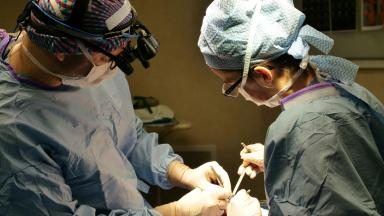
Laparoscopic Gynecologic Surgery
Three or four cuts the width of a pencil do the work of a 20 cm incision, and randomised data put the return to normal life almost two weeks earlier.