
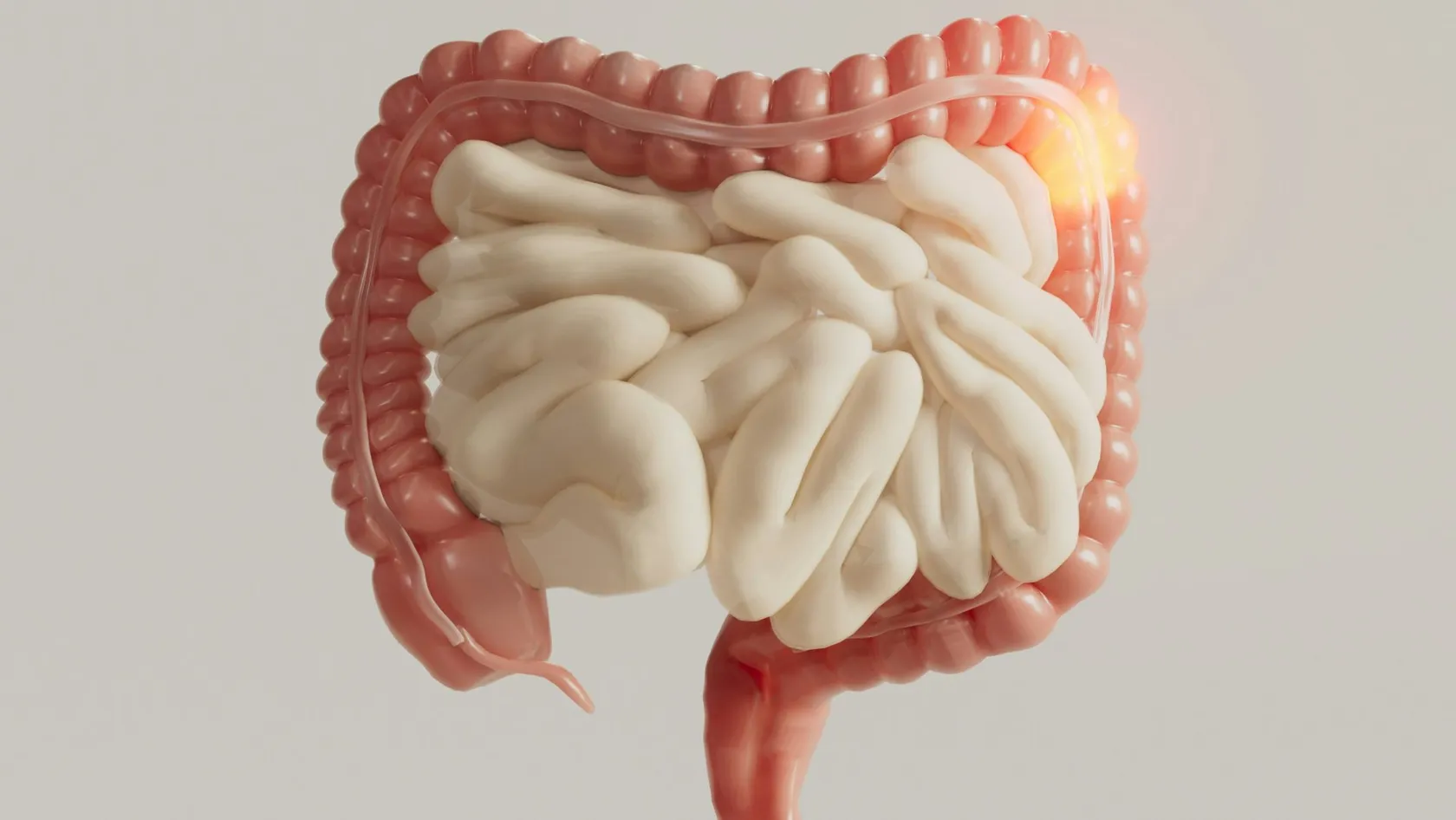
Colon Resection - Colectomy
Eight operations share this one word. Which segment comes out decides your hospital stay, whether you wake up joined or with a stoma, and how your bowels work. Written from the randomized trials, for every reason a colectomy is done.
About This Department
Colectomy is one word covering at least eight different operations, and which one you are having depends on which segment of colon is coming out, a single fact that determines how long you are in hospital, whether you wake up joined or with a stoma, and how your bowels behave for the rest of your life. Almost everything else people worry about follows from it. This page is organized around that, and it deals with colectomy for every reason it is done, with the cancer-specific decisions covered separately.
Free consultation
Find out which segment is coming out and what follows from that
Send the colonoscopy report, the scan reports of abdomen and pelvis, any biopsy result, a note of how many episodes of illness you have had and how they were treated, your blood results, your medication list and details of any previous abdominal surgery. A colorectal surgeon reads the file and tells you which operation is being contemplated, whether a stoma is likely and what would make one necessary. No fee, no obligation, and a coordinator replies in your own language, usually within the same working day.
Eight operations, one word
Find the row that matches what you have been told, and if nobody has named the operation yet, that is the first question to ask, because every later question on this page depends on the answer to it. The colon is roughly five feet long and it runs up the right side of the abdomen, across the top, down the left side and into the pelvis, so the name of the operation is simply a description of which stretch is coming out.
Wide table. Swipe or drag it sideways on a narrow screen to see every column.
| Operation | What comes out | What you are left with |
|---|---|---|
| Right hemicolectomy | The last part of the small bowel, the cecum and the ascending colon. | Small bowel joined to transverse colon. Looser and more frequent stools are common, and the reason for that is explained further down. |
| Extended right hemicolectomy | The same, plus most of the transverse colon. | Small bowel joined further round to the left. The same function changes, usually a little more pronounced. |
| Left hemicolectomy | The descending colon on the left side. | Transverse colon joined to sigmoid or rectum. Bowel function usually returns close to what it was. |
| Sigmoid colectomy | The short S-shaped segment above the rectum. | Descending colon joined to rectum. The commonest operation for diverticular disease and the one most of this page's evidence concerns. |
| Hartmann's procedure | The sigmoid, with no join made at all. | An end colostomy and a closed-off rectal stump. Reversal is a second major operation and many people never have it. |
| Subtotal colectomy | Almost all the colon, leaving the rectum behind. | Either an end ileostomy with the rectum left in place, or small bowel joined straight to rectum. The usual emergency operation in colitis. |
| Total colectomy with ileorectal join | The whole colon, rectum kept. | Small bowel joined to rectum, no stoma. Several loose stools a day is the expected result, and the rectum still needs watching. |
| Proctocolectomy with a pouch | Colon and rectum both. | A reservoir built from small bowel and joined to the anus, usually in two or three stages with a temporary ileostomy in between. |
Why yours is recommended
Cancer is the reason most people assume, and it accounts for a large share of colectomies, but it is far from the only one. Diverticular disease that keeps coming back or that has perforated, ulcerative colitis that no longer responds to drugs, Crohn's disease affecting the colon, a twisted sigmoid that keeps twisting, a polyp too large to lift out at colonoscopy, ischemia, and severe unrelieved constipation with a documented transit abnormality all lead to the same operation. The indication changes very little about the surgery and a great deal about the argument for having it. Which of those you have determines almost nothing about the two or three hours in the operating room and almost everything about whether the operation was the right idea, and that is why the sections below are arranged by reason before they are arranged by technique.
That argument has been tested properly in one setting, which is recurrent diverticulitis. A Finnish trial randomly assigned 90 patients who had been through repeated episodes either to a planned keyhole sigmoid colectomy or to carrying on with conservative treatment, then followed them for four years.
Further attacks over four years occurred in 6 of 38 operated patients (16 percent) and in 34 of 37 treated conservatively (92 percent). Fourteen of the 44 assigned to conservative care ended up having the operation anyway. Yet quality of life scores at four years were 115.3 against 109.8, a difference of 5.54 points with a confidence interval running from minus 2.98 to 14.06, which means the trial could not show a lasting difference in how people felt.
Both halves of that result are true and they point in different directions, which is exactly why the decision belongs to you and cannot be settled by a guideline. Surgery reliably stops the attacks. Whether stopping the attacks makes your life better depends on how bad your life is between them, and the trial's authors said as much, concluding that an operation suits patients whose quality of life is poor while conservative treatment suits those whose scores are already near normal. Ask your surgeon what your score would be, and if nobody has measured it, that itself tells you something about how the decision is being made. The measurement takes a few minutes with a standard questionnaire, it is the same instrument both of the randomized trials used, and it turns a vague conversation about how much the attacks bother you into a number that can be set against the people who were actually studied. Ask for it by name.
Diverticular disease
Two separate questions hide under this heading, and mixing them up is the commonest source of confusion in the clinic. One concerns a planned operation for repeated attacks. The other concerns what to do when the bowel has actually perforated.
The planned operation for repeated attacks
A Dutch trial randomly assigned 109 patients with recurring or ongoing symptoms to elective sigmoid resection or to conservative management, and at five years the quality of life score was 118.2 against 108.5, a mean difference of 9.7 points with a confidence interval of 1.7 to 17.7. Pain scores, physical and mental health scores and general health scores all favored the operated group. Twenty-six of the 56 patients assigned to conservative care, which is 46 percent, had a resection in the end. The price of the operation was visible in the same data, with a leak at the join in 8 patients, meaning 11 percent, and a further procedure needed in 11, meaning 15 percent. That trial was stopped early because recruiting people to be randomized between an operation and no operation proved very difficult, which is worth knowing when you read it. Read alongside the Finnish trial, the honest summary is that surgery buys a real reduction in attacks and a modest improvement in daily life, at the cost of a roughly one in ten chance of a serious surgical complication.
Keyhole or open, when it is planned
Dutch investigators randomized 104 patients to keyhole or open sigmoid resection for diverticular disease and found major complications in the first six months in 9 patients against 23, a difference that reached statistical significance at a probability value of 0.003. Conversion from keyhole to open happened in 19.2 percent, which is higher than most patients expect and reflects how inflamed and stuck-down this tissue can be after repeated attacks. Quality of life was better in the keyhole group at six weeks and the two groups had converged by six months, so the advantage is real and it is front-loaded into the recovery period. Late complications were similar in number, and they were the ones you would expect after any abdominal operation, which is to say incisional hernias, small bowel obstructions and the occasional fistula or stricture. None of that is an argument for insisting on keyhole surgery regardless of what the surgeon finds, because a surgeon who converts when the tissue demands it is doing the right thing, and a unit reporting a conversion rate near zero for inflamed diverticular disease is either selecting very carefully or counting differently.
The emergency choice
If the bowel has perforated and you are ill, the surgeon has three options and they lead to very different lives afterwards, which makes this the single area where an informed patient, or a relative asking on their behalf, can change what actually happens.
Ulcerative colitis
Colectomy for ulcerative colitis is not one operation but a sequence, usually spread over a year, and understanding that sequence in advance removes most of the fear from it, because almost nothing that happens in the first stage forecloses a decision in the second.
Two less common reasons
Both of these send a steady trickle of people to colorectal clinics, and in both the evidence is thinner than anyone would like.
A sigmoid that keeps twisting
A long floppy sigmoid can rotate on itself and block, and untwisting it with a scope works in almost everybody, with one French series reporting success in 96 percent of attempts and no complications. Untwisting does nothing about the floppy sigmoid, which is why 23 of the 42 patients in that series who had no operation twisted again. An American analysis of 2,113 admissions found that just under half had a resection during the same admission, and that those who did were readmitted with a further twist significantly less often, with no difference in death but with more complications and a longer stay. That series also reported far higher mortality in the patients who had no surgery, and the authors themselves noted that group was older and less independent, so the gap describes who was chosen for an operation and not what the operation did. The practical question is whether you are well enough for a planned resection once the crisis has passed, and it is a question worth asking before you are discharged rather than after the next episode.
Constipation that will not respond to anything
Removing the colon for constipation is a real operation with real results and it is also the one most likely to disappoint, because it treats a colon that does not move while leaving a pelvic floor that may not open. Nobody should have it without transit studies and an assessment of pelvic floor function first. In a series of 44 women having a hand-assisted keyhole total colectomy, 39 of them, meaning 88.6 percent, rated the result as excellent or good, with a mean stay of 7.6 days and two patients needing a further operation for obstruction. Whether the small bowel is joined to the rectum or the cecum is preserved and joined instead has been compared across five trials and 291 patients, with similar complication rates, a shorter operation and hospital stay for the cecal version and better continence scores, though the published summary reports probability values without effect sizes. The one thing worth insisting on is that somebody assesses the pelvic floor before anybody assesses the colon, because an operation that removes a sluggish colon does nothing at all for a pelvic floor that will not relax, and that mismatch is the commonest reason these operations disappoint the people who have them.
Whether you wake up joined
Every question about stomas comes down to one thing, which is how confident the surgeon is that the join will heal. A leak is the complication that dominates this operation, and the fear of it is what puts stomas on people who might have managed without one. It helps to know how common it actually is.
An audit of 1,347 right-sided resections across 200 centers in 32 countries found an overall leak rate of 8.3 percent. It also found that leaks occurred in 12.1 percent of operations done by general surgeons and 7.3 percent of those done by colorectal specialists, with an odds ratio of 1.65 and a confidence interval of 1.04 to 2.64.
The authors themselves pointed out that general surgeons were operating on a higher-risk group, so this is a long way from a clean measure of skill, and it is still the reason the specialty of the person operating is a fair thing to ask about, whether you are being treated at home or abroad. The question is simply whether colorectal surgery is what they do all week. As for whether you personally will wake up with a stoma, the honest answer is that a planned colectomy in a well person usually ends with a join and nothing brought out to the skin, an emergency in an unwell person often does not, and the surgeon decides in the operating room with the tissue in front of them. What you can do beforehand is ask what would have to be true for a stoma to be made, so that the possibility is not a surprise.
The operation itself
Allow two to three hours for a segmental resection and longer for a total colectomy or a pouch, done through four or five small cuts and one slightly larger one.
What happens before
Preparation for colectomy is an area where practice varies enormously and where two of the most confidently repeated pieces of advice turned out, when tested properly, to be shakier than expected.
On a narrow screen the table scrolls sideways instead of shrinking. Swipe or drag it to see every column.
| What is done | What the best evidence says | How to read it |
|---|---|---|
| Emptying the bowel and taking oral antibiotics | A randomized trial of 417 patients found wound infection in 7 percent of those prepared and 11 percent of those not, a difference well within chance. Leaks and reoperations were the same in both groups. | Large observational datasets favor preparation and this trial did not. Its authors said the recommendation should be reconsidered. Practice remains divided and either answer is defensible. |
| A structured recovery program | Across 13 randomized trials and 1,298 patients, hospital stay fell by 2.00 days with a confidence interval of 1.48 to 2.52, wind returned 12 hours sooner, and complications fell with a relative risk of 0.59 and a confidence interval of 0.40 to 0.86. | The best-supported thing on this list. Ask whether the unit runs one, because the individual components are useless in isolation and the effect comes from doing all of them. |
| The same program after emergency surgery | Across 20 studies covering lower gastrointestinal emergencies, stay fell by 2.80 days and complications fell with a relative risk of 0.66 and a confidence interval of 0.52 to 0.85. | The authors graded this as low to very low certainty. Promising, and thinner than the elective evidence. |
| Exercise and nutrition training beforehand | A trial in 110 frail patients, average age 78, compared training before surgery with the same training afterwards and found no difference in complications, with an adjusted mean difference of minus 3.2 and a confidence interval running from minus 11.8 to 5.3. | Widely offered and, in this trial, ineffective at the thing it is offered for. It may still be worth doing for other reasons, and it should be described honestly. |
| Stopping smoking | Not tested in the trials above, and consistently associated with wound healing and leak in the wider surgical literature. | The single change with the clearest rationale that is entirely under your control. Four weeks before is the usual advice. |
How the join is made
Surgeons argue about this more than about almost anything else, and some of the arguments have been settled. These are worth reading because they let you ask a specific question instead of a general one.
Swipe or drag the table sideways on a narrow screen to see every column. It scrolls sideways instead of shrinking.
| The argument | Where it stands |
|---|---|
| Stapled or hand-sewn, for a right-sided join | Settled in favor of staples. Across 6 trials and 955 participants, leaks occurred in 5 of 357 stapled joins and 36 of 598 sewn ones, an odds ratio of 0.34 with a confidence interval of 0.14 to 0.82. |
| Making that join inside the abdomen or outside it | Four randomized trials covering 399 patients found a smaller incision, less pain on days two through five and a hospital stay shorter by about a quarter of a day when the join is made inside. Leak rates, infections and complications were no different. |
| Which stapler closes the last opening | No difference found. In the 1,347 patient audit, cutting and non-cutting staplers gave 8.4 against 8.0 percent, and oversewing the staple line changed nothing measurable either way. |
| Stapling or sewing the pouch join in colitis | Across 31 studies and 8,872 patients, the stapled version had fewer strictures, less obstruction, less pouch failure and better continence, with no difference in stool frequency, pouchitis or leak. The published summary gives directions without effect sizes. |
| Who is holding the instruments | The largest single difference in that audit, at 12.1 against 7.3 percent between general and colorectal surgeons, with the caveat that the two groups were operating on different patients. |
What can go wrong
Colectomy is major abdominal surgery and the list is honest rather than reassuring. Reading it beforehand is what lets you recognize a problem early, which is the only part of this you influence.
Four columns here. Drag or swipe the table sideways on a narrow screen, because it scrolls instead of shrinking.
| Problem | How common | When | What is done |
|---|---|---|---|
| A leak at the join | Around 8 percent for right-sided joins in the international audit, and 11 percent in the Dutch diverticulitis trial. | Usually days three to seven. | Drainage and antibiotics, often a further operation with a stoma. A heart rate that climbs and stays up is the first sign. |
| Wound infection | 7 to 11 percent in the randomized preparation trial, and much higher after emergency lavage. | The first fortnight. | Antibiotics, sometimes opening the wound to let it drain and heal from the base. |
| The bowel refusing to start | Common, and the usual reason a discharge slips by a few days. | The first week. | A tube through the nose, fluids by drip and time. Recovery programs shorten it. |
| Injury to the ureter | Uncommon, and more likely in a heavily inflamed left-sided field. | During the operation or in the days after. | Repair, and a stent. Some surgeons place stents beforehand in difficult cases, which is worth asking about. |
| Clots in the legs or lungs | Raised by any abdominal cancer operation and by inflammatory bowel disease itself. | The first weeks. | Blood thinning injections, often continued after discharge. A long flight taken too soon adds to the risk. |
| Conversion to an open operation | 19.2 percent in the randomized trial of keyhole sigmoid resection for diverticular disease. | Partway through. | Nothing, beyond a longer recovery. It is a judgment about safety and it should be presented as one. |
Recovery
Structured recovery programs have shortened this considerably, and knowing what is supposed to happen on each day makes it much easier to tell whether it is happening.
- Day of surgery. Sitting out of bed within a few hours and drinking the same evening. Both are deliberate parts of the protocol and neither is a sign of exceptional progress.
- Days one to three. Eating, walking the corridor, off the drip. Pain control moves to tablets. The catheter comes out. This is when most people feel worse than they expected to and better than they feared.
- Days three to seven. The window when a leak declares itself, and the reason the hospital watches you rather than sending you off. Wind first, then stool. A heart rate that climbs and stays up is the sign that matters most, and it usually appears before the pain changes and well before anybody looks unwell, which is why the nursing observations are taken as often as they are.
- Discharge. Four to six nights after a keyhole segmental resection, longer after an open operation, a total colectomy or an emergency. In the series of subtotal colectomies for inflammatory bowel disease the median was 13 days after an emergency and 9 after a planned operation.
- Weeks two to six. Tiredness that surprises people. No lifting anything heavy for six weeks, because the extraction wound is the one that turns into a hernia. Desk work at around three weeks after keyhole surgery, physical work at six to eight.
- Get in touch about. A rising heart rate, pain that worsens after the third day, a fever, vomiting that will not stop, a wound that reddens and discharges, or a stoma that stops working. The first of those needs to be seen the same day.
Flying home
Around ten to fourteen days after a keyhole segmental colectomy, and longer after an open operation or a total colectomy. That figure is set by one thing, which is that a leak at the join typically announces itself between the third and seventh day and is far easier to manage in the hospital that made the join than in an emergency department that has never seen you. Where the surgery was for cancer, the pathology report adds a second reason to wait, since it takes one to two weeks and it is the document that decides whether you need chemotherapy and who is going to give it to you.
Put two things in the conversation before you book. Clotting risk is raised after any abdominal operation and a long flight adds to it, so ask whether blood thinning injections should continue and for how long, and get the answer written into the discharge summary where your own doctor will find it. And if you are going home with a stoma, ask for enough supplies to last well beyond the journey, plus the exact product codes, because matching a bag and a base plate from a different country's catalogue is a miserable thing to be doing in week two.
Living with a shorter colon
Your colon absorbs water and salt from what the small bowel has finished with, so taking a piece out means less water gets absorbed, and where the piece came from decides how much of that shows in daily life.
- Looser and more frequent stools follow a right hemicolectomy. The right colon does most of the water absorption, so its loss shows the most. Most people settle over the first year and a proportion never fully do.
- And if it persists, there is a treatable cause worth chasing. Among 45 patients with chronic loose stools after a right hemicolectomy, 82 percent had bile acid malabsorption on testing, against 37 percent of 19 patients without the symptom. Symptoms improved with treatment. This is a cheap test and a cheap drug, and it is missed constantly.
- Left and sigmoid resections usually settle close to baseline. The right colon is still doing its job. Some people notice more urgency, particularly when the join sits low.
- After a total colectomy with a join to the rectum, several loose stools a day is the expected result. Not a complication and not a failure. Bulking agents, loperamide and timing meals are the usual tools.
- With a pouch, plan around five or six bowel movements in 24 hours. The figure of 6.3 in 24 hours comes from a series of patients with known Crohn's disease, which is a harder group than most, so read it as an upper end.
- If any rectum was left behind, it needs a scope every year. In the pooled ileorectal series, cancer developed in the retained rectum in 2.4 percent. Annual surveillance is the whole reason that number stays small.
Risks that arrive years later
Two things happen long after everybody has stopped thinking about the operation, and both are worth a sentence at the six week appointment rather than a shock at year three.
Questions to ask
Split them by timing, because the useful ones before the operation are different from the useful ones after it.
Before you agree to it
Which named operation is this, and which segment is coming out. Whether it is planned as keyhole, and what would prompt a conversion, given that conversion ran at 19.2 percent in the randomized trial of diverticular disease. Whether a stoma is expected, what would make one necessary and whether it would be an ileostomy or a colostomy. If you are being offered a planned operation for repeated diverticulitis, ask how many attacks you have actually had, how they were confirmed and what your quality of life score is, because the trial evidence turns on exactly that. If it is an emergency and the word Hartmann's is used, ask whether a join with a protecting ileostomy is possible, since stoma-free survival at twelve months was 94.6 against 71.7 percent in the randomized comparison. And ask whether the surgeon operating is a colorectal specialist. None of those questions is confrontational, all of them have short answers, and a surgeon who has thought about your case will get through the lot in a couple of minutes without needing to look anything up.
Before you leave the hospital
Ask for the operation note and the pathology report, both as documents rather than as a summary. Ask exactly what was removed and how the join was made, because whoever looks after you at home will need that and will not be able to guess it. Ask where the extraction incision was placed. Ask whether blood thinning injections continue and for how many days. If you have a stoma, ask when reversal is planned and what has to happen first, and ask whether anybody has said it might be permanent. If any rectum was left behind, ask when the first surveillance scope is due and who is arranging it. Then ask for a written summary addressed to your own doctor, naming the operation, the findings and the follow-up plan. Ask for all of it on paper and in English, and check before you leave the ward that the documents actually say what you were told in conversation, because a discharge summary naming only the diagnosis and not the operation is common and is close to useless to whoever reads it next.
Reading a quote
No figure appears on this page. What follows is what has to appear in writing before any figure means anything, because colectomy is the kind of operation where the same word covers a four day stay and a three week one.
Coming to Istanbul
Twelve to sixteen days covers assessment, the operation and a safe departure for a planned segmental colectomy in somebody arriving with the workup done. Send these things in this order and the first reply will be a useful one.
- Colonoscopy report, and any biopsy result. If a scope could not be completed, say why, because that changes what has to happen and in what order.
- The scan reports, in writing. The report itself and not a summary of it. For diverticular disease, every scan from every attack, since the number and severity of episodes is the whole basis of the decision.
- A plain account of your episodes. How many, how severe, whether any needed a hospital stay, drainage or antibiotics through a drip, and how you feel between them. That last part is the one nobody writes down and the one the randomized evidence turns on.
- Your drugs, in full. Steroids, biologics, immune-suppressing drugs, blood thinners and anything for diabetes. Several of these change the timing of surgery and some change the safety of making a join at all.
- Blood results and any previous operations. Recent bloods, plus a note of every previous abdominal operation, because adhesions from an old one lengthen this one and raise the chance of converting to open surgery.
- Your questions, written down. Send them with the file so the surgeon answers them in the first consultation instead of the last.
One coordinator holds your file from the first message to discharge, and the international patients team works in English, Arabic, French, Russian, Serbian, Romanian and Spanish, with other languages arranged on request. Ask in your first message if you would prefer a female physician. Someone can stay overnight with you on the ward, where the rooms carry a companion bed, and meals from the hospital kitchen cover halal, vegetarian and diabetic diets, with a prayer room available. The international patients office books accommodation for both of you, arranges the airport transfer and daily transport, and prepares the appointment confirmation and the invitation letter naming the hospital and your treating doctor for a medical visa application, around ten days before travel. Say in your first message what you need in order to be comfortable, whether that is a particular diet, a companion staying every night, prayer facilities or an interpreter present at every conversation and not only at the consultation, because all of it is far easier to arrange two weeks ahead than on the morning you arrive.
After you get home
Cross-border surgery fails most often in the handover and hardly ever in the operating room, so treat the paperwork as part of the treatment. Leave with the operation note, the pathology report, the discharge summary and a written follow-up plan, and give all four to your own doctor in the first fortnight whether or not anything is wrong. If you have a stoma, book the stoma nurse at home before you fly, because the first bag change without help is a bad time to be looking for a phone number.
Three appointments belong in the diary before you leave. A wound and general review at around two weeks. A discussion of the pathology result, whoever holds it. And, if any rectum or colon remains, a surveillance colonoscopy at whatever interval the surgeon specifies, which for a retained rectum after an ileorectal join is annual and indefinite. Your coordinator stays reachable on the same WhatsApp number afterwards, so a question about a wound, a stoma or a line in a report reaches somebody with your notes in front of them.
Colon resection FAQ
Will I need a stoma after a colectomy?
Should I have surgery for recurrent diverticulitis?
Is a Hartmann's procedure reversible?
Do I need bowel preparation before the operation?
How will my bowels work afterwards?
Is keyhole surgery better for benign disease too?
What are the options in ulcerative colitis?
Does exercising before surgery help?
How long should I stay in Turkey?
What should I take home with me?
References
- Santos A, Mentula P, Pinta T, Ismail S, Rautio T, Juusela R, Lahdesmaki A, Scheinin T, Sallinen V. Sigmoid resection versus conservative treatment after diverticulitis, prespecified 4-year analysis of the LASER randomized clinical trial. JAMA Surgery. 2025;160(6):615-622.
- Santos A, Mentula P, Pinta T, Ismail S, Rautio T, Juusela R, Lahdesmaki A, Scheinin T, Sallinen V. Comparing laparoscopic elective sigmoid resection with conservative treatment in improving quality of life of patients with diverticulitis, the LASER randomized clinical trial. JAMA Surgery. 2021;156(2):129-136.
- Bolkenstein HE, Consten ECJ, van der Palen J, van de Wall BJM, Broeders IAMJ, Bemelman WA, Lange JF, Boermeester MA, Draaisma WA. Long-term outcome of surgery versus conservative management for recurrent and ongoing complaints after an episode of diverticulitis, 5-year follow-up results of a multicenter randomized controlled trial. Annals of Surgery. 2019;269(4):612-620.
- van de Wall BJM, Stam MAW, Draaisma WA, Stellato R, Bemelman WA, Boermeester MA, Broeders IAMJ, Belgers EJ, Toorenvliet BR, Prins HA, Consten ECJ. Surgery versus conservative management for recurrent and ongoing left-sided diverticulitis (DIRECT trial), an open-label, multicentre, randomised controlled trial. The Lancet Gastroenterology and Hepatology. 2017;2(1):13-22.
- Klarenbeek BR, Bergamaschi R, Veenhof AAFA, van der Peet DL, van den Broek WT, de Lange ESM, Bemelman WA, Heres P, Lacy AM, Cuesta MA. Laparoscopic versus open sigmoid resection for diverticular disease, follow-up assessment of the randomized control Sigma trial. Surgical Endoscopy. 2011;25(4):1121-1126.
- Lambrichts DPV, Vennix S, Musters GD, Mulder IM, Swank HA, Hoofwijk AGM, Belgers EHJ, Stockmann HBAC, Eijsbouts QAJ, Gerhards MF, van Wagensveld BA, van Geloven AAW, Crolla RMPH, Nienhuijs SW, Govaert MJPM, di Saverio S, D'Hoore AJL, Consten ECJ, van Grevenstein WMU, Pierik REGJM, Kruyt PM, van der Hoeven JAB, Steup WH, Catena F, Konsten JLM, Vermeulen J, van Dieren S, Bemelman WA, Lange JF. Hartmann's procedure versus sigmoidectomy with primary anastomosis for perforated diverticulitis with purulent or faecal peritonitis (LADIES), a multicentre, parallel-group, randomised, open-label, superiority trial. The Lancet Gastroenterology and Hepatology. 2019;4(8):599-610.
- Rios Diaz AJ, Bevilacqua LA, Habarth-Morales TE, Zalewski A, Metcalfe D, Costanzo C, Yeo CJ, Palazzo F. Primary anastomosis with diverting loop ileostomy versus Hartmann's procedure for acute diverticulitis, what happens after discharge, results of a nationwide analysis. Surgical Endoscopy. 2024;38(5):2777-2787.
- Schultz JK, Wallon C, Blecic L, Forsmo HM, Folkesson J, Buchwald P, Korner H, Dahl FA, Oresland T, Yaqub S. One-year results of the SCANDIV randomized clinical trial of laparoscopic lavage versus primary resection for acute perforated diverticulitis. British Journal of Surgery. 2017;104(10):1382-1392.
- Kohl A, Rosenberg J, Bock D, Bisgaard T, Skullman S, Thornell A, Gehrman J, Angenete E, Haglind E. Two-year results of the randomized clinical trial DILALA comparing laparoscopic lavage with resection as treatment for perforated diverticulitis. British Journal of Surgery. 2018;105(9):1128-1134.
- Pucher PH, Mackenzie H, Tucker V, Mercer SJ. A national propensity score-matched analysis of emergency laparoscopic versus open abdominal surgery. British Journal of Surgery. 2021;108(8):934-940.
- Burns L, Kelly ME, Whelan M, O'Riordan J, Neary P, Kavanagh DO. A contemporary series of surgical outcomes following subtotal colectomy and completion proctectomy for management of inflammatory bowel disease. Irish Journal of Medical Science. 2022;191(6):2705-2710.
- Fornaro R, Casaccia M, Caristo G, Batistotti P, Di Maira L, Atzori G, Oliva A, Stratta E, Razzore A, Caratto M, Caratto E, Giovinazzo D, Frascio M. Elective surgery for ulcerative colitis, ileo-rectal anastomosis or restorative proctocolectomy, an update. Annali Italiani di Chirurgia. 2019;90:565-573.
- Al-Rashedy M, Mukherjee T, Askari A, Gurjar S. A systematic review of outcomes and quality of life after ileorectal anastomosis for ulcerative colitis. Arab Journal of Gastroenterology. 2023;24(2):79-84.
- Lightner AL, Jia X, Zaghiyan K, Fleshner PR. Ileal pouch-anal anastomosis in known preoperative Crohn's disease, a systematic review. Diseases of the Colon and Rectum. 2021;64(3):355-364.
- Chaouch MA, Hussain MI, Gouader A, Krimi B, Mazzotta A, Costa ACD, Petrucciani N, Bouassida M, Khan J, Noomen F, Oweira H. Stapled anastomosis versus hand-sewn anastomosis with mucosectomy for ileal pouch-anal anastomosis, a systematic review and meta-analysis of postoperative outcomes, functional outcomes, and oncological safety. Cancer Control. 2024;31:10732748241236338.
- Queneherve L, Dagouat C, Le Rhun M, Perez-Cuadrado Robles E, Duchalais E, Bruley des Varannes S, Touchefeu Y, Chapelle N, Coron E. Outcomes of first-line endoscopic management for patients with sigmoid volvulus. Digestive and Liver Disease. 2019;51(3):386-390.
- Rafaqat W, Lagazzi E, McChesney S, Smith MC, UrRahman M, Lee H, DeWane MP, Khan A. To resect or not to resect, a nationwide comparison of management of sigmoid volvulus. Journal of Surgical Research. 2024;297:101-108.
- Hsiao KCW, Jao SW, Wu CC, Lee TY, Lai HJ, Kang JC. Hand-assisted laparoscopic total colectomy for slow transit constipation. International Journal of Colorectal Disease. 2008;23(4):419-424.
- Perivoliotis K, Baloyiannis I, Tzovaras G. Cecorectal versus ileorectal anastomosis after colectomy for slow transit constipation, a meta-analysis. International Journal of Colorectal Disease. 2022;37(3):531-539.
- The impact of stapling technique and surgeon specialism on anastomotic failure after right-sided colorectal resection, an international multicentre, prospective audit. Colorectal Disease. 2018;20(11):1028-1040.
- Luglio G, Corcione F. Stapled versus handsewn methods for ileocolic anastomoses. Techniques in Coloproctology. 2019;23(11):1093-1095.
- Hajibandeh S, Hajibandeh S, Mankotia R, Akingboye A, Peravali R. Meta-analysis of randomised controlled trials comparing intracorporeal versus extracorporeal anastomosis in laparoscopic right hemicolectomy, upgrading the level of evidence. Updates in Surgery. 2021;73(1):23-33.
- Koskenvuo L, Lehtonen T, Koskensalo S, Rasilainen S, Klintrup K, Ehrlich A, Pinta T, Scheinin T, Sallinen V. Mechanical and oral antibiotic bowel preparation versus no bowel preparation for elective colectomy (MOBILE), a multicentre, randomised, parallel, single-blinded trial. The Lancet. 2019;394(10201):840-848.
- Ni X, Jia D, Chen Y, Wang L, Suo J. Is the enhanced recovery after surgery program effective and safe in laparoscopic colorectal cancer surgery, a meta-analysis of randomized controlled trials. Journal of Gastrointestinal Surgery. 2019;23(7):1502-1512.
- McKechnie T, Tessier L, Archer V, Park L, Cohen D, Levac B, Parpia S, Bhandari M, Dionne J, Eskicioglu C. Enhanced recovery after surgery protocols following emergency intra-abdominal surgery, a systematic review and meta-analysis. European Journal of Trauma and Emergency Surgery. 2024;50(3):679-704.
- Carli F, Bousquet-Dion G, Awasthi R, Elsherbini N, Liberman S, Boutros M, Stein B, Charlebois P, Ghitulescu G, Morin N, Jagoe T, Scheede-Bergdahl C, Minnella EM, Fiore JF. Effect of multimodal prehabilitation versus postoperative rehabilitation on 30-day postoperative complications for frail patients undergoing resection of colorectal cancer, a randomized clinical trial. JAMA Surgery. 2020;155(3):233-242.
- Udelsman BV, Chang DC, Parina R, Talamini MA, Lillemoe KD, Witkowski ER. Population level analysis of adhesive small bowel obstruction, sustained advantage of a laparoscopic approach. Annals of Surgery. 2020;271(5):898-905.
- Ahsan A, Nour HM, Peristeri DV, Abogabal S, Swaminathan C, Sajid MS. Systematic review with meta-analysis of transverse vertical midline extraction incisional hernia risk following laparoscopic colorectal resections. Translational Gastroenterology and Hepatology. 2023;8:16.
- Tan WS, Chew MH, Ho KS, Yatim JB, Lai JSF, Tang CL. Short and long-term outcomes of a randomised controlled trial of vertical periumbilical wound versus transverse left iliac fossa wound for specimen retrieval in laparoscopic anterior resections. Surgical Endoscopy. 2015;29(9):2720-2727.
- Larsen HM, Krogh K, Borre M, Gregersen T, Mejlby Hansen M, Arveschoug AK, Christensen P, Drewes AM, Emmertsen KJ, Laurberg S, Ladefoged Fassov J. Chronic loose stools following right-sided hemicolectomy for colon cancer and the association with bile acid malabsorption and small intestinal bacterial overgrowth. Colorectal Disease. 2023;25(4):600-607.
Editor's note
Written by the Biruni Hospital medical editorial team. Reviewed by Prof. Dr. Cemalettin ERTEKİN, General Surgery.
Medically reviewed by

Prof. Dr. Cemalettin ERTEKİN
General Surgery
Related Treatments
View All
Bariatric Surgery - Weight Loss Surgery
Followed for 24 years, people who had weight loss surgery lived a median of 3.0 years longer than those who did not, and 5.5 years less than the general population. Both numbers come from the same study.
Breast Cancer Surgery
Across 202,934 women with the same early disease, the proportion who kept the breast ran from 58.5 to 75.5 percent depending on the region. Breast cancer surgery is not one decision. It is four, and this page maps them.

Breast Conserving Surgery
Two hundred and four women with two or three cancers in the same breast kept that breast, and recurrence at five years was 3.1 percent. Most of the reasons women are told they cannot keep the breast have quietly stopped being true.

Breast Lump Removal
Of 3,305 people under forty seen at one breast clinic, 29 had cancer. Most lumps are something else, and most of those never need an operation. This page covers how to tell which lump yours is and when removal earns its place.
Central Venous Port Implantation
A port is implanted in half an hour and then kept for years. Almost everything that later goes wrong with it was settled in that half hour, or is settled by how the device is flushed and accessed every week.