
Colon Cancer Surgery
Which operation, whether chemotherapy should come first, how much bowel and how many lymph nodes come out, what a leak means, and when a stoma is genuinely temporary. Built from the randomized trials that settled each question.
About This Department
In a Chinese trial that randomly assigned 995 people to a more extensive lymph node clearance or a standard one, disease-free survival at three years was 86.1 percent against 81.9 percent, and the difference did not reach statistical significance. Five years on, it still had not. The bigger operation is not automatically the better operation, and most of what follows on this page is about which parts of colon cancer surgery have actually been shown to matter.
Free consultation
Ask whether anything should happen before the operation
Chemotherapy given first, a stent for a blocked bowel, and a few weeks of preparation for a frail patient are three decisions that only exist before surgery and cannot be revisited afterwards. Send the colonoscopy report with the biopsy result, the staging scans of chest, abdomen and pelvis with their reports, the tumor location and how far it sits from the anal verge if that was measured, your blood results including hemoglobin and the tumor marker, your medication list, and a note of any previous abdominal surgery. A colorectal surgeon and a medical oncologist review the file together and set out what the sequence should be. No fee, no obligation, and a coordinator replies in your own language, usually within the same working day.
Four decisions first
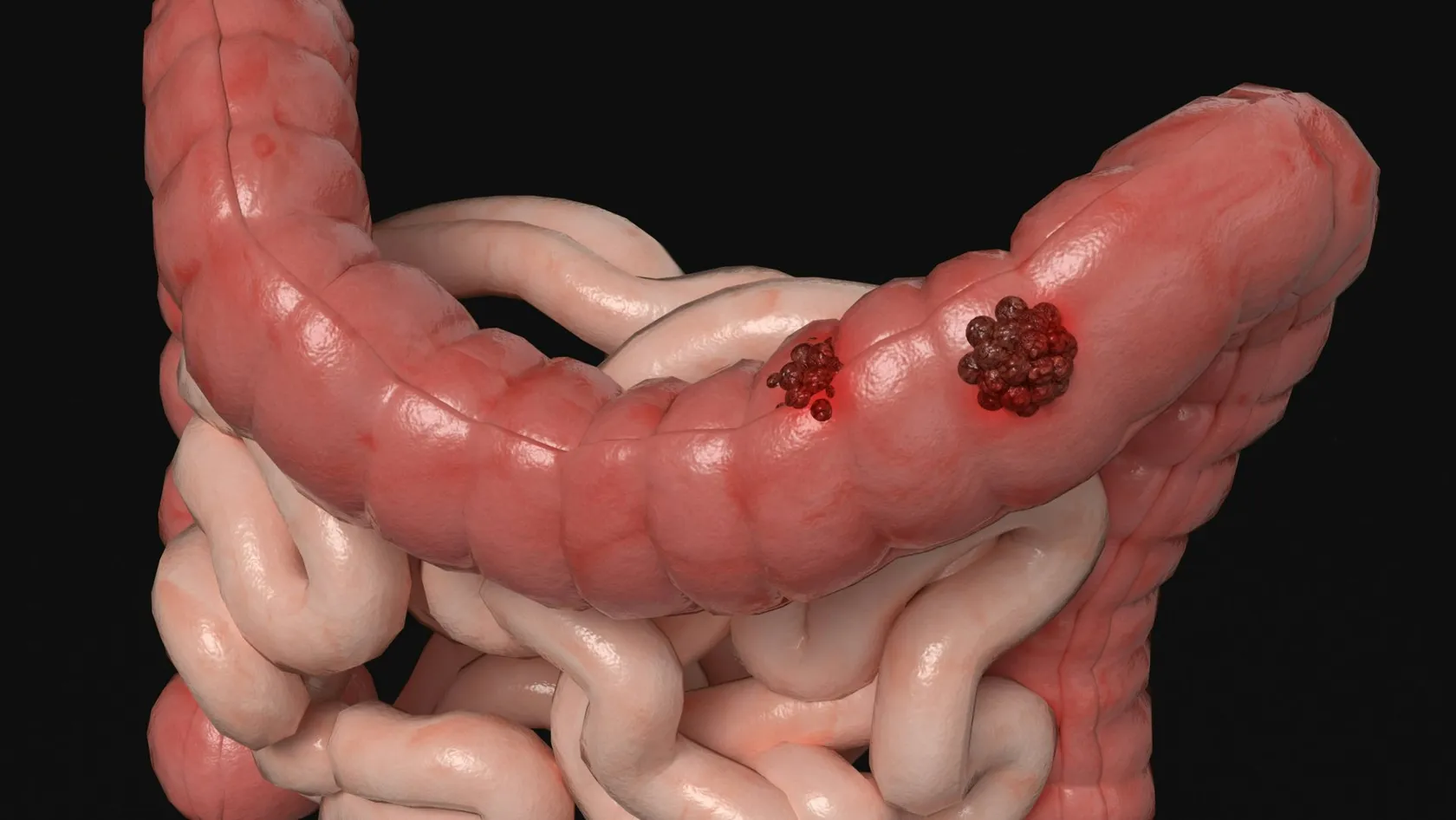
Colon cancer surgery removes the segment of bowel containing the tumor along with the fatty tissue and lymph nodes that drain it, then joins the two cut ends back together. That description covers almost every operation done for this disease. Four decisions sit underneath it, and they are answered in this order.
Diagnosis to operating room
Five things happen between the biopsy result and the anesthetic, and knowing the sequence tells you where you are in it.
Keyhole or open
Few questions in surgery have been settled as thoroughly as this one. When keyhole colon surgery appeared, the fear was that it would compromise the cancer operation, and three large randomized trials were run to find out. An American trial randomized 872 patients across 48 institutions and found recurrence at three years of 16 percent after keyhole surgery against 18 percent after open, with a hazard ratio of 0.86, and three year survival of 86 against 85 percent. Hospital stay was five days against six.
The European counterpart randomized 1,248 patients and reported blood loss of 100 against 175 milliliters, with the keyhole operation taking thirty minutes longer and the number of lymph nodes retrieved no different, which is the measure that most directly reflects whether the cancer operation itself was compromised. At a median follow-up of 53 months, disease-free survival at three years was 74.2 percent against 76.2 percent and overall survival 81.8 against 84.2 percent. Its authors noted that formal non-inferiority was not quite met, because the upper bound of the confidence interval slightly exceeded the margin they had set in advance, while judging the difference clinically acceptable and recommending the technique in experienced hands. The British trial covering both colon and rectal cancer followed 794 patients for a median of nearly five and a half years and found no significant difference in overall or disease-free survival, which is a third independent randomized answer to the same question and the reason surgeons now treat the argument as closed.
Robotic surgery has far less evidence behind it. The only randomized comparison this page could find in colon cancer covered 71 patients having right-sided operations at a single center, where five year disease-free survival was 77.4 percent robotic against 83.6 percent laparoscopic, a difference that fell well short of statistical significance in a trial of that size. The robotic operation took 195 minutes against 129 and cost more. That is not evidence against the robot. It is an accurate description of how thin the evidence for it currently is in this particular disease, and anybody presenting robotic colon surgery as proven to be better is going beyond what has been shown.
The conversion finding
One result from those trials deserves separating out, because it is the only thing in this comparison that changed how surgeons behave. In the British trial, 29 percent of the patients started on keyhole surgery were converted to an open operation partway through. Ten years later, the long-term analysis looked at what happened to those patients.
In colon cancer, being converted from keyhole to open surgery during the operation was associated with worse overall survival at a hazard ratio of 2.28 and worse disease-free survival at 2.20. Starting open was fine. Starting keyhole and having to change was not.
Read that carefully, because it is easy to misread as an argument against keyhole surgery, when the likeliest explanation is that the patients who get converted are the ones with the most difficult tumors, and difficult tumors do worse whichever way they are approached. What it means practically is that the decision about which approach to use should be made honestly at the start, with the anatomy and the body habitus and the size of the tumor all weighed before the first incision instead of discovered halfway through. A surgeon who converts occasionally is a surgeon who is selecting properly. A unit that claims never to convert is either operating on very easy cases or is not telling you.
How much comes out
Once the approach is settled, the real surgical argument is about how radical the lymph node clearance should be. It has recently been tested properly for the first time.
The operation itself
Two to three hours, four or five small cuts, and one slightly larger one to lift the specimen out.
The join and the leak
One complication dominates this operation, and unusually it appears to affect not only your recovery but your cancer outcome.
Chemotherapy, and when
For colon cancer the traditional order is surgery first and drugs afterwards. Both halves of that have been questioned by good trials in the last few years.
Six weeks of treatment before the operation
An international trial randomized 1,053 patients with operable colon cancer either to six weeks of chemotherapy before surgery followed by eighteen weeks afterwards, or to twenty-four weeks entirely afterwards. Ninety-six percent of those assigned to have it first were able to start and 87 percent completed it, and complete removal of the tumor at operation was then achieved in 94 percent of them against 89 percent of the patients who went straight to surgery. Residual or recurrent disease within two years occurred in 16.9 percent against 21.5 percent, a rate ratio of 0.72. Four percent of the patients treated first developed obstructive symptoms that required their surgery to be brought forward, which is the real risk of this approach. Little benefit appeared in tumors with the mismatch repair deficient subtype, which is why that test belongs at the beginning. Adding a targeted antibody drug to those six weeks changed nothing at all, a useful reminder that more treatment before surgery and better treatment before surgery are separate questions.
Three months afterwards instead of six
Six trials pooled 12,834 patients to ask whether three months of treatment is as good as six, because the drug involved causes cumulative nerve damage that in a proportion of people never fully resolves. Across everybody, three months failed to be confirmed as non-inferior, with a hazard ratio of 1.07, and the answer then split by regimen and by risk, with one of the two common regimens non-inferior at three months and the other falling short of it. In lower risk disease, three year disease-free survival was 83.1 against 83.3 percent and three months was enough. In higher risk disease it was 64.4 against 62.7 percent and six months did better. That is an individualized answer instead of a rule, it depends entirely on what your pathology report says about the depth of invasion and the number of involved lymph nodes, and it is a conversation worth having with that report open in front of both of you.
The trials that moved practice
Six trials account for most of what has changed in this disease in twenty years. The table is a map of them, so that when a doctor mentions one you know which question it answered.
This table scrolls sideways on a narrow screen. Swipe or drag to see every column.
| The question | What the trial found | What it means for you |
|---|---|---|
| Is keyhole surgery safe for cancer | In 872 patients, three year recurrence 16 against 18 percent and survival 86 against 85 percent, with a shorter stay. | Settled. Keyhole is the default where the tumor and the surgeon allow it. |
| Should the node clearance be more radical | In 995 patients, three year disease-free survival 86.1 against 81.9 percent, which fell short of statistical significance, and no difference at five years overall. | A standard clearance is enough for most people. The debate now concerns node-positive disease specifically. |
| Should chemotherapy come first | In 1,053 patients, residual or recurrent disease at two years in 16.9 against 21.5 percent, with more complete removals. | Worth asking about for locally advanced disease. Four percent needed their surgery brought forward. |
| Three months of chemotherapy or six | Across 12,834 patients, three months sufficed in lower risk disease and six was better in higher risk disease. | Your pathology report decides this, and the trade is against permanent nerve damage. |
| Can a blood test decide who needs chemotherapy | In 455 patients with stage two disease, chemotherapy use fell from 28 to 15 percent with no loss of recurrence-free survival. | Available in some centers and not others. Worth asking whether it is offered. |
| Does intensive follow-up save lives | In 2,506 patients, five year mortality was 13.0 against 14.1 percent between more and less frequent testing, with no significant difference. | More scans do not straightforwardly mean better outcomes, which is worth knowing before paying for them. |
A blood test that decides
The hardest conversation in stage two colon cancer has always been about chemotherapy that most patients do not need. The disease is cured by surgery alone in the great majority, but a minority relapse, and until recently nobody could tell which. A trial randomized 455 patients to have that decision made by a blood test looking for fragments of tumor DNA at four or seven weeks after the operation, or by the standard clinical judgment.
Chemotherapy was given to 15 percent of the blood-test group and 28 percent of the standard group. Recurrence-free survival at two years was 93.5 against 92.4 percent, a difference of 1.1 percentage points, meeting the trial's standard for non-inferiority. Roughly half as many people had chemotherapy and they did just as well.
Two qualifications belong with it. Among the patients whose blood test was positive and who were treated on that basis, three year recurrence-free survival was 86.4 percent, against 92.5 percent among those who tested negative and had nothing, so a positive result identifies a higher-risk group instead of a group the chemotherapy rescues completely. And this applies to stage two disease, where the question is whether to treat at all, so ask whether the test is available where you are being treated, because the answer varies enormously between hospitals and it is the sort of thing that goes unmentioned unless somebody asks about it directly.
If the bowel is blocked
A substantial minority of colon cancers announce themselves by obstructing the bowel, and that changes the operation considerably. There is a real choice here even in an emergency.
- A stent can open the bowel first. A metal mesh tube placed through a colonoscope opens the blockage, the crisis passes, and the operation happens days or weeks later as a planned procedure rather than in the middle of the night on an unprepared bowel.
- It roughly halves the chance of a stoma. Pooling the randomized trials, an upfront operation to bring out the bowel end rather than joining it was needed in 39.1 percent of emergency surgery patients against 23.4 percent of those stented first, a relative risk of 0.61. Successful joining of the two ends was achieved in 69.75 percent against 55.07 percent.
- And it reduces complications. Overall complications after surgery occurred in 32.74 percent of the stented group against 48.25 percent of those operated on immediately, a relative risk of 0.61. Mortality did not differ significantly between the two approaches, at a relative risk of 1.06.
- What it does not do is improve the cancer outcome. Recurrence and long-term survival did not differ significantly between the two, on the limited follow-up available from those trials. The case for stenting rests on avoiding a stoma and a complication, and it stops there.
- It is not always possible. A stent has to be passed across the blockage and that fails in a proportion of attempts, and it suits a left-sided obstruction better than a right-sided one. Ask whether it is being considered and, if the answer is no, ask why in your case.
Stomas
Stomas frighten patients more than anything else about this operation, and the reassurance usually offered is too glib. Four things are true at once.
- Most planned colon operations do not involve one. Where the operation is elective, the bowel is prepared and the patient is stable, the two ends are joined and nothing is brought out to the skin. That is the ordinary course of events and it is worth saying plainly.
- Emergencies are different. In the pooled randomized data, an operation bringing out the bowel end was needed in 39.1 percent of patients operated on immediately for an obstruction. That is the single strongest argument for the stent discussed above.
- Temporary does not always mean temporary. Among 155 Dutch patients who had an emergency resection for an obstructing left-sided cancer with a join protected by a temporary stoma, 32.9 percent still had that stoma after a median of more than four years. The word temporary is doing a lot of work in most consultations.
- And what predicts it is known. In that study, a low hemoglobin carried odds of 4.79 for the stoma never being reversed, poor kidney function 4.64, and disease that had already spread 6.12. Those are the patients who should hear the word temporary with a qualification attached, and asking directly where you sit on that list is reasonable.
Recovery and flying home
Recovery from bowel surgery has been studied more carefully than recovery from almost any other operation, and structured programs have measurably changed it. Pooling 16 randomized trials covering 2,376 patients, a formal recovery program reduced overall complications at a relative risk of 0.60 and shortened hospital stay by an average of 2.28 days without increasing readmissions.
- Hospital. Four to six nights after a keyhole operation and longer after an open one. The trials that established the keyhole approach reported five days against six, and modern recovery programs have shortened both.
- Eating and moving. Both start early and deliberately. Sitting out of bed on the day of surgery, drinking the same evening, and eating within a day or two are part of the protocol rather than signs of exceptional progress.
- The bowels waking up. The slowest part. Wind before stool, and several days is normal. Persistent vomiting and a swelling abdomen after the fourth day is a different matter and needs assessing.
- Flying. Generally cleared at around ten to fourteen days after a keyhole operation, later after an open one, and only once the pathology report is in your hands. A leak typically declares itself between the third and seventh day, which is the reason for those numbers rather than caution for its own sake.
- Back to ordinary life. Desk work at around three weeks after a keyhole operation, physical work at six to eight. No heavy lifting for six weeks because of the specimen extraction wound, which is the one most likely to develop a hernia later.
- Get in touch about. A heart rate that climbs and stays up, pain that worsens after the third day, a fever, vomiting that will not stop, or a wound that reddens and discharges. The first of those is the one that matters most and it needs to be seen the same day.
What can go wrong
Colon resection is major abdominal surgery and the list is longer than for most operations on this site. Reading it is not the same as expecting it.
On a narrow screen the table scrolls sideways instead of shrinking. Swipe or drag it to see every column.
| Problem | When it appears | What is done |
|---|---|---|
| A leak at the join | Usually days three to seven, and the serious one. | Drainage, antibiotics and often a further operation with a stoma. A rising heart rate is the earliest sign. |
| The bowel refusing to wake up | The first week, and common. | A tube through the nose, fluids by drip, and time. Combined preparation with oral antibiotics reduced it at an odds ratio of 0.71. |
| Wound infection | The first fortnight, most often at the extraction wound. | Antibiotics and sometimes opening the wound to drain it. Preparation with oral antibiotics carried an odds ratio of 0.40 for this. |
| Clots in the legs or lungs | The first weeks. Cancer surgery raises this risk considerably. | Blood thinning injections often continue for weeks after discharge. A long flight taken too early is a genuine risk factor. |
| Bowel obstruction from adhesions | Months to years afterwards, and a lifelong small risk after any abdominal operation. | Often settles with rest and fluids. Sometimes surgery. Keyhole surgery is thought to leave fewer adhesions than open. |
| Hernia at the extraction wound | Months to years, and commoner in larger patients. | Repair if it causes symptoms. Avoiding heavy lifting for six weeks is the part you control. |
| Looser or more frequent stools | From the start, and often permanent to some degree. | Diet, bulking agents and time. It is more pronounced after right-sided operations, which is covered further down. |
Follow-up afterwards
Two large randomized trials asked whether watching people more closely after surgery makes them live longer, and their answers are more sobering than most follow-up schedules imply.
Swipe or drag the table sideways on a narrow screen to see every column. It scrolls sideways rather than shrinking.
| The trial | What it compared | What it found |
|---|---|---|
| 1,202 patients across 39 hospitals | A tumor marker blood test, scans, both, or minimal follow-up, over a mean of 4.4 years. | Recurrence treated with curative intent rose from 2.3 percent with minimal follow-up to between 6.6 and 8.0 percent with testing, but overall mortality did not differ significantly. |
| 2,506 patients across 24 centers | Scans and blood tests at five time points against two, over five years. | Five year overall mortality 13.0 against 14.1 percent and cancer-specific mortality 10.6 against 11.4 percent. Neither difference was significant. |
| Taken together | More testing finds more recurrences at a stage where they can be operated on. | It has not been shown to translate into more people surviving. The authors of the first trial said any advantage, if real, is likely small. |
| What still belongs in any schedule | A colonoscopy about a year after surgery, then at intervals. | This looks for new cancers in the remaining colon rather than for recurrence, which is a different question and one where surveillance clearly works. |
| How to read all of this | As permission to have a proportionate schedule rather than the most intensive one available. | And as a reason to ask what each scan is looking for and what would be done differently if it found something. |
If it has already spread
Colon cancer that has spread to the liver is not automatically incurable, which is the single most important thing to know about it. Where the liver disease can be removed completely, surgery is done with the intention of cure, and the question then becomes whether to remove the colon and the liver at the same operation or in two. Pooling 23 studies covering 4,862 patients found no significant difference between the two approaches in total complications, complications of the bowel or the liver specifically, perioperative death, five year disease-free survival or five year overall survival. Doing both at once meant significantly less blood loss and a total hospital stay shorter by 5.43 days. Almost all of that evidence is observational, with a single randomized trial among the 23, which the authors flagged themselves. What that means in practice is that the choice between one operation and two usually turns on your fitness, on the size of the liver resection being contemplated and on the experience of the team, and it is a conversation to have with a liver surgeon actually in the room.
Spread to the lining of the abdominal cavity is a different situation and a more difficult one, and for years the standard at specialist centers was to remove every visible deposit and then wash the abdomen with heated chemotherapy. A French trial randomized 265 patients who had already had a complete removal to receive that heated wash or not, and followed them for a median of 63.8 months. Median overall survival was 41.7 months with the heated chemotherapy and 41.2 months without it, a hazard ratio of exactly 1.00, while serious adverse events at sixty days were significantly more common in the group that received it, at 26 against 15 percent. Its investigators concluded that the surgery itself should be the cornerstone of treatment and that the heated wash added nothing to it. That is a rare thing in medicine, a large trial that removed a treatment instead of adding one, and it is worth knowing about if the wash is offered to you.
Two things nobody mentions
Both of these come up months later, and both are easier to live with when somebody has said them out loud beforehand.
Your bowels behave differently, especially on the right
Swedish investigators surveyed 517 patients a year after a segmental colon resection and found significant bowel dysfunction in 20.6 percent of those who had a right-sided operation against 15.6 percent of those who had a left-sided one, an odds ratio of 1.45 that held after adjusting for age and sex. It correlated with worse quality of life. The right colon absorbs water, so removing it means looser and more frequent stools for a good number of people, sometimes permanently. The anatomy explains it. Nobody made a mistake, it settles over the first year in most people, and knowing about it in advance changes how frightening it is when it happens. Ask before the operation which side yours is on and what that usually means for the first year, because the answer is concrete, the surgeon will know it, and it is much easier to hear at a clinic appointment than to work out alone at home.
Some early cancers never needed an operation
Danish investigators followed 1,749 patients with the earliest invasive stage of colon cancer through their national registry. Fifty-eight percent had it removed at colonoscopy first, 31 percent of those removals had cancer at the edge of the specimen, and among the patients who then went on to a colectomy, 58.3 percent turned out to have no cancer left in the removed bowel at all. Lymph node spread was found in 11.5 percent overall, and it was no more likely in those with a recognized risk feature than in those without, at 10.6 against 8.9 percent, which undermines the basis on which these decisions are currently made. The authors concluded that current tools for deciding which of these patients need a colectomy are insufficient, and that is an unusually direct admission to find in a surgical journal. So if your cancer was found and removed at colonoscopy and an operation is being recommended afterwards, understand that decision in detail before agreeing to it, and ask specifically what the estimated chance of lymph node involvement is in your case and how that estimate was arrived at.
Questions to ask
Start with sequence rather than technique. Ask whether chemotherapy before surgery has been considered and why it was or was not chosen, since a randomized trial of 1,053 patients found residual or recurrent disease at two years of 16.9 against 21.5 percent with that approach. Ask whether the tumor has been tested for mismatch repair, because that result changes the answer. If your bowel is blocked, ask whether a stent is possible, given that it roughly halved the chance of an upfront stoma in the pooled trials.
Then ask about the operation and afterwards. Whether it is planned as keyhole and what would prompt a conversion. Whether oral antibiotics are part of the bowel preparation, since combining them with mechanical preparation was associated with an odds ratio of 0.57 for a leak and 0.40 for wound infection. Whether a stoma is expected and what would make one necessary. Then, once the pathology report exists, how many lymph nodes were examined, whether it reached twelve, and whether the blood test for tumor DNA is available to help decide about chemotherapy. And ask what the follow-up schedule is and what each part of it is looking for, because two randomized trials found more testing did not translate into more people surviving.
Reading a quote
No figure appears on this page, and cancer treatment is a sequence rather than an event, so a number quoted for the operation alone answers a smaller question than the one you are asking. Seven things belong in writing. Which operation the quote covers, named as a right hemicolectomy, a left hemicolectomy or a sigmoid resection rather than as bowel surgery. Whether the staging scans and the colonoscopy are inside the number or expected to have been done already. Whether the pathology examination of the whole specimen is included, which is the report every later decision depends on. How many nights are budgeted and what an extra night costs, since a leak declares itself in the first week and extends a stay considerably. Whether the operation becoming open partway through changes the price. Whether stoma supplies and stoma nurse teaching are included if one is needed. And whether chemotherapy afterwards is inside the quote, alongside it, or expected to happen at home.
Your own file moves the total more here than in most operations. Which segment is being removed, whether the operation is elective or an emergency, whether the liver is being operated on at the same sitting, and whether a stoma is part of the plan are the four variables that decide the number.
Packages published by Turkish hospitals and medical travel agencies for colon cancer surgery generally include the airport transfer, pre-operative testing, the surgeon and anesthesia fees, the operating room, the planned nights, the pathology, an interpreter and the review before departure. They generally exclude flights, insurance, chemotherapy, treatment of a complication, extra nights, stoma supplies, gene or tumor DNA testing and any follow-up beyond the first weeks. Read what arrives against both lists.
Coming to Istanbul
Fourteen to eighteen days covers assessment, the operation and the pathology report for somebody arriving with the staging complete, and that is longer than for most operations on this site for two specific reasons. A leak at the join typically declares itself between the third and seventh day, and the pathology report that decides whether you need chemotherapy takes one to two weeks. Leaving before either of those is settled means leaving at the wrong moment. Send the colonoscopy report with the biopsy result, the staging scans of chest, abdomen and pelvis with their written reports, the mismatch repair result if it has been done, your recent blood results including hemoglobin and the tumor marker, your medication list, and details of any previous abdominal surgery. If a colonoscopy could not be completed because the tumor blocked the scope, say so in the first message, because that single fact changes what has to happen and in what order, and it is exactly the sort of detail that gets lost inside a forwarded radiology report.
Say in your first message whether your bowel is currently obstructing, or partly obstructing, and whether you have been vomiting or unable to pass wind, because that is the one piece of information that changes everything about the timing and it deserves stating plainly. Say too who will give any chemotherapy afterwards and where, because that is usually done at home and the handover is the part of cross-border care most likely to fail. Only one coordinator holds your file from the first message to discharge, and the international patients team works in English, Arabic, French, Russian, Serbian, Romanian and Spanish, with other languages arranged on request. Ask in your first message if you would prefer a female physician. Someone can stay overnight with you on the ward, where the rooms carry a companion bed. Meals from the hospital kitchen cover halal, vegetarian and diabetic diets and a prayer room is available. The international patients office books accommodation for both of you, arranges the airport transfer and daily transport, and prepares the appointment confirmation and the invitation letter naming the hospital and your treating doctor for a medical visa application, around ten days before travel.
Take home the pathology report itself and not a summary. It should give the tumor type and grade, how deeply it invaded, the margins, the number of lymph nodes examined and the number containing cancer, whether cancer was seen in small vessels, and the mismatch repair result. Every one of those decides something about the next year. Take the operation note as well, which should name the segment removed and how the join was made, and take the multidisciplinary meeting conclusion with its recommendation about chemotherapy. Address the file to a medical oncologist near you and book that appointment before you fly, because the interval between surgery and chemotherapy is where cross-border care most often goes wrong. Once you are back home, your coordinator stays reachable on the same WhatsApp number, so a question about a wound or a line in the report reaches somebody with your notes in front of them.
Colon cancer surgery FAQ
Is keyhole surgery as safe as open surgery for cancer?
Will I need a stoma?
How many lymph nodes should be removed?
Should I have a more radical node clearance?
Can chemotherapy come before the operation?
Three months of chemotherapy or six?
Is there a blood test that can tell me if I need chemotherapy?
How long can I safely wait for surgery?
My cancer has spread to the liver. Is surgery still worth it?
How long should I stay in Turkey?
References
- Nelson H, Sargent DJ, Wieand HS, Fleshman J, Anvari M, Stryker SJ, Beart RW, Hellinger M, Flanagan R, Peters W, Ota D. A comparison of laparoscopically assisted and open colectomy for colon cancer. The New England Journal of Medicine. 2004;350(20):2050-2059.
- Veldkamp R, Kuhry E, Hop WCJ, Jeekel J, Kazemier G, Bonjer HJ, Haglind E, Pahlman L, Cuesta MA, Msika S, Morino M, Lacy AM. Laparoscopic surgery versus open surgery for colon cancer, short-term outcomes of a randomized trial. The Lancet Oncology. 2005;6(7):477-484.
- Buunen M, Veldkamp R, Hop WCJ, Kuhry E, Jeekel J, Haglind E, Pahlman L, Cuesta MA, Msika S, Morino M, Lacy A, Bonjer HJ. Survival after laparoscopic surgery versus open surgery for colon cancer, long-term outcome of a randomized clinical trial. The Lancet Oncology. 2009;10(1):44-52.
- Guillou PJ, Quirke P, Thorpe H, Walker J, Jayne DG, Smith AMH, Heath RM, Brown JM. Short-term endpoints of conventional versus laparoscopic-assisted surgery in patients with colorectal cancer (MRC CLASICC trial), multicenter, randomized controlled trial. The Lancet. 2005;365(9472):1718-1726.
- Green BL, Marshall HC, Collinson F, Quirke P, Guillou P, Jayne DG, Brown JM. Long-term follow-up of the Medical Research Council CLASICC trial of conventional versus laparoscopically assisted resection in colorectal cancer. British Journal of Surgery. 2013;100(1):75-82.
- Park JS, Kang H, Park SY, Kim HJ, Woo IT, Park IK, Choi GS. Long-term oncologic outcome after robotic versus laparoscopic right colectomy, a prospective randomized study. Surgical Endoscopy. 2019;33(9):2975-2981.
- Lu J, Xing J, Zang L, Zhang C, Xu L, Zhang G, He Z, Sun Y, Feng Y, Du X, Hu S, Chi P, Huang Y, Wang Z, Zhong M, Wu A, Zhu A, Li F, Xu J, Kang L, Suo J, Deng H, Ye Y, Ding K, Xu T, Zhang Y, Zhang Z, Zheng M, Su X, Xiao Y. Extent of lymphadenectomy for surgical management of right-sided colon cancer, the randomized phase III RELARC trial. Journal of Clinical Oncology. 2024;42(33):3957-3966.
- Li K, Li H, Wu A, Zang L, Zhang G, Xu L, Lu J, Xing J, Feng B, Sun Y, Du X, Chi P, Xu J, Wang Z, Zhang Y, Zhang Z, Zheng M, Su X, Xiao Y. Long-term survival on extent of lymphadenectomy for right-sided colon cancer, five-year follow-up results of a randomized controlled trial. Annals of Surgery. 2025.
- Chang GJ, Rodriguez-Bigas MA, Skibber JM, Moyer VA. Lymph node evaluation and survival after curative resection of colon cancer, systematic review. Journal of the National Cancer Institute. 2007;99(6):433-441.
- Ha GW, Kim JH, Lee MR. Oncologic impact of anastomotic leakage following colorectal cancer surgery, a systematic review and meta-analysis. Annals of Surgical Oncology. 2017;24(11):3289-3299.
- Jafari MD, Wexner SD, Martz JE, McLemore EC, Margolin DA, Sherwinter DA, Lee SW, Senagore AJ, Phelan MJ, Stamos MJ. Perfusion assessment in laparoscopic left-sided and anterior resection (PILLAR II), a multi-institutional study. Journal of the American College of Surgeons. 2015;220(1):82-92.
- Kiran RP, Murray ACA, Chiuzan C, Estrada D, Forde K. Combined preoperative mechanical bowel preparation with oral antibiotics significantly reduces surgical site infection, anastomotic leak and ileus after colorectal surgery. Annals of Surgery. 2015;262(3):416-425.
- Greco M, Capretti G, Beretta L, Gemma M, Pecorelli N, Braga M. Enhanced recovery program in colorectal surgery, a meta-analysis of randomized controlled trials. World Journal of Surgery. 2014;38(6):1531-1541.
- Morton D, Seymour M, Magill L, Handley K, Glasbey J, Glimelius B, Palmer A, Seligmann J, Laurberg S, Murakami K, West N, Quirke P, Gray R. Preoperative chemotherapy for operable colon cancer, mature results of an international randomized controlled trial. Journal of Clinical Oncology. 2023;41(8):1541-1552.
- Grothey A, Sobrero AF, Shields AF, Yoshino T, Paul J, Taieb J, Souglakos J, Shi Q, Kerr R, Labianca R, Meyerhardt JA, Vernerey D, Yamanaka T, Boukovinas I, Meyers JP, Renfro LA, Niedzwiecki D, Watanabe T, Torri V, Saunders M, Sargent DJ, Andre T, Iveson T. Duration of adjuvant chemotherapy for stage III colon cancer. The New England Journal of Medicine. 2018;378(13):1177-1188.
- Tie J, Cohen JD, Lahouel K, Lo SN, Wang Y, Kosmider S, Wong R, Shapiro J, Lee M, Harris S, Khattak A, Burge M, Harris M, Lynam J, Nott L, Day F, Hayes T, McLachlan SA, Lee B, Ptak J, Silliman N, Dobbyn L, Popoli M, Hruban R, Lennon AM, Papadopoulos N, Kinzler KW, Vogelstein B, Tomasetti C, Gibbs P. Circulating tumor DNA analysis guiding adjuvant therapy in stage II colon cancer. The New England Journal of Medicine. 2022;386(24):2261-2272.
- Cirocchi R, Arezzo A, Sapienza P, Crocetti D, Cavaliere D, Solaini L, Ercolani G, Sterpetti AV, Mingoli A, Fiori E. Current status of the self-expandable metal stent as a bridge to surgery versus emergency surgery in colorectal cancer, results from an updated systematic review and meta-analysis of the literature. Medicina. 2021;57(3):268.
- van Ommeren-Olijve SJ, Burbach JPM, Furnee EJB. Risk factors for non-closure of an intended temporary defunctioning stoma after emergency resection of left-sided obstructive colon cancer. International Journal of Colorectal Disease. 2020;35(6):1087-1093.
- Flemming JA, Nanji S, Wei X, Webber C, Groome P, Booth CM. Association between the time to surgery and survival among patients with colon cancer, a population-based study. European Journal of Surgical Oncology. 2017;43(8):1447-1455.
- Sarjanoja E, Klintrup K, Ohtonen P, Kauppila JH. Annual hospital volume and colorectal cancer survival in a population-based nationwide cohort study in Finland. European Journal of Surgical Oncology. 2022;48(7):1650-1655.
- Carli F, Bousquet-Dion G, Awasthi R, Elsherbini N, Liberman S, Boutros M, Stein B, Charlebois P, Ghitulescu G, Morin N, Jagoe T, Scheede-Bergdahl C, Minnella EM, Fiore JF. Effect of multimodal prehabilitation versus postoperative rehabilitation on 30-day postoperative complications for frail patients undergoing resection of colorectal cancer, a randomized clinical trial. JAMA Surgery. 2020;155(3):233-242.
- Ebbehoj AL, Jorgensen LN, Smith HG, Krarup PM. Current management of T1 colon cancer in Denmark, a nationwide cohort study. Annals of Surgery. 2025;282(6):1110-1117.
- Wang SH, Song L, Tang JY, Sun WP, Li Z. Safety and long-term prognosis of simultaneous versus staged resection in synchronous colorectal cancer with liver metastasis, a systematic review and meta-analysis. European Journal of Medical Research. 2022;27(1):297.
- Primrose JN, Perera R, Gray A, Rose P, Fuller A, Corkhill A, George S, Mant D. Effect of 3 to 5 years of scheduled carcinoembryonic antigen and computed tomography follow-up to detect recurrence of colorectal cancer, the FACS randomized clinical trial. JAMA. 2014;311(3):263-270.
- Wille-Jorgensen P, Syk I, Smedh K, Laurberg S, Nielsen DT, Petersen SH, Renehan AG, Horvath-Puho E, Pahlman L, Sorensen HT. Effect of more versus less frequent follow-up testing on overall and colorectal cancer-specific mortality in patients with stage II or III colorectal cancer, the COLOFOL randomized clinical trial. JAMA. 2018;319(20):2095-2103.
- Buchli C, Martling A, Sjovall A. Low anterior resection syndrome after right and left-sided resections for colonic cancer. BJS Open. 2019;3(3):387-394.
- Quenet F, Elias D, Roca L, Goere D, Ghouti L, Pocard M, Facy O, Arvieux C, Lorimier G, Pezet D, Marchal F, Loi V, Meeus P, Juzyna B, de Forges H, Paineau J, Glehen O. Cytoreductive surgery plus hyperthermic intraperitoneal chemotherapy versus cytoreductive surgery alone for colorectal peritoneal metastases (PRODIGE 7), a multicenter, randomized, open-label, phase 3 trial. The Lancet Oncology. 2021;22(2):256-266.
Editor's note
Written by the Biruni Hospital medical editorial team. Reviewed by Prof. Dr. Cemalettin ERTEKİN, General Surgery.
Medically reviewed by

Prof. Dr. Cemalettin ERTEKİN
General Surgery
Related Treatments
View All
Bariatric Surgery - Weight Loss Surgery
Followed for 24 years, people who had weight loss surgery lived a median of 3.0 years longer than those who did not, and 5.5 years less than the general population. Both numbers come from the same study.
Breast Cancer Surgery
Across 202,934 women with the same early disease, the proportion who kept the breast ran from 58.5 to 75.5 percent depending on the region. Breast cancer surgery is not one decision. It is four, and this page maps them.

Breast Conserving Surgery
Two hundred and four women with two or three cancers in the same breast kept that breast, and recurrence at five years was 3.1 percent. Most of the reasons women are told they cannot keep the breast have quietly stopped being true.

Breast Lump Removal
Of 3,305 people under forty seen at one breast clinic, 29 had cancer. Most lumps are something else, and most of those never need an operation. This page covers how to tell which lump yours is and when removal earns its place.
Central Venous Port Implantation
A port is implanted in half an hour and then kept for years. Almost everything that later goes wrong with it was settled in that half hour, or is settled by how the device is flushed and accessed every week.