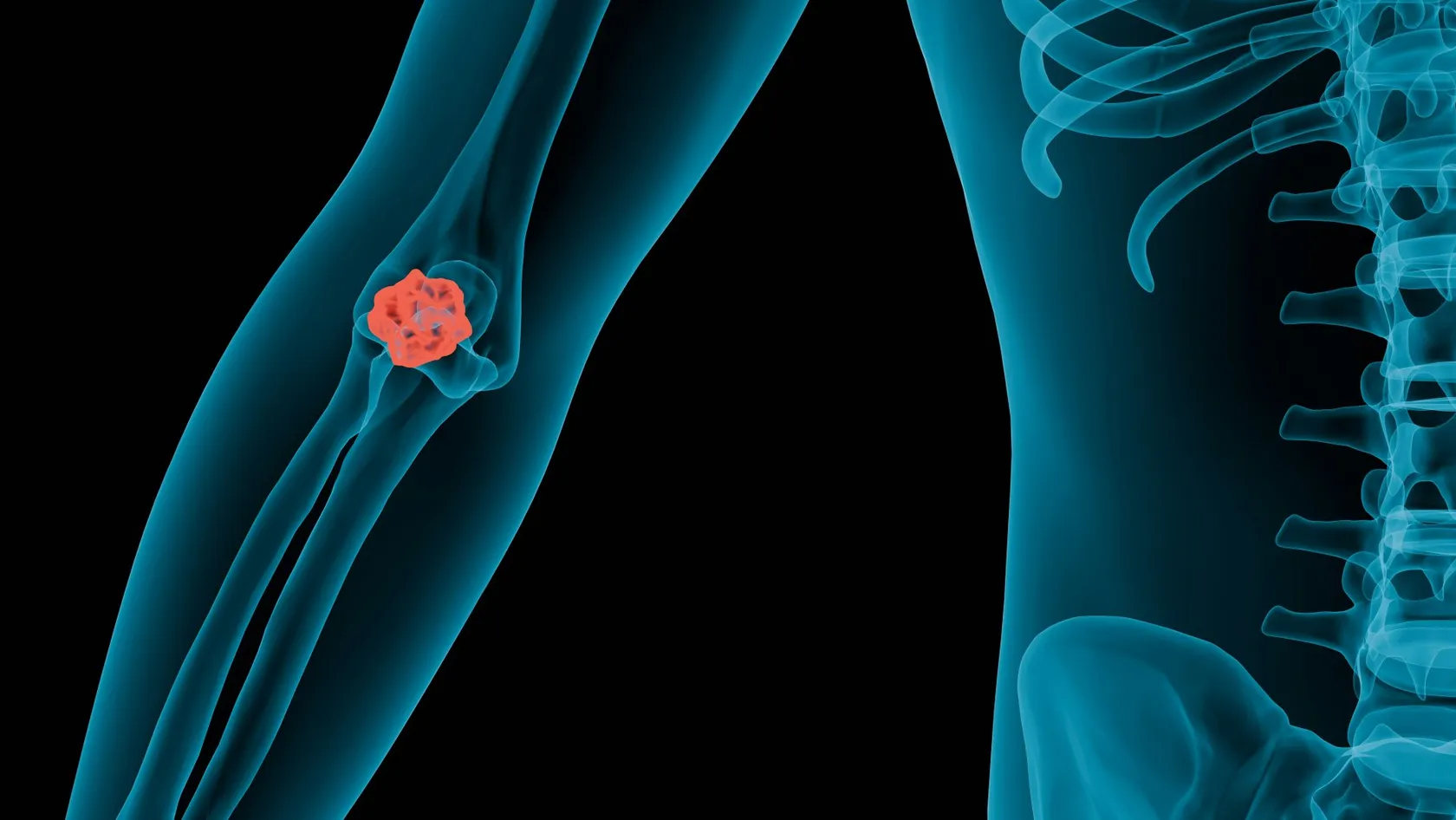
A bone marrow transplant for multiple myeloma means high-dose melphalan followed by the return of your own stem cells. In two large trials it kept the disease under control 14 to 21 months longer than drugs alone, with equal survival. This page explains who is a candidate, each stage from collection to recovery, side effects, maintenance treatment, the choice between early and delayed transplant, and planning from abroad at Biruni Hospital in Istanbul.
About This Department
Myeloma transplant
In two large trials, a stem cell transplant kept multiple myeloma under control 14 to 21 months longer than drug treatment alone. Survival at four to five years was the same either way.
Both halves of that sentence matter to anyone weighing a bone marrow transplant for multiple myeloma. In the French IFM 2009 trial of 700 patients, the median time before the disease progressed was 50 months with a transplant and 36 months without (Attal and colleagues, New England Journal of Medicine, 2017). In the American DETERMINATION trial of 722 patients it was 67.5 months against 46.2 (Richardson and colleagues, New England Journal of Medicine, 2022). Neither trial found a difference in overall survival, largely because patients who skipped the transplant could still have one later. The procedure remains a standard part of first treatment for people fit enough to undergo it. This page explains what it involves, who is suited to it, what it costs the body, and how patients from abroad can plan it at Biruni Hospital in Istanbul.
67.5
Months before progression with transplant in the DETERMINATION trial, against 46.2 without
50
Months before progression with transplant in the IFM 2009 trial, against 36 without
52.8
Months before progression with lenalidomide maintenance after transplant, against 23.5
The name misleads. In myeloma the treatment that does the work is a single very high dose of a chemotherapy drug called melphalan, which kills myeloma cells far more thoroughly than ordinary doses can. The same dose wipes out the healthy bone marrow, which would be fatal if nothing more were done, and so blood stem cells are collected beforehand, frozen, and returned afterward through a drip to rebuild the marrow within two weeks or so. They serve as a rescue. Doctors call the whole procedure high-dose therapy with autologous stem cell transplantation.
Whose cells are used?
Your own, in nearly every case. Autologous means exactly that. No donor is needed and there is no rejection. Transplants from a donor, called allogeneic, carry much higher risk and are rarely used for myeloma.
Is it an operation?
It involves no surgery. The cells are collected from a vein by a machine, much as in blood donation, and returned through a drip. Marrow is no longer taken from the hip bone under anesthesia except in rare circumstances.
Does it cure myeloma?
For most people it does not. It deepens the response to treatment and lengthens the time before the disease returns. Years of good-quality remission are the realistic aim.
Who is a candidate
Fitness decides, more than the birthday. The large trials enrolled adults up to 65, and many centers now transplant selected patients into their early seventies. The hematologist looks at the following.
Heart function on echocardiography, and lung function tests.
Kidney function. Reduced function calls for a lower melphalan dose and is no automatic bar.
Liver tests, and screening for hepatitis and other dormant infections.
General condition, meaning how active you are day to day and what other illnesses you have.
Response to the first months of drug treatment.
Your own wishes, after a frank account of benefit and burden.
What the trials show
Two randomized trials asked the same question a few years apart. Every patient received the same three-drug combination of lenalidomide, bortezomib and dexamethasone, and half also received a transplant.
This table scrolls sideways on a narrow screen. Swipe or drag to see every column.
Transplant against drug treatment alone in newly diagnosed myeloma
Measure
IFM 2009, 700 patients
DETERMINATION, 722 patients
Median time before progression with transplant
50 months
67.5 months
Median time before progression without
36 months
46.2 months
Overall survival
81 and 82 percent at 4 years
80.7 and 79.2 percent at 5 years
Maintenance afterward
Lenalidomide for one year
Lenalidomide until progression
Severe side effects
Low white cells in 92 against 47 percent, infections in 20 against 9 percent
Grade 3 or higher events in 94.2 against 78.2 percent
Why was survival equal?
Patients in the drug-only groups who relapsed could have a transplant then, and many did. New drugs at relapse also work well. The trials therefore compared early transplant with a delayed one more than transplant with none.
In the French trial, no myeloma cells could be detected by sensitive testing in 79 percent of patients after transplant and in 65 percent after drugs alone.
The treatment, stage by stage
From first drug cycle to recovery the process spans some six months. The hospital stay fills only a small part of it.
Induction
Three to six cycles of combination drug treatment, given as injections and tablets in an outpatient clinic, shrink the myeloma before anything else happens. Many international patients receive this stage at home.
Collection
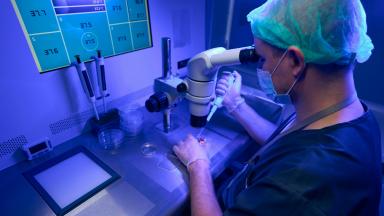
Daily injections of a growth factor for four or five days push stem cells out of the marrow into the blood. Bones ache for a few days. A cell separator then draws blood from one arm, spins out the layer that contains the stem cells and returns everything else through the other arm, in one to three sessions of several hours each during which you lie still, watch a film and feel little beyond a tingling of the lips from the anticoagulant. The laboratory freezes the cells and stores enough for a second transplant should one ever be needed.
High-dose melphalan
After admission a central line goes in, and melphalan runs through it over half an hour. Sucking ice chips before, during and after the infusion protects the mouth, since cold narrows the blood vessels of the lining and less drug reaches it.
Day zero and the wait
A day or two later the thawed cells go back through the line. It feels like a transfusion. Blood counts then fall to almost nothing for a week or more. You spend those days in a single room with filtered air, on antibiotics, transfusions and extra nutrition as needed, feeling tired, nauseated and sore in the mouth and gut, with nurses checking temperature and pulse every few hours because a fever at this point is treated as an emergency. White cells reappear between day ten and day fourteen, first as a trickle on the morning blood count and then, within forty-eight hours, in numbers that let the mouth heal. Discharge follows two to three weeks after admission.
Bring loose clothes, a soft toothbrush, lip balm, music and patience. Fresh flowers, plants and uncooked food stay outside the room while counts are low.
Will I lose my hair?
Yes, some two weeks after melphalan. It grows back within three to six months.
Risks and recovery
Side effects arrive in a fairly fixed order.
Nausea, diarrhea and loss of appetite. Worst in the second week. Modern anti-sickness drugs help a great deal.
Sore mouth and throat. Mouth care and pain relief are routine, and a few patients need feeding through a drip for some days.
Fever while counts are low. Treated at once with antibiotics through the line. In the French trial one in five transplant patients had a serious infection.
Need for blood and platelet transfusions. Common in the second week.
Fatigue. The longest-lasting effect. Energy returns over three to six months.
1
First month at home or nearby
Rest, short walks, careful food hygiene, no crowds, and blood tests once or twice a week.
2
Months two and three
Strength and appetite return. Many people resume desk work part time.
3
Around day 100
Marrow, blood, urine and imaging tests measure the response. Maintenance begins.
Few patients die of the procedure in experienced units, and neither trial found a significant excess of treatment-related deaths in its transplant group. Immunity from childhood vaccines disappears with the old marrow, so the whole series is given again from six months onward.
Maintenance and follow-up
A transplant is followed by long-term low-dose treatment, most often lenalidomide capsules, to hold the remission.
Pooled data from three trials and 1,208 patients showed a median of 52.8 months before progression with lenalidomide maintenance and 23.5 months without it. Overall survival was also longer (McCarthy and colleagues, Journal of Clinical Oncology, 2017).
What maintenance asks of you
You take capsules daily, or for three weeks in every four, for years. Blood is counted every month or two. Lenalidomide can lower white cells and cause rashes, loose stools and tiredness. It raises the risk of blood clots, and a preventive is prescribed. The same pooled analysis found more second cancers among people on maintenance, a small risk that was outweighed by the fall in deaths from myeloma. Patients with high-risk genetic features often receive a second drug alongside, and those who cannot tolerate lenalidomide are switched to an alternative. A hematologist at home supervises all of this perfectly well, provided the drug can be obtained and paid for in your country, and that single practical point deserves a firm answer before you book a flight, because a transplant without maintenance gives up half of its benefit.
Now or later
Because survival was equal in both trials, some patients who respond very well to modern drug combinations choose to collect and freeze their stem cells and keep the transplant in reserve for first relapse. Doctors regard that as a legitimate choice. It buys freedom from the hardest month of treatment for as long as the first remission lasts, and it costs, on average, an earlier relapse and a second course of intensive therapy at an older age, when fitness may have slipped. Doctors lean toward early transplant for people with high-risk disease or an incomplete response to induction, and are more relaxed about delay in those with standard-risk disease and a deep response. Newer four-drug inductions that add an antibody are pushing remission rates higher still, and trials now running will show how much a transplant adds on top of them, a question to which nobody yet holds the answer and on which honest hematologists admit to differing. Collect early in either case. Months of lenalidomide make the harvest harder.
Raise the question with your hematologist. More than one good answer exists.
Coming from abroad
Send the file first. The hematology team reviews diagnosis reports, genetic results, treatment given so far and current blood tests without charge, and replies with a written plan. Many patients receive induction in their own country. Collection and transplant are done in one visit or two, and the plan states the length of stay for each. As a guide, allow a week for collection and five to six weeks for the transplant, a figure that counts both the admission and a period spent close to the hospital afterward while blood counts settle, appetite returns and the legs remember how to climb stairs. Doctors consider you fit to fly when white cells and platelets have reached safe levels without support and no infection is active, and the doctor confirms this in writing. Travel insurance for the journey home, a letter listing your medicines, and the telephone number of a hematologist who has agreed to see you in the first week back complete the preparation.
One coordinator from the international patients office handles arrangements from the first message through discharge, and the same WhatsApp number answers once you are back home. The office works in English, Arabic, French, Russian, Serbian, Romanian and Spanish, books interpreters for other languages, and arranges the invitation letter for a visa, airport transfers, daily transport and accommodation near the hospital. Bring a relative. The hospital kitchen prepares halal, vegetarian and diabetic meals and adapts them to the low-microbe diet that transplant patients follow while their white cells are recovering, which means thoroughly cooked food, peeled fruit and nothing from an open buffet. A prayer room is on site, and a request for a female physician is met wherever the rota allows. Radiotherapy for painful bone lesions is available on the same site.
Cost
The written estimate follows the review of your file. Hospitals in this market quote stem cell collection and the transplant admission as packages with a stated number of days, and itemize transfusions, extra nights and maintenance drugs separately.
Confirm which applies to you. Check what your insurer covers abroad.
References
Attal M, Lauwers-Cances V, Hulin C, et al. Lenalidomide, bortezomib, and dexamethasone with transplantation for myeloma. N Engl J Med. 2017;376(14):1311-1320.
Richardson PG, Jacobus SJ, Weller EA, et al. Triplet therapy, transplantation, and maintenance until progression in myeloma. N Engl J Med. 2022;387(2):132-147.
McCarthy PL, Holstein SA, Petrucci MT, et al. Lenalidomide maintenance after autologous stem-cell transplantation in newly diagnosed multiple myeloma, a meta-analysis. J Clin Oncol. 2017;35(29):3279-3289.
Editor's note
Written by the Biruni Hospital medical editorial team. Reviewed by Gökhan Özgür, Internal Medicine (Hematology).