
Sleeve Gastrectomy - Stomach Sleeve Surgery
Fifty people scoped more than eight years after a sleeve had inflammation of the esophagus in 46 percent of cases, and in four out of ten the esophagus looked normal while the biopsy did not. This is a good operation with quiet consequences.
About This Department
Fifty people who had a sleeve more than eight years earlier agreed to be scoped whether or not they had symptoms. Inflammation of the esophagus was found in 46 percent of them. In four out of every ten patients the endoscopist looked at a normal-looking esophagus and the biopsy came back abnormal anyway, and that single finding is the argument for everything on this page, which is that the sleeve is a very good operation whose consequences are quiet.
Free consultation
Ask for an endoscopy before anybody agrees to a sleeve
Existing reflux and a hiatus hernia are the two findings that change which operation you should have, and neither can be ruled out by asking you questions. Send your height and weight with the date they were measured, a list of the conditions you are treated for, your medication list with the doses, any endoscopy report you already hold, details of any previous abdominal surgery, and a note of whether you get heartburn and how often. A surgeon and a dietitian review the file together and tell you whether a sleeve is the right operation for your particular stomach, what it would achieve over ten years, and who would be checking on you in that time. No fee, no obligation, and a coordinator replies in your own language, usually within the same working day.
What it achieves, long term
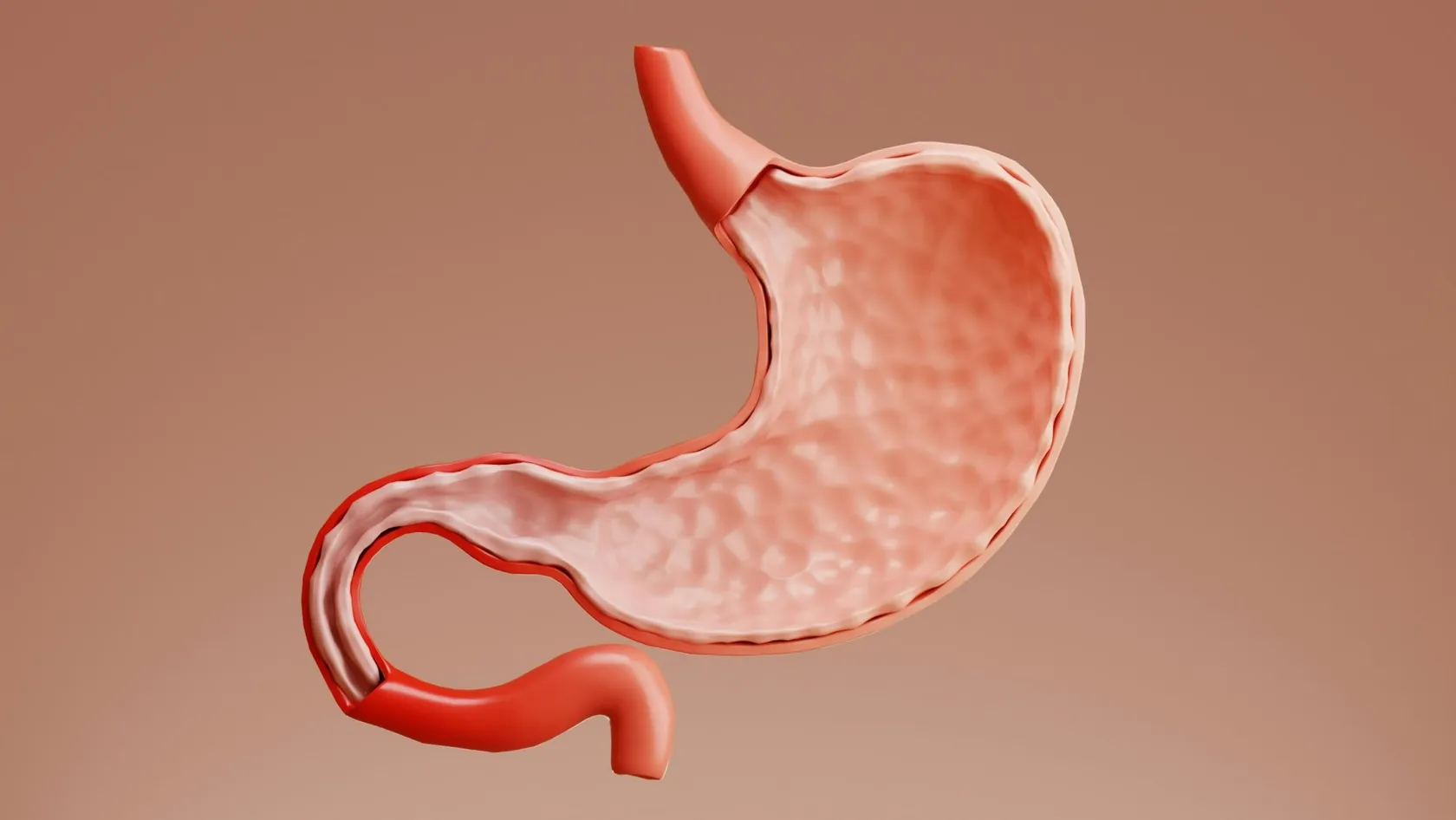
A sleeve gastrectomy removes roughly four-fifths of the stomach along its outer curve and leaves a narrow tube running from the gullet to the outlet, and nothing is rerouted and nothing is joined, which is what makes it the simpler of the two common operations. The table sets out what the longer follow-up series report, because almost everything published about this operation describes the first eighteen months.
This table scrolls sideways on a narrow screen. Swipe or drag to see every column.
| What was measured | The figure | Where it comes from |
|---|---|---|
| Weight at six years | Mean body mass index down from 45.9 to 30.2, with 67.3 percent of excess weight lost and 83.1 percent of patients still above the halfway mark. | An Italian single-center series of 182 patients, 81.4 percent of whom were followed for six years. |
| Weight coming back | 27.8 percent, with a confidence interval of 22.8 to 32.7 percent and a range across studies of 14 to 37 percent. | A meta-analysis of nine cohorts, in the 652 patients who reached seven years or more. |
| Needing another operation | 19.9 percent overall, made up of 13.1 percent for weight coming back and 2.9 percent for reflux. | The same meta-analysis. The wide variation between studies is acknowledged by its authors. |
| Diabetes in remission | 83.8 percent at long-term follow-up. | The Italian series. A single center reporting its own results, so read it alongside the trial figures rather than instead of them. |
| Sleep apnea in remission | 75.6 percent, and high blood pressure 59.7 percent. | The same series at six years. |
| Reflux at eight years or more | Symptoms in 50 percent, up from 26 percent before surgery, with 82 percent taking acid suppression. | A prospective study that scoped 50 patients regardless of symptoms. |
The details that change it
Two numbers decide the shape of the tube that gets left behind, and they are chosen by the surgeon rather than by your anatomy. Neither appears in any brochure, and both are reasonable to ask about.
The calibrating tube
Anesthetists pass a flexible tube down through the mouth and along the inside of the stomach, and the stapler follows it, so the tube's diameter sets the width of the sleeve. Narrower means more restriction and, for many years, a widely assumed higher risk of a leak, though a 2024 review that graded the evidence concluded that a 36 French tube is effective and safe with a leak rate similar to wider ones. What has not been shown is that going narrower than that buys anything, and a very tight sleeve is the one that later twists or obstructs.
Where the stapling starts
Where the first staple fires is the other choice, and it is measured from the stomach outlet. Starting closer removes more of the muscular pump at the bottom, which is called antral resection, while starting further away preserves it, and pooling nine randomized trials covering 877 patients showed that removing the antrum produced more weight loss at six months and at one year. By two years the difference had gone, with excess weight loss and body mass index comparable between the groups. Complications, operating time, comorbidity resolution and new reflux did not differ either. The same evidence review found no significant difference in leak rate between starting under six centimeters from the outlet and starting at six. So this is a real choice with a real short-term effect and no lasting one, which is worth knowing if somebody presents their particular technique as decisive. What the antral question actually decides is how fast the first six months go, and a patient who is told that one approach is fundamentally superior is being sold a preference rather than shown a result.
The operation itself
Keyhole, ninety minutes or so, and five small cuts. Inside, the sequence is a good deal more deliberate than that speed suggests.
Reinforcing the staple line
Surgeons have argued about this for fifteen years and there is now a good answer, because a network analysis pooled 17 randomized trials covering 3,994 patients, comparing no reinforcement at all against oversewing with a suture, gluing, a bioabsorbable strip and clips. Just over 41 percent of those patients had nothing done to the staple line, and 37.7 percent had it oversewn.
Oversewing the staple line cut bleeding at a risk ratio of 0.51, leaks at 0.56 and complications overall at 0.50, each with a credible interval excluding no effect. Glue, strips and clips showed no significant advantage over doing nothing. The cost of oversewing was about sixteen extra minutes of operating time.
Nothing in that analysis separated the techniques on infection, narrowing of the sleeve, reoperation, length of stay or death within thirty days, and its authors were careful to note that the evidence on strips and clips is thin. What it gives you is a specific and answerable question. Ask whether the staple line will be oversewn and, if the answer is no, ask what is used instead. A surgeon who has thought about this will have a reason. A surgeon who has not will say that they have never had a leak.
The leak
One complication dominates everything else about this operation, and understanding its timing is what keeps people safe.
If it narrows or twists
Narrowing is the second complication specific to this operation, with the sleeve becoming too tight or turning on its own axis, and a French unit reported it carefully across 1,210 operations.
- It affects about one patient in seventy. Seventeen of those 1,210 patients developed symptoms, which is 1.4 percent, and the median time from surgery to diagnosis was 47.2 days with a range from 1 to 114.
- There are two different problems with the same symptoms. Eleven of the seventeen had a true narrowing and six had a twist, where the tube has rotated rather than tightened, and both present as vomiting and an inability to keep food down, so telling them apart takes an endoscopy and a contrast study.
- Endoscopy fixes most of it. Thirteen were treated with balloon stretching and two with a covered stent, and 15 of the 17 were resolved without further surgery, which is 88.2 percent. Seven needed nutritional support while that was going on.
- A minority still need converting. Two of the fifteen treated endoscopically, 11.8 percent, ended up having the sleeve converted to a bypass, which is the fallback, and it works, and it is a bigger operation than the one they had signed up for.
Reflux, over years
Reflux is what the sleeve costs, and it is worth reading the actual endoscopy findings rather than the reassurance, so the table sets out three separate long-term studies that looked inside people instead of asking them how they felt.
On a narrow screen the table scrolls sideways instead of shrinking. Swipe or drag it to see every column.
| Finding | How often | What it means for you |
|---|---|---|
| Symptoms of reflux | Rose from 26 percent before surgery to 50 percent at more than eight years, in 50 prospectively scoped patients. | Roughly a doubling. Manageable for most people, and the reason 82 percent of that group were on acid suppression. |
| Inflammation seen under the microscope | 46 percent in the same group. | Higher than the number reporting symptoms, which is why symptoms alone are a poor guide. |
| Normal-looking esophagus with abnormal biopsies | 40 percent. | The single most useful finding on this page. An endoscopy without biopsies misses most of this. |
| Barrett's esophagus | 4 percent in that prospective group, and 30.8 percent against 13.6 percent after bypass in a small randomized sub-study at seven and a half years. | The two figures are far apart and the randomized difference was not statistically significant with those numbers. Treat the range as genuine uncertainty. |
| Reoperation for reflux | 2.9 percent across a meta-analysis of series followed seven years or more. | Most reflux is managed with tablets. A minority needs the sleeve converted to a bypass. |
Investigators of that randomized sub-study drew a practical conclusion worth adopting, which was to support routine endoscopic surveillance after a sleeve whether or not the patient has symptoms, and the discordance figure above is why they said it. If you have a sleeve, plan on being scoped periodically for the rest of your life, and arrange that before you leave rather than discovering at year six that nobody ever mentioned it.
The hiatus hernia question
Hiatus hernia means the top of the stomach sliding up through the diaphragm and it is extremely common in people having this operation, and whether to repair it at the same sitting now has a clearer answer than it used to.
Repairing it reduces reflux afterwards
Researchers matched 406 patients, half of whom had the hernia repaired alongside the sleeve and half of whom had a sleeve alone, found no significant difference in complications between them apart from one thing. New reflux developed significantly more often in the group who had the sleeve without the repair. The repair added operating time and nothing else. That is a straightforward argument for doing it, and it is also an argument for a surgeon who looks properly, since a hernia nobody notices is a hernia nobody repairs.
The repair does not last forever
Investigators at several centers followed 108 patients who had both operations together for an average of nearly eight years. The hernia had come back in 13.0 percent of them. Freedom from recurrence was 98.1 percent at five years and 68.9 percent at ten, and the authors themselves cautioned that the ten year figure rests on small numbers. A hernia of five centimeters or more and reflux after the operation each predicted recurrence, at odds ratios of 5.0 and 4.97, and just over ten percent of the whole group needed a further operation, all of them for reflux symptoms. None of that argues against repairing the hernia. It argues for knowing that reflux appearing years later is a reason to be investigated rather than a reason to increase the dose. Ask whether the hiatus was inspected and what was found, and ask for it to be written into the operation note, because a surgeon in another country a decade from now will otherwise have no way of knowing whether the repair was ever done.
When it is not enough
Roughly one sleeve patient in five has another operation eventually and the two reasons are weight coming back and reflux that will not settle, so what that second operation should be depends on which of the two brought you back, and the evidence now separates them cleanly.
Where reflux is the problem, the choice lies between a Roux-en-Y bypass and a one anastomosis bypass. Pooling ten studies covering 1,556 converted patients, reflux resolved in 80.6 percent after the Roux-en-Y and 68.6 percent after the one anastomosis version, a difference that did not reach statistical significance across studies that disagreed with each other a great deal. New reflux after the conversion appeared in 6.3 percent of the one anastomosis group and 0.5 percent of the Roux-en-Y group, again without reaching significance. The one anastomosis conversion did produce 5.70 percent more total body weight loss and took about 25 minutes less, both of those with tight confidence intervals and no heterogeneity. Leaks, bleeding and ulcers did not differ. What the analysis could not settle is which conversion suits an individual patient, because the studies behind it disagreed with each other so much that the pooled reflux figures carry very little weight on their own.
Where weight is the problem and reflux is not, a third option enters, which is a duodenal switch with a single join. A seven year comparison against the Roux-en-Y bypass in patients converted for weight regain found significantly greater weight loss with the duodenal switch, while reflux resolution ran at 95 percent for the Roux-en-Y against 5 percent for the switch. Remission of diabetes, blood pressure and cholesterol problems was similar and overall complications did not differ significantly, though the nutritional profiles diverged, with lower calcium, zinc, folate and vitamin D after the switch and lower vitamin B12 after the bypass. Read those two paragraphs together and the rule writes itself. Reflux points to a Roux-en-Y. Weight alone opens the other doors. Somebody with both is having a conversation rather than being given an answer. Whichever route is proposed, ask what the plan would be if it does not work either, since a third operation on the same stomach is a considerably harder undertaking than the second one.
Who it suits particularly
Three groups do notably well from the sleeve specifically, and in each case the reason is that the operation leaves the intestine alone.
- Children and adolescents. A Saudi group followed 2,504 patients operated on between the ages of five and twenty-one. Excess weight loss was 82.3 percent in the first three years, 76.3 percent between four and six, and 71.1 percent in the 632 patients who reached seven to ten years. Complete remission at long-term follow-up ran at 74 percent for diabetes, 64 percent for high blood pressure and 59 percent for cholesterol problems. Growth was not affected, with the height score essentially unchanged at every stage. Adverse events occurred in 1 percent and nobody died from the procedure.
- People with a very high starting weight. A Scandinavian registry of 83,057 patients found the complication rate identical across body mass index groups from 35 up to above 70, at 7.2 percent overall. Weight loss at two years was lowest with the sleeve, at 26.6 to 31.3 percent of total body weight, so it is being chosen for safety and simplicity rather than for maximum effect. That registry also found that long-term death rates still rose with starting weight, which is a sobering point that the operation modifies rather than erases.
- Older patients. A prospective study of 60 patients aged 65 or over compared 30 who had a sleeve against 30 managed conservatively, and every one of the surgical patients reduced or stopped medication for at least one condition, against 10 percent of the others. Total body weight loss was 30.7 percent against 2.9 percent, glycated hemoglobin fell by 1.36 percentage points more, and the sleep apnea index fell by 14.8 events an hour more. Nobody died. It was not randomized, and the patients chose their own group. Read it as encouraging rather than definitive.
What it does elsewhere
Weight is the visible result and it is not the most interesting one. The table collects what changes in the rest of the body, with the evidence that supports each.
Swipe or drag the table sideways on a narrow screen to see every column. It scrolls sideways rather than shrinking.
| What changes | By how much | The caveat |
|---|---|---|
| Fatty liver disease | Against a lifestyle program in adolescents with biopsy-proven disease, the sleeve raised the probability of complete resolution by 49 percentage points and of fibrosis improving by 36, with liver fat on scanning falling 8.0 percent further. | A small controlled study in adolescents, with 27 of 42 completing paired biopsies. The direction held in every analysis they ran. |
| Type 2 diabetes | 83.8 percent in remission at six years in one long series, and 74 percent among adolescents at seven to ten years. | Remission means quiet rather than gone, and a proportion returns as weight comes back. |
| Sleep apnea | 75.6 percent in remission at six years, and in patients over 65 the apnea index fell by 14.8 events an hour more than with conservative care. | Have a repeat sleep study before abandoning your machine. Feeling better is not the same thing as the apnea having gone. |
| High blood pressure | 59.7 percent in remission at six years, and 64 percent among adolescents in the long-term group. | Medication doses need reviewing as weight falls, and this is a common reason for feeling faint in the early months. |
| Periods and fertility | In a survey of 387 women after a sleeve, 70.5 percent reported a change in their cycle, and becoming regular was the commonest single change at 26.3 percent. | Self-reported and cross-sectional, so it is not proof of restored ovulation. Contraception still matters, because fertility often returns quickly. |
The first year
Eating changes in stages and the stages are not arbitrary, since a fresh staple line needs weeks before it will tolerate anything solid.
Recovery and flying home
Wounds heal quickly and the staple line does not, and confusing the two is how people get into trouble far from the hospital that operated on them.
- Hospital. Two or three nights. A contrast study is done in many units before discharge, and it is worth knowing that a normal study does not exclude a leak appearing weeks later.
- Walking. From the first evening, several times a day. It prevents clots more reliably than anything else you will be asked to do.
- Flying. Ask for written clearance and do not fly on a fast pulse. The mean time to a leak declaring itself in one series was 29.3 days, so staying a week rather than three days does not remove the risk. It removes the part of the risk that lands you in a foreign emergency department.
- Clot prevention. Injections usually continue for a period after discharge. A long flight in the first weeks is a recognized risk, so take the injections with you and use them.
- Work. Desk work at around two weeks, physical work at six. Nothing heavy for six weeks.
- Get in touch about. A pulse above 120, breathlessness, pain in the left shoulder, an inability to keep fluids down, or a fever, of which the first two matter most and need to be seen the same day, wherever you happen to be.
Stones, clots and low sugar
Three later problems belong on any honest account of this operation and two of them are preventable, starting with gallstones, which form because rapid weight loss changes the composition of bile and are common enough that prevention has been studied properly. Pooling 14 randomized trials covering 3,619 patients across several bariatric operations, gallstones formed in 8.3 percent of those given ursodeoxycholic acid and 38.1 percent of those given nothing, a risk ratio of 0.27. Symptomatic gallstone disease fell at a risk ratio of 0.30. Those reviewers recommended 500 to 600 milligrams for six months for everybody after this kind of surgery, so ask whether it is being prescribed, because the difference between 8 and 38 percent is the difference between a tablet and a second operation. That pooled figure covers several bariatric operations rather than the sleeve alone, so treat the exact baseline as approximate while the size of the effect stands.
Second comes a clot in the veins draining the stomach and intestine, which is rare and has a particular association with this operation, and a matched study comparing 38 such cases against 152 controls found fatty liver disease independently associated with it at an adjusted odds ratio of 2.95. Ninety-two percent of the events happened within thirty days of surgery, and abdominal pain was the commonest way it announced itself. Persistent abdominal pain in the first month after a sleeve is not something to wait out.
Third comes low blood sugar appearing well after surgery, usually an hour or two after eating. A systematic review estimated that around 10 percent of sleeve patients develop it against nearly 30 percent after a bypass, with about 5 percent of sleeve patients needing medical attention for it. Those authors were candid that estimates in the literature range from under 1 percent to three-quarters depending on how it is defined, and it is managed with diet first, splitting carbohydrate across small meals and pairing it with protein, and with medication where that is not enough.
Who does it matters
A 2024 review that graded the evidence on why sleeves leak went through the technical variables one by one, and reached a conclusion that ought to be printed on every consent form for this operation.
Surgical experience and case volume affect the leak rate more consistently than any form of staple line reinforcement. The tube size, the distance from the outlet and the choice of buttress all matter less than how many of these the surgeon has done.
That same review found testing the staple line during the operation to be a matter of surgeon preference, with no standardized method and no proven detection rate, which is a candid admission about a step most patients assume is a guarantee. What follows practically is a short list. Ask how many sleeves this surgeon personally performed last year. Ask what their own leak rate is. Treat an answer of none rather than a number as a reason to keep asking, since a surgeon who has genuinely never had a leak has either done very few operations or is not counting. Nothing in that is impolite, and a high-volume unit will answer all three without hesitating. The same review was also clear that intraoperative leak testing has no standardized method and no proven detection rate, which is worth remembering if a unit offers a negative test on the day as though it settled the question.
Follow-up
Sleeve patients are often told there is less to monitor afterwards, and that framing does real damage. Four things need watching and none of them announces itself.
Questions to ask
Start with the endoscopy, because it is the question that separates a unit choosing your operation from a unit selling one. Ask whether it happens before the decision, what would change if it showed inflammation, and whether a hiatus hernia found during the operation would be repaired at the same sitting given that the matched evidence favors doing so. Then ask about the two technical numbers. What size calibrating tube is used and how far from the outlet the stapling begins, and whether the staple line is oversewn, given that oversewing halved bleeding and leaks in a network analysis of 17 randomized trials.
Then ask about the decade rather than the fortnight. How many sleeves this surgeon did last year and what their own leak rate is. Who runs the annual blood tests and who pays for them. Whether an endoscopy years from now is part of the plan and who arranges it. Whether ursodeoxycholic acid is prescribed for the first six months. And what happens if the weight comes back, since roughly one patient in five has another operation and it is better to know in advance whether coming back is included or charged again.
Reading a quote
No figure appears on this page, and this is among the most aggressively advertised operations anywhere, which is exactly why the comparison has to be made on inclusions rather than on the headline. Seven things belong in writing. Whether the endoscopy before the operation is inside the number. Whether repairing a hiatus hernia, if one is found during the surgery, is included or charged as an extra procedure, and how many nights are budgeted along with what an extra night costs if you are not fit to fly. Whether staple line reinforcement is used, since that is a consumable and it appears in some price lists and not others. Whether the dietitian consultations are included and how many. What the follow-up contains and for how long, stated in months rather than described as lifetime support, and whether treatment of a complication here is covered, along with who pays if you are readmitted at home instead.
Your own file moves the total less here than in most surgery, which is why it is sold as a package. Starting weight, a hiatus hernia needing repair at the same sitting, a previous abdominal operation making the dissection harder, and whether this is a first operation or a revision are the four things that actually shift it.
Packages published by Turkish hospitals and medical travel agencies for sleeve gastrectomy generally include the airport transfer, pre-operative testing, the surgeon and anesthesia fees, the operating room, the planned nights, an interpreter, the hotel for an agreed number of nights and the review before departure. They generally exclude flights, insurance, the endoscopy, hiatus hernia repair, treatment of a complication, extra nights, supplements, gallstone prevention and any follow-up beyond the first months, so read what arrives against both lists and note that four of those exclusions are things this page has argued you should insist on.
Coming to Istanbul
Seven to ten days, which is longer than most advertised packages and the length is the point. Assessment and the endoscopy fill the first day or two, the operation takes a morning, two or three nights in hospital follow, and the remaining days exist so that anything going wrong does so while you are still in the same city as the people who would fix it. Send your height and weight with the date they were measured, the conditions you are treated for, your medication list with the doses, details of any previous abdominal surgery, and any endoscopy report you already hold. Say whether you get heartburn, how often, and whether you take anything for it, because that answer changes which operation is recommended more than anything else you can send, and send recent blood tests if you have them, since anemia and low vitamin D are common beforehand and worth correcting first.
Say in your first message who will run your blood tests at home. This is the question that decides how this turns out in a decade, and it is worth settling before you travel rather than discovering at year two that nobody was ever asked. If you already have a doctor willing to do it, say so. If you do not, say that too, so it can be planned for. Only one coordinator holds your file from the first message to discharge, and the international patients team works in English, Arabic, French, Russian, Serbian, Romanian and Spanish, with other languages arranged on request. Ask in your first message if you would prefer a female physician. Someone can stay overnight with you on the ward, where the rooms carry a companion bed. Meals from the hospital kitchen cover halal, vegetarian and diabetic diets and a prayer room is available. The international patients office books accommodation for both of you, arranges the airport transfer and daily transport, and prepares the appointment confirmation and the invitation letter naming the hospital and your treating doctor for a medical visa application, around ten days before travel.
Take home the operation note itself and not a discharge summary. It should say what size calibrating tube was used, how far from the outlet the stapling started, whether the staple line was reinforced and how, and whether a hiatus hernia was found and repaired. Any surgeon treating you in ten years will want all four and reconstructing them later is difficult. Add the pathology report on the removed stomach, the contrast study if one was done, the supplement regimen with doses, the schedule of blood tests with the specific tests named, and a note of when an endoscopy is next due. Address the file to a doctor near you and make that appointment before you fly. Once you are back home, your coordinator stays reachable on the same WhatsApp number, and keep that number for years rather than weeks, because the questions that matter most in this operation arrive long after the wounds have healed.
Sleeve gastrectomy FAQ
Do I really need an endoscopy first?
How likely is a leak, and when would it happen?
Does the staple line need reinforcing?
Will I get reflux?
Should a hiatus hernia be repaired at the same time?
What if the sleeve stops working?
Can teenagers have this operation?
Will I get gallstones?
How much weight comes back?
How long should I stay in Turkey?
References
- Iossa A, Martini L, De Angelis F, Micalizzi A, Watkins BM, Silecchia G, Cavallaro G. Leaks after laparoscopic sleeve gastrectomy, 2024 update on risk factors. Langenbeck's Archives of Surgery. 2024;409(1):249.
- Aiolfi A, Gagner M, Zappa MA, Lastraioli C, Lombardo F, Panizzo V, Bonitta G, Cavalli M, Campanelli G, Bona D. Staple line reinforcement during laparoscopic sleeve gastrectomy, systematic review and network meta-analysis of randomized controlled trials. Obesity Surgery. 2022;32(5):1466-1478.
- Yu Q, Saeed K, Okida LF, Gutierrez Blanco DA, Lo Menzo E, Szomstein S, Rosenthal R. Outcomes of laparoscopic sleeve gastrectomy with and without antrectomy in severely obese subjects, evidence from randomized controlled trials. Surgery for Obesity and Related Diseases. 2022;18(3):404-412.
- Parmer M, Wang YHW, Hersh EH, Zhang L, Chin E, Nguyen SQ. Management of staple line leaks occurring after laparoscopic sleeve gastrectomy. JSLS, Journal of the Society of Laparoendoscopic Surgeons. 2022;26(3):e2022.00029.
- Rebibo L, Hakim S, Dhahri A, Yzet T, Delcenserie R, Regimbeau JM. Gastric stenosis after laparoscopic sleeve gastrectomy, diagnosis and management. Obesity Surgery. 2016;26(5):995-1001.
- El Nakeeb A, Aldossary H, Zaid A, Rashad AE, Balata M, Abdulrazek M, Alshehri D, Hamza HM, Elsheemy R, Mohammed MM, Alnakeeb K, Attia M. Outcomes of concomitant laparoscopic sleeve gastrectomy and hiatal hernia repair on gastroesophageal reflux disease in patients with severe obesity, a propensity score-matched analysis. Obesity Surgery. 2025;35(5):1685-1692.
- Carrano FM, De Luca B, Angrisani F, Griguolo G, Campanile FC, Perrotta N, Boru CE, Angrisani L, Silecchia G. Long-term anatomical durability and clinical outcomes of concomitant laparoscopic sleeve gastrectomy and hiatal hernia repair, up to 10-year multicenter analysis. Obesity Surgery. 2026;36(8):4052-4064.
- Mazahreh T, Ayoub K, Mohsen A, Aleshawi A, Alhadrab Y, Angrisani F, Angrisani L, Carandina S, Iannelli A. Barrett's esophagus and histologic esophagitis after laparoscopic sleeve gastrectomy, a long-term prospective endoscopic and histopathologic evaluation. Obesity Surgery. 2026;36(6):2938-2946.
- Lee YM, Barazanchi A, Robertson J, Murphy R, Booth MWC. Long-term effect of Roux-en-Y gastric bypass versus sleeve gastrectomy on reflux and Barrett's esophagus, a randomized controlled trial. ANZ Journal of Surgery. 2025;95(5):911-918.
- Hany M, Zidan A, Aboelsoud MR, Torensma B. Laparoscopic sleeve gastrectomy versus one-anastomosis gastric bypass 5-year follow-up, a single-blinded randomized controlled trial. Journal of Gastrointestinal Surgery. 2024;28(5):621-633.
- Noel P, Layani L, Parmar C, Himpens J. Conversion to one-anastomosis gastric bypass versus Roux-en-Y gastric bypass for treatment of gastroesophageal reflux disease after sleeve gastrectomy, a systematic review and meta-analysis. Obesity Surgery. 2026;36(5):2597-2610.
- Salama AF, Yahmadi A, El Baba H, Baazaoui J, Gibreal K, Bougmiza M, Al Kuwari M. Comparative seven year outcomes of Roux-en-Y gastric bypass and single anastomosis duodeno-ileal bypass as revisional procedures for weight recurrence after sleeve gastrectomy. Surgical Endoscopy. 2026;40(5):4326-4335.
- Alqahtani AR, Elahmedi M, Abdurabu HY, Alqahtani S. Ten-year outcomes of children and adolescents who underwent sleeve gastrectomy, weight loss, comorbidity resolution, adverse events and growth velocity. Journal of the American College of Surgeons. 2021;233(6):657-664.
- Stenberg E, Sundbom M, Hedberg S, Ottosson J, Naslund E. Laparoscopic metabolic and bariatric surgery in patients with high body mass index, a nationwide registry-based cohort study. Surgery for Obesity and Related Diseases. 2026;22(7):707-714.
- Gheda A, Barakat KE, Seddik R, Elemawy MH, Farag MM, Ali RF. Impact of laparoscopic sleeve gastrectomy on obesity-related comorbidities in patients over 65 years, a prospective comparative study. BMC Surgery. 2026;26(1):172.
- Yahia Y, Hamran S, Chandra P, Mahmoud W, Qasem M, Al Ali DA, Ali AA, Al-Zu'bi MM, Abuodeh J, Khidir N, Al-Kuwari M. Risk factors for porto-mesenteric venous thrombosis after laparoscopic sleeve gastrectomy, a matched case-control study. Obesity Surgery. 2026;36(5):2005-2012.
- Yodoshi T, Ollberding NJ, McNeill M, Ley SL, Kirk S, Kleiner DE, Arce-Clachar AC, Bramlage K, Inge TH, Helmrath MA, Cecil KM, Trout AT, Elder DA, Mouzaki M, Xanthakos SA. Vertical sleeve gastrectomy versus comprehensive lifestyle intervention for adolescents with metabolic dysfunction-associated steatotic liver disease, a prospective controlled cohort study. Alimentary Pharmacology and Therapeutics. 2026;64(6):758-769.
- Alsareii S, Almetrek MA, Alshaiban SH, Alshahrani RS, Alshahrani NA, Atafi TE, Almnjwami RF, Oberi IA, Al-Ruwaili RH. Menstrual changes in women who undergo sleeve gastrectomy in Saudi Arabia. Cureus. 2024;16(8):e66109.
- Casella G, Soricelli E, Giannotti D, Collalti M, Maselli R, Genco A, Redler A, Basso N. Long-term results after laparoscopic sleeve gastrectomy in a large monocentric series. Surgery for Obesity and Related Diseases. 2016;12(4):757-762.
- Sharma A, Shanti H, Nageswaran H, Best LMJ, Patel AG. Role of ursodeoxycholic acid in the prevention of gallstones formation in bariatric patients, a systematic review and meta-analysis of randomized trials. Obesity Surgery. 2023;33(12):4115-4124.
- Craig CM, Ramanujan S, McLaughlin TL. Prevalence of post-bariatric hypoglycemia in the United States. Surgery for Obesity and Related Diseases. 2026;22(6):674-683.
- Clapp B, Wynn M, Martyn C, Foster C, O'Dell M, Tyroch A. Long term outcomes of the sleeve gastrectomy, seven or more years, a meta-analysis. Surgery for Obesity and Related Diseases. 2018;14(6):741-747.
Editor's note
Written by the Biruni Hospital medical editorial team. Reviewed by Ramazan Acıroğlu, General Surgery.
Medically reviewed by
Ramazan Acıroğlu
General Surgery
Related Treatments
View All
Bariatric Surgery - Weight Loss Surgery
Followed for 24 years, people who had weight loss surgery lived a median of 3.0 years longer than those who did not, and 5.5 years less than the general population. Both numbers come from the same study.
Breast Cancer Surgery
Across 202,934 women with the same early disease, the proportion who kept the breast ran from 58.5 to 75.5 percent depending on the region. Breast cancer surgery is not one decision. It is four, and this page maps them.

Breast Conserving Surgery
Two hundred and four women with two or three cancers in the same breast kept that breast, and recurrence at five years was 3.1 percent. Most of the reasons women are told they cannot keep the breast have quietly stopped being true.

Breast Lump Removal
Of 3,305 people under forty seen at one breast clinic, 29 had cancer. Most lumps are something else, and most of those never need an operation. This page covers how to tell which lump yours is and when removal earns its place.
Central Venous Port Implantation
A port is implanted in half an hour and then kept for years. Almost everything that later goes wrong with it was settled in that half hour, or is settled by how the device is flushed and accessed every week.