General Surgery
Sigmoid colectomy removes the S-shaped last part of the colon and joins the bowel again. Two randomized trials found better quality of life after surgery for recurrent diverticulitis.
Recurrent or grumbling diverticulitis drives most planned sigmoid operations, followed by sigmoid cancer and a twisted bowel, called volvulus. In the Dutch DIRECT trial, 46 percent of patients kept on tablets and diet needed the operation anyway within five years. Surgery carries a real risk of the bowel join leaking. Send your CT scan and colonoscopy report, and our colorectal team will tell you whether an operation helps you more than continued care at home.
46%
Patients on conservative care in DIRECT who needed surgery within five years
9.6% vs 25%
Major complications, keyhole against open sigmoid resection
5% vs 31%
New diverticulitis within six months, surgery against conservative care
Free
Review of your CT scan before you book
Free consultation
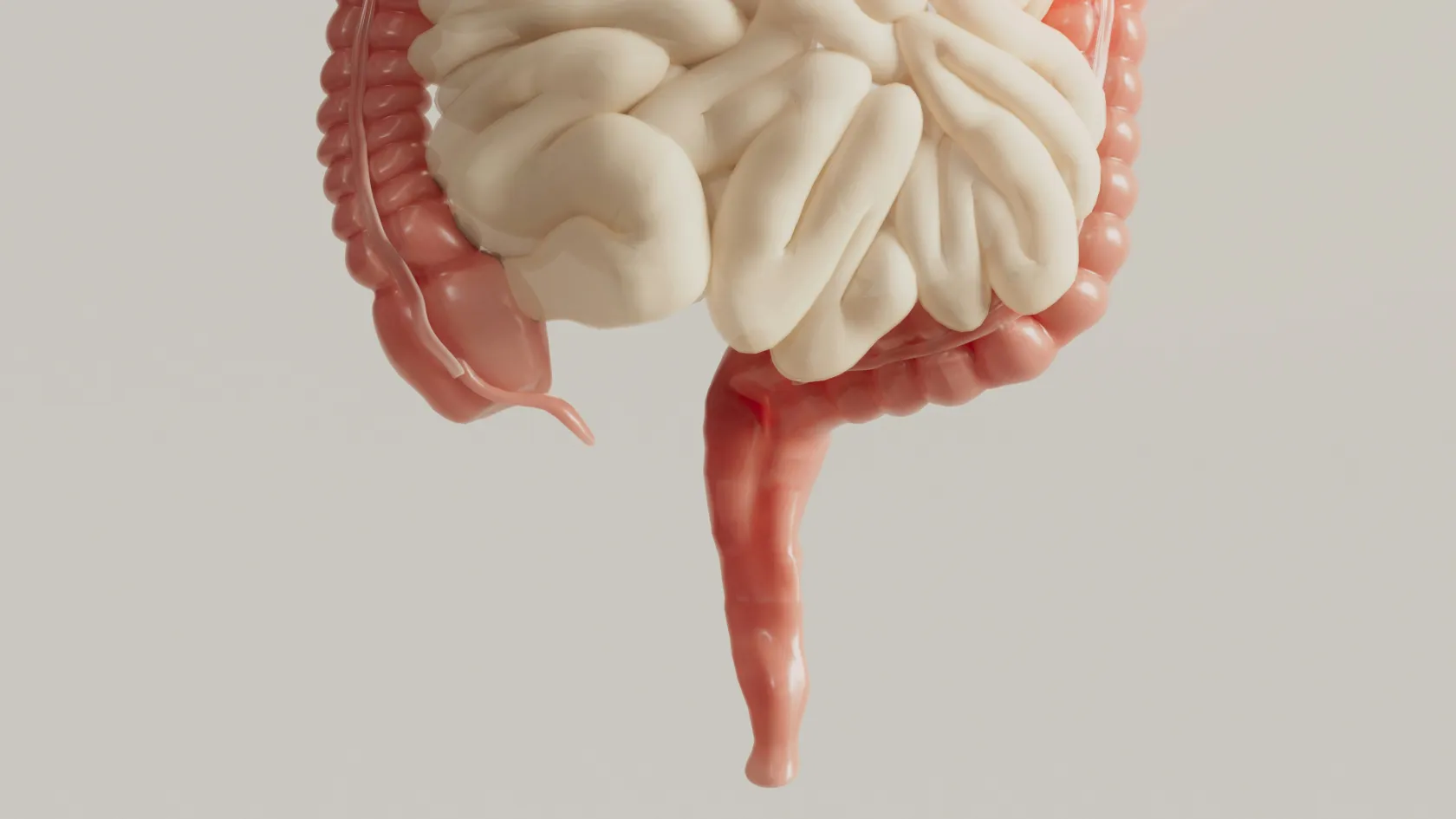
The sigmoid colon sits in the lower left of the abdomen, between the descending colon and the rectum. Small pouches called diverticula form in its wall with age. An inflamed pouch means diverticulitis.
In this randomized clinical trial, elective laparoscopic sigmoid resection improved quality of life in patients with recurrent, complicated, or persistent painful diverticulitis but carried a 10% risk of major complications.
Finnish LASER trial, JAMA Surgery, 2021
High pressure inside this narrow segment pushes the lining out through weak spots in the muscle. The surgeon removes it down to the top of the rectum. Leave the junction behind and the disease comes back more.
Four reasons bring patients to a planned sigmoid colectomy.
Reasons differ, and so does the operation.
Surgery or conservative care
For recurrent or ongoing diverticulitis, two randomized trials compared a planned keyhole operation with continued care by diet, fiber and pain relief.
The Dutch DIRECT trial
Van de Wall and colleagues randomized 109 patients with three or more attacks in two years, or pain lasting three months or longer. At six months, the quality-of-life score reached 114.4 after surgery and 100.4 with conservative care. Seven operated patients, 15 percent, had a leak from the bowel join, and 23 percent of the conservative group crossed over to surgery within the trial period.
The Finnish LASER trial
Santos and colleagues randomized 90 patients with recurrent, complicated or persistently painful diverticulitis. Quality of life rose by 11.96 points more after surgery. New attacks within six months struck 5 percent after surgery and 31 percent with conservative care, while major complications reached 10 percent after surgery and none without it.
When we advise against surgery
One or two mild attacks that settled fully, with a normal colonoscopy, give no reason for an operation. Older guidance recommended surgery after a second attack, and the trials above enrolled patients with far more trouble than that. We tell you plainly when watching and waiting serves you better.
The leak risk in the trials
Across the five-year DIRECT follow-up, 11 percent of operated patients had a leak from the join and 15 percent needed a further procedure. That risk sits against years of attacks, pain and courses of antibiotics, and only you can weigh the two with the numbers in front of you.
Two trials side by side
Same direction, two countries.
This table scrolls sideways on a narrow screen. Swipe or drag to see every column.
DIRECT and LASER, sigmoid colectomy against conservative care
| Outcome |
DIRECT, 109 patients |
LASER, 90 patients |
| Quality of life at six months |
Higher after surgery |
Higher after surgery |
| New attacks within six months |
Not reported |
5 percent against 31 percent |
| Leak or major complication after surgery |
15 percent leaks |
10 percent major complications |
| Conservative patients later operated |
23 percent in the trial, 46 percent by five years |
Not reported |
Five years on
- Quality-of-life scores stayed higher after surgery, 118.2 against 108.5.
- Pain scores ran lower.
- Almost half the conservative group, 26 of 56, ended up having the operation because of severe ongoing complaints.
- No deaths.
The operation
Keyhole or open surgery
What the Sigma trial found
Klarenbeek and colleagues randomized 104 patients with symptomatic sigmoid diverticulitis to keyhole or open resection, with the abdomen covered by an opaque dressing so neither patients nor the doctors deciding on discharge knew which operation had taken place. Major complications fell from 25.0 to 9.6 percent with the keyhole approach, and pain, painkiller use and hospital stay all dropped, at the cost of a longer operation. One in five keyhole operations, 19.2 percent, had to be converted to open surgery.
We perform planned sigmoid colectomy by keyhole surgery under general anesthesia, through four or five small cuts and a short incision low on the abdomen to take the specimen out. Two to four hours.
Joining the bowel or a stoma
In planned surgery the surgeon joins the descending colon to the top of the rectum with a circular stapler passed from below, then tests the join under water for air leaks. A temporary stoma, an opening of the bowel on the abdomen with a bag, protects a join only in selected cases and gets closed after six to twelve weeks.
Risks and recovery
- A leak from the bowel join, the most serious risk, needing drainage, antibiotics or a further operation and sometimes a stoma.
- Wound infection.
- Bleeding.
- A slow-to-wake bowel for a few days.
- Injury to the ureter, the tube from the kidney, which the surgeon identifies and protects.
- Blood clots in the legs or lungs, lowered by early walking and blood thinner injections.
Signs of a leak
Rising pain after the first two days, fever, a fast heart rate and a swollen abdomen. Our team checks for these every day, and a CT scan confirms or rules out a leak within hours.
This table scrolls sideways on a narrow screen. Swipe or drag to see every column.
Sigma trial, keyhole against open sigmoid resection, 104 patients
| Outcome |
Keyhole |
Open |
| Major complications |
9.6 percent |
25.0 percent |
| Minor complications |
36.5 percent |
38.5 percent |
| Pain, painkiller use, hospital stay |
Lower |
Higher |
| Operating time |
Longer |
Shorter |
Bowel habit after surgery
Stools run looser and more frequent for the first weeks, then settle. A high-fiber diet and plenty of water help the remaining colon.
1
Day of surgery
Sips of fluid in the evening and sitting out of bed.
2
Days one to four
Walking the corridor, eating soft food, the urinary catheter out, and home once the bowel opens.
3
Weeks two to four
Short walks every day, no lifting over five kilograms, and desk work from the third week.
4
Six weeks
Normal activity, sport and lifting.
Emergency surgery for perforation
A burst diverticulum spreads pus or stool through the abdomen and needs surgery within hours, in the nearest hospital. Never travel with it. Patients come to us afterwards, for closure of a stoma left by an emergency operation, or for a planned colectomy once an abscess has healed.
These findings do not support laparoscopic lavage for treatment of perforated diverticulitis.
Scandinavian SCANDIV trial, JAMA, 2015
Washing out against removing the sigmoid
The SCANDIV trial randomized 199 patients with a perforation to a keyhole washout of the abdomen or removal of the sigmoid. Severe complications matched, 30.7 against 26.0 percent, but reoperations rose to 20.3 percent after washout against 5.7 percent after resection, and four sigmoid cancers went unseen in the washout group.
The stay in Istanbul
Three to five nights in hospital come first, followed by ten to fourteen days in a hotel near the hospital in Istanbul, with daily walks, a soft diet building back to normal food and a visit to the clinic for the wound check, and you stay until the pathology report arrives. Our surgeon confirms fitness to fly before you leave. Bring a companion. They can sleep in your room, and our coordinators speak English, Arabic, French, Russian, Serbian, Romanian and Spanish, and follow-up after you return home runs through them, with a written report for your own doctor. Costs vary. The reason for the operation, keyhole or open surgery and any stoma closure set the figure, and the estimate after the free review lists each. Before surgery for diverticulitis, a colonoscopy within the past year rules out cancer. Without a recent one, we arrange it.
Surgeons should counsel these patients for elective sigmoidectomy weighing superior QoL, less pain, and lower risk of new recurrences against the complication risk of surgery.
DIRECT trial at five years, Annals of Surgery, 2019
Sigmoid colectomy FAQ
Do I need surgery after two attacks of diverticulitis?
Not by the number of attacks alone. Surgery helps when attacks keep returning, pain persists or a complication such as a fistula or narrowing has formed.
Will I need a colostomy bag?
Rarely in planned surgery. A temporary stoma protects a join in selected cases and gets closed after a few months.
Can diverticulitis come back after sigmoid colectomy?
Yes, in a small share of patients, since pouches elsewhere in the colon remain. Removing the sigmoid down to the rectum lowers the risk.
How long does the operation take?
Two to four hours by keyhole surgery, with three to five nights in hospital.
When can I fly home?
Ten to fourteen days after surgery, once the wound check and pathology report are done.
References
- Klarenbeek BR, Veenhof AA, Bergamaschi R, et al. Laparoscopic sigmoid resection for diverticulitis decreases major morbidity rates: a randomized control trial. Short-term results of the Sigma Trial. Annals of Surgery. 2009;249(1):39-44.
- van de Wall BJM, Stam MAW, Draaisma WA, et al. Surgery versus conservative management for recurrent and ongoing left-sided diverticulitis (DIRECT trial): an open-label, multicentre, randomised controlled trial. Lancet Gastroenterology and Hepatology. 2017;2(1):13-22.
- Bolkenstein HE, Consten ECJ, van der Palen J, et al. Long-term outcome of surgery versus conservative management for recurrent and ongoing complaints after an episode of diverticulitis: 5-year follow-up results of a multicenter randomized controlled trial (DIRECT-Trial). Annals of Surgery. 2019;269(4):612-620.
- Santos A, Mentula P, Pinta T, et al. Comparing laparoscopic elective sigmoid resection with conservative treatment in improving quality of life of patients with diverticulitis: the Laparoscopic Elective Sigmoid Resection Following Diverticulitis (LASER) randomized clinical trial. JAMA Surgery. 2021;156(2):129-136.
- Schultz JK, Yaqub S, Wallon C, et al. Laparoscopic lavage vs primary resection for acute perforated diverticulitis: the SCANDIV randomized clinical trial. JAMA. 2015;314(13):1364-1375.