
POEM Procedure
Swallowing after this procedure matches surgery at two years and at five, and serious complications are fewer. Acid reflux is roughly twice as common. That trade is the whole decision, and it is worth understanding before anybody books a date.
About This Department
Five years after 221 patients were randomly assigned to a keyhole endoscopic operation or to conventional surgery for achalasia, three quarters of each group were still doing well. Swallowing was equally good either way. What separated them was acid, with 62 percent of the endoscopy patients showing abnormal acid exposure against 31 percent of the surgical patients among those tested. That trade is the whole decision, and most pages about this procedure give it a sentence.
Free consultation
Ask which type of achalasia you have before anybody proposes a treatment
Three types exist and they respond differently, which is why the pressure test comes before the decision. Send the manometry report with its type, the barium swallow, the endoscopy report, any record of previous dilation, botulinum toxin or surgery, and your medication list. A gastroenterologist reviews the file and tells you whether this procedure suits your type, what it would do to your swallowing and what it is likely to do to your reflux. No fee, no obligation, and a coordinator replies in your own language.
What the procedure does
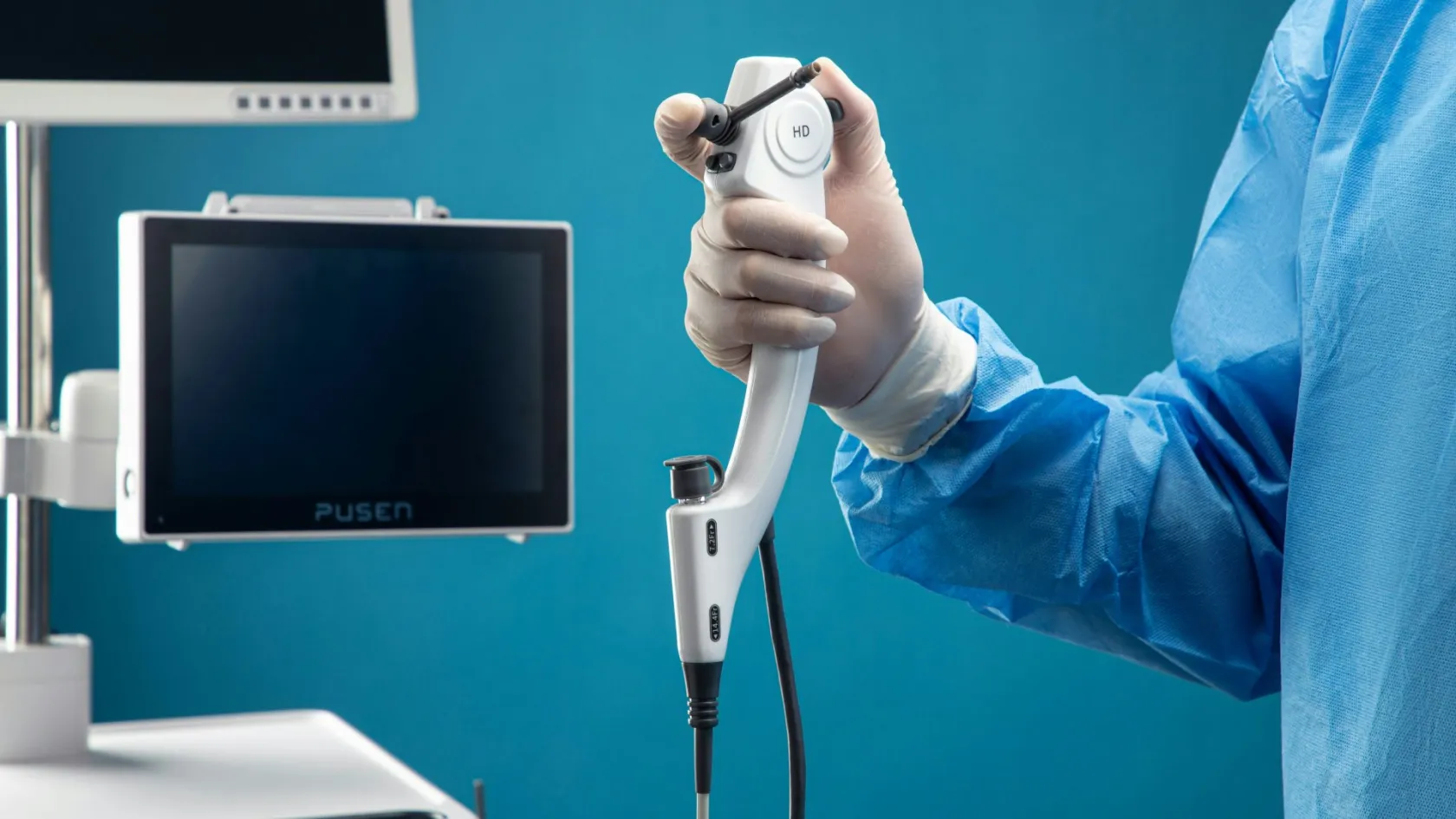
Achalasia is a failure of the muscular ring at the bottom of the gullet to relax. Food and liquid sit above it, the gullet widens over years, and swallowing becomes a matter of waiting, standing up, drinking water to push things down and eventually bringing undigested food back. It is not a cancer and it does not go away, and the muscle nerve cells that would normally open that ring do not regrow. Every effective treatment does the same thing. It weakens that ring so gravity and pressure can push food past it. Nothing restores the coordinated squeeze the gullet has lost, which is why no treatment for this condition is a cure and why the word used by careful doctors is always relief. Endoscopy does the same job from inside. A camera passed through the mouth makes a small cut in the inner lining of the gullet, then tunnels down between the layers of the wall for several centimeters, and divides the muscle fibers of the tight ring from within that tunnel before closing the entry point with clips. No cut is made through the skin anywhere. The whole operation happens inside a wall a few millimeters thick, which is both what makes it elegant and why it is done by people who do a lot of them.
The four options
Understanding what this procedure competes against makes the rest of the page easier to read, and the four differ more in what they cost you than in what they achieve.
- Botulinum toxin injection. Paralyzes the ring chemically through an endoscope. Simple and safe, wears off within months, and repeated injections cause scarring that makes later surgery harder. Generally reserved for patients too frail for anything else.
- Pneumatic dilation. A balloon is inflated across the ring to tear the muscle fibers. Quick, no incision, repeated in many patients, and it carries a small risk of perforating the gullet. It remains a reasonable first treatment in many hands.
- Laparoscopic Heller myotomy. Keyhole abdominal surgery cutting the same muscle from outside, almost always combined with wrapping part of the stomach around the gullet to create an anti-reflux valve. Four or five small skin incisions and a hospital stay of a day or two.
- Peroral endoscopic myotomy. The subject of this page. The same muscle, cut from inside, with no skin incision and no anti-reflux wrap, and that missing wrap is why the reflux figures further down look the way they do.
Notice what the last two have in common and where they part. Both divide the same muscle and both achieve similar swallowing. The surgical version adds a valve to protect against acid coming back up and the endoscopic version does not, and that single structural difference explains almost every number in this article.
Which type you have
A pressure study, called manometry, is passed through the nose and measures what the gullet does when you swallow. It sorts achalasia into three types, and the type predicts which treatment works. Ask for yours by number before any treatment is discussed.
Type one, a silent gullet
Contractions in the body of the gullet have stopped altogether and the ring will not open, which is often the late stage of the disease, and it responds to any of the treatments that weaken the ring. In the largest single series published, this type accounted for about a quarter of patients treated.
Type two, pressure building up
Here the gullet squeezes along its whole length against the closed ring, producing a column of pressure. This is the commonest type, at about half of patients in that same series, and it is the one that responds best to every treatment including balloon dilation. If a doctor tells you your type two achalasia should do well, they are right.
Type three, spasm as well as obstruction
Violent uncoordinated spasms run through the gullet on top of the ring failing to open, which is why these patients tend to have chest pain as well as difficulty swallowing. Balloon dilation treats only the ring and leaves the spasm untouched. Pooled results from eight observational studies covering 179 patients with spastic disorders found the endoscopic operation clinically successful in 87 percent overall, and in the 116 patients with type three specifically the figure was 92 percent.
Two honest cautions on that last figure. Those were observational studies rather than trials, and the reason usually given for the advantage, that the cut can be made longer from inside to cover the spastic segment, was not confirmed when somebody tested it. A separate pooled analysis of 210 patients found no difference in success between cuts shorter and longer than ten centimeters, so the advantage in type three is real in the data while the explanation usually offered for it is less settled than it sounds.
Against surgery
Read the last panel with one qualification. Acid testing at five years was done in only 81 of the 221 patients, so those percentages rest on 45 and 36 people, and while the direction is not in doubt the precision is a good deal lower than the numbers suggest.
Against balloon dilation
Balloon dilation is the cheapest and least invasive option, and for patients who have never been treated it was tested head to head against the endoscopic operation in a randomized trial of 133 people.
This table scrolls sideways on a narrow screen. Swipe or drag to see every column.
| Outcome | Endoscopic operation | Balloon dilation |
|---|---|---|
| Treatment success | 92 percent, in 58 of 63 patients. | 54 percent, in 34 of 63. A difference of 38 percentage points. |
| Inflammation from acid | 41 percent of those tested, in 22 of 54. | 7 percent, in 2 of 29. |
| Serious complications | None. | Two, and one was a perforation of the gullet. |
| Emptying on a barium swallow | A residual column of 2.3 cm. | A residual column of 0 cm, which favors dilation on that one measure. |
That success gap is the largest in this article and it deserves its weight. Balloon dilation failed in nearly half of these patients within two years and many of them then needed something else done, and what the table also shows is that the same trade appears here as against surgery. The treatment that opens the ring most reliably is the one that lets the most acid back up.
The day itself
Who it suits
- Type three achalasia and other spastic disorders. The strongest indication. Pooled results put success at 92 percent in type three, and the alternatives address the ring without touching the spasm above it.
- Anybody who has already had surgery on the area. Working from inside avoids the scar tissue left by a previous operation, which is dealt with in its own section below.
- Patients who want the fewest serious complications. The randomized comparison put these at 2.7 percent against 7.3 percent for surgery, which is a meaningful difference for anybody with other health problems.
- Somebody who cannot tolerate abdominal surgery. No skin incision, no wrap around the stomach, and a shorter anesthetic than a laparoscopic operation.
- Anybody in whom balloon dilation has failed. Dilation failed within two years in nearly half of previously untreated patients in the randomized comparison, and those patients need something more durable.
And who should think twice. Somebody who already has significant reflux, since this procedure reliably makes acid worse, and somebody who cannot or will not take an acid-suppressing tablet long term. A patient with a very tortuous end-stage gullet is also a harder case, and in some of those the discussion turns to removing the gullet altogether, which is a much larger undertaking and a different conversation.
If you have been treated before
Previous botulinum toxin or balloon dilation is a different situation again with no randomized evidence about it, so if that describes you, expect a frank answer that the numbers on this page do not exactly fit your case.
Reflux, the price
Read this section twice. Weakening the ring that was refusing to open also weakens the barrier that stops stomach acid coming up, and the endoscopic version does not add a valve to compensate. The result is measurable, common and manageable, and it should be discussed before rather than after.
This table scrolls sideways on a narrow screen. Swipe or drag to see every column.
| Measure | Endoscopic, 1,542 patients | Surgery with a wrap, 2,581 patients |
|---|---|---|
| Reflux symptoms | 19.0 percent. | 8.8 percent. |
| Abnormal acid on testing | 39.0 percent, with a wide range from 24.5 to 55.8. | 16.8 percent. |
| Inflammation seen at endoscopy | 29.4 percent. | 7.6 percent. |
| Severe inflammation at five years, in the randomized trial | 14 percent, in 9 of 63 patients examined. | 7 percent, in 4 of 58. |
| What is not known | Barrett's changes and cancer of the gullet were not reported in the five-year trial. | The same. Nobody should reassure or alarm you on that point from this evidence. |
Three practical consequences follow from that table, and each of them is worth settling in the consultation before the procedure rather than discovering it in the months afterwards. Most patients are started on an acid-suppressing tablet and many stay on one indefinitely, which is a small daily commitment and not a trivial one, particularly for somebody in their thirties who may be taking it for decades. A large share of the acid coming up produces no symptoms at all, which is why an endoscopy at some point after the procedure is recommended rather than waiting to feel heartburn, since feeling nothing is not the same as having nothing. And if acid is already a problem for you before treatment, that is a genuine argument for the surgical route with its wrap instead. Whether you already get heartburn is the single most useful thing you can bring to the consultation about yourself, so answer that question carefully rather than in passing, and answer it about the last year and not about last week.
The honest summary
Put next to each other, the findings on this page are consistent. None of them is a marketing claim.
Swallowing after this procedure matches surgery at two years and at five. Serious complications are fewer. Acid reflux is roughly twice as common, and you are likely to be taking a tablet for it. That is the deal, and for most patients it is a good one.
Where it becomes a poor deal is worth naming. Somebody who already lives with heartburn, somebody unwilling to take a daily tablet indefinitely, and somebody who will not attend an endoscopy some years later to check what the acid has been doing are all better served by the operation with its wrap. None of that is a reason to steer patients away from the endoscopic route, and it is a reason to choose between the two deliberately rather than by whichever specialist you happened to see first. Which department you walked into should not decide which operation you get.
One more piece of context belongs here. Neither treatment cures achalasia, both lose a little ground over five years at the same rate, and a proportion of patients eventually need something further whichever they choose. Being told that at the start makes the years afterwards much easier than discovering it at year six, when swallowing has quietly become difficult again and it feels like a failure rather than a known feature of the disease. Ask what the plan would be if symptoms returned, and you will find there is one.
Eating again
The morning after, a swallow test or a scan confirms the closure is watertight, and then you drink. Clear fluids for a day, thickened liquids and soft food for a week or so, and ordinary food from around the second week, with the exact schedule set by the unit that treated you. Chest discomfort behind the breastbone for a few days is expected and settles, as is a sore throat from the tube and some bloating from the gas used during the procedure. What is not expected is fever, worsening chest or abdominal pain, breathlessness, or swelling in the neck that crackles under the fingers, and any of those needs assessment the same day rather than a wait to see whether it passes. Most patients notice their swallowing change immediately, which is the part people remember and the part that makes the first week feel like a different life. The relief is real and it arrives fast, and that is exactly why the reflux discussion has to happen before the procedure rather than in the glow afterwards. Eat sitting upright, chew properly and take smaller mouthfuls for the first weeks, because the gullet above the treated ring is still the weak one it always was, and eating habits built up over years of difficulty take a while to catch up with the new anatomy. An acid-suppressing tablet starts before you leave and continues. Sleeping with the head of the bed raised, leaving three hours between eating and lying down, and being careful with late meals all matter more after this procedure than they did before it. Ask when your first follow-up endoscopy should be, and put the date in your own calendar rather than trusting a letter to reach you. Flying is cleared at around five to seven days, once you are eating comfortably and any check has been reported. A doctor examines you and writes the date. Avoid a heavy meal before boarding and keep to soft food on the flight.
What can go wrong
- Acid reflux. Not a complication so much as an expected consequence, and the reason this page has a section of its own about it. Common, measurable and controlled with a tablet in most people.
- An accidental hole in the inner lining. The commonest technical mishap, at 10.5 percent in a series of 610 patients, and almost always closed with clips during the same procedure without consequence.
- Gas escaping into the chest or abdomen. Carbon dioxide used during tunnelling can track into the tissues, the chest cavity or the abdominal cavity. It is usually watched and absorbs on its own, occasionally needing a needle to release pressure.
- Bleeding. Within the tunnel during the procedure or from the entry site afterwards. Managed endoscopically in nearly all cases.
- Infection in the space behind the gullet. Rare, and the reason for antibiotics around the procedure and for taking fever seriously in the first week.
- Serious adverse events overall. These occurred in 2.7 percent of patients in the randomized comparison against 7.3 percent after surgery, and in 3.4 percent of the 610-patient series.
- The symptoms coming back. Success falls from 83 percent at two years to 75 percent at five in the randomized trial, and recurrence is treatable, sometimes with a further endoscopic cut on the opposite wall of the gullet.
Reading a quote
No figure appears on this page. What this costs depends on whether the diagnostic work has already been done, on whether you have had previous treatment and on how many nights your case is expected to need, none of which is knowable from a description of your symptoms. Six things to settle in writing before anybody books a date. Whether the manometry, the barium swallow and the diagnostic endoscopy are inside the number or billed separately, since a patient arriving without a typed manometry report will need one before anything else can happen and that adds both a day and a line to the bill. How many nights are budgeted and what an extra one costs. Whether the check performed the morning after, whether a swallow study or a scan, is included. What happens financially if the assessment concludes the surgical route with its wrap suits you better, which is a real outcome for patients who already have reflux. Whether the follow-up endoscopy some months later is covered or is expected to happen at home. And whether the acid-suppressing medication you leave on is included.
Your own file moves the total less here than in most procedures, because a straightforward case is short and the stay is one night. Previous surgery in the area, a very dilated gullet and previous repeated botulinum toxin are the three things that most often turn a routine case into a longer one.
Packages published by Turkish hospitals and medical travel agencies for endoscopic procedures generally include the airport transfer, pre-procedure testing, the operator and anesthesia fees, the endoscopy suite, the planned nights, an interpreter and the review before departure. They generally exclude flights, insurance, treatment of a complication, extra nights and hotel stays past an agreed number. Compare what you receive against both lists.
Coming to Istanbul
Seven to ten days covers a straightforward case. Assessment fills the first days, the procedure takes an afternoon, one night in hospital follows, and the rest is a short recovery while you work back up to solid food. Somebody who has been treated before, or whose gullet is very dilated, should allow a few days more, because the assessment takes longer and the procedure itself usually does too. Tell the coordinator at the outset if either applies to you, so the booking is made against a realistic timetable instead of an optimistic one. The manometry report is the document that matters most, and specifically the type it assigns. Send it with the barium swallow images, the endoscopy report, and a clear account of anything already done to you, including how many balloon dilations, how many botulinum toxin injections and any operation with its date. That history changes both the recommendation and the numbers you will be quoted. An approximate memory is not enough.
Say in your first message how long you have had symptoms, how much weight you have lost and whether you already have heartburn. That last question decides more than patients expect. One coordinator holds your file from the first message to discharge, and the international patients team works in English, Arabic, French, Russian, Serbian, Romanian and Spanish, with other languages arranged on request. Ask in your first message if you would prefer a female physician.
Someone can stay overnight with you on the ward, where the rooms carry a companion bed. Meals from the hospital kitchen cover halal, vegetarian and diabetic diets, and the liquid and soft diets you will be on immediately afterwards are prepared to the same standards, which matters more here than in most treatments because the first week is defined by what you can swallow. A prayer room is available, and the ward staff are used to patients working their way back through liquids and soft food in the days after this particular procedure. The international patients office books accommodation for both of you, arranges the airport transfer and daily transport, and prepares the appointment confirmation and the invitation letter naming the hospital and your treating doctor for a medical visa application, around ten days before travel.
Take home a written file rather than a discharge slip, because the follow-up for this procedure happens elsewhere and depends entirely on what you can hand over. It should state the type of achalasia treated, the length and orientation of the cut made, the findings of the check performed the morning after, the acid-suppressing tablet with its dose, the eating schedule week by week, and the date the follow-up endoscopy should happen. Address it to a gastroenterologist and arrange that appointment before you fly, because the reflux this procedure causes is often silent, and the endoscopy some months after you are back home is how it gets found. Your coordinator stays reachable on the same WhatsApp number afterwards, so a question about food sticking or a tablet reaches somebody holding your notes. Get in touch about fever, chest or abdominal pain that is getting worse, vomiting blood, black stools, or swallowing that becomes difficult again after having been easy.
POEM procedure FAQ
Will this cure my achalasia?
Will I get reflux afterwards?
Is it better than the operation?
Should I just have a balloon dilation instead?
My manometry says type three. Does that change anything?
I had a Heller myotomy and my symptoms came back. Is this worth doing?
Will I have any scars?
How long should I stay in Turkey?
References
- Werner YB, Hakanson B, Martinek J, Repici A, von Rahden BHA, Bredenoord AJ, Bisschops R, Messmann H, Vollberg MC, Noder T, Kersten JF, Mann O, Izbicki J, Pazdro A, Fumagalli U, Rosati R, Germer CT, Schijven MP, Emmermann A, von Renteln D, Fockens P, Boeckxstaens G, Rosch T. Endoscopic or surgical myotomy in patients with idiopathic achalasia. The New England Journal of Medicine. 2019;381(23):2219-2229.
- Hugova K, Mares J, Hakanson B, Repici A, von Rahden BHA, Bredenoord AJ, Bisschops R, Messmann H, Ruppenthal T, Mann O, Izbicki J, Harustiak T, Fumagalli Romario U, Rosati R, Germer CT, Schijven M, Emmermann A, von Renteln D, Dautel S, Fockens P, Boeckxstaens G, Rosch T, Martinek J, Werner YB. Per-oral endoscopic myotomy versus laparoscopic Heller's myotomy plus Dor fundoplication in patients with idiopathic achalasia, 5-year follow-up of a multicenter, randomized, open-label, non-inferiority trial. The Lancet Gastroenterology and Hepatology. 2025;10(5):431-441.
- Ponds FA, Fockens P, Lei A, Neuhaus H, Beyna T, Kandler J, Frieling T, Chiu PWY, Wu JCY, Wong VWY, Costamagna G, Familiari P, Kahrilas PJ, Pandolfino JE, Smout AJPM, Bredenoord AJ. Effect of peroral endoscopic myotomy versus pneumatic dilation on symptom severity and treatment outcomes among treatment-naive patients with achalasia, a randomized clinical trial. JAMA. 2019;322(2):134-144.
- Repici A, Fuccio L, Maselli R, Mazza F, Correale L, Mandolesi D, Bellisario C, Sethi A, Khashab MA, Rosch T, Hassan C. GERD after per-oral endoscopic myotomy as compared with Heller's myotomy with fundoplication, a systematic review with meta-analysis. Gastrointestinal Endoscopy. 2018;87(4):934-943.
- Khan MA, Kumbhari V, Ngamruengphong S, Ismail A, Chen YI, Chavez YH, Bukhari M, Nollan R, Ismail MK, Onimaru M, Balassone V, Sharata A, Swanstrom L, Inoue H, Repici A, Khashab MA. Is POEM the answer for management of spastic esophageal disorders? A systematic review and meta-analysis. Digestive Diseases and Sciences. 2017;62(1):35-44.
- Chandan S, Mohan BP, Chandan OC, Jha LK, Mashiana HS, Hewlett AT, Khashab MA. Clinical efficacy of per-oral endoscopic myotomy for spastic esophageal disorders, a systematic review and meta-analysis. Surgical Endoscopy. 2020;34(2):707-718.
- Saleh CMG, Familiari P, Bastiaansen BAJ, Fockens P, Tack J, Boeckxstaens G, Bisschops R, Lei A, Schijven MP, Costamagna G, Bredenoord AJ. The efficacy of peroral endoscopic myotomy versus pneumatic dilation as treatment for patients with achalasia suffering from persistent or recurrent symptoms after laparoscopic Heller myotomy, a randomized clinical trial. Gastroenterology. 2023;164(7):1108-1118.
- Wessels EM, Masclee GMC, Bastiaansen BAJ, Saleh CMC, Tack J, Boeckxstaens G, Costamagna G, Familiari P, Fockens P, Schijven MP, Bisschops R, Bredenoord AJ. Long-term outcomes of peroral endoscopic myotomy versus pneumatic dilation after prior laparoscopic Heller myotomy for achalasia. Clinical Gastroenterology and Hepatology. 2026;24(7):1812-1822.
- Ngamruengphong S, Inoue H, Ujiki MB, Patel LY, Bapaye A, Desai PN, Dorwat S, Nakamura J, Hata Y, Balassone V, Onimaru M, Ponchon T, Pioche M, Roman S, Rivory J, Mion F, Garros A, Draganov PV, Perbtani Y, Abbas A, Pannu D, Yang D, Perretta S, Romanelli J, Desilets D, Hayee B, Haji A, Hajiyeva G, Ismail A, Chen YI, Bukhari M, Haito-Chavez Y, Kumbhari V, Saxena P, Talbot M, Chiu PW, Yip HC, Wong VW, Hernaez R, Maselli R, Repici A, Khashab MA. Efficacy and safety of peroral endoscopic myotomy for treatment of achalasia after failed Heller myotomy. Clinical Gastroenterology and Hepatology. 2017;15(10):1531-1537.
- Modayil RJ, Zhang X, Rothberg B, Kollarus M, Galibov I, Peller H, Taylor S, Brathwaite CE, Halwan B, Grendell JH, Stavropoulos SN. Peroral endoscopic myotomy, 10-year outcomes from a large, single-center U.S. series with high follow-up completion and comprehensive analysis of long-term efficacy, safety, objective GERD, and endoscopic functional luminal assessment. Gastrointestinal Endoscopy. 2021;94(5):930-942.
Editor's note
Written by the Biruni Hospital medical editorial team. Reviewed by Prof. Dr. Cemalettin ERTEKİN, General Surgery.
Medically reviewed by
Prof. Dr. Cemalettin ERTEKİN
General Surgery
Related Treatments
View All-
Appendectomy - Appendix Removal Surgery
Acute appendicitis needs surgery where you are, but a planned appendectomy after an abscess, after repeated attacks or for a mucus-filled appendix on a scan can be scheduled abroad. This page explains why adults over 30 have the appendix removed after an abscess, what the keyhole operation involves, and what happens if the pathology report finds a tumor.
-
Appendicitis Surgery
Appendicitis surgery removes an inflamed appendix, today through three small keyhole incisions with most patients home in a day or two. Antibiotics alone settle some cases, but 29 percent needed surgery within 90 days in a large trial. This guide covers symptoms, diagnosis, surgery or antibiotics, the operation, recovery and what to do if it happens in Istanbul.
-

Bariatric Surgery - Weight Loss Surgery
Followed for 24 years, people who had weight loss surgery lived a median of 3.0 years longer than those who did not, and 5.5 years less than the general population. Both numbers come from the same study.
-
Breast Cancer Surgery
Across 202,934 women with the same early disease, the proportion who kept the breast ran from 58.5 to 75.5 percent depending on the region. Breast cancer surgery is not one decision. It is four, and this page maps them.
-

Breast Conserving Surgery
Two hundred and four women with two or three cancers in the same breast kept that breast, and recurrence at five years was 3.1 percent. Most of the reasons women are told they cannot keep the breast have quietly stopped being true.