Pediatric Surgery
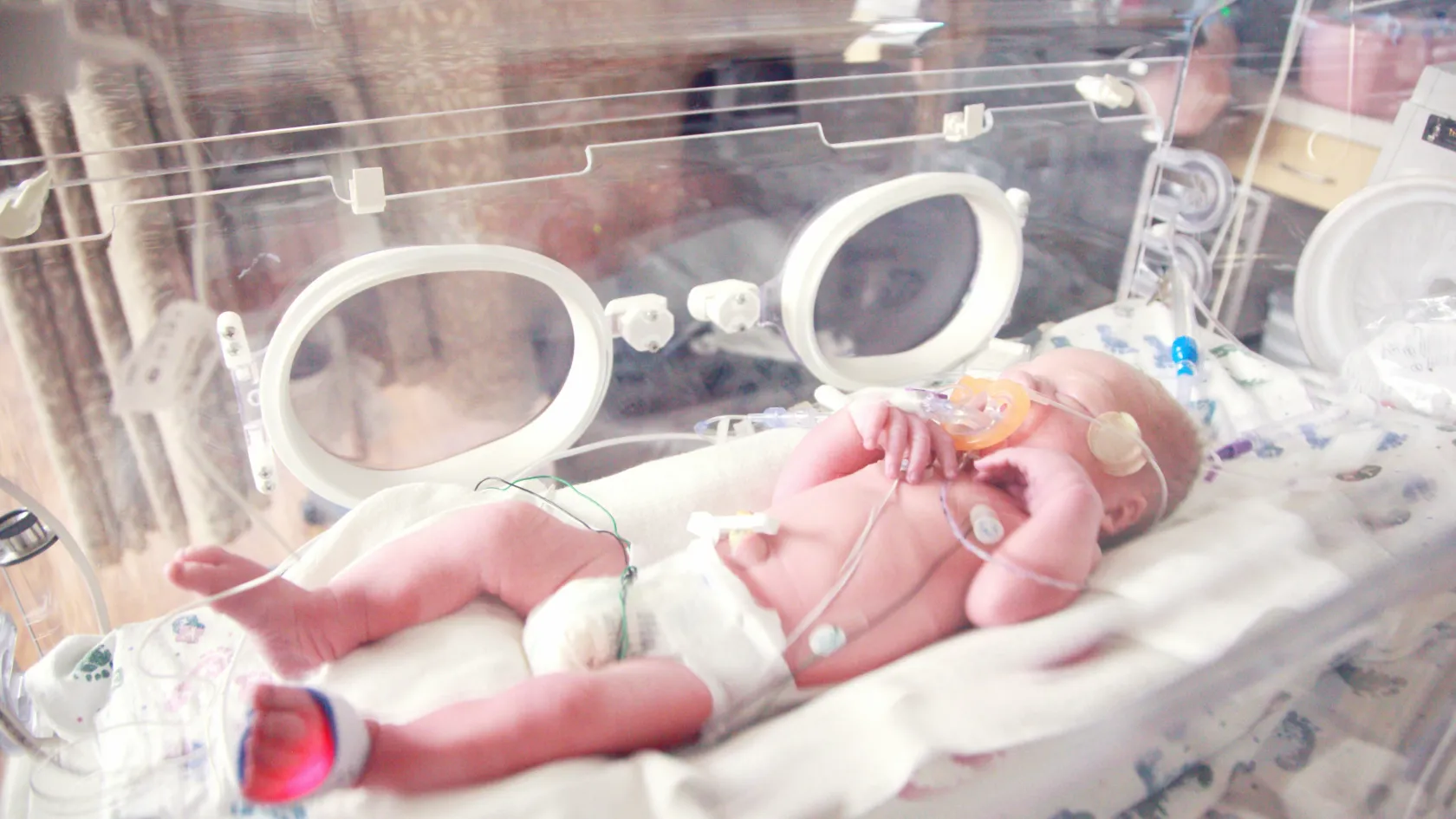
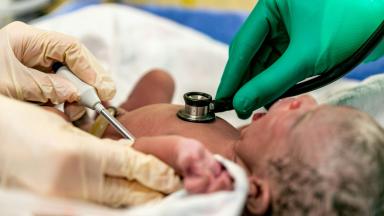
Some babies need an operation in their first hours or days of life. When the problem is found before birth, the family can plan the delivery where a neonatal surgery team is waiting.
Neonatal surgery treats newborns with birth defects of the gullet, diaphragm, abdominal wall or intestines, and premature babies whose bowel becomes inflamed. Most of these conditions are seen on pregnancy scans, which gives families time to plan the birth in a hospital with a neonatal intensive care unit and pediatric surgeons. Results have improved greatly. In a French national registry, 95 percent of babies born with esophageal atresia survived, and in a United Kingdom and Ireland cohort, 96 percent of babies with gastroschisis were alive at one year. Send us the pregnancy scans and reports, and a pediatric surgeon and neonatologist will explain what the baby will need after birth and how to plan the delivery.
95%
Survival of babies born with esophageal atresia, French national registry
96%
Babies with gastroschisis alive at one year, UK and Ireland
Planned
Birth near the surgical team when the problem is known
Free
Pediatric surgeon's review of your pregnancy scans
Free consultation
Each condition is rare.
Together they make up the daily work of a neonatal surgery team.
Which conditions need surgery in the first days?
Esophageal atresia
The gullet ends in a pouch. The baby cannot swallow milk or saliva. Most babies also have a connection between the lower gullet and the windpipe, which lets stomach acid reach the lungs, so the surgeon divides that connection and joins the two ends of the gullet through the chest in the first days of life, or, when the gap is too long, brings the ends together in stages over several weeks while the baby is fed through a tube into the stomach.
A French national registry recorded 307 babies born with esophageal atresia over two years. Survival was 95 percent, and results did not depend on how many cases each center treated. Many children later have reflux or a narrowing at the join that needs stretching, and they are followed into adulthood.
Congenital diaphragmatic hernia
A hole in the diaphragm lets the stomach, bowel and sometimes the liver move into the chest, where they press on the developing lungs. The lungs are small and the blood pressure in them is high, which is the main danger. After birth the baby goes on a ventilator. Days may pass before the lungs and circulation allow the surgeon to close the hole, directly or with a patch.
Diaphragmatic hernia before birth
1
Severity assessment
Ultrasound measures the size of the lungs compared with the head, and shows whether the liver has moved into the chest.
2
Fetal treatment in specialized centers
A balloon in the windpipe helps the lungs grow.
3
Balloon removal and birth
The balloon is removed at around 34 weeks, and the baby is born in a center ready for intensive care and surgery.
What the TOTAL trial showed
An international randomized trial enrolled 80 pregnancies with severe left-sided diaphragmatic hernia. Of babies whose mothers had fetal tracheal occlusion, 40 percent survived to discharge, against 15 percent with standard care. The procedure carried a price. Early rupture of the membranes rose to 47 percent from 11, and preterm birth to 75 percent from 29. It is offered only in a few fetal treatment centers, and families are referred to them when the scan shows a severe case.
Abdominal wall defects
Gastroschisis
The bowel lies outside the body through a small opening beside the navel, with no covering. Pregnancy scans find it in most cases. After birth the bowel is covered and protected, and returned to the abdomen either in a single operation or gradually over several days in a clear plastic silo, before the opening is closed.
The national cohort of 301 babies in the United Kingdom and Ireland showed that the state of the bowel decides the outcome. Babies with simple gastroschisis did well. Those with complex gastroschisis, where the bowel was damaged, blocked or perforated, needed longer feeding through a vein, stayed longer in hospital and needed further operations four times as frequently.
- Cover the bowel in a sterile bag at birth and keep the baby warm.
- Return the bowel to the abdomen and close the opening.
- Feed through a vein until the bowel starts working, then build up milk slowly.
This table scrolls sideways on a narrow screen. Swipe or drag to see every column.
Gastroschisis, simple against complex, UK and Ireland
| Outcome |
Simple |
Complex |
| Intestinal failure |
41 percent |
81 percent |
| Liver disease from intestinal failure |
4 percent |
23 percent |
| Unplanned reoperation |
10 percent |
42 percent |
Signs that need urgent assessment in a newborn
Green vomiting, a swollen abdomen, no stool in the first 48 hours, choking, coughing or turning blue at the first feed, constant drooling, or difficulty breathing need a neonatal team at once.
This table scrolls sideways on a narrow screen. Swipe or drag to see every column.
TOTAL trial, severe left diaphragmatic hernia
| Outcome |
Fetal tracheal occlusion |
Standard care |
| Survival to discharge |
40 percent |
15 percent |
| Early rupture of membranes |
47 percent |
11 percent |
| Preterm birth |
75 percent |
29 percent |
This table scrolls sideways on a narrow screen. Swipe or drag to see every column.
Esophageal atresia, French national registry
| Measure |
Result |
| Babies recorded in two years |
307 |
| Birth prevalence |
1.8 per 10,000 births |
| Survival |
95 percent |
Necrotizing enterocolitis
- Stop feeds, drain the stomach and give antibiotics.
- Watch with X-rays for a perforation of the bowel.
- Operate, by laparotomy or a drain, if the bowel perforates or dies.
Planning before birth saves time
For a baby with a known problem, every hour between birth and specialist care matters. A planned delivery near the surgical team avoids an ambulance transfer of a fragile newborn and lets parents meet the surgeon, neonatologist and nurses before the baby arrives.
Necrotizing enterocolitis in premature babies
Necrotizing enterocolitis mainly affects premature babies, whose bowel becomes inflamed and can die and perforate. Most recover with medical treatment alone. When the bowel perforates, surgeons either open the abdomen and remove the damaged bowel, or place a drain through a small cut. An American randomized trial in 117 premature babies under 1,500 grams found the same survival with either approach, 34.5 against 35.5 percent mortality at 90 days, and the same time in hospital.
Hirschsprung disease and anorectal malformations
The type of operation performed for perforated necrotizing enterocolitis does not influence survival or other clinically important early outcomes in preterm infants.
Randomized trial of 117 infants, New England Journal of Medicine, 2006
Hirschsprung disease means the nerve cells of the lower bowel are missing, and the baby cannot pass stool. The affected segment is removed and healthy bowel brought down, in many babies through the anus without an abdominal incision. Anorectal malformations, where the anus is missing or in the wrong place, are corrected in one or more stages, sometimes with a temporary stoma, and children are followed for continence as they grow.
Is anesthesia safe, and how should families plan?
Anesthesia in newborns and infants
Many parents worry that an anesthetic in early life might affect brain development. The international GAS trial randomized 722 infants having hernia surgery to general anesthesia or awake-regional anesthesia, and tested their intelligence at five years. Scores were the same, 98.97 against 99.08, after a median of 54 minutes of general anesthesia. Longer or repeated anesthetics are less well studied. Anesthetists keep them short.
Days, cost and the trip
Families who learn of a problem during pregnancy come to Istanbul in the weeks before the due date, so that the team can assess the mother and plan the birth. The length of stay in intensive care ranges from one or two weeks for a straightforward repair to several months for complex conditions. A baby is fit to fly once feeding is established, breathing is stable and the surgeon has given a letter for the airline.
Intensive care drives the cost.
Cost depends on the condition, the delivery, the operation and above all the days in neonatal intensive care. The coordinator explains the plan once the scans have been reviewed.
One coordinator supports the family from the first message, through the birth and the weeks in intensive care, with the visa invitation letter, transfers and an apartment near the hospital. Parents can stay close to the baby, mothers are supported with breastfeeding and expressing milk, and the team works in seven languages with halal meals and a prayer room available. Back home, the surgical team stays in touch with your pediatrician and reviews the baby's growth and feeding on the same WhatsApp number, and because many of these children need care for years, from stretching a narrowed gullet after esophageal atresia to managing reflux, feeding difficulties or bowel control, the team writes a clear plan of what to watch for, which tests to repeat and when, and which problems your local doctors handle and which should bring the family back for a review.
Survival was 95%, and no correlation with caseload was noted.
French national registry of esophageal atresia, Journal of Pediatric Surgery, 2013
Neonatal surgery FAQ
Which newborns need surgery?
Babies with conditions such as esophageal atresia, diaphragmatic hernia, gastroschisis, intestinal blockage, Hirschsprung disease or anorectal malformations, and premature babies with perforated necrotizing enterocolitis.
Can the problem be found before birth?
Many can, on routine pregnancy scans. Early diagnosis allows the birth to be planned where a neonatal surgery team is available.
What is the survival rate after newborn surgery?
It depends on the condition. In national cohorts, 95 percent of babies with esophageal atresia survived, and 96 percent of babies with gastroschisis were alive at one year.
Is general anesthesia safe for my baby's brain?
In the GAS trial, under an hour of general anesthesia in infancy did not change intelligence scores at five years compared with regional anesthesia.
How long will the baby stay in hospital?
From one or two weeks for a straightforward repair to several months for complex conditions.
Can parents stay with the baby?
Yes. Parents stay close to the baby in intensive care, and mothers are supported to breastfeed or express milk.
References
- Sfeir R, Bonnard A, Khen-Dunlop N, et al. Esophageal atresia: data from a national cohort. Journal of Pediatric Surgery. 2013;48(8):1664-1669.
- Deprest JA, Nicolaides KH, Benachi A, et al. Randomized Trial of Fetal Surgery for Severe Left Diaphragmatic Hernia. New England Journal of Medicine. 2021;385(2):107-118.
- Bradnock TJ, Marven S, Owen A, et al. Gastroschisis: one year outcomes from national cohort study. BMJ. 2011;343:d6749.
- Moss RL, Dimmitt RA, Barnhart DC, et al. Laparotomy versus peritoneal drainage for necrotizing enterocolitis and perforation. New England Journal of Medicine. 2006;354(21):2225-2234.
- McCann ME, de Graaff JC, Dorris L, et al. Neurodevelopmental outcome at 5 years of age after general anaesthesia or awake-regional anaesthesia in infancy (GAS): an international, multicentre, randomised, controlled equivalence trial. Lancet. 2019;393(10172):664-677.