
FOLFOXIRI Chemotherapy
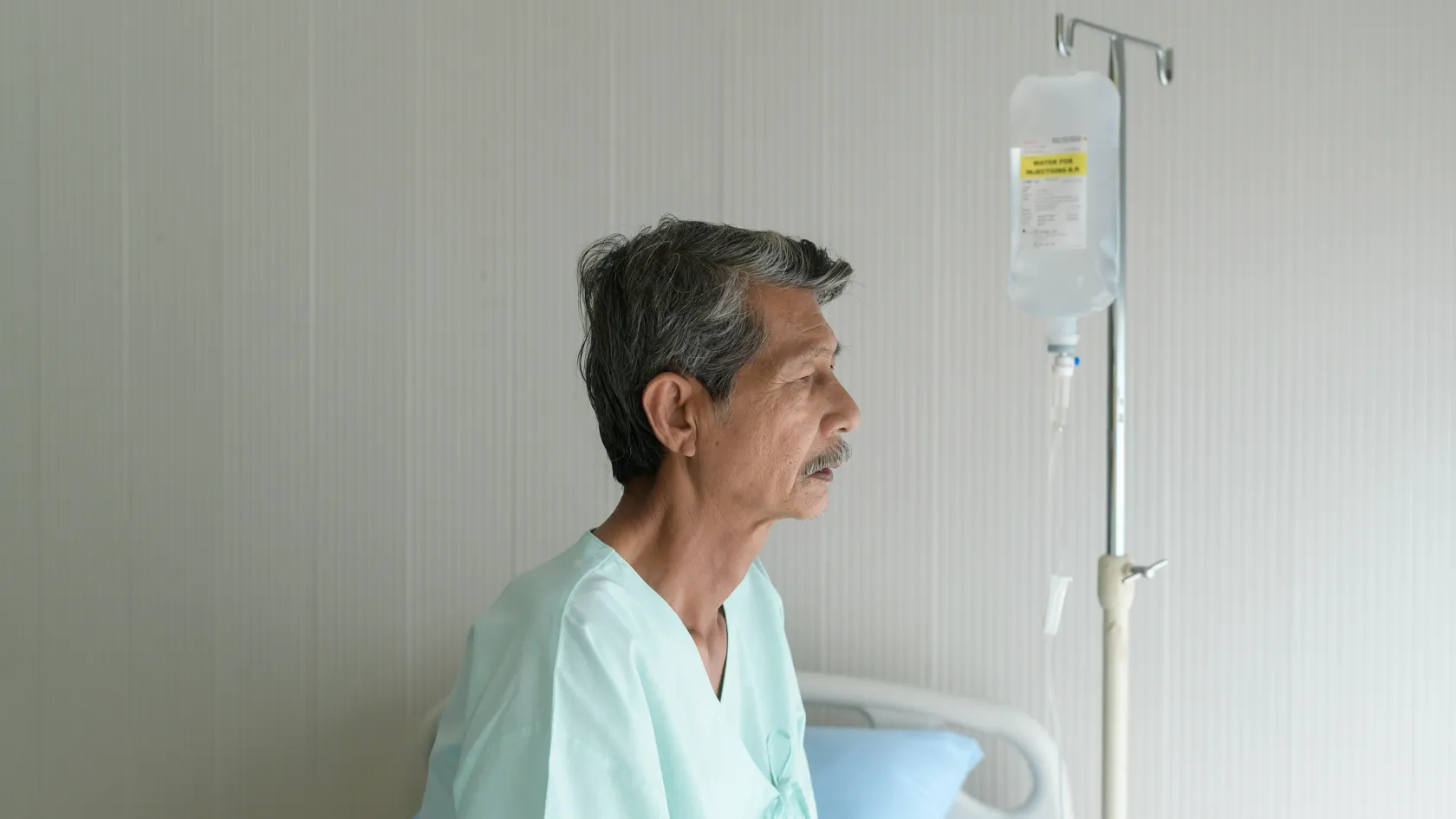
FOLFOXIRI combines fluorouracil, leucovorin, oxaliplatin and irinotecan every two weeks, with a 48-hour home pump, as the first treatment for bowel cancer that has spread. Given with bevacizumab to fit patients, it shrinks more tumors and extends survival compared with two-drug chemotherapy, and it can turn liver metastases operable. Our oncologists check DPD and tumor genes before the first cycle and follow you once you are back home.
About This Department
Most chemotherapy for bowel cancer uses two drugs at a time. FOLFOXIRI gives three, for patients fit enough to gain from it.
FOLFOXIRI is a chemotherapy regimen that combines fluorouracil, leucovorin, oxaliplatin and irinotecan, given every two weeks, with the fluorouracil running for 48 hours through a small portable pump. Oncologists use it mainly as the first treatment for bowel cancer that has spread and cannot be removed, together with bevacizumab. Against the two-drug regimen FOLFIRI, it raised the share of patients whose tumors shrank from 41 to 66 percent and median survival from 16.7 to 22.6 months (Falcone and colleagues, Journal of Clinical Oncology, 2007). A pooled analysis of five trials with bevacizumab found median survival of 28.9 months against 24.5 months on two drugs, and more patients whose liver or lung metastases could then be removed (Cremolini and colleagues, 2020). The extra drug brings more side effects, so it suits patients who are fit and under about 75. This page explains the drugs, how the regimen compares with FOLFOX, FOLFIRI and FOLFIRINOX, who is a candidate, the trial results, how it can make surgery possible, the treatment cycle and side effects, and how patients from abroad arrange it at Biruni Hospital in Istanbul.
What FOLFOXIRI is
FOLFOXIRI is the most intensive standard chemotherapy for bowel cancer that has spread. It trades more side effects for more tumor shrinkage and longer survival.
FOLFOXIRI was given as irinotecan 165 mg/m2 on day 1, oxaliplatin 85 mg/m2 on day 1, leucovorin 200 mg/m2 on day 1 and fluorouracil 3,200 mg/m2 as a 48-hour continuous infusion starting on day 1, every 2 weeks (Falcone and colleagues, 2007).
| Drug | How it works | Given as |
|---|---|---|
| Fluorouracil, 5-FU | Blocks the building blocks of DNA | 48-hour infusion through a portable pump |
| Leucovorin | Strengthens the effect of fluorouracil | Drip over two hours |
| Oxaliplatin | Binds DNA and stops it from copying | Drip over two hours |
| Irinotecan | Blocks topoisomerase I, an enzyme needed to copy DNA | Drip over one hour |
The name
FOL for folinic acid, which is leucovorin. F for fluorouracil. OX for oxaliplatin. IRI for irinotecan.
FOLFOXIRI, FOLFOX, FOLFIRI and FOLFIRINOX
| Regimen | Drugs | Main use |
|---|---|---|
| FOLFOX | Fluorouracil, leucovorin, oxaliplatin | Bowel cancer after surgery and when spread, stomach and esophageal cancer |
| FOLFIRI | Fluorouracil, leucovorin, irinotecan | Bowel cancer when spread, first or second treatment |
| FOLFOXIRI | All four, no fluorouracil push, 48-hour infusion | Bowel cancer that has spread, in fit patients, first treatment |
| FOLFIRINOX | The same four, with a fluorouracil push and higher irinotecan dose | Pancreatic cancer, and before chemoradiation in rectal cancer |
Two drugs are the standard for most patients. Three drugs are chosen when shrinkage matters most, because the tumor is causing symptoms, is growing fast or stands between the patient and an operation.
Is FOLFOXIRI the same as FOLFIRINOX?
Why three drugs at once
Sequence or combine. Oncologists argued over it for a decade.
For years the standard was to give two drugs until they stopped working, then switch to the other pair. The logic seemed sound, since each patient would eventually receive all three drugs. In reality many patients never reach the second treatment, because the cancer grows quickly or they become too unwell after the first line fails, and the drugs held in reserve are never used. Giving everything at the start guarantees exposure to all three, hits the tumor while the patient is strongest and produces the deepest shrinkage. The TRIBE2 trial tested the question directly. Patients on upfront FOLFOXIRI with bevacizumab, with the same regimen reintroduced after progression, lived longer without a second progression than those who received FOLFOX and then FOLFIRI, 19.2 months against 16.4.
The price comes in low blood counts and diarrhea, and only patients who can bear it receive the approach.
Who is a candidate
| Condition | Reason | Alternative |
|---|---|---|
| Age over 75 or limited fitness | Higher risk of serious side effects | FOLFOX or FOLFIRI, or capecitabine alone |
| Existing nerve damage | Oxaliplatin worsens it | FOLFIRI |
| Low DPD enzyme activity | Fluorouracil builds up to toxic levels | Reduced dose or another regimen |
| Poor bowel function or recent obstruction | Diarrhea and perforation risk | Surgery or a stent first |
| Test | Result | What it means |
|---|---|---|
| RAS, KRAS and NRAS | Mutated or wild type | Mutated means bevacizumab as the partner |
| BRAF V600E | Present in under one in ten | Aggressive cancer, with targeted treatment in the second line |
| Mismatch repair or MSI | Deficient, MSI-high | Immunotherapy first, instead of chemotherapy |
| HER2 | Amplified in a few percent | HER2-targeted treatment later |
Results
Patients assigned to FOLFOXIRI plus bevacizumab had significantly longer overall survival than those assigned to doublets plus bevacizumab, median 28.9 against 24.5 months, and higher objective response and R0 resection rates, at the price of a moderate increase in toxicity (Cremolini and colleagues, 2020).
| Trial | Comparison | Main result |
|---|---|---|
| GONO, 244 patients | FOLFOXIRI against FOLFIRI | Response 66 against 41 percent, survival 22.6 against 16.7 months |
| TRIBE, 508 patients | FOLFOXIRI with bevacizumab against FOLFIRI with bevacizumab | Time before growth 12.1 against 9.7 months, response 65 against 53 percent |
| TRIBE2, 679 patients | Upfront FOLFOXIRI and reintroduction against FOLFOX then FOLFIRI, all with bevacizumab | Time to second progression 19.2 against 16.4 months |
| Pooled five trials, 1,697 patients | FOLFOXIRI with bevacizumab against two drugs with bevacizumab | Survival 28.9 against 24.5 months |
A note on BRAF
The pooled analysis found no extra benefit from the third drug in tumors with a BRAF mutation, which had been an early reason to use it in that group (Cremolini and colleagues, 2020).
Shrinking tumors for surgery
Liver metastases
What the numbers show
The R0 secondary resection rate of metastases was greater in the FOLFOXIRI arm, 15 percent against 6 percent among all patients and 36 percent against 12 percent among patients with liver metastases only (Falcone and colleagues, 2007).
Bevacizumab or an anti-EGFR antibody
| Tumor profile | Usual partner with FOLFOXIRI | Note |
|---|---|---|
| RAS mutated, any side | Bevacizumab | The combination tested in TRIBE and TRIBE2 |
| RAS and BRAF wild type, right side | Bevacizumab | Anti-EGFR antibodies work poorly on the right side |
| RAS and BRAF wild type, left side | FOLFOX or FOLFIRI with panitumumab or cetuximab | Adding the third drug to anti-EGFR treatment showed no clear gain in TRIPLETE |
| BRAF V600E | Bevacizumab, or two drugs | Targeted encorafenib and cetuximab later |
The partner drug depends on the tumor's genes and on where in the colon the cancer began.
The treatment cycle
A two-week cycle
| Day | What happens | Where |
|---|---|---|
| Day 1 | Drips of about four hours, pump connected | Day unit |
| Days 1 to 3 | Fluorouracil runs from the pump for 48 hours | Home or hotel |
| Day 3 | Pump disconnected, port flushed | Day unit, 15 minutes |
| Days 4 to 14 | Recovery, lowest blood counts around day 7 to 10 | Home |
| Every four cycles | Scan to measure response | Imaging unit |
Side effects
| Side effect, grade 3 or 4 | Three drugs | Two drugs |
|---|---|---|
| Low neutrophil count | 45.8 percent | 21.5 percent |
| Fever with low neutrophils | 6.3 percent | 3.7 percent |
| Diarrhea | 17.8 percent | 8.4 percent |
Nerve damage from oxaliplatin
Oxaliplatin causes tingling in the fingers and sensitivity to cold, first around the mouth and throat after each dose and later in the hands and feet. Oxaliplatin is paused or stopped before the damage becomes lasting.
- A fever of 38 degrees or more.
- More than four extra loose stools in a day, or diarrhea that loperamide does not control.
- Numbness that makes buttons or writing difficult.
Checking DPD before the first dose
An enzyme called DPD breaks down fluorouracil. Around one in twenty people have reduced activity and one in several hundred almost none, and in them a standard dose turns life-threatening. A blood test for the DPYD gene or the enzyme level, recommended in Europe since 2020, is done before the first cycle, and the dose is lowered when activity is reduced.
After the first months
In TRIBE2, patients whose cancer progressed after maintenance received FOLFOXIRI with bevacizumab again, and this strategy outperformed a planned sequence of two-drug regimens (Cremolini and colleagues, 2020).
Other uses
| Cancer | Regimen | Setting |
|---|---|---|
| Pancreatic cancer | FOLFIRINOX or modified FOLFIRINOX | Spread disease in fit patients, after surgery, and before surgery for borderline tumors |
| Rectal cancer | Modified FOLFIRINOX | Before chemoradiation and surgery in locally advanced tumors |
| Bowel cancer after surgery | Not used | FOLFOX or CAPOX remain the standard |
Pancreatic cancer
Living on treatment
The pump goes everywhere with you for two days.
The pump, the size of a baby bottle, sits in a pouch on a belt or shoulder strap. You can walk, sleep and shower with care while it runs. In the oxaliplatin week, avoid cold drinks and cold food for several days, wear gloves to open the fridge and cover your mouth and nose outside in cold weather, since cold triggers the throat spasm oxaliplatin causes. Eat small frequent meals, drink plenty and keep loperamide at home. Pregnancy has to be avoided during treatment and for six months after.
Treatment for patients from abroad
One coordinator from the international patients office handles arrangements from the first message through discharge and answers the same WhatsApp number once you are back home. The office works in English, Arabic, French, Russian, Serbian, Romanian and Spanish and books interpreters for other languages, and it arranges the visa invitation letter, airport transfers, daily transport and accommodation near the hospital. Halal, vegetarian and diabetic meals, a prayer room on site, and a female physician on request wherever the rota allows.
Two ways to complete the course
Cost
| Item | Included | Priced separately |
|---|---|---|
| Chemotherapy | The four drugs and the pump for each cycle | Bevacizumab or anti-EGFR antibody, when quoted apart |
| Treatment day | Consultation, blood tests, day unit chair, pump disconnection | Admission for fever or diarrhea |
| Before starting | Planning consultation | Port placement, DPD test, tumor gene tests, scans |
References
- Falcone A, Ricci S, Brunetti I, et al. Phase III trial of infusional fluorouracil, leucovorin, oxaliplatin, and irinotecan (FOLFOXIRI) compared with infusional fluorouracil, leucovorin, and irinotecan (FOLFIRI) as first-line treatment for metastatic colorectal cancer. The Gruppo Oncologico Nord Ovest. J Clin Oncol. 2007;25(13):1670-1676.
- Loupakis F, Cremolini C, Masi G, et al. Initial therapy with FOLFOXIRI and bevacizumab for metastatic colorectal cancer. N Engl J Med. 2014;371(17):1609-1618.
- Cremolini C, Antoniotti C, Rossini D, et al. Upfront FOLFOXIRI plus bevacizumab and reintroduction after progression versus mFOLFOX6 plus bevacizumab followed by FOLFIRI plus bevacizumab in the treatment of patients with metastatic colorectal cancer (TRIBE2). A multicentre, open-label, phase 3, randomised, controlled trial. Lancet Oncol. 2020;21(4):497-507.
- Cremolini C, Antoniotti C, Stein A, et al. Individual patient data meta-analysis of FOLFOXIRI plus bevacizumab versus doublets plus bevacizumab as initial therapy of unresectable metastatic colorectal cancer. J Clin Oncol. 2020;38(28):3314-3324.
Editor's note
Written by the Biruni Hospital medical editorial team. Reviewed by Prof. Dr. Mustafa Teoman YANMAZ, Medical Oncology.
Medically reviewed by

Prof. Dr. Mustafa Teoman YANMAZ
Medical Oncology
Related Treatments
View All
ALK Inhibitor Therapy
ALK inhibitor therapy treats ALK-positive lung cancer with a daily tablet taken at home. In the CROWN trial 60 percent of patients on lorlatinib were free of progression at five years, alectinib cut brain progression from 45 to 12 percent in ALEX, and two years of alectinib after surgery now protects early disease.

Anti-Angiogenic Therapy
Anti-angiogenic therapy blocks VEGF, the signal tumors use to grow their own blood vessels. Bevacizumab is given by drip with chemotherapy or immunotherapy, and tablets such as sunitinib, axitinib, cabozantinib and lenvatinib are taken at home. It treats bowel, liver, kidney, ovarian, cervical, lung and thyroid cancers. Our oncologists check blood pressure, bleeding risk and surgery timing before the first dose and follow you once you are back home.

Antibody Drug Conjugate Therapy - ADC Therapy
An antibody drug conjugate links an antibody that finds cancer cells to a powerful chemotherapy drug, delivering it inside the tumor. ADCs are now standard in HER2-positive, HER2-low and triple-negative breast cancer and in advanced bladder cancer, where enfortumab vedotin with pembrolizumab raised median survival from 16.1 to 31.5 months.

Atezolizumab Therapy - Tecentriq
Atezolizumab is an immunotherapy drip that blocks PD-L1, the protein tumors use to switch off the immune cells attacking them. It is approved for lung cancer after surgery and in advanced disease, for small cell lung cancer and, with bevacizumab, for advanced liver cancer, where it raised one-year survival from 54.6 to 67.2 percent.

Bevacizumab Therapy - Avastin
Starving a tumor of new blood vessels sounds as if it should work everywhere. The trials say otherwise. Bevacizumab added months of life in bowel, lung, cervical and liver cancer, delayed ovarian cancer, and did nothing for survival in newly diagnosed glioblastoma. This guide gives each result, the side effects, the biosimilars and how a course is planned.