
Understanding chronic myeloid leukemia (CML) and modern treatment options
Key Takeaways
- Chronic Myeloid Leukemia CML is a slow-growing cancer of the blood and bone marrow.
- It is caused by a specific genetic abnormality known as the Philadelphia chromosome.
- CML mainly affects white blood cells, causing them to grow uncontrollably.
- Many patients have no symptoms in the early stage.
- CML progresses in three phases: chronic phase, accelerated phase, and blast phase.
- Diagnosis involves blood tests, bone marrow examination, and genetic testing.
- Targeted therapy with tyrosine kinase inhibitors has greatly improved survival.
- Most patients diagnosed early can live long and near-normal lives.
- Regular monitoring is essential to ensure treatment effectiveness.
Definition of chronic myeloid leukemia
Chronic Myeloid Leukemia is a cancer that affects myeloid cells in the bone marrow. Myeloid cells normally develop into red blood cells, platelets, and certain types of white blood cells. In CML, an abnormal genetic change causes the body to produce too many white blood cells.
These abnormal white blood cells do not function properly, they accumulate in the blood and bone marrow, interfering with the production of healthy blood cells.
CML is classified as a chronic leukemia because it typically progresses slowly, especially in the early stage. This makes it different from acute leukemias, which progress rapidly and require immediate intervention.
The hallmark of CML is the presence of a specific genetic abnormality called the Philadelphia chromosome, an abnormal chromosome gene known as BCR ABL1, which leads to uncontrolled cell growth.
Causes of chronic myeloid leukemia
The exact reason why CML develops is not fully understood. However, the main cause is clearly identified at the genetic level.
The philadelphia chromosome
CML is caused by a genetic mutation that occurs when parts of chromosome 9 and chromosome 22 exchange places. This process is called translocation. The result is a shortened chromosome 22, known as the Philadelphia chromosome.
This abnormal chromosome creates a new gene called BCR ABL1.
How the BCR ABL1 gene causes CML
The BCR-ABL1 gene produces an abnormal protein that acts as a constantly active tyrosine kinase. Normally, tyrosine kinases regulate cell growth and signaling in a controlled way, but this protein sends continuous signals that tell blood cells to grow and divide without regulation, at the same time preventing the natural process of programmed cell death, allowing abnormal white blood cells to accumulate in the blood and bone marrow, leading to the development and progression of CML. This genetic mutation is acquired during a person's lifetime. It is not inherited from parents and cannot be passed on to children.
Risk factors
Although the exact trigger is often unknown, some factors may increase risk:
- Older age
- Male gender
- Exposure to high doses of radiation
In most cases, no clear cause is identified.
Symptoms of chronic myeloid leukemia
Symptoms vary depending on the phase of the disease. Many people have no symptoms in the early stage and are diagnosed during routine blood tests.
Common symptoms
- Persistent fatigue
- Weakness
- Unexplained weight loss
- Night sweats
- Low grade fever
- Loss of appetite
Symptoms due to enlarged spleen
The spleen often becomes enlarged in CML, because it filters abnormal blood cells. This may cause:
- Pain or fullness in the upper left abdomen
- Feeling full quickly after eating small meals
- Abdominal discomfort
Blood-related symptoms
Because CML interferes with normal blood production, patients may experience:
- Pale skin due to anemia
- Shortness of breath
- Frequent infections
- Easy bruising or bleeding
Symptoms often become more noticeable as the disease progresses.
Detailed phases of chronic myeloid leukemia
CML develops in three distinct phases. Understanding these phases is essential because treatment response and prognosis depend on the stage of the disease.
Chronic phase
The chronic phase is the earliest and most common stage at diagnosis. About 80 to 90 percent of patients are diagnosed during this phase.
Characteristics of this phase:
- The number of blast cells in the blood or bone marrow is less than 10 percent.
- White blood cell counts are elevated.
- Symptoms are mild or absent.
- The spleen may be slightly enlarged.
During this phase, abnormal white blood cells are increased, but they are still relatively mature and partially functional. Patients may feel well or experience only mild fatigue.
Treatment with tyrosine kinase inhibitors in this stage is highly effective. Most patients achieve good control of the disease and can live for many years with proper therapy.
If treated appropriately, many patients remain in the chronic phase indefinitely.
Accelerated phase
The accelerated phase occurs when the disease becomes more aggressive and begins to progress.
Characteristics of the accelerated phase:
- Blast cells represent 10 to 19 percent of blood or bone marrow cells.
- White blood cell counts become more difficult to control.
- Platelet counts may become very high or very low.
- Symptoms worsen.
- Spleen enlargement increases.
Patients may experience more pronounced fatigue, weight loss, fever, and abdominal discomfort. These changes make the disease more resistant to treatment.
Treatment becomes more complex, and doctors may adjust medications or consider more intensive options.
Without appropriate treatment, the accelerated phase can progress to the blast phase.
Blast phase or blast crisis
The blast phase is the most advanced and dangerous stage of CML. It resembles acute leukemia.
Characteristics of the blast phase:
- Blast cells account for 20 percent or more of blood or bone marrow cells.
- Severe symptoms develop.
- Bone marrow function becomes severely impaired.
In this stage, immature white blood cells called blasts multiply rapidly and crowd out healthy cells. This leads to:
- Severe anemia
- Serious infections
- Heavy bleeding
- Bone pain
- Extreme fatigue
Blast phase is life-threatening and requires urgent treatment. Intensive chemotherapy, targeted therapy adjustments, or stem cell transplantation may be needed.
The goal of treatment at this stage is to return the disease to the chronic phase and regain control.
Diagnosis of chronic myeloid leukemia
Early detection plays a key role in improving treatment outcomes and long-term disease control.
Complete blood count
A complete blood count is usually the first test performed. It often reveals:
- Significantly elevated white blood cell count
- Reduced red blood cell count
- Abnormal platelet counts
These abnormalities raise suspicion and require further investigation.
Peripheral blood smear
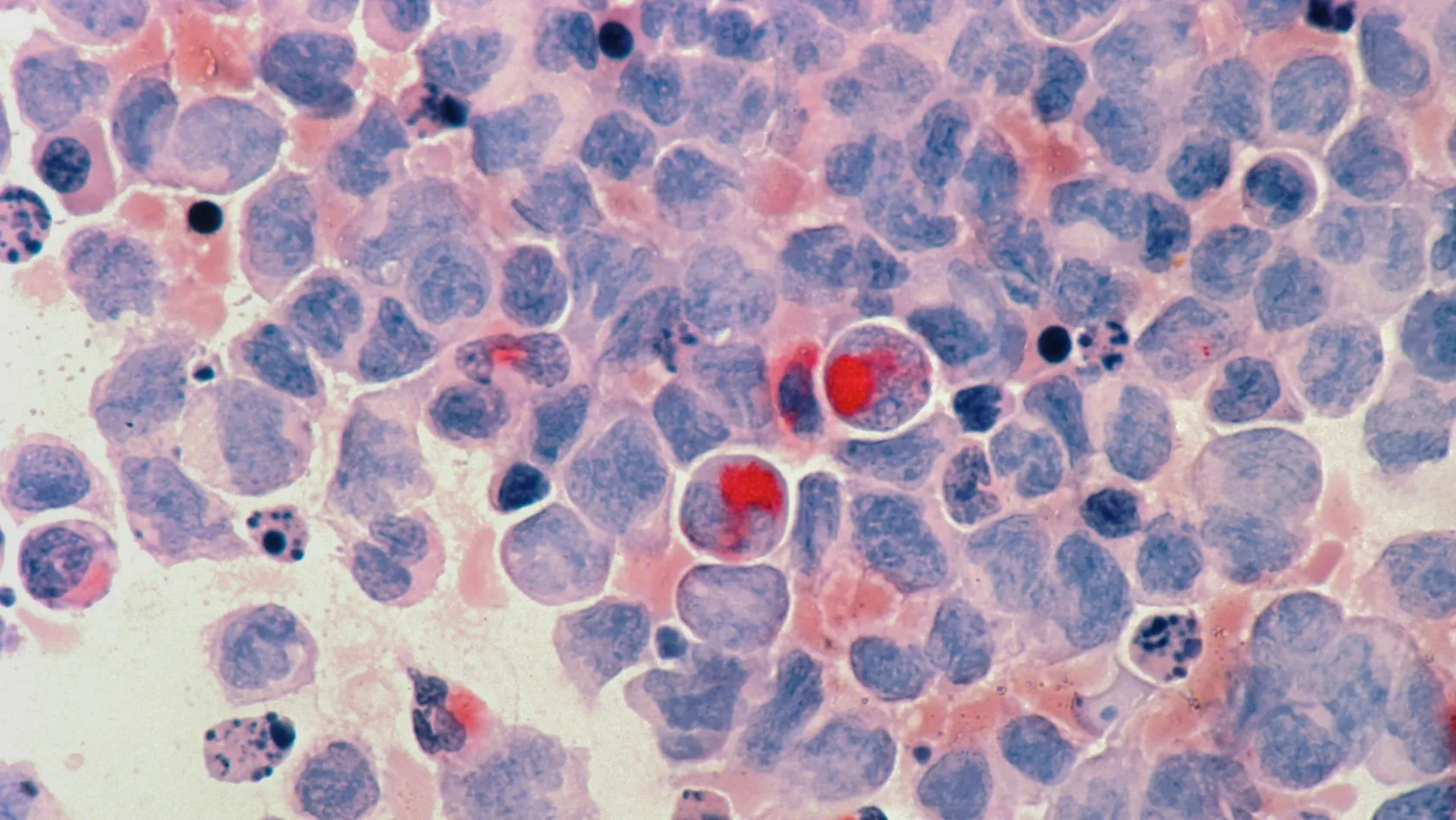
In this test, a laboratory specialist examines a blood sample under a microscope to identify abnormal or immature white blood cells. The presence of increased blasts or atypical cells supports the diagnosis and helps assess disease activity.
Bone marrow biopsy
A bone marrow examination confirms the diagnosis and provides important information about disease progression. It allows doctors to:
- Measure the percentage of blast cells
- Determine the phase of the disease
- Evaluate bone marrow structure and involvement
Cytogenetic testing
Cytogenetic analysis is performed to detect chromosomal abnormalities, particularly the presence of the Philadelphia chromosome, which is characteristic of CML.
Molecular testing
Polymerase chain reaction (PCR) testing identifies and measures the level of the BCR-ABL1 gene. This test is essential not only for confirming the diagnosis but also for monitoring how well the patient responds to treatment over time.
Treatment of chronic myeloid leukemia
The treatment of Chronic Myeloid Leukemia CML focuses on blocking the abnormal protein that causes uncontrolled growth of white blood cells. Thanks to modern targeted therapies, most patients can achieve long-term control of the disease, especially when diagnosed within the chronic phase.
Tyrosine kinase inhibitors
Tyrosine kinase inhibitors, known as TKIs, are the first line treatment for CML. These medications target the abnormal BCR-ABL1 protein produced by the Philadelphia chromosome.
Common TKIs include:
- Imatinib
- Dasatinib
- Nilotinib
- Bosutinib
- Ponatinib
These stay taken orally and are highly effective in normalizing blood counts and reducing leukemia cells. Most patients respond very well, particularly in the early stage of the disease.
Monitoring response
Regular blood tests and molecular testing are essential to measure BCR ABL1 levels and ensure that treatment is working. Monitoring helps detect resistance early and allows doctors to adjust therapy if needed.
Managing resistance
If the disease does not respond to new TKI, doctors may switch to another. Mutation testing can help guide the choice of medication.
Stem cell transplantation
Stem cell transplantation may be considered in patients who do not respond to multiple medications or who progress to advanced phases. This option carries higher risks and is reserved for selected cases.
Treatment goals
The main goals of treatment are:
- Restore normal blood counts
- Reduce or eliminate detectable leukemia cells
- Prevent progression to accelerated or blast phase
- Maintain long term remission
With early diagnosis and appropriate therapy, most patients with CML can live long and near-normal lives.
Conclusion
Chronic Myeloid Leukemia is a slow-growing cancer of the blood caused by a specific genetic mutation known as the Philadelphia chromosome. It progresses through three phases: chronic phase, accelerated phase, and blast phase.
The chronic phase is the most treatable and least dangerous. The accelerated phase indicates disease progression and requires careful management. The blast phase is aggressive and life-threatening.
Modern targeted therapies have transformed CML into a manageable condition for most patients. With early diagnosis, appropriate treatment, and regular follow up, many individuals with CML can live long and productive lives.
Understanding the phases, symptoms, and treatment options empowers patients to participate actively in their care and improves overall outcomes.
Editor's note
Written by the Biruni Hospital medical editorial team. Reviewed by Op. Dr. Selda Atar Akal, Gynecology and Obstetrics.
Medically reviewed by

Op. Dr. Selda Atar Akal
Gynecology and Obstetrics
Other Articles
Why does lymphoma occur? Causes and contributing factors
Lymphoma is a type of cancer that originates in the lymphatic system, the network of tissues, vessels, and organs that play a vital role in the body's immune defense. Discover the genetic, viral, environmental, and lifestyle factors that contribute to its development.
Read more
What is a chemotherapy infusion? Duration, process, and what to expect
A chemotherapy infusion is a method of delivering cancer treatment directly into the bloodstream through a vein, usually via an intravenous (IV) line. Learn how long sessions take, what to expect, and how to prepare.
Read more
Will I lose my hair with chemotherapy? everything you need to know
Losing your hair is one of the first concerns many people have when they hear the word chemotherapy. Discover why chemotherapy causes hair loss, when it starts, how long it lasts, and practical ways to cope and support regrowth.
Read more