
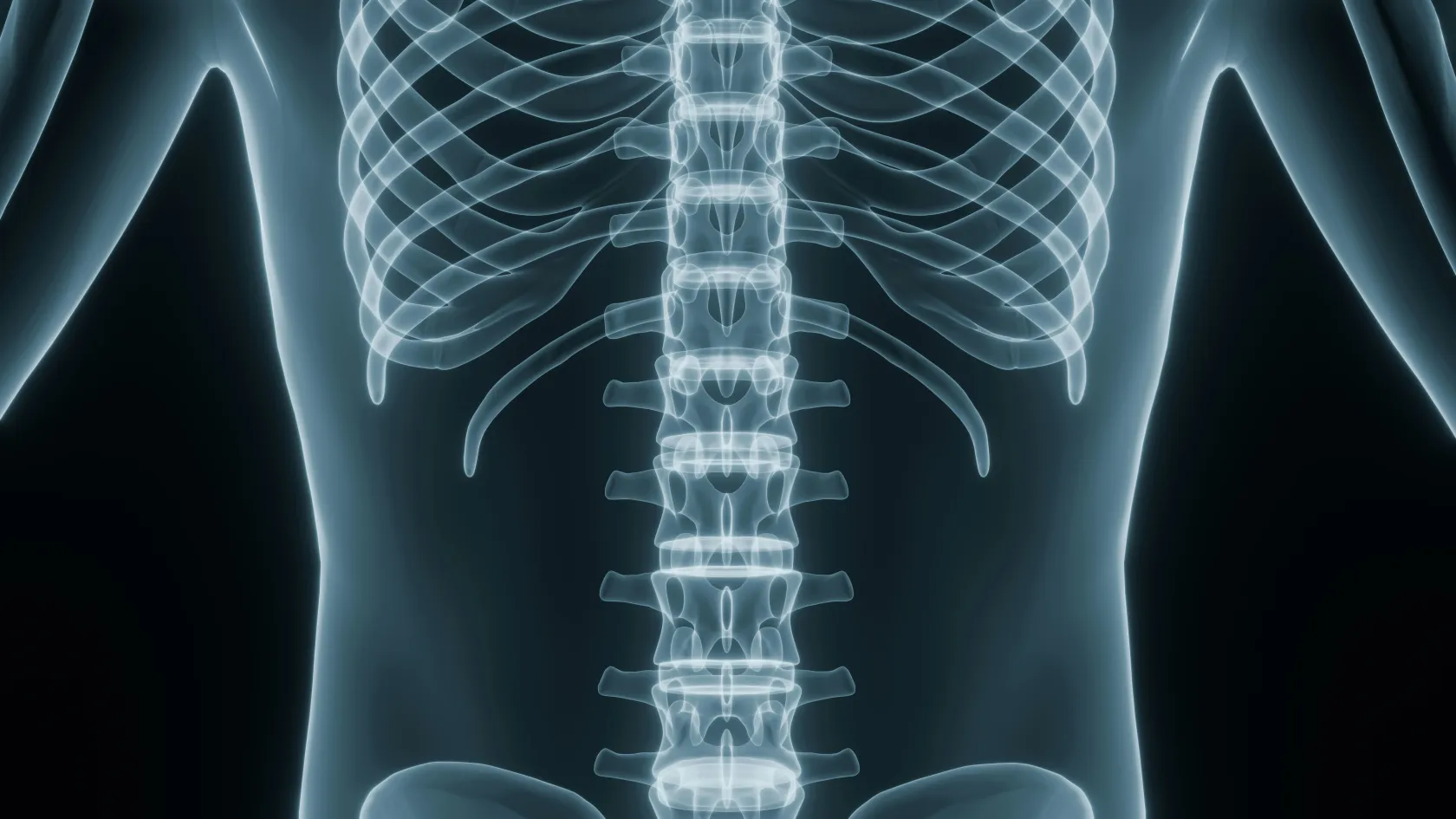
Scoliosis Surgery Child
Scoliosis surgery in a child straightens and stabilizes a curve that would keep worsening, most often with posterior spinal fusion using screws and rods, or with growing rods and tethering in younger children who are still growing. Many curves are controlled with a brace and never need surgery. At Biruni Hospital in Istanbul, our pediatric spine surgeons operate with spinal cord monitoring and an enhanced recovery pathway that gets children walking the day after surgery.
About This Department
Most curved spines in children need watching or a brace. Surgery straightens and stops the curves that keep growing.
Scoliosis surgery in a child corrects a sideways and twisted curve of the spine that has reached a size where it will keep worsening into adulthood, at 45 to 50 degrees or more. For teenagers with idiopathic scoliosis surgeons use posterior spinal fusion with screws and rods as the standard operation, and for younger children with early onset scoliosis growth-friendly rods straighten the spine while it keeps growing. Many children never reach surgery. In the BrAIST trial of 242 adolescents, a brace worn as prescribed stopped high risk curves from reaching 50 degrees in 72 percent, against 48 percent with observation alone (Weinstein and colleagues, New England Journal of Medicine, 2013). When a child needs surgery, recovery comes faster than many families expect. An enhanced recovery pathway cut the average hospital stay after fusion from 6.3 to 3.5 days (Temby and colleagues, Spine Deformity, 2021). This page explains types of scoliosis, measurement, bracing, fusion, tethering, growing rods, safety, recovery, and how families from abroad arrange scoliosis surgery for a child at Biruni Hospital in Istanbul.
What scoliosis is
A three-dimensional curve
Scoliosis is not caused by posture, heavy school bags or sports. Parents did nothing to cause it.
Uneven shoulders, a prominent shoulder blade, an uneven waist or a hump when bending forward are the signs parents notice first.
| Specialist | Role | When |
|---|---|---|
| Pediatric spine surgeon | Assessment, bracing decisions, surgery | Throughout |
| Orthotist | Making and adjusting the brace | During bracing |
| Physiotherapist | Scoliosis-specific exercises, recovery | Before and after surgery |
| Pediatric anesthetist and intensivist | Safe surgery and pain control | Around surgery |
Types of scoliosis
| Type | Cause | Typical age |
|---|---|---|
| Adolescent idiopathic | Unknown, runs in families | Ten years to maturity |
| Early onset | Idiopathic, congenital, syndromic or neuromuscular | Under ten years |
| Congenital | Malformed vertebrae from before birth | Infancy and childhood |
| Neuromuscular | Cerebral palsy, muscular dystrophy, spinal muscular atrophy | Childhood |
| Syndromic | Marfan syndrome, neurofibromatosis | Any age |
An MRI for some children
Does every child with scoliosis need an MRI?
Measuring the curve
| Measurement | What it shows | How |
|---|---|---|
| Cobb angle | Size of the curve in degrees | Standing X-ray of the whole spine |
| Risser grade and hand X-ray | Growth remaining | X-ray of the pelvis or hand |
| Rib hump | Rotation | Forward bend test, scoliometer |
| Bending X-rays | Flexibility of the curve | Before surgery |
Growth matters most
A change of five degrees or more between X-rays counts as real progression. Smaller changes fall within measurement error.
Bracing
| Outcome | Brace | Observation |
|---|---|---|
| Curve stayed under 50 degrees, all patients | 72 percent | 48 percent |
| Randomized patients only | 75 percent | 42 percent |
| Effect of wear time | More hours, better result | Not applicable |
Who benefits
| Topic | Advice | Note |
|---|---|---|
| Hours | At least 18 a day, including nights | Sensors can record wear time |
| Sport | Allowed without the brace | Keeps muscles strong |
| Skin | Cotton vest underneath, daily checks | Adjust if red marks persist |
When surgery is needed
The 50 degree line
Can surgery wait until our child is older?
Choosing the right moment
Families choose the timing with us.
Once surgery is advised, families choose a date around school, examinations, sports seasons and travel, and a delay of a few months rarely changes the result for an adolescent near the end of growth, while a rapidly progressing curve in a younger child calls for an earlier date, so we show the growth stage, the speed of progression and the flexibility of the curve on the X-rays and agree a window rather than a fixed day. Summer holidays suit most teenagers. Psychological preparation matters too, and teenagers take part in every discussion.
Teenagers make this decision together with us.
Posterior spinal fusion
- An incision runs down the middle of the back.
- Screws are placed in the vertebrae of the curved segment.
- Two rods, shaped to the corrected spine, are attached to the screws and rotated to straighten the curve.
- Bone graft makes the instrumented vertebrae grow together into one solid segment.
The operation
| Step | What happens | Time |
|---|---|---|
| Anesthesia and monitoring set-up | Nerve monitoring leads placed | One hour |
| Correction and fusion | Screws, rods, bone graft | Three to five hours |
| Waking | Neurological check in the operating room | Before leaving theater |
| Intensive care or high dependency | Pain control, monitoring | One night |
The rods stay in place for life and do not set off airport security in most cases. Removal is rarely needed.
Safety during surgery
| Measure | Purpose | When |
|---|---|---|
| Spinal cord monitoring | Detects stress on the spinal cord in real time | Throughout surgery |
| Tranexamic acid and cell saver | Reduce blood loss and transfusion | During surgery |
| Navigation or careful screw checks | Accurate screw placement | During surgery |
| Antibiotics and wound protocol | Prevent infection | Before and after |
Blood conservation
Children with neuromuscular scoliosis carry higher risks, and their care is planned with neurologists, lung specialists and intensivists before surgery.
Vertebral body tethering
A non-fusion option
| Outcome | Posterior spinal fusion | Vertebral body tethering |
|---|---|---|
| Curve correction | Greater and more reliable | Less |
| Unplanned revision surgery | Lower odds | Higher, tether breakage in 13 to 23 percent |
| Pain and opioid use | More | Less |
| Return to sport, lumbar flexibility | Slower | Faster, more flexibility |
Who is a candidate
Is tethering right for our child?
Growing rods for young children
| Technique | Unplanned reoperations | Planned operations |
|---|---|---|
| Traditional growing rods | 15 percent | Highest, 5.3 per child |
| Magnetically controlled growing rods | Higher than traditional rods | Lengthening in clinic with a magnet, no surgery |
| Shilla growth guidance | Comparable | Fewer |
Fusing the spine of a young child stops chest growth and harms lung development. Growth-friendly techniques straighten the spine and let it grow.
Infants and toddlers with progressive curves start with serial casting under anesthesia, which straightens some curves completely.
Casting first
Serial plaster casts, changed every two to three months under anesthesia, delay or avoid surgery in many infants with idiopathic curves, and some curves resolve completely.
Congenital and neuromuscular scoliosis
Special planning
| Condition | Goal of surgery | Special care |
|---|---|---|
| Cerebral palsy | Sitting balance, comfort, care | Fusion often to the pelvis |
| Duchenne muscular dystrophy | Sitting, breathing | Heart and lung assessment |
| Spinal muscular atrophy | Sitting, lung function | Growth-friendly rods in young children |
For children who cannot walk, a straighter spine means more comfortable sitting, easier care and less pain.
Recovery
| Milestone | Enhanced recovery | Conventional care |
|---|---|---|
| Hospital stay | 3.5 days on average | 6.3 days |
| Switch to pain tablets | Two days earlier | Later |
| Hospital costs | Half | Full |
Life after fusion
Teenagers go back to their lives.
After a fusion, adolescents return to school, sport, dance and most activities they enjoyed before, work in any career they choose and carry pregnancies later in life without special problems, while the fused segment no longer bends, which most young people barely notice when the fusion ends in the mid or lower back, and yearly X-rays for two years confirm that the fusion is solid. Long-term studies show good function decades after surgery.
A straight back, a full life.
For families from abroad
Length of stay
Flying home
Long flights are possible ten to fourteen days after surgery, with walks in the aisle every hour.
Cost
| Item | Included | Priced separately |
|---|---|---|
| Surgery | Surgeon, anesthesia, implants, spinal cord monitoring | Revision or extra procedures |
| Hospital | Intensive care night and ward stay as planned | Extra days |
| Aftercare | Physiotherapy in hospital, X-ray before discharge, video follow-up | Braces, growing rod lengthening |
The price depends on the number of levels fused, the type of implants and the complexity of the curve.
Growing rods and staged care
For young children with growing rods, the quote lists the first operation, each lengthening and the final fusion separately, so families can plan for the years ahead.
References
- Weinstein SL, Dolan LA, Wright JG, Dobbs MB. Effects of bracing in adolescents with idiopathic scoliosis. N Engl J Med. 2013;369(16):1512-1521.
- Al-Naseem AO, Al-Naseem A, Al Balushi B, et al. Posterior spinal fusion versus vertebral body tethering for paediatric scoliosis, a meta-analysis of comparative studies. Spine Deform. 2025;13(3):681-694.
- Kim G, Sammak SE, Michalopoulos GD, et al. Comparison of surgical interventions for the treatment of early-onset scoliosis, a systematic review and meta-analysis. J Neurosurg Pediatr. 2023;31(4):342-357.
- Temby SE, Palmer GM, Penrose SP, Peachey DM, Johnson MB. Implementation of an enhanced recovery pathway in Australia after posterior spinal fusion for adolescent idiopathic scoliosis delivers improved outcomes. Spine Deform. 2021;9(5):1371-1377.
Editor's note
Written by the Biruni Hospital medical editorial team. Reviewed by Assoc. Prof. Dr. Aysel TAKTAK, Pediatric Nephrology.
Medically reviewed by

Assoc. Prof. Dr. Aysel TAKTAK
Pediatric Nephrology
Related Treatments
View All
Appendectomy For Children - Pediatric Appendix Surgery
Appendicitis is the commonest reason for emergency abdominal surgery in children, and a child with the warning signs needs an emergency department the same day. This guide covers the signs to watch for, diagnosis with ultrasound, keyhole surgery against antibiotics alone, perforated appendicitis, recovery and what families in Istanbul need to know.
Biliary Atresia Surgery
Biliary atresia blocks the bile ducts of a newborn, and the Kasai operation restores bile flow in about half of babies, best when done in the first weeks of life. This guide covers the warning signs of pale stools and lasting jaundice, diagnosis, the Kasai, results in expert centers, liver transplant, stool color screening and the stay.
Circumcision Surgery
Circumcision removes the foreskin for religious, cultural or medical reasons, in babies, boys and adults. With a trained surgeon and proper pain relief, complications are rare and lowest in the first year of life. This guide covers the reasons, the best age, pain relief, techniques, health effects from the main studies, healing and the short stay in Istanbul.

Hepatoblastoma Surgery - Liver Cancer Surgery Child
Hepatoblastoma surgery removes the most common liver cancer of young children, after cisplatin chemotherapy has shrunk the tumor. Depending on PRETEXT stage, the surgeon removes part of the liver or, when the tumor cannot be resected, replaces it with a living donor transplant. At Biruni Hospital in Istanbul, our pediatric oncology, liver surgery and transplant teams plan each child's treatment together, protect hearing during chemotherapy and follow every child with AFP tests.
Hydrocephalus Surgery Child
Hydrocephalus in children is treated with a shunt that drains fluid to the abdomen or with an endoscopic third ventriculostomy that needs no implant. Choosing the right treatment spares many children a lifelong shunt, and modern protocols cut shunt infection. This guide covers both operations, who suits each, signs of failure, results, follow-up and the stay.