In osteosarcoma, complete removal of the tumor and a good response to chemotherapy are the two strongest predictors of survival. This guide explains how surgeons plan margins, why limb salvage, rotationplasty or amputation fits different tumors, how lung metastases can still be cured by surgery, newer additions to treatment, follow-up and the stay in Istanbul.
About This Department
Pediatric Surgery
In osteosarcoma, how completely the surgeon removes the tumor is one of the two strongest predictors of survival. The other is how well the tumor responded to chemotherapy before the operation.
Osteosarcoma leads the bone cancers of children and teenagers. Treatment has three parts, chemotherapy, surgery and more chemotherapy, and the surgery decides a great deal. In a German and Austrian analysis of 1,702 patients, ten-year survival was 64.8 percent when all visible tumor was removed and 14.6 percent when it was not. Surgery also matters when the cancer comes back, since complete removal of lung or bone deposits gives a real chance of long-term cure. Send us the MRI, chest CT, biopsy and chemotherapy record, and an orthopedic oncology surgeon working with pediatric oncologists will tell you how the tumor would be removed and what reconstruction would follow.
64.8% vs 14.6%
Ten-year survival, complete against incomplete surgery, 1,702 patients
39% vs 0%
Five-year survival after relapse, with and without complete second surgery
The tumor comes out in one piece, never cut through, with a cuff of normal bone and muscle around it.
The biopsy track is removed with the tumor.
Margins are planned on an MRI taken after chemotherapy, including any separate skip lesions in the same bone.
The joint or bone removed is rebuilt in the same operation.
Why chemotherapy came first
Before the 1980s, surgery alone, mostly amputation, cured fewer than one in five patients, because microscopic spread to the lungs was already present. A small American randomized trial in 1986 settled the question. At two years, 66 percent of patients given chemotherapy were free of relapse. Of those only observed, 17 percent were. Chemotherapy before and after surgery became standard. Surgery moved from amputation to limb sparing, and the two changes together turned a cancer that killed most children into one that most survive.
Planning the resection
MRI of the whole bone after chemotherapy, to measure the tumor and look for skip lesions.
Mapping of the nerves and vessels near the tumor, which decides whether the limb can be saved.
Choice of reconstruction, an implant, donor bone or rotationplasty, agreed with the family.
Review by the tumor board, with the oncologist, radiologist and pathologist.
The share of tumor killed by chemotherapy, with 90 percent or more counted as a good response.
The distance from the tumor to every cut edge.
Margins and response
Chemotherapy-induced tumor necrosis and surgical margins are important prognostic factors for local control of patients with osteosarcoma.
Rizzoli Institute series, Journal of Clinical Oncology, 1994
Prognostic factors
Tumor site and size, primary metastases, response to chemotherapy, and surgical remission are of independent prognostic value in osteosarcoma.
Analysis of 1,702 patients, Journal of Clinical Oncology, 2002
What do the studies show?
Two numbers decide most outcomes.
Surgery and survival
The Cooperative Osteosarcoma Study Group analyzed 1,702 patients treated with chemotherapy before and after surgery. Ten-year survival was 59.8 percent overall. It was 64.8 percent when all visible tumor was removed and 14.6 percent when removal was incomplete, and 73.4 percent with a good response to chemotherapy against 47.2 percent with a poor one. Tumors of the pelvis or spine, large tumors and metastases at diagnosis did worse, and surgical remission and response emerged as the two key factors.
Adjuvant chemotherapy increases the chances of relapse-free survival of patients with high-grade osteosarcoma.
Randomized trial, New England Journal of Medicine, 1986
Where the tumor sits changes the operation. Around the knee and in the upper arm, the commonest sites, limb salvage is possible in most children. In the pelvis and spine, wide margins are harder to achieve without major loss of function, survival is lower and radiotherapy sometimes supports surgery. For a tumor that wraps around the main nerve of the leg, saving the limb may leave it numb and weak, and a rotationplasty or amputation can give a child a more active life with a prosthesis. These are hard conversations, and the team gives families time, written information and, where helpful, the chance to meet another family who made the same choice.
Local recurrence
At the Rizzoli Institute in Bologna, local recurrence occurred in 7 percent of patients and only three of 28 who recurred were alive at last follow-up. None of the patients treated by radical amputation or rotationplasty recurred locally, against 10 percent after limb salvage. Among limb-salvage patients, a poor response to chemotherapy and inadequate margins were the strongest predictors, so the surgeon plans margins on the post-chemotherapy MRI, and rotationplasty or amputation remain the right choice for some tumors.
What happens when the cancer spreads to the lungs?
Relapse is not the end.
Surgery remains key at relapse
Most relapses of osteosarcoma occur in the lungs, in the first two to three years after treatment. Unlike many cancers, lung deposits from osteosarcoma can be cured by removing them, and surgeons operate even for several nodules or on both lungs if every one can be removed.
This table scrolls sideways on a narrow screen. Swipe or drag to see every column.
Survival after relapse, 576 patients
Group
Five-year survival
All patients after relapse
23 percent
Second complete surgical remission
39 percent
No second complete remission
0 percent
1
Assessment
CT of the chest and a bone scan or PET to find every deposit. A long interval since treatment and a single nodule favor cure.
2
Lung surgery
Each nodule is removed through an open chest incision, which lets the surgeon feel for nodules too small to see on CT, or by keyhole surgery for a single small nodule.
3
Further treatment
Second-line chemotherapy is added in many patients, and the chest is scanned regularly afterward.
Signs to report during follow-up
A new cough, chest pain, breathlessness, new pain or swelling at or near the operated bone, or pain in another bone need a scan without waiting for the next scheduled visit.
This table scrolls sideways on a narrow screen. Swipe or drag to see every column.
A typical follow-up schedule
Period after treatment
Chest CT and X-ray of the operated bone
Years one and two
Every three months
Years three and four
Every four to six months
Years five to ten
Every six to twelve months
Are there additions to standard treatment?
Mifamurtide
Mifamurtide, also called MTP, stimulates immune cells to attack remaining cancer cells. In an American trial of 662 patients with localized osteosarcoma, adding it to chemotherapy improved six-year overall survival from 70 to 78 percent, with a trend toward better event-free survival. Europe approved it for localized osteosarcoma removed completely. The oncologist decides whether to use it.
The addition of MTP to chemotherapy resulted in a statistically significant improvement in overall survival and a trend toward better EFS.
Children's Oncology Group trial of 662 patients, Journal of Clinical Oncology, 2008
1
Ten weeks
Chemotherapy with methotrexate, doxorubicin and cisplatin before surgery.
2
Surgery
Removal and reconstruction, then examination of the tumor for response and margins.
3
About eighteen weeks
More chemotherapy after surgery, sometimes with mifamurtide.
Complete surgery is an essential component of curative second-line therapy.
Analysis of 576 relapsed patients, Journal of Clinical Oncology, 2005
How long is the stay, and what decides the cost?
Planning the trip
Families planning treatment ask the same three questions first.
This table scrolls sideways on a narrow screen. Swipe or drag to see every column.
Key numbers for families
Question
Answer from the studies
Survival at ten years, all patients
59.8 percent
Survival with complete surgery
64.8 percent
Local recurrence after limb salvage
10 percent at the Rizzoli Institute
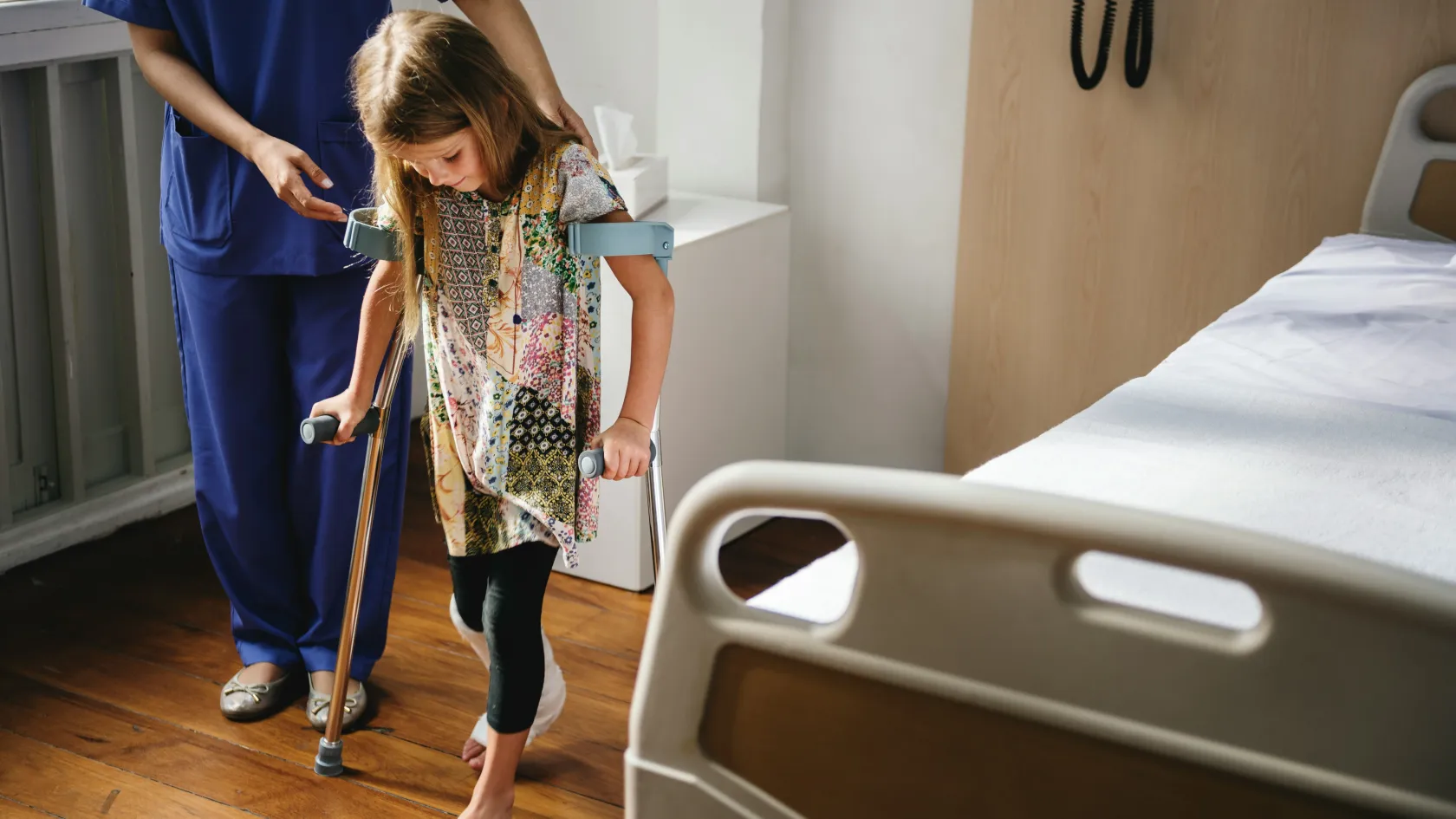
Plan two to three weeks in Istanbul for the primary operation, and one to two weeks for lung surgery. The team coordinates chemotherapy with your home oncologists. Children fly home once the wound has healed and they manage crutches or breathing exercises safely.
Cost depends on the operation, the reconstruction, the hospital stay and physiotherapy. Your own figure follows the free review of your file.
One coordinator plans each visit with the family, from the visa invitation letter sent ten days ahead to the transfer and an apartment with step-free access near the hospital. A parent stays with the child throughout, and the team works in seven languages with halal meals and a prayer room available. Back home, the surgeon and oncologist review the follow-up scans sent by your local team and stay reachable on the same WhatsApp number, and because most relapses show first on a chest CT in the first two to three years, the team makes sure every scan is read by someone who knows the original images, so that a small new nodule is recognized early, while it can still be removed completely, well before the next routine visit.
Osteosarcoma surgery FAQ
Why does the surgery matter so much in osteosarcoma?
It predicts survival. In 1,702 patients, ten-year survival was 64.8 percent with complete surgery and 14.6 percent without.
What does a good response to chemotherapy mean?
At least 90 percent of the tumor is dead under the microscope after the operation. Good responders had 73.4 percent ten-year survival against 47.2 percent for poor responders.
Can lung metastases be cured?
Many can. After relapse, patients whose deposits were all removed had 39 percent five-year survival, while none survived without complete surgery.
Is amputation ever better than limb salvage?
For some tumors, yes. Amputation and rotationplasty had no local recurrences in the Rizzoli series, and they are the right choice when clear margins cannot be achieved otherwise.
How long will we stay in Istanbul?
Two to three weeks for the main operation, one to two weeks for lung surgery.
Can a parent stay with the child?
Yes. A parent stays with the child throughout the hospital stay.
References
Link MP, Goorin AM, Miser AW, et al. The effect of adjuvant chemotherapy on relapse-free survival in patients with osteosarcoma of the extremity. New England Journal of Medicine. 1986;314(25):1600-1606.
Bielack SS, Kempf-Bielack B, Delling G, et al. Prognostic factors in high-grade osteosarcoma of the extremities or trunk: an analysis of 1,702 patients treated on neoadjuvant cooperative osteosarcoma study group protocols. Journal of Clinical Oncology. 2002;20(3):776-790.
Picci P, Sangiorgi L, Rougraff BT, et al. Relationship of chemotherapy-induced necrosis and surgical margins to local recurrence in osteosarcoma. Journal of Clinical Oncology. 1994;12(12):2699-2705.
Kempf-Bielack B, Bielack SS, Jürgens H, et al. Osteosarcoma relapse after combined modality therapy: an analysis of unselected patients in the Cooperative Osteosarcoma Study Group (COSS). Journal of Clinical Oncology. 2005;23(3):559-568.
Meyers PA, Schwartz CL, Krailo MD, et al. Osteosarcoma: the addition of muramyl tripeptide to chemotherapy improves overall survival, a report from the Children's Oncology Group. Journal of Clinical Oncology. 2008;26(4):633-638.
Editor's note
Written by the Biruni Hospital medical editorial team. Reviewed by Prof. Dr. Kürşad AYDIN, Pediatric Neurology.