FOLFOX combines folinic acid, fluorouracil and oxaliplatin in a two-weekly cycle with a 46-hour home pump. After colon cancer surgery it raised five-year disease-free survival from 67.4 to 73.3 percent, and for lower-risk stage III disease three months now works as well as six, sparing half the nerve damage.
About This Department
Medical Oncology
Every two weeks, a two-hour drip and a small pump you carry home for two days. After colon cancer surgery, it lowers the chance of the cancer returning.
FOLFOX combines three drugs, folinic acid, fluorouracil and oxaliplatin, in a cycle that repeats every 14 days. Oncologists rely on it as the backbone of chemotherapy for bowel cancer after surgery and in advanced disease, and use it widely for stomach and esophageal cancer. In the MOSAIC trial of 2,246 patients after surgery for colon cancer, adding oxaliplatin raised five-year disease-free survival from 67.4 to 73.3 percent. For many lower-risk patients, three months of treatment now does the work that once took six.
73.3% vs 67.4%
Disease-free at 5 years after colon surgery, J Clin Oncol 2009
12,834 patients
Pooled to compare 3 and 6 months of treatment, NEJM 2018
0.7 in 100
Severe numbness still present 4 years later, J Clin Oncol 2009
Free
Oncologist review of your pathology and scans
Free consultation
Send the pathology report with the stage, the number of lymph nodes removed and involved, and the MSI or mismatch repair result, plus the operation note, the latest CT and the CEA level. A medical oncologist tells you whether chemotherapy is needed at all, whether three months or six fits your risk, and whether FOLFOX or a tablet-based alternative would suit your travel better. The review is free and asks nothing of you in return.
FOL stands for folinic acid, F for fluorouracil and OX for oxaliplatin, and the regimen has been in use for a quarter of a century. This page explains the FOLFOX Chemotherapy schedule, the trials that made it standard, the choice between three and six months, what a cycle feels like, the numbness that the cold brings on, and how a patient from abroad can combine it with travel.
What FOLFOX is
Each drug has a job. Fluorouracil, known as 5-FU, blocks the building blocks of DNA in dividing cells, and folinic acid, a vitamin relative also called leucovorin, makes fluorouracil work harder and longer inside the tumor. Oxaliplatin binds DNA. Cells cannot copy it. Together they work better than any one of them alone, and the fluorouracil is given partly as a slow drip over 46 hours because the drug acts longer that way.
One cycle every 14 days
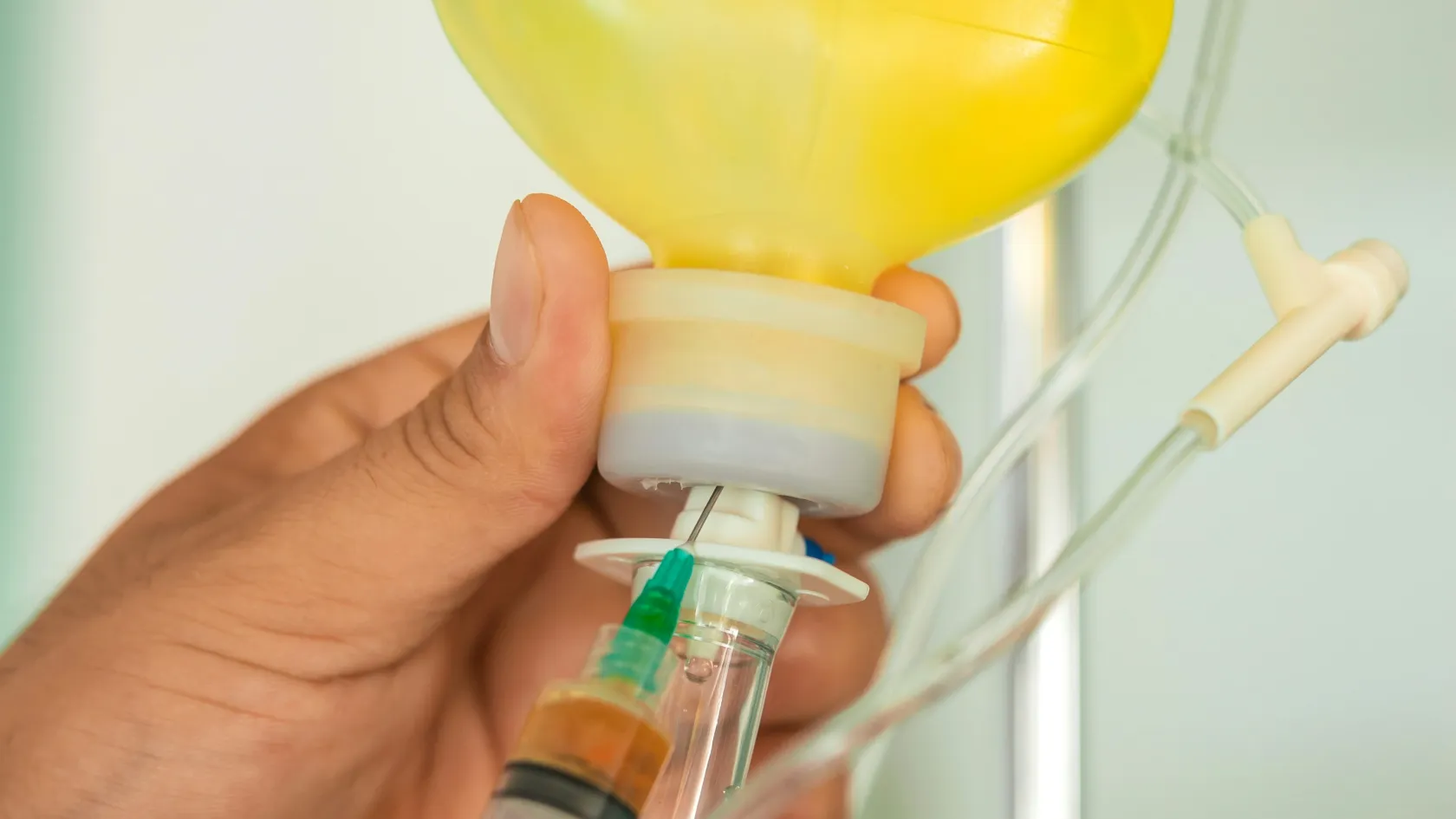
Oxaliplatin and folinic acid run into a vein over two hours on day one, then a small dose of fluorouracil is pushed in and the rest is connected to a portable pump that delivers it over the next 46 hours at home or in the hotel.
FOLFOX4, mFOLFOX6 and the other versions
The number after the name marks a variation in doses and timing. Modified FOLFOX6, the version used in most hospitals today, gives oxaliplatin at 85 milligrams per square meter of body surface, and the doses of all three drugs are calculated from the patient's height and weight. The versions differ in convenience more than in results.
Where it is used
Colon cancer after surgery, stage III and high-risk stage II, to lower the chance of return.
Rectal cancer, as part of treatment before or after surgery with radiotherapy.
Advanced bowel cancer, as first or second treatment, often with bevacizumab, cetuximab or panitumumab according to the tumor's genes.
Stomach and esophageal adenocarcinoma, before and after surgery, and with nivolumab in advanced disease.
Other cancers, such as some cancers of the pancreas, bile ducts and small bowel, mostly in variations of the regimen that add or swap a drug.
MSI-high bowel cancer is a different disease
About one in seven bowel cancers carries a mismatch repair defect, called MSI-high. In stage II these rarely benefit from fluorouracil, and in advanced disease immunotherapy has replaced chemotherapy as the first treatment. Every pathology report should include this test.
After colon cancer surgery
The MOSAIC trial
In 2,246 patients after surgery for stage II or III colon cancer, six months of FOLFOX4 gave five-year disease-free survival of 73.3 percent against 67.4 percent with fluorouracil and folinic acid alone. Six-year overall survival was 78.5 against 76.0 percent, and in stage III disease 72.9 against 68.7 percent, while in stage II as a whole no survival benefit appeared. Andre and colleagues, Journal of Clinical Oncology, 2009.
For stage III disease, oxaliplatin earns its place. For stage II, the oncologist weighs high-risk features, such as fewer than 12 lymph nodes examined, a tumor that has grown through the bowel wall or blocked the bowel, or cancer cells in blood vessels, against the benefit, which for most stage II patients is small.
Three months or six
Oxaliplatin numbness builds with every dose, so shorter treatment matters if it works as well.
The question looked simple and took six trials in twelve countries to answer. Doctors wanted to know whether half the course, three months instead of six, could protect patients just as well while sparing them half the nerve damage. The trials in Italy, the United Kingdom, France, Greece, Japan and North America were run separately and pooled from the start, which gave the analysis more patients than any single study could recruit. It depended on two things. First came the risk of the cancer, judged from the depth of the tumor and the number of involved lymph nodes. Second came the regimen itself, because the three-weekly CAPOX schedule, with oxaliplatin by drip and capecitabine tablets at home, performed better at three months than two-weekly FOLFOX did. Oncologists now sort patients into two groups before choosing the length. The conversation takes minutes. It saves many patients three months of treatment and a good deal of lasting numbness.
Lower risk, T1 to T3 tumors with one to three involved lymph nodes, called N1
Higher risk, T4 tumors or four or more involved lymph nodes, called N2
Three months was as good as six in lower-risk disease
The IDEA collaboration pooled six trials with 12,834 patients. In the lower-risk group, three-year disease-free survival was 83.1 percent after three months and 83.3 percent after six. In the higher-risk group, six months was better, 64.4 against 62.7 percent. Three months was clearly sufficient with CAPOX, a tablet-based cousin of FOLFOX, and less certainly so with FOLFOX itself. Grothey and colleagues, New England Journal of Medicine, 2018.
Advanced bowel, stomach and esophageal cancer
In advanced disease the aim shifts from cure to control, and FOLFOX becomes one step in a longer sequence that also includes FOLFIRI, antibodies chosen by the tumor's genes and, in selected patients, surgery or ablation for spread to the liver.
Order matters less than access
In a French trial of 220 patients with advanced bowel cancer, FOLFIRI followed by FOLFOX6 gave a median survival of 21.5 months and the reverse order 20.6 months, no real difference. What matters is that patients receive both regimens during their illness. Tournigand and colleagues, Journal of Clinical Oncology, 2004.
Stomach and esophageal cancer, CheckMate 649
In 1,581 patients with advanced adenocarcinoma of the stomach, gastroesophageal junction or esophagus, adding nivolumab to FOLFOX or CAPOX lengthened survival, with a hazard ratio of 0.71 in tumors with a PD-L1 combined positive score of five or more, and benefit in the wider groups too. Severe treatment-related side effects were 59 against 44 percent. Janjigian and colleagues, Lancet, 2021.
Before the first cycle
The port
A port makes the 46-hour pump possible
A small reservoir is placed under the skin below the collarbone, connected to a large vein, in a short procedure under local anesthetic. The pump needle goes into it each cycle, so the arm veins are spared and the drugs cannot leak into the skin. It stays in place for the whole course and is removed afterward.
Blood tests, and the DPD test
Blood counts, kidney and liver tests, the tumor marker CEA, and a test for DPD deficiency. The DPD enzyme breaks down fluorouracil. A small share of people carry a gene variant that lowers it, and at a full dose they can suffer severe, sometimes fatal toxicity. European regulators recommend testing before the first dose, and a positive result means a lower starting dose. Treatment still goes ahead.
One cycle, day by day
Fourteen days.
A cycle at a glance
Two to three hours in the day unit on day one, 46 hours with a pump at home, a short visit to disconnect it on day three, then eleven days of recovery before the next cycle. Blood tests come before each cycle.
1
Day 1, morning
Blood tests, a doctor's check, anti-sickness medicine, then oxaliplatin and folinic acid together over two hours. Some people feel tingling in the throat or jaw during the drip, which passes.
2
Day 1, afternoon
A fluorouracil injection into the port, then the pump is connected and hidden in a small bag or belt. You go back to the hotel with it.
3
Day 3
The pump is empty after 46 hours. A nurse disconnects it and flushes the port, which takes ten minutes.
4
Days 4 to 14
Tiredness and nausea are strongest in the first days and fade. White cells are lowest around day 10. Most people feel close to normal by the second week.
Side effects, and the cold
Oxaliplatin makes nerves sensitive to cold for a few days after each dose. Touching a cold surface or drinking something cold can cause pins and needles in the hands, lips or throat, and a sudden tight feeling in the throat that is frightening and harmless. Wear gloves to open the fridge, drink at room temperature, and cover the mouth and nose in cold air during those days. Over the months a separate, lasting numbness in the fingers and feet builds up with each dose, and the oncologist lowers or stops oxaliplatin when it begins to interfere with buttons, writing or walking. The other side effects are tiredness, nausea, diarrhea, mouth sores, low blood counts with a risk of infection, and soreness of the palms and soles. Hair thins in some people and falls out in few.
Numbness usually fades, and in a few it stays
In MOSAIC, severe numbness affected 1.3 percent of patients a year after treatment and 0.7 percent four years after. Milder numbness is more common and improves over months to years after the last dose.
Length of stay, flying, cost and the trip
The honest arithmetic of a two-weekly regimen
Six months of FOLFOX means twelve cycles, twelve pump connections and twelve disconnections, so few patients from abroad receive every cycle in Istanbul. The usual plan is a first stay of about ten days, which covers the consultation, the port, the DPD and other tests, the first cycle and the review after the lowest blood counts. Treatment then continues with an oncologist at home following the written protocol, or with a return every two weeks for those who live near. Where the oncologist agrees, CAPOX, with an infusion every three weeks and tablets in between, fits travel far better and was at least as effective in the IDEA trial. Flying is safe once the pump comes off, and the port, which sits under the skin, needs no special care at airport security or during the flight.
Cost and the trip
Cost now sits elsewhere. FOLFOX drugs have aged into inexpensive generics, so the port, the day-unit time, the pump, blood tests, CT scans and any added antibody or immunotherapy make up most of the bill, and a patient on FOLFOX with bevacizumab or nivolumab pays mainly for the added drug. Published packages in Istanbul cover the consultation, the port, the first cycle, an interpreter and transfers. Hotel, flights and later cycles fall outside them, and we send a figure per cycle with the treatment plan after a free review of your reports.
The coordinator writes in your language.
English, Arabic, French, Russian, Serbian, Romanian or Spanish, or through an interpreter. The office sends the appointment confirmation and an invitation letter naming the hospital and the treating doctor ten days ahead, books the hotel and transfers, and arranges for two family members to join consultations if you wish. Meals come in halal, vegetarian and diabetic versions, a prayer room is on site, and a female doctor can be requested at the first contact.
Between cycles and after
Keep the written plan.
Once you are back home, your own oncologist takes over follow-up after the course. After colon cancer surgery that means a CEA blood test every three to six months and a CT scan every six to twelve months for the first three years, with a colonoscopy one year after the operation. Most recurrences that can still be cured are found this way.
Fever means the emergency department, the same hour
A temperature of 38 degrees or higher in the second week after a cycle may mean infection with low white cells, which needs antibiotics within an hour. Go to the nearest emergency department and say that you are on chemotherapy.
This table scrolls sideways on a narrow screen. Swipe or drag to see every column.
What to watch for between cycles
Sign
What it may mean
What to do
Fever of 38 degrees or chills
Infection with low white cells
Emergency department at once
More than four loose stools a day above normal
Fluorouracil diarrhea
Loperamide as instructed, call the team if it does not settle in a day
Mouth sores that stop eating or drinking
Mucositis
Call the team the same day
Redness, pain or swelling at the port
Port infection or clot
Call the team the same day
Chest pain during the pump
Rare fluorouracil effect on the heart arteries
Stop the pump if trained to, emergency department
Numbness that makes buttons or writing hard
Cumulative oxaliplatin nerve damage
Report before the next cycle so the dose can change
FOLFOX Chemotherapy FAQ
What does FOLFOX stand for?
Folinic acid, fluorouracil and oxaliplatin. The three drugs are given together in a cycle that repeats every two weeks.
How long does FOLFOX treatment last?
After colon cancer surgery, three or six months, which is six or twelve cycles, depending on the risk. The IDEA analysis of 12,834 patients showed three months was enough for lower-risk stage III disease. In advanced cancer it continues as long as it helps, often with breaks.
Why do I need a pump and a port?
Fluorouracil works best as a slow drip, so most of it runs through a small portable pump over 46 hours. The port under the skin lets the pump connect to a large vein safely and spares the arm veins.
Why should I avoid cold drinks during FOLFOX?
Oxaliplatin makes nerves sensitive to cold for a few days after each dose, so cold drinks or objects can cause tingling and a tight feeling in the throat. The effect passes. Drinks at room temperature, gloves for the fridge and a scarf over the mouth in winter air prevent almost all of it.
Will the numbness in my hands and feet go away?
In most people it improves over months to years after the last dose. In the MOSAIC trial severe numbness remained in 0.7 percent of patients four years later.
Can I have FOLFOX in Istanbul and continue at home?
Yes. A first visit of about ten days covers the port, the tests and the first cycle. Later cycles can be given by an oncologist at home following the written protocol, or a three-weekly regimen such as CAPOX can be chosen if it suits the case.
References
Andre T, Boni C, Navarro M, et al. Improved overall survival with oxaliplatin, fluorouracil, and leucovorin as adjuvant treatment in stage II or III colon cancer in the MOSAIC trial. J Clin Oncol. 2009;27(19):3109-16.
Grothey A, Sobrero AF, Shields AF, et al. Duration of Adjuvant Chemotherapy for Stage III Colon Cancer. N Engl J Med. 2018;378(13):1177-1188.
Tournigand C, Andre T, Achille E, et al. FOLFIRI followed by FOLFOX6 or the reverse sequence in advanced colorectal cancer, a randomized GERCOR study. J Clin Oncol. 2004;22(2):229-37.
Janjigian YY, Shitara K, Moehler M, et al. First-line nivolumab plus chemotherapy versus chemotherapy alone for advanced gastric, gastro-oesophageal junction, and oesophageal adenocarcinoma (CheckMate 649), a randomised, open-label, phase 3 trial. Lancet. 2021;398(10294):27-40.
Editor's note
Written by the Biruni Hospital medical editorial team. Reviewed by Prof. Dr. Metin GÜDEN, Radiation Oncology.