
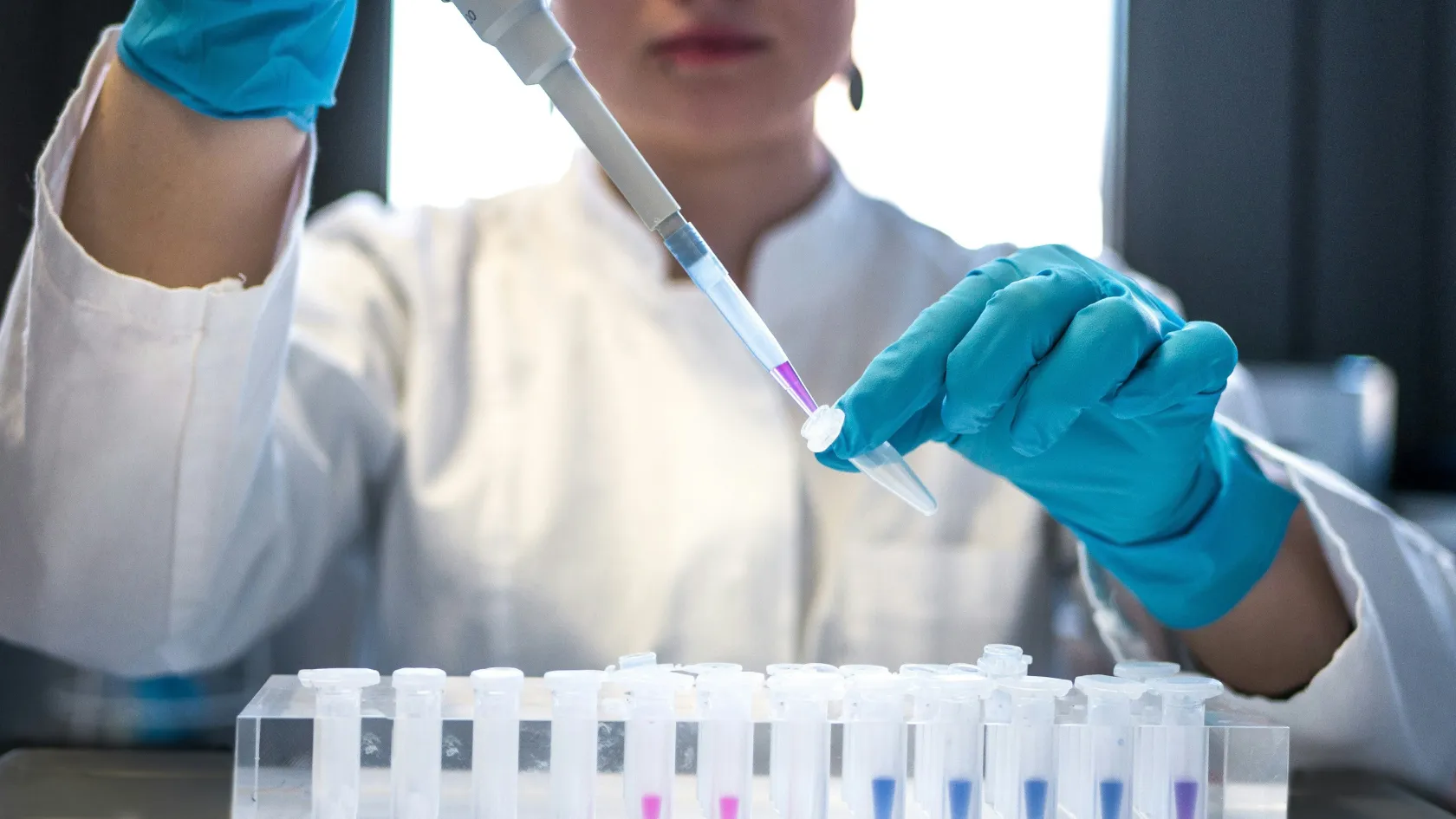
Cancer Clinical Trials
Cancer clinical trials test new drugs, combinations and techniques against the current standard, under ethics committee and regulator approval. This page explains the four phases, placebo and randomization, realistic results of phase 1 trials, eligibility, your rights, and who pays for what. Our oncologists review your records to check trial options in Istanbul and abroad, and the options when no trial fits.
About This Department
Every cancer drug in use today was once tested in a trial. For some patients, a trial is the best treatment option available.
A cancer clinical trial is a research study in patients that tests whether a new drug, combination, dose, operation or radiation schedule works better, or causes fewer side effects, than the current standard. Trials give access to treatments years before they are approved, under close monitoring, and they are the route by which standard care improves. Few patients take part. In a review of 13 studies covering 8,883 patients, only 8.1 percent enrolled in a trial, and for more than half no suitable trial was open at their own hospital (Unger and colleagues, Journal of the National Cancer Institute, 2019). Looking beyond one hospital widens the choice. This page explains what trials are, the phases and what each offers, placebo and randomization, the realistic results of early trials, who can take part, how to find a trial, your rights and safety, who pays, what to do when no trial fits, and how our medical oncology team at Biruni Hospital in Istanbul helps patients from abroad assess their options.
What a clinical trial is
A clinical trial asks one clearly stated question, such as whether adding a new drug to standard chemotherapy helps people live longer, and follows a written plan to answer it.
| Type | Question it asks | Example |
|---|---|---|
| Treatment | Does a new drug, combination or technique work better | A new targeted tablet against standard chemotherapy |
| De-escalation | Can treatment be reduced without losing benefit | Shorter radiation courses, skipping chemotherapy in low-risk disease |
| Supportive care | Can side effects or symptoms be better controlled | A new drug to prevent nausea |
| Screening and prevention | Can cancer be found earlier or avoided | Blood tests for early detection |
The phases
| Phase | Main question | Typical size |
|---|---|---|
| Phase 1 | Is the drug safe, and what dose should be used | Tens of patients, often with several cancer types |
| Phase 2 | Does it shrink this cancer or delay its growth | Dozens to a few hundred patients |
| Phase 3 | Is it better than the current standard | Hundreds to thousands, randomized |
| Phase 4 | What happens in wider use after approval | Thousands, observational |
Placebo and randomization
Will I get a placebo instead of treatment?
Why a coin toss is fair
Pooling 743 randomized trials with 297,744 patients, new treatments were on average only slightly more favorable than established ones, and the results were close to symmetrical, confirming real uncertainty about which option is better (Djulbegovic and colleagues, Cochrane Database of Systematic Reviews, 2012).
Phase 1 trials
| Measure | Result | Note |
|---|---|---|
| Tumor shrinkage, all years | 12.2 percent | 13,847 patients in 465 trials |
| Tumor shrinkage, 2013 to 2019 | 18.0 percent | Up from 9.6 percent in 2000 to 2005 |
| Shrinkage with combinations | 15.8 percent | Against 3.5 percent with a single drug |
| Treatment-related death | 0.7 percent | Unchanged over time |
During the past 20 years, the response rate in phase 1 trials nearly doubled without an increase in the treatment-related death rate (Chihara and colleagues, Lancet, 2022).
Who they suit
Suitable patients remain active and well, with normal organ function, and understand that the main aim of the study is to find a safe dose.
Why so few patients join
The main barrier sits with the system.
When researchers traced what happened to patients as they moved toward a trial, the biggest loss came before any patient was asked. For more than half, no trial for their cancer and stage was open at the hospital where they were treated. Another fifth failed the entry criteria for the trial that was open, because of an earlier treatment, a second illness or a laboratory value just outside the limits. Only 14.8 percent had a trial open to them and did not enroll. Academic centers enrolled more than twice as many patients as community practices. For a patient with an uncommon cancer or a rare mutation, the right trial lies in another city or another country for many, and finding it takes someone who knows where to look and reads the eligibility criteria against the medical records.
Who can take part
Every trial lists inclusion and exclusion criteria. They protect participants and make the results reliable.
| Criterion | What it usually requires | Why |
|---|---|---|
| Cancer type and stage | Confirmed by pathology, often with a specific gene change | The drug targets that disease |
| Earlier treatment | A set number or type of previous treatments | Places the trial at the right point in care |
| General fitness | Able to look after yourself, up and about most of the day | Tolerating the treatment and the visits |
| Blood, liver and kidney tests | Within set limits | Safety of the new drug |
| Measurable disease | A tumor visible on scans that can be measured | Response has to be assessed |
Common reasons for exclusion
Finding a trial
| Registry | Coverage | Note |
|---|---|---|
| ClinicalTrials.gov | Worldwide, the largest registry | Searchable by cancer, gene and country |
| EU Clinical Trials Information System | Trials in the European Union | Public since 2023 |
| WHO International Clinical Trials Registry Platform | Combines national registries | Includes Turkish trials |
Your rights and safety
The principles behind every trial
The Declaration of Helsinki, revised by the World Medical Association in 2024, holds that the goal of generating new knowledge can never take precedence over the rights and interests of individual research participants (World Medical Association, JAMA, 2025).
- You can leave the trial at any time, for any reason, without losing standard care.
- You are told promptly of any new information that could change your decision to stay.
- Your data are coded and kept confidential.
What it costs and who pays
Who pays for what
| Cost | Usually paid by | Note |
|---|---|---|
| The study drug | The sponsor | Free throughout the trial |
| Tests and visits required only by the study | The sponsor | Extra scans, blood tests, biopsies |
| Standard care you would receive anyway | You or your insurer | Depends on the trial and the country |
| Travel and accommodation | Varies | Some sponsors reimburse part of it |
A genuine clinical trial never charges a fee to take part. An offer to join a study in exchange for payment is a warning sign.
| Sign | Why it matters | What to check |
|---|---|---|
| A fee to enroll | Legitimate sponsors pay for the study drug | Ask who the sponsor is |
| No registry number | Every approved trial is registered | Search the number on ClinicalTrials.gov |
| Promises of a cure | No trial can know its result in advance | Ask for the phase and the question it tests |
When no trial fits
| Option | What it means | When it applies |
|---|---|---|
| Expanded access | A drug still in trials given outside a study, with regulator approval | Serious illness, no alternative, drug unavailable otherwise |
| Approved drug from abroad | A drug approved elsewhere imported for one patient | Approved in the United States or Europe, awaiting local approval |
| Standard treatment | The best proven option for that stage | The usual choice, often combined with local treatments |
| Second opinion and tumor board | A fresh review of the whole case | When options seem exhausted |
Expanded access
What is compassionate use?
Deciding
Joining a trial is a personal choice.
Some patients join for the chance of a new drug, some to help people who come after them, most for both. Others prefer the predictability of standard care, fewer visits and staying close to home. Either choice deserves the same respect and the same care. Take the consent form home. Talk to your family. A second oncologist's view helps some patients. Take as much time as the trial allows, which for most studies means days to a few weeks.
For patients from abroad
One coordinator from the international patients office handles arrangements from the first message through discharge and answers the same WhatsApp number once you are back home. The office works in English, Arabic, French, Russian, Serbian, Romanian and Spanish and books interpreters for other languages, and it arranges the visa invitation letter, airport transfers, daily transport and accommodation near the hospital. Halal, vegetarian and diabetic meals, a prayer room on site, and a female physician on request wherever the rota allows.
Practical limits
Questions to ask before joining
- The question and the phase. What the trial is testing, and how far the drug has come.
- The treatment in each arm. Including whether a placebo is used and how treatment is assigned.
- The known side effects. And the number to call at night if they happen.
- The visits, scans and biopsies. How many, how often and for how long.
- What happens when the trial ends. Whether the drug continues if it works.
Good trials welcome questions. A clear answer to each of these is part of informed consent.
References
- Unger JM, Vaidya R, Hershman DL, Minasian LM, Fleury ME. Systematic review and meta-analysis of the magnitude of structural, clinical, and physician and patient barriers to cancer clinical trial participation. J Natl Cancer Inst. 2019;111(3):245-255.
- Chihara D, Lin R, Flowers CR, et al. Early drug development in solid tumours. Analysis of National Cancer Institute-sponsored phase 1 trials. Lancet. 2022;400(10351):512-521.
- Djulbegovic B, Kumar A, Glasziou PP, et al. New treatments compared to established treatments in randomized trials. Cochrane Database Syst Rev. 2012;10(10):MR000024.
- World Medical Association. World Medical Association Declaration of Helsinki. Ethical principles for medical research involving human participants. JAMA. 2025;333(1):71-74.
Editor's note
Written by the Biruni Hospital medical editorial team. Reviewed by Prof. Dr. Özcan YILDIZ, Medical Oncology.
Medically reviewed by

Prof. Dr. Özcan YILDIZ
Medical Oncology
Related Treatments
View All
ALK Inhibitor Therapy
ALK inhibitor therapy treats ALK-positive lung cancer with a daily tablet taken at home. In the CROWN trial 60 percent of patients on lorlatinib were free of progression at five years, alectinib cut brain progression from 45 to 12 percent in ALEX, and two years of alectinib after surgery now protects early disease.

Anti-Angiogenic Therapy
Anti-angiogenic therapy blocks VEGF, the signal tumors use to grow their own blood vessels. Bevacizumab is given by drip with chemotherapy or immunotherapy, and tablets such as sunitinib, axitinib, cabozantinib and lenvatinib are taken at home. It treats bowel, liver, kidney, ovarian, cervical, lung and thyroid cancers. Our oncologists check blood pressure, bleeding risk and surgery timing before the first dose and follow you once you are back home.
Antibody Drug Conjugate Therapy - ADC Therapy
An antibody drug conjugate links an antibody that finds cancer cells to a powerful chemotherapy drug, delivering it inside the tumor. ADCs are now standard in HER2-positive, HER2-low and triple-negative breast cancer and in advanced bladder cancer, where enfortumab vedotin with pembrolizumab raised median survival from 16.1 to 31.5 months.

Atezolizumab Therapy - Tecentriq
Atezolizumab is an immunotherapy drip that blocks PD-L1, the protein tumors use to switch off the immune cells attacking them. It is approved for lung cancer after surgery and in advanced disease, for small cell lung cancer and, with bevacizumab, for advanced liver cancer, where it raised one-year survival from 54.6 to 67.2 percent.
Bevacizumab Therapy - Avastin
Starving a tumor of new blood vessels sounds as if it should work everywhere. The trials say otherwise. Bevacizumab added months of life in bowel, lung, cervical and liver cancer, delayed ovarian cancer, and did nothing for survival in newly diagnosed glioblastoma. This guide gives each result, the side effects, the biosimilars and how a course is planned.