A bispecific antibody is a drug with two hands, one on a cancer cell and one on your own T cell, and it turns immune cells that had ignored the cancer into ones that kill it. It works in myeloma, leukemia, lymphoma and small-cell lung cancer. This guide gives the trials, explains why the first doses need a hospital bed and plans the weeks.
About This Department
Hematology and Medical Oncology
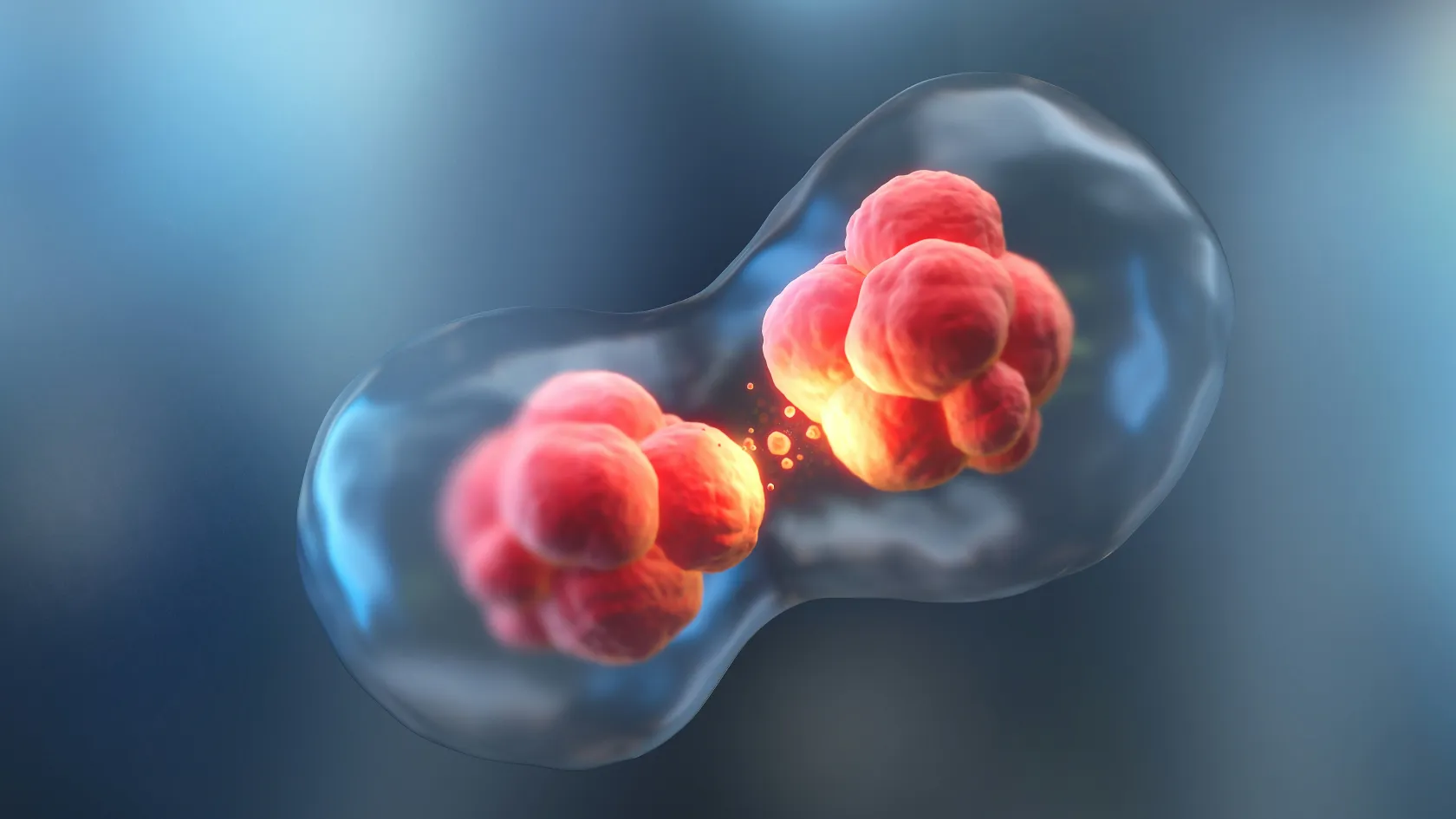
One arm grips a cancer cell, the other grips one of your own T cells. Held together, the T cell kills.
Bispecific antibodies are off-the-shelf drugs that do part of what CAR-T cell therapy does, without the weeks of manufacturing. In myeloma that had failed five lines of treatment, teclistamab produced responses in 63 percent of patients. In small-cell lung cancer after chemotherapy, tarlatamab raised median survival from 8.3 to 13.6 months against chemotherapy in a randomized trial. The first doses carry a risk of cytokine release syndrome. They are given in hospital for that reason, and that shapes how a treatment abroad is planned. Send us your diagnosis, treatment history and recent results, and a hematologist or oncologist will tell you whether a bispecific fits and how the first weeks would run.
63%
Response in heavily treated myeloma with teclistamab
39%
Complete response in relapsed lymphoma with glofitamab
13.6 vs 8.3
Months of median survival, tarlatamab against chemotherapy
An ordinary antibody drug grips one target. A bispecific grips two. Most of the bispecifics used in cancer today are T-cell engagers, with one arm that binds CD3, a marker found on every T cell, and another that binds a marker on the cancer cell, so that the T cell no longer needs to recognize the cancer by itself before attacking it. The drug brings the two together. The T cell does the rest.
Why that matters
Cancers escape the immune system partly by hiding from T cells. Checkpoint drugs such as pembrolizumab release the brakes on T cells that have already found the tumor, and they fail when too few T cells recognize it. A T-cell engager skips recognition entirely. Any T cell passing by becomes a weapon once the drug links it to a cancer cell. These drugs therefore work in cancers that checkpoint drugs barely touch, such as myeloma, acute leukemia and small-cell lung cancer.
The same power explains the side effects. Thousands of T cells switching on at once release a flood of signaling proteins called cytokines, and the body responds with fever, low blood pressure and sometimes confusion. That reaction is strongest with the first doses, while the tumor load is largest, and it fades as treatment continues.
T-cell engagers
Cancer-side targets decide which disease a drug treats. CD19 and CD20 sit on B cells, so blinatumomab, glofitamab, epcoritamab and mosunetuzumab treat B-cell leukemia and lymphoma. BCMA and GPRC5D sit on myeloma cells, so teclistamab, elranatamab and talquetamab treat myeloma. DLL3 sits on small-cell lung cancer cells, so tarlatamab treats that.
Teclistamab is a T-cell-redirecting bispecific antibody that targets both CD3 expressed on the surface of T cells and B-cell maturation antigen expressed on the surface of myeloma cells.
MajesTEC-1, New England Journal of Medicine, 2022
Bispecifics that do not engage T cells
A second group blocks two growth signals at once and recruits no T cells. Amivantamab binds EGFR and MET on lung cancer cells and is used in EGFR-mutated lung cancer. Its side effects are those of the growth-signal drugs, rash and swelling above all, and it carries no risk of cytokine release syndrome. The rest of this page concerns T-cell engagers.
Bispecifics and CAR-T
CAR-T therapy takes a patient's own T cells, engineers them in a laboratory for three to six weeks and returns them in a single infusion. A bispecific is a vial on the shelf, given from the day the decision is made, repeatedly, until the disease stops responding. CAR-T tends to produce deeper single responses in some diseases. Bispecifics are available at once. They suit patients who cannot wait, or cannot travel for cell manufacturing, and many patients receive both, in either order, since glofitamab worked in a third of the patients whose lymphoma had already beaten CAR-T.
By 2026, European or American regulators had approved the T-cell engagers listed below, each for a defined disease and line of treatment, and several more are in late-stage trials for solid tumors such as prostate and gastric cancer.
Blinatumomab for B-cell acute lymphoblastic leukemia, relapsed or with measurable residual disease.
Teclistamab, elranatamab and talquetamab for multiple myeloma after several earlier lines.
Glofitamab and epcoritamab for diffuse large B-cell lymphoma after two lines, and mosunetuzumab and epcoritamab for follicular lymphoma.
Tarlatamab for small-cell lung cancer after platinum chemotherapy.
Tebentafusp, a related molecule, for uveal melanoma in patients with a specific tissue type.
This table scrolls sideways on a narrow screen. Swipe or drag to see every column.
Trials behind four of them
Drug and disease
Trial
Design
Result
Safety
Blinatumomab, relapsed B-cell ALL
TOWER, New England Journal of Medicine 2017
Randomized, 405 adults, against chemotherapy
Median survival 7.7 against 4.0 months. Complete remission with full blood recovery 34 against 16 percent
Grade 3 or worse events common in both groups
Teclistamab, myeloma after five lines
MajesTEC-1, New England Journal of Medicine 2022
Single group, 165 patients
Response 63 percent, complete response or better 39.4 percent, median response 18.4 months
Cytokine release 72.1 percent, almost all mild. Infections 76.4 percent, grade 3 or 4 in 44.8 percent
Glofitamab, large B-cell lymphoma after two lines
Phase 2, New England Journal of Medicine 2022
Single group, 155 patients, 12 fixed cycles
Complete response 39 percent, 35 percent after failed CAR-T. Of these, 78 percent ongoing at one year
Cytokine release 63 percent, grade 3 or worse in 4 percent
Tarlatamab, small-cell lung cancer after platinum
DeLLphi-304, New England Journal of Medicine 2025
Randomized, 509 patients, against chemotherapy
Median survival 13.6 against 8.3 months
Grade 3 or worse events 54 against 80 percent
Reading those numbers
Two of the four trials were randomized against the treatment patients would otherwise have had, and both showed longer survival. The other two treated every patient with the drug and measured response, which is how drugs for patients who have run out of options reach approval first. A 63 percent response in myeloma that had failed five lines of treatment is remarkable, and it is also not a survival comparison.
Randomized trials in earlier lines of myeloma and lymphoma were reported in 2025 and 2026 and are changing where these drugs are used. The reply to your file states the evidence that applies to your disease and stage.
Every T-cell engager starts with small doses that rise over a week or two, so that the cytokine reaction happens in a controlled way.
1
Step-up doses
Teclistamab, for example, is injected under the skin at 0.06 milligrams per kilogram, then 0.3, then the full 1.5, two to four days apart. Glofitamab is preceded by a single dose of obinutuzumab to reduce the B cells that feed the reaction. Steroids, paracetamol and an antihistamine are given before each step-up dose.
2
Observation in hospital
After each step-up dose the patient stays on a ward for one to two days, with temperature, blood pressure, oxygen and a simple handwriting and orientation test checked every few hours. Cytokine release, when it happens, appears within this window.
3
Full dose
Once the full dose is tolerated, treatment moves to the day unit, weekly at first and later every two weeks or monthly, with no further admission unless a problem arises.
Why the first doses need a hospital bed
Cytokine release syndrome starts as a fever. For the majority it stays that way. In a minority the blood pressure falls or oxygen levels drop, and a smaller minority develop confusion, word-finding difficulty or drowsiness, a neurologic effect called ICANS. Tocilizumab, an antibody that blocks the main cytokine, and steroids treat both. Caught early, both reverse in nearly every case, and the patient continues the treatment, often without any further reaction at the next dose, because the tumor load that drove the first reaction has already begun to fall.
In MajesTEC-1, 72.1 percent had cytokine release, and only one patient, 0.6 percent, reached grade 3, with no grade 4. In the glofitamab trial the figures were 63 and 4 percent. Those low severe rates are the result of the step-up schedule and the hospital observation, and a unit that shortens either is changing the conditions the figures were obtained under.
A temperature of 38 degrees or more.
Shivering, dizziness on standing, a racing heart or breathlessness.
Confusion, drowsiness, difficulty finding words, a change in handwriting or a tremor.
Any fever at all during the first months, which may also mean infection.
How the reaction is graded
Doctors grade cytokine release syndrome and neurologic toxicity with the consensus scale of the American Society for Transplantation and Cellular Therapy, published in 2019 for CAR-T and applied to bispecifics as well. Grade 1 is fever alone. Grade 2 adds low blood pressure that responds to fluids, or a need for a little oxygen. Grade 3 needs drugs to support blood pressure or high-flow oxygen, and grade 4 needs intensive care.
The same consensus defines ICANS by a ten-point test of orientation, naming, following commands, writing and attention, repeated at the bedside. Its purpose is to spot a change early, since a patient who is mildly confused today is treated before becoming drowsy tomorrow.
Who does it suit, and what should I send?
Relapse is the setting. Today bispecifics treat diseases that have come back or stopped responding, and trials reported in 2025 and 2026 are moving them earlier in myeloma and lymphoma, and the reply to your file will say whether an earlier use now applies to you. The patient needs working T cells, adequate organ function and enough fitness to tolerate a cytokine reaction, and in myeloma and lymphoma must have received the earlier treatments the label requires. Active infection must be controlled first, and recent chemotherapy that has depleted T cells needs a gap.
The diagnosis report, with the marker studies that confirm the target, CD19 or CD20 in lymphoma and leukemia, and any BCMA or DLL3 result if done.
Every treatment so far, with dates, response and, if CAR-T or a transplant was given, the date and outcome.
Recent blood counts, kidney and liver tests, immunoglobulin levels in myeloma, and the latest scans or bone marrow report.
Any infection in the past three months, hepatitis B and C status, and vaccination history.
Treatment with tarlatamab led to longer overall survival than chemotherapy among patients with small-cell lung cancer whose disease had progressed during or after platinum-based chemotherapy.
DeLLphi-304, New England Journal of Medicine, 2025
Infections, the risk that lasts
After the first weeks, infection takes over as the main danger. The drugs that target B cells and myeloma cells also destroy the healthy cells that make antibodies, and in MajesTEC-1, 76.4 percent of patients had an infection, 44.8 percent at grade 3 or 4. White cells fell too.
Prevention follows a routine. Antiviral tablets against shingles, an antibiotic against pneumocystis pneumonia, immunoglobulin infusions when antibody levels fall, and vaccinations before treatment where time allows. Fever at any point is treated as an emergency until proven otherwise.
1
Weeks one and two
Step-up doses in hospital, then the first full dose. Most patients are discharged within the second week.
2
Months one to six
Weekly or every-other-week doses in the day unit, blood counts and immunoglobulins monthly, response assessed every one to three months.
3
After that
Glofitamab stops after 12 cycles. Teclistamab and the myeloma drugs continue while they work, often at a monthly interval. Tarlatamab continues every two weeks while the cancer is controlled.
When a bispecific is the wrong choice
Some patients are better served elsewhere. A fit patient with lymphoma who can wait for manufacturing may gain more from CAR-T first. A patient whose myeloma has lost BCMA after an earlier BCMA drug needs a drug with a different target. A patient with an uncontrolled infection, a severely weakened heart or brain disease that affects speech and thinking carries a higher risk from cytokine release and neurologic effects. And a patient whose own country offers the same drug close to home is better treated there, with this hospital giving a second opinion on the plan.
Honest advice includes those answers. So does ours.
How many days in Istanbul, and what decides the cost?
Two to three weeks cover the start. First come the consultation, the tests and the tumor board, then the step-up phase with its hospital nights, and the stay ends with the first full dose given in the day unit and a review the day after, when the handover letter, the dosing calendar and the fever instructions are gone through with you and your companion. Patients then either continue treatment here, living nearby for weekly doses, or go home to a center that stocks the same drug, with a written handover. Continuing at home makes more sense whenever the drug is available there, because weekly visits and the infection risk favor treatment close to where you live.
Fly only after the first full dose, without fever, and with the discharge summary in hand.
What decides the cost
Price starts with the drug. These rank among the most expensive cancer medicines, dosed by weight for some and fixed for others, and given weekly at first. Nights come second. The step-up phase means several of them, with close monitoring and tocilizumab kept ready. Pre-medication, blood tests, immunoglobulin infusions and preventive antibiotics follow. An admission for cytokine release or infection is the unknown. Hospitals in Istanbul do not publish packages for bispecifics, and availability of each drug in Turkey should be confirmed before travel, since new approvals reach countries at different times. A written quote should cover the step-up phase, each later dose and a daily rate for an unplanned admission.
Your own figure follows the free review of your file.
Language, companions and follow-up at home
One coordinator from the international patients team is assigned from your first message and stays with you through the start of treatment. The team works in English, Arabic, French, Russian, Serbian, Romanian and Spanish and arranges interpreting in other languages on request, which matters here because the neurologic checks rely on language and the nurses must be able to test it in yours. An invitation letter naming the hospital and the treating physician is sent ten days before travel. The international patients office arranges the airport transfer and the hotel for you and a companion, and a companion is needed during the step-up phase. Rooms have a companion bed. Halal, vegetarian and diabetic meals are available, a prayer room is on site, and a request for a female doctor is passed to the department and met wherever the rota allows. Back home, the coordinator stays reachable on the same WhatsApp number, and any fever goes to a local hospital the same day.
Bispecific antibody therapy FAQ
What is a bispecific antibody?
A drug with two binding arms. In T-cell engagers, one arm grips a marker on the cancer cell and the other grips CD3 on a T cell, so the T cell kills the cancer cell it is held against.
How is it different from CAR-T?
CAR-T uses your own T cells, engineered in a laboratory over weeks and given once. A bispecific comes ready-made and is given repeatedly. Both can cause cytokine release syndrome, and many patients receive both at different times.
Why do the first doses need a hospital stay?
Cytokine release syndrome and neurologic effects appear after the step-up doses. Observation for one to two days after each lets the team treat them at the first sign. Severe reactions stayed below 5 percent in the trials for that reason.
How effective are bispecifics?
In myeloma after five lines, teclistamab produced responses in 63 percent. In relapsed large B-cell lymphoma, glofitamab gave complete responses in 39 percent. In small-cell lung cancer, tarlatamab lengthened median survival from 8.3 to 13.6 months against chemotherapy.
How long do I need to stay in Istanbul?
Two to three weeks for the start, including the step-up phase in hospital and the first full dose. Later doses can be given at home if the drug is available there.
Can my family stay with me?
Yes, and a companion is needed during the step-up phase. Rooms for admitted patients have a companion bed, and the international patients office arranges a hotel nearby.
Glofitamab therapy was effective for DLBCL. More than half the patients had an adverse event of grade 3 or 4.
Conclusion of the glofitamab phase 2 trial, New England Journal of Medicine, 2022
References
Kantarjian H, Stein A, Gokbuget N, et al. Blinatumomab versus Chemotherapy for Advanced Acute Lymphoblastic Leukemia. New England Journal of Medicine. 2017;376(9):836-847.
Moreau P, Garfall AL, van de Donk NWCJ, et al. Teclistamab in Relapsed or Refractory Multiple Myeloma. New England Journal of Medicine. 2022;387(6):495-505.
Dickinson MJ, Carlo-Stella C, Morschhauser F, et al. Glofitamab for Relapsed or Refractory Diffuse Large B-Cell Lymphoma. New England Journal of Medicine. 2022;387(24):2220-2231.
Mountzios G, Sun L, Cho BC, et al. Tarlatamab in Small-Cell Lung Cancer after Platinum-Based Chemotherapy. New England Journal of Medicine. 2025;393(4):349-361.
Lee DW, Santomasso BD, Locke FL, et al. ASTCT Consensus Grading for Cytokine Release Syndrome and Neurologic Toxicity Associated with Immune Effector Cells. Biology of Blood and Marrow Transplantation. 2019;25(4):625-638.
Editor's note
Written by the Biruni Hospital medical editorial team. Reviewed by Prof. Dr. Metin GÜDEN, Radiation Oncology.